
Laser welding is generally better suited to metal joints requiring base-metal fusion, precise weld placement, and efficient production. Brazing is often preferable when joining certain dissimilar metals or assemblies designed to use a lower-melting filler metal.
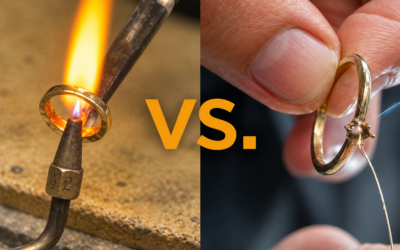
The main difference is simple: laser welding melts the base metals to form a joint, while brazing melts a filler metal without melting the base materials.
But choosing between these methods involves more than comparing strength. Material thickness, joint design, heat distortion, production speed, and equipment investment can all influence the result.
For metal fabrication shops, a handheld laser welder may offer advantages when producing stainless steel cabinets, sheet metal enclosures, kitchen equipment, and other fabricated components.
Brazing remains useful for copper fittings, selected mixed-metal assemblies, and applications where the base materials should remain solid.
This guide compares laser welding vs brazing across the factors that matter most to manufacturers, helping you determine which process fits your materials, production requirements, and budget.
1. Laser Welding vs Brazing: How Do They Work?
The fundamental difference between laser welding and brazing is how the joint forms.
Laser welding directs concentrated laser energy onto the joint, melting the base metals and forming a molten weld pool. As the metal cools, it solidifies into a fusion joint.
Filler wire may be added to accommodate suitable joint gaps, improve the weld profile, or meet specific material requirements. However, filler metal is not required for every laser welding application.
Brazing uses a different joining mechanism. A heat source melts a compatible filler alloy while the base metals remain solid.
The molten filler wets the surfaces and, in conventional capillary brazing, flows through a properly designed joint clearance. Once the filler solidifies, it bonds the components.
Brazing filler metals have a liquidus temperature above 450°C (840°F), but below the melting temperatures of the base materials.
Laser Welding vs Brazing Comparison
| Factor | Laser Welding | Brazing |
|---|---|---|
| Base Metal | Melts at the joint | Remains solid |
| Filler Metal | Optional | Required |
| Heat Source | Focused laser beam | Torch, induction, furnace, or specialized laser |
| Joint Formation | Base-metal fusion | Filler wetting and bonding |
| Joint Strength | Depends on fusion quality and design | Depends on filler, wetting, and joint geometry |
| Heat Effects | Concentrated, often with a narrow affected zone | Lower peak joining temperature, but heating area varies |
| Joint Clearance | Generally requires controlled fit-up | Requires suitable clearance for filler flow |
| Common Applications | Sheet metal, frames, enclosures | Copper fittings, selected dissimilar-metal joints |
Is Laser Brazing the Same as Conventional Brazing?
Laser brazing uses a laser as its heat source but still relies on melting filler metal rather than intentionally melting the base materials.
It is a specialized process used in selected industrial applications, particularly where joint appearance and controlled heat input are important.
Conventional brazing typically uses a torch, induction heating, or a furnace.
A standard handheld laser welding machine should not automatically be considered suitable for laser brazing.
For most fabrication workshops, the practical comparison is between handheld laser fusion welding and an existing conventional brazing process.

2. Which Is Stronger and Produces Less Distortion?
Joint strength and thermal distortion are often the most important considerations when choosing between laser welding and brazing.
However, neither process is automatically superior for every metal or joint design.
Which Process Creates a Stronger Joint?
Laser welding is often preferred when the project requires a fusion joint with suitable penetration and mechanical performance.
By melting the base metals, the laser creates a metallurgical connection that can provide high joint strength when the material and welding procedure are appropriate.
This makes laser welding worth evaluating for equipment frames, metal enclosures, brackets, and other fabricated components.
However, an incorrectly prepared laser weld may contain porosity, cracks, incomplete fusion, or insufficient penetration.
Brazed joints can also provide reliable strength when the correct filler alloy, joint clearance, and bonding area are used.
For example, a properly designed brazed lap joint can distribute loads over a relatively large bonded area.
The better process therefore depends on the expected loading conditions, including tension, shear, fatigue, and operating temperature.
For load-bearing or safety-critical components, joint strength must be verified through appropriate testing and applicable standards rather than assumed from the joining method.
Which Process Causes Less Heat Distortion?
Brazing generally operates at a lower peak temperature because the base metals do not need to melt.
This can be beneficial for assemblies that are sensitive to high temperatures.
However, conventional torch or furnace brazing may heat a large part of the assembly, and prolonged heating can still cause distortion.
Laser welding concentrates energy in a smaller area and can reduce overall heat input compared with some conventional welding methods.
For thin stainless steel panels, this may help maintain part dimensions and reduce post-weld straightening.
For example, a manufacturer producing stainless steel cabinets may need continuous joints without excessive panel warping.
A properly configured handheld fiber laser welder can be useful in this situation, provided the joint geometry, material, and operating conditions are suitable.
Joint Fit-Up and Surface Finish
Laser welding generally performs best when the parts are consistently positioned and the joint gap is controlled.
Some handheld systems use oscillating beams and filler wire to accommodate suitable variations in fit-up, but excessively wide or irregular gaps can still cause welding defects.
Brazing also requires controlled joint preparation.
In capillary brazing, a gap that is too large or too small may prevent the filler from flowing correctly.
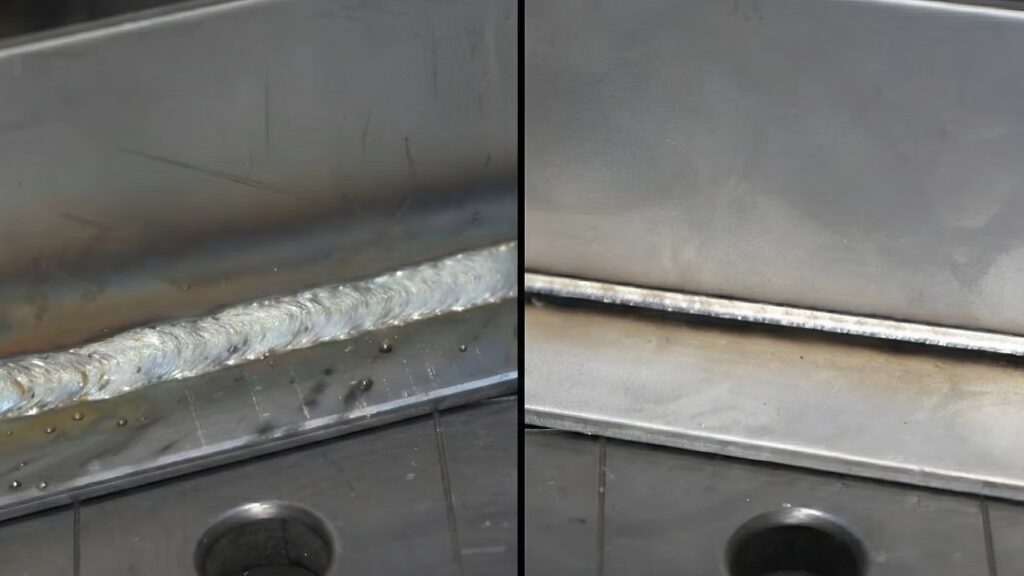
For appearance-sensitive products, both processes can produce attractive results.
Laser welding may reduce grinding and polishing when it produces a smooth, narrow weld. Brazing may require additional cleanup, particularly when flux residue or excess filler remains.
The most useful comparison is the finished part after all required processing—not simply the appearance of the initial joint.
3. Which Process Is Best for Your Metal Fabrication Project?
Different metal fabrication projects place different demands on the joining process.
Instead of choosing laser welding or brazing based only on the material name, consider the joint design, thickness, production volume, and required finished quality.
Application Comparison
| Application | Recommended Starting Point | Why |
|---|---|---|
| Stainless Steel Cabinets | Handheld Laser Welding | Controlled joints and reduced distortion potential |
| Sheet Metal Enclosures | Handheld Laser Welding | Localized heat input and repeatable production |
| Commercial Kitchen Equipment | Handheld Laser Welding | Suitable for selected stainless steel fabrication with support from a stainless steel welding supplier |
| Metal Doors and Frames | Handheld Laser Welding | Useful for suitable fabricated joints |
| Aluminum Sheet Metal | Laser Welding or Brazing | Depends on alloy, joint design, and requirements |
| Copper Pipe Fittings | Brazing | Established filler-metal joining process |
| Steel-to-Aluminum Joints | Qualified Brazing or Specialized Welding | Requires careful control of dissimilar-metal interactions |
| Automotive Cosmetic Seams | Specialized Laser Brazing | Useful for selected appearance-sensitive assemblies |
Stainless Steel Fabrication
Stainless steel is one of the most relevant materials for handheld laser welding.
Fabrication shops regularly produce stainless steel cabinets, kitchen equipment, enclosures, and architectural components.
These parts often require consistent welds, limited distortion, and an acceptable surface finish.
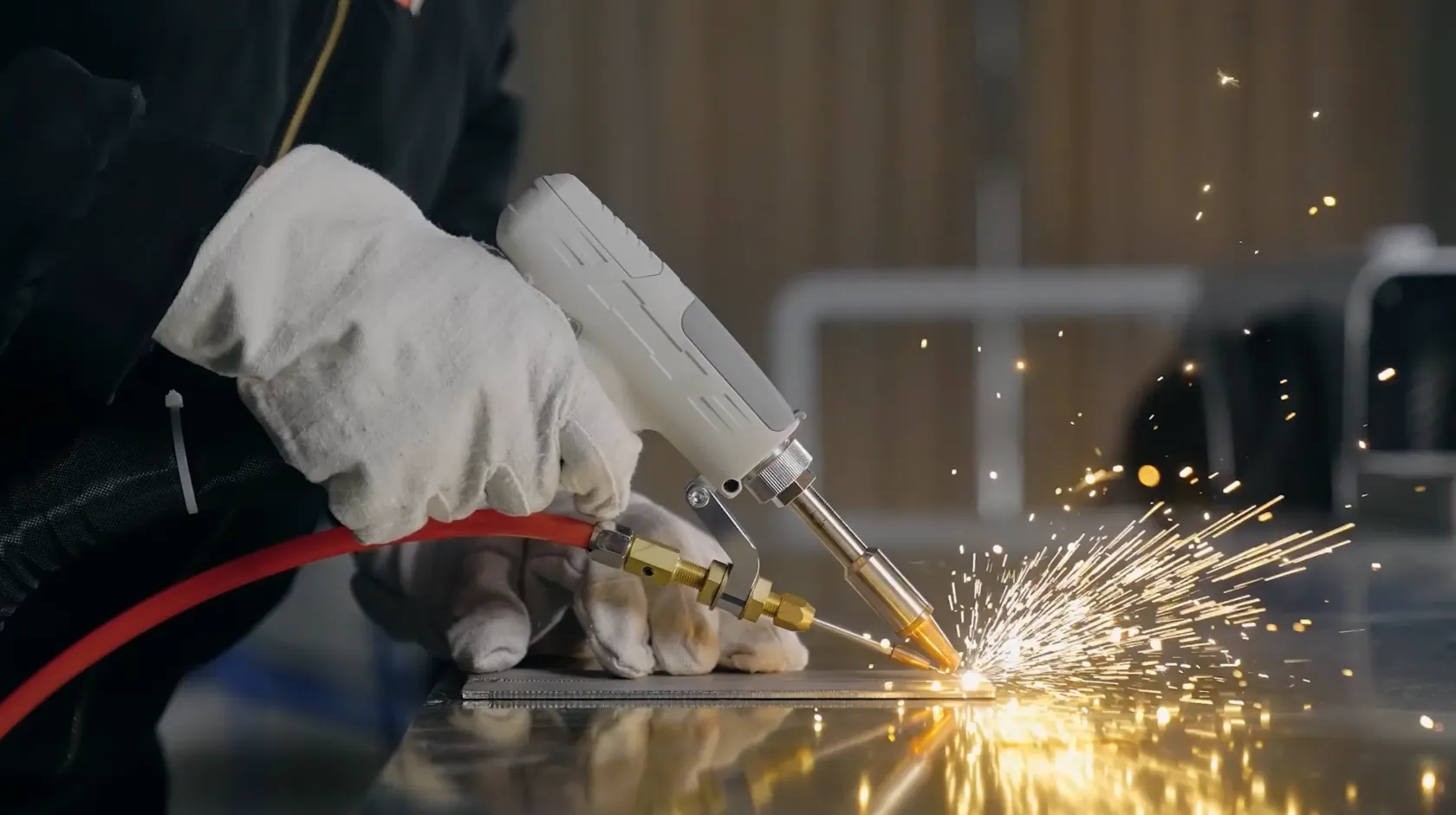
A handheld laser welder allows the operator to direct the laser along the intended joint without requiring a complete robotic production line.
For repeated fabrication work, this can offer an efficient alternative when the parts are properly fitted. A stainless steel laser welder supplier can also advise on settings, gas, and wire for your grade.
Real MaxWave Welding Example
MaxWave’s published welding samples include the following configuration:
| Item | Demonstrated Configuration |
|---|---|
| Material | Stainless Steel |
| Thickness | 2 mm |
| Laser Power | 1500W |
| Joint Type | Fillet Weld |
| Filler Wire | 1.0 mm |
This example demonstrates a specific stainless steel welding application supported by the equipment.
It does not mean these settings will work for every stainless steel grade or joint geometry.
For manufacturers evaluating a laser welder for stainless steel, matching the machine to actual workpieces is more important than relying on a maximum thickness specification.
Carbon Steel Fabrication
Handheld laser welding is also relevant for selected carbon steel projects, including frames, brackets, covers, and fabricated assemblies.
MaxWave also shows a 1500W handheld laser welding sample involving a 3 mm carbon steel lap joint with 1.0 mm filler wire.
This provides a useful starting reference for evaluating similar applications.
However, material preparation, fit-up, shielding gas, welding speed, and joint access can all affect the result.
For structural applications, the process must meet the applicable performance and qualification requirements.
Aluminum Welding
Aluminum can be laser welded, but its reflectivity, thermal conductivity, and oxide layer make process control especially important.
Different aluminum alloys can also respond differently to welding.
Laser welding may be effective for suitable aluminum sheet metal and fabricated parts, but the process should be tested using the actual alloy and joint design, ideally with an aluminum laser welder supplier who can confirm workable thickness and power ranges.
Brazing can be preferable for selected aluminum assemblies where compatible filler alloys and suitable joint geometry are available.
Neither method should be selected solely because the material is aluminum.
Copper and Dissimilar-Metal Joints
Copper pipe connections remain a common application for brazing.
For suitable piping systems, brazing provides a well-established method for joining fittings using compatible filler alloys.
Certain dissimilar-metal combinations may also favor brazing because direct fusion welding can form brittle intermetallic compounds.
However, brazing is not universally suitable for all dissimilar metals.
The filler, joint design, corrosion resistance, and service temperature must be evaluated.
For shops mainly producing stainless steel and carbon steel fabricated products, laser welding may be a more relevant equipment investment than replacing existing brazing procedures for copper fittings. If you go that route, compare a dissimilar-metal laser welder supplier for stainless-to-carbon steel joints.

4. Laser Welding vs Brazing: Which Costs Less?
Equipment purchase price is only one part of the total joining cost.
A traditional torch brazing setup generally requires less initial investment than a professional handheld laser welding machine.
However, the cost per completed part also includes material preparation, joining time, filler, consumables, finishing, inspection, and rework.
Equipment and Operating Cost Comparison
| Cost Factor | Handheld Laser Welding | Conventional Brazing |
|---|---|---|
| Initial Equipment Cost | Higher | Usually lower for basic torch systems |
| Consumables | Shielding gas, filler wire when needed, protective optics | Filler metal, flux when required, fuel or power |
| Labor | Depends on setup and welding time | Depends on heating, filler flow, and cleanup |
| Finishing | May be reduced for suitable welds | Flux removal and cleanup may be required |
| Maintenance | Optical protection, cooling, wire-feeding components | Torch or heating system maintenance |
| Safety Investment | Class 4 laser-controlled workspace and protection | Heat, fire, fumes, and fuel-related safeguards |
The fastest joining process is not always the least expensive if equipment, preparation, or maintenance costs are high.
For occasional brazing jobs, an existing torch system may be the more economical option. For repeatable, high-volume seams, a robotic laser welder supplier can show how automation fits your line.
For workshops producing many similar fabricated components, a handheld laser welder may become attractive if it can reduce total processing time while maintaining the required joint quality.
Example: Comparing Labor Costs for 100 Joints
Consider a hypothetical fabrication shop evaluating two suitable joining procedures for the same component.
Assume the following times have been established for planning purposes:
| Production Factor | Brazing | Laser Welding |
|---|---|---|
| Joining and setup time per joint | 6 minutes | 4 minutes |
| Finishing and cleanup per joint | 4 minutes | 1 minute |
| Total time per joint | 10 minutes | 5 minutes |
| Total labor time for 100 joints | 16.7 hours | 8.3 hours |
| Labor cost at $30/hour | $500 | $250 |
Under these assumptions, laser welding would reduce direct labor expenses by approximately $250 for 100 joints.
This example is illustrative, not a measured MaxWave performance claim or an industry-average productivity comparison.
The actual result could be very different depending on the materials, operator, process, and production volume.
It also excludes equipment ownership, shielding gas, filler, flux, energy, laser safety investment, and other operating costs.
The most reliable way to compare costs is to time both processes on representative components and calculate the full cost per accepted part.
Why Production Volume Matters
A workshop performing a small number of suitable brazing jobs each month may have little reason to invest in laser welding equipment.
However, a manufacturer regularly producing stainless steel cabinets or metal enclosures may benefit if laser welding reduces processing time or finishing requirements.
The potential savings become more meaningful when the same improvement can be repeated across many parts. For repeat jobs, an automatic laser welder supplier can help you test programmed weld paths on your own parts.
For businesses evaluating a metal laser welding machine, this is the practical purchasing question:
Will the equipment improve the cost, quality, or production capacity of the parts we already manufacture?
If the answer can be demonstrated with real samples, the investment becomes easier to evaluate.
5. When Should You Buy a Handheld Laser Welder?
A handheld laser welder is worth considering when your production involves suitable metal joints that benefit from localized heat input, consistent welding, and efficient operation.
It may be particularly relevant for workshops handling thin sheet metal, stainless steel fabrication, metal enclosures, and repeated repair or assembly tasks.
However, choosing a machine requires more than selecting a power rating.
What to Consider Before Purchasing
Start with the materials and thicknesses your workshop processes most frequently.
Then evaluate joint geometry, fit-up accuracy, filler-wire requirements, production volume, and the finished weld specifications.
For example, a shop mainly producing thin stainless steel cabinets may have different requirements from one working with thicker carbon steel frames.
If your existing process already produces acceptable joints efficiently, the benefits of laser welding should be demonstrated before replacing equipment.
MaxWave Handheld Laser Welder Options
MaxWave, a laser welder manufacturer, offers air-cooled handheld laser welding configurations from 800W to 2000W.
Different power options can be considered for different material thicknesses and fabrication requirements.
| Power Configuration | Applications Worth Evaluating |
|---|---|
| 800W | Thin-sheet fabrication and lighter repair work |
| 1200W | General fabrication and varied daily welding |
| 1500W | Regular production of cabinets, frames, and enclosures |
| 2000W | More demanding fabrication requiring additional capacity |
The suitable configuration depends on more than rated power. Material grade, thickness, joint fit-up, shielding, and required penetration must also be considered.
MaxWave’s air-cooled design eliminates the need for an external water chiller.
The equipment also provides adjustable welding controls, preset parameters, and compatible wire-feeding options.
These features may help simplify setup and job changes in fabrication workshops.
An air-cooled laser welder can be worth evaluating when portability, routine maintenance, and varied fabrication tasks are important.
Verify Weld Quality and Safety
Before purchasing, request sample welds using your actual materials and joint types.
Inspect the weld appearance, penetration, consistency, and any relevant mechanical properties.
If the parts are subject to structural loads, pressure, fatigue, or regulated requirements, complete appropriate procedure qualification and testing.
Handheld laser welding also requires a properly designed safety system.
These machines use high-power Class 4 lasers, creating serious direct and reflected beam hazards.
A compliant operating arrangement should include suitable beam containment or a controlled laser area, interlocks, restricted access, trained personnel, appropriate protective equipment, and fume extraction.
Safety requirements and the associated costs must be included in the equipment investment decision.
Choose the machine based on verified welding performance and the conditions in your workshop, not simply an advertised welding speed or maximum power.
Conclusion
Laser welding and brazing are both effective metal joining processes, but they serve different manufacturing requirements.
Laser welding is often the better starting point when base-metal fusion, controlled heat input, and efficient joining of fabricated components are priorities.
Brazing remains useful for copper fittings, selected dissimilar-metal joints, and assemblies designed around compatible filler metals.
For stainless steel cabinets, sheet metal enclosures, commercial kitchen equipment, and suitable carbon steel fabrication, a handheld laser welder may offer meaningful production advantages.
The best decision comes from evaluating your actual materials, joint requirements, production costs, and sample results.
Considering a handheld laser welder for your fabrication projects? Contact MaxWave to discuss your metal type, thickness, joint design, and production workload. Our team can help you compare suitable machine configurations and evaluate representative welding applications before you invest.

0 Comments