
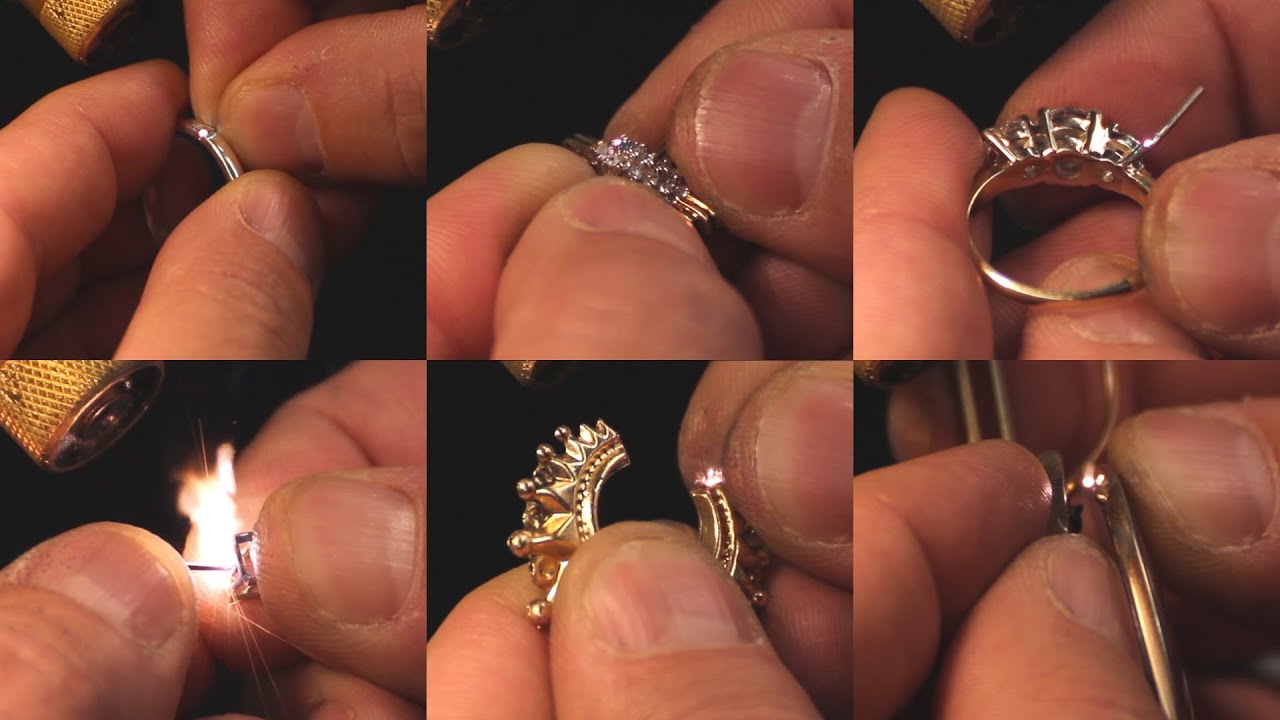
A customer brings in a damaged ring with gemstones close to the repair area. Your jeweler can attempt a torch repair, send the piece to a specialist, or turn down the job.
For a small jewelry repair shop, situations like this raise an important question: Is a jewelry laser welder worth buying, or is outsourcing still the smarter choice?
Laser welding can help shops handle delicate repairs, reduce certain finishing tasks, and keep more work in-house. But the equipment also requires training, maintenance, and a realistic workload to justify the investment.
This guide explains which repair shops benefit most, how to compare buying with outsourcing, and what to check before purchasing a machine.
Is a Jewelry Laser Welder Worth It for a Small Repair Shop?
A jewelry laser welder can be worth the investment if your shop regularly handles precision repairs, pays for outsourced welding, or loses customers because of slow turnaround times. However, shops with occasional repair orders or efficient existing soldering workflows may be better off outsourcing until demand becomes more consistent.
The decision should depend on your actual repair business, not simply the size of your shop.
When Buying Makes Sense
A jewelry laser welder is worth evaluating when:
- You regularly outsource repairs that require localized welding.
- Customers request repairs near gemstones or delicate settings.
- Traditional soldering creates significant preparation or refinishing work.
- Your shop could accept additional repairs with suitable equipment.
- You have a technician available for laser welding training.
- Your expected additional profit can reasonably cover equipment ownership costs.
When You Should Wait
Buying may not make sense if your shop handles only a few suitable repairs each month, already completes most work efficiently with a torch, or has no trained operator.
A useful starting point is to review your last three to six months of repair records. Count the jobs that could realistically benefit from laser welding, not every repair your shop completes.
A busy store selling jewelry and offering occasional repairs may have less need for a laser welder than a small workshop specializing in difficult restoration jobs.
Which Jewelry Repairs Make a Laser Welder Worth Buying?
The strongest reason to buy a jewelry laser welder is its ability to perform certain repairs with localized heat and precise weld placement.
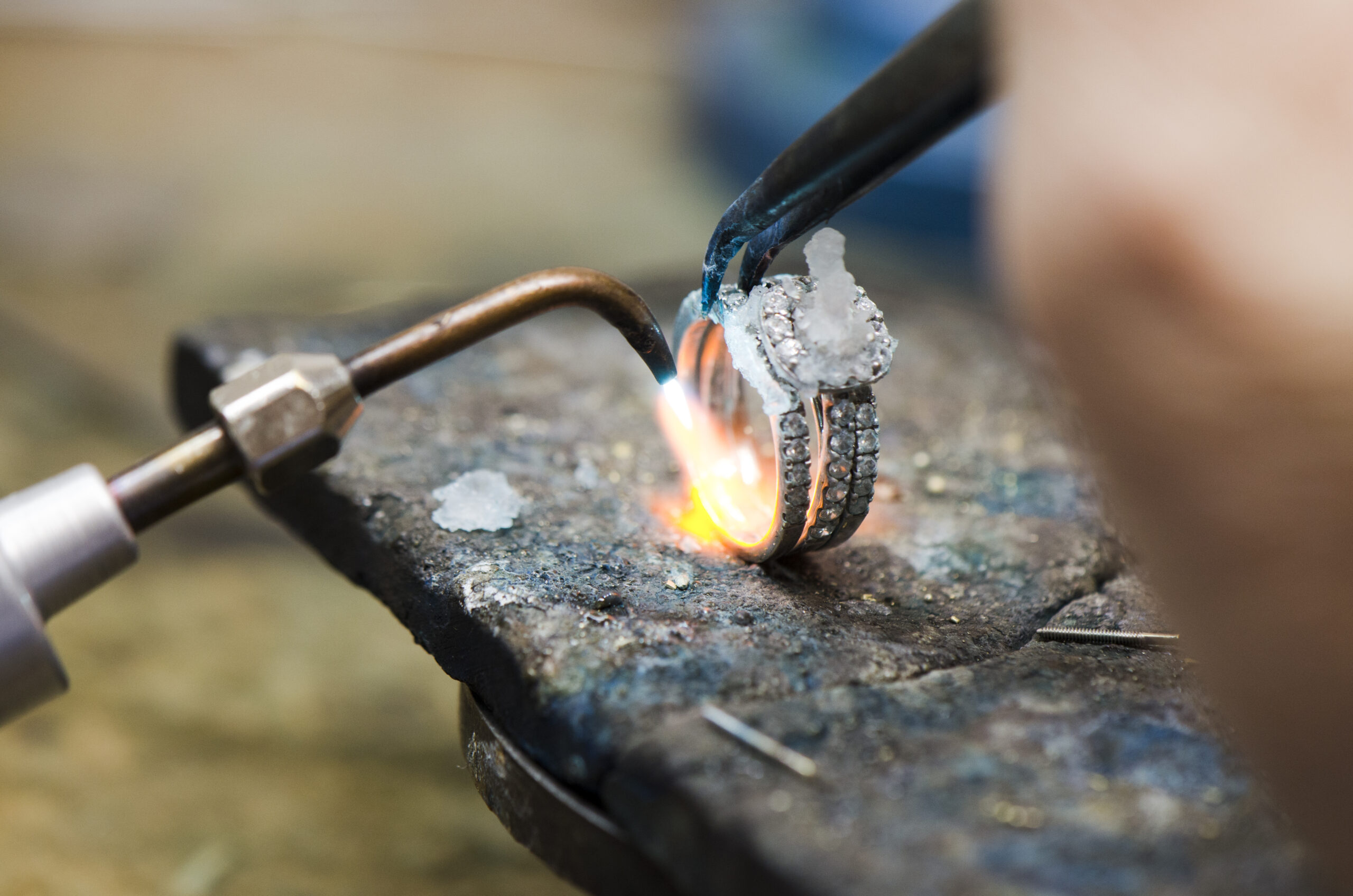
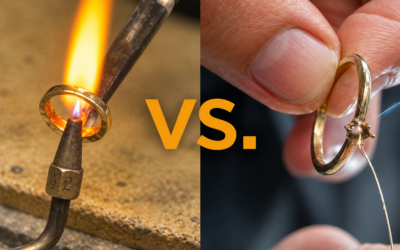
Traditional torch soldering remains effective for many tasks, but laser welding can offer advantages when the surrounding jewelry must be protected from unnecessary heating.
Repairs That Offer the Most Value
| Repair type | Potential advantage of laser welding | Important limitation |
|---|---|---|
| Prong retipping | Rebuilds small areas with precise metal placement | Gemstone safety must be assessed |
| Ring sizing and shank repair | Limits heating around the joint | Weld strength and alignment remain critical |
| Fine chain and clasp repair | Targets small joints without broadly heating adjacent links | Very thin or hollow links can melt through |
| Platinum jewelry repair | Provides localized fusion and controlled metal buildup; ask a jewelry repair laser welder supplier about platinum settings | Suitable equipment and parameters are essential |
| Porosity and crack repair | Can restore small defective areas | Severely damaged metal may need replacement |
| Antique jewelry restoration | May preserve nearby details and finishes | Unknown alloys and fragile components increase risk |
Can Laser Welding Reduce Gemstone Removal?
In certain repairs, laser welding may allow the jeweler to work without removing nearby gemstones.
For example, a localized repair on a ring shank may expose the setting to less heat than traditional torch soldering.
However, laser welding does not automatically make gemstone-set jewelry safe to repair.
Silver and other metals conduct heat, while gemstones vary in their sensitivity to temperature changes. Some stones and treatments are especially vulnerable. For silver pieces, ask a sterling silver laser welder supplier about suitable settings and test welds.
Before welding, the jeweler should identify the gemstones, inspect their condition, and evaluate the distance from the weld. Removal may still be necessary.
How These Repairs Create Business Value
A laser welder can improve profitability in several ways.
First, the shop may retain repairs previously sent to an outside specialist. Second, suitable repairs may require less disassembly, cleaning, or refinishing. Third, faster turnaround may help the business accept additional customer orders.
These benefits should be measured individually.
Saving ten minutes on a repair has financial value only if it reduces actual costs or allows the technician to complete other productive work.
The goal is not simply to perform more laser welds. It is to improve repair profitability and customer service.
Buying vs Outsourcing Jewelry Repairs: Which Is Better?
For a small jewelry repair shop, outsourcing is often the most practical starting point.
It provides access to specialized equipment and experienced technicians without requiring a substantial investment.
However, outsourcing may become less attractive as repair volume grows.
Buying vs Outsourcing Compared
| Factor | Buying a laser welder | Outsourcing repairs |
|---|---|---|
| Initial investment | Equipment, training, and setup costs | Minimal equipment investment |
| Cost structure | Ownership costs plus internal repair labor | Payment for each outsourced job |
| Turnaround | Greater control over scheduling | Depends on the repair partner |
| Quality control | Managed by your own technicians | Depends on the external specialist |
| Repair flexibility | Suitable jobs can be handled in-house | Specialized work can be referred out |
| Main risk | Low equipment utilization or downtime | Delays, shipping costs, and reduced margins |
When Outsourcing Is Better
Continue outsourcing when laser-compatible repairs are infrequent, your existing repair partner provides reliable service, or buying equipment would create unnecessary financial pressure.
Outsourcing also makes sense for unusual repairs that require skills or equipment your workshop does not have.
Even shops that own laser welders may continue outsourcing particularly complex jobs.
When In-House Welding Becomes Attractive
Consider purchasing when you consistently send similar repairs to outside specialists and could complete them with your existing staff after suitable training.
Bringing work in-house may help you:
- Reduce repeated outsourcing expenses.
- Offer more predictable delivery times.
- Handle certain urgent repairs without waiting for another workshop.
- Maintain direct control over repair quality.
- Expand your range of precision repair services.
However, keeping a repair in-house does not automatically mean keeping the entire retail fee as additional profit. Internal labor, consumables, equipment costs, and potential rework must still be considered.
For shops with growing but uncertain demand, a hybrid approach is often sensible: continue routine bench repairs internally, outsource specialized work, and track which laser-compatible jobs appear regularly.
How Much Repair Work Justifies Buying a Jewelry Laser Welder?
There is no universal minimum number of repairs required to justify a jewelry laser welder.
A shop completing a few high-value precision repairs may benefit more than one handling many inexpensive jobs with little opportunity to improve efficiency.
The more reliable approach is to calculate the equipment’s expected contribution to your business.
Calculate Your Actual Monthly Benefit
Start with the financial improvements that purchasing a laser welder could create:
Monthly incremental net benefit = Additional repair contribution + Net savings from bringing outsourced work in-house + Realizable labor savings − Additional operating costs
When calculating these amounts, avoid double-counting the same benefit. For example, an outsourced repair’s added contribution should already reflect the outside fee avoided and the internal labor required.
Then estimate the simple payback period:
Payback period (months) = Total initial investment ÷ Monthly incremental net benefit
The total initial investment should include the equipment, delivery, required installation, initial training, and necessary safety arrangements.
Example: A Small Repair Shop Considering an $8,000 Investment
Suppose your total initial investment is $8,000.
The following scenarios use hypothetical monthly net benefits after additional operating expenses.
| Business scenario | Monthly incremental net benefit | Simple payback |
|---|---|---|
| Conservative | $200 | 40 months |
| Moderate | $500 | 16 months |
| Strong demand | $900 | Approximately 9 months |
These figures illustrate the calculation, not guaranteed industry returns.
The moderate scenario may be attractive to one established repair shop but too uncertain for a newly opened business.
Financing can reduce the initial cash payment, but interest and fees increase the total ownership cost. Monthly loan payments also need to fit the shop’s cash flow.
What Costs Should You Include?
Beyond the machine price, consider training, maintenance, spare parts, shielding gas where required, electrical arrangements, fume extraction, and equipment downtime.
The cost of a suitable safety installation can also be significant, particularly if the laser workstation does not provide adequate beam containment.
For detailed equipment pricing and ownership expenses, see our jewelry laser welder price guide.
The most important financial question is straightforward:
Can the shop demonstrate enough additional monthly net benefit to justify the investment within an acceptable period?
If the answer depends entirely on hypothetical new customers, it may be better to validate demand before purchasing.
When Is a Jewelry Laser Welder Not Worth Buying?
Laser welding is a useful repair technology, but it is not the right solution for every workshop or every piece of jewelry.
Your Repair Volume Is Too Low
A shop that receives only occasional specialized repair orders may find that outsourcing remains more economical.
Equipment sitting idle still represents tied-up capital, and maintenance or service expenses do not disappear when the machine is unused.
Before investing, determine whether the workload is regular or seasonal.
Most Repairs Are Already Handled Efficiently
Traditional soldering remains valuable for jewelry assembly, certain large joints, and repairs that require conventional solder-flow techniques.
Some joints may be difficult to access with the laser beam. Others may involve significant missing metal, unsuitable alloys, or delicate construction.
A jewelry laser welder should complement your existing bench tools rather than replace them completely.
Your Shop Lacks Training or Technical Support
Laser welding requires more than selecting a preset.
Operators need to understand joint preparation, laser settings, filler selection, weld inspection, and safe machine operation.
Poor technique can create incomplete fusion, cracks, porosity, or damaged jewelry.
If your shop cannot provide training or does not have an employee responsible for the equipment, purchasing may introduce more problems than it solves.
The Equipment Creates Too Much Financial Risk
A low purchase price is not necessarily a good investment.
Limited warranty coverage, unavailable replacement parts, slow service response, and unexpected installation costs may outweigh the initial savings. It helps to review the background of a laser machine manufacturer before buying.
If your workload remains uncertain, consider continuing to outsource, sharing equipment with another workshop, or exploring a suitable rental arrangement where available.
These options allow you to test the business opportunity before making a larger commitment.
What Should Small Repair Shops Check Before Buying a Laser Welder?
Once your business case supports purchasing, the next step is choosing a jewelry laser welder manufacturer whose equipment matches your actual repairs.
For jewelry applications, average laser power alone is not enough to judge welding capability.
Pulse energy, peak power, pulse duration, spot size, optical quality, and material compatibility all affect performance.
Match the Equipment to Your Repair Work
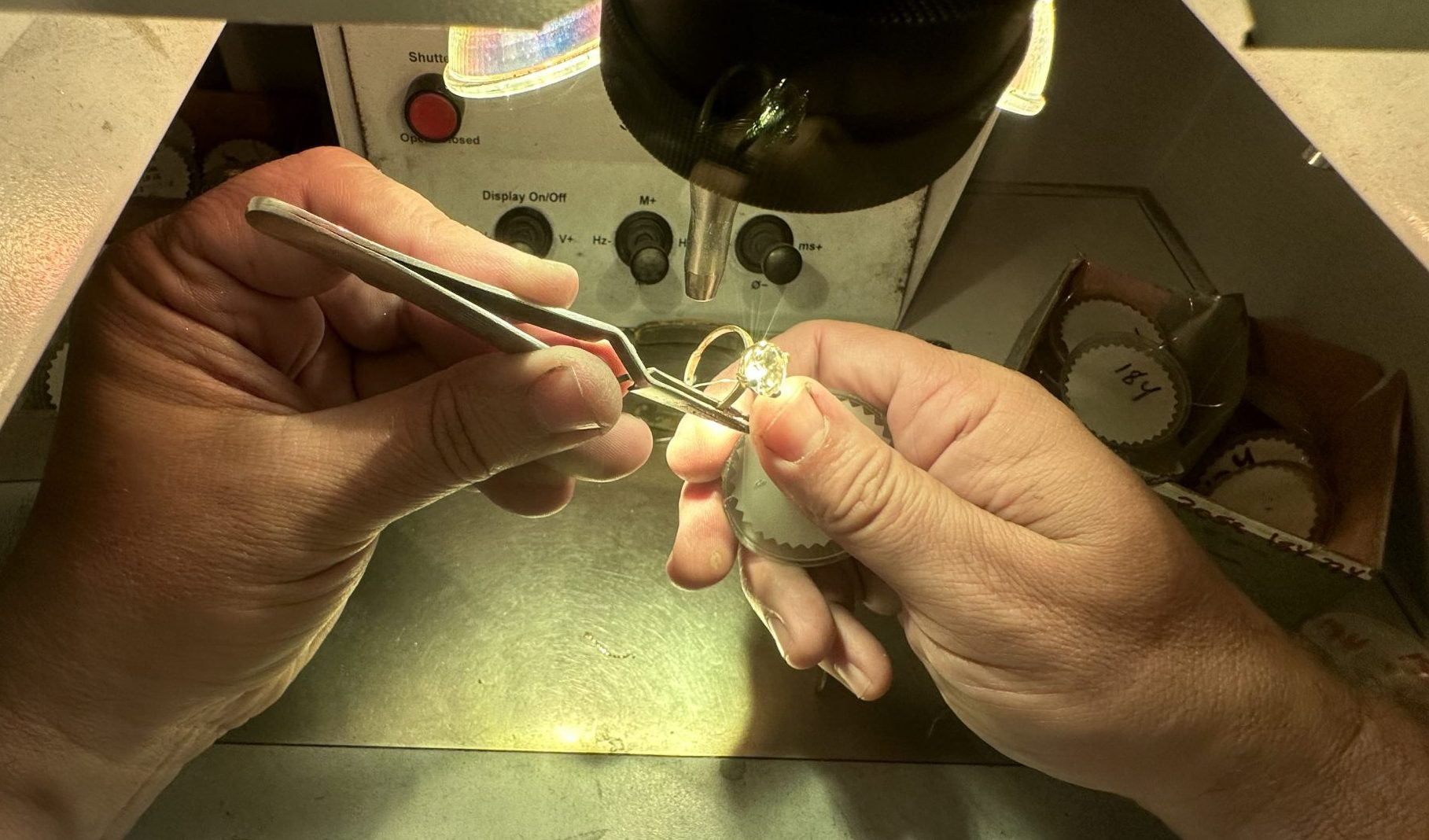
A workshop focused on fine chains and small prongs may prioritize precise spot control and clear magnification, so ask each permanent jewelry welder supplier to demonstrate both.
A shop repairing heavier gold or platinum jewelry may need different pulse-energy capabilities and more demanding operating capacity.
Both should evaluate weld quality on their own materials.
When comparing machines, check the following:
- Laser performance: Suitable pulse energy, adjustable pulse duration, spot size, and stable output.
- Viewing system: Clear microscope or CCD positioning for small repair areas.
- Material compatibility: Demonstrated performance on the gold, silver, platinum, and other alloys your shop handles.
- Workstation design: Adequate access, comfortable positioning, suitable cooling, and manageable maintenance.
- Safety: Proper laser safeguards, operator protection, fume extraction, and documented training requirements.
- Supplier support: Written warranty terms, replacement-part availability, technical guidance, and service arrangements.
For a more detailed explanation of the technical specifications, read our guide to choosing a laser welder for gold and silver jewelry.
Request a Sample Welding Test
Before purchasing, ask a jewelry laser welder supplier to demonstrate repairs comparable to those your shop performs.
Useful samples may include a cracked gold ring, a damaged silver chain, a worn prong, or a platinum joint.
Evaluate more than surface appearance. Check whether the weld provides adequate fusion, whether the surrounding jewelry remains undamaged, and whether the finished repair meets your quality expectations.
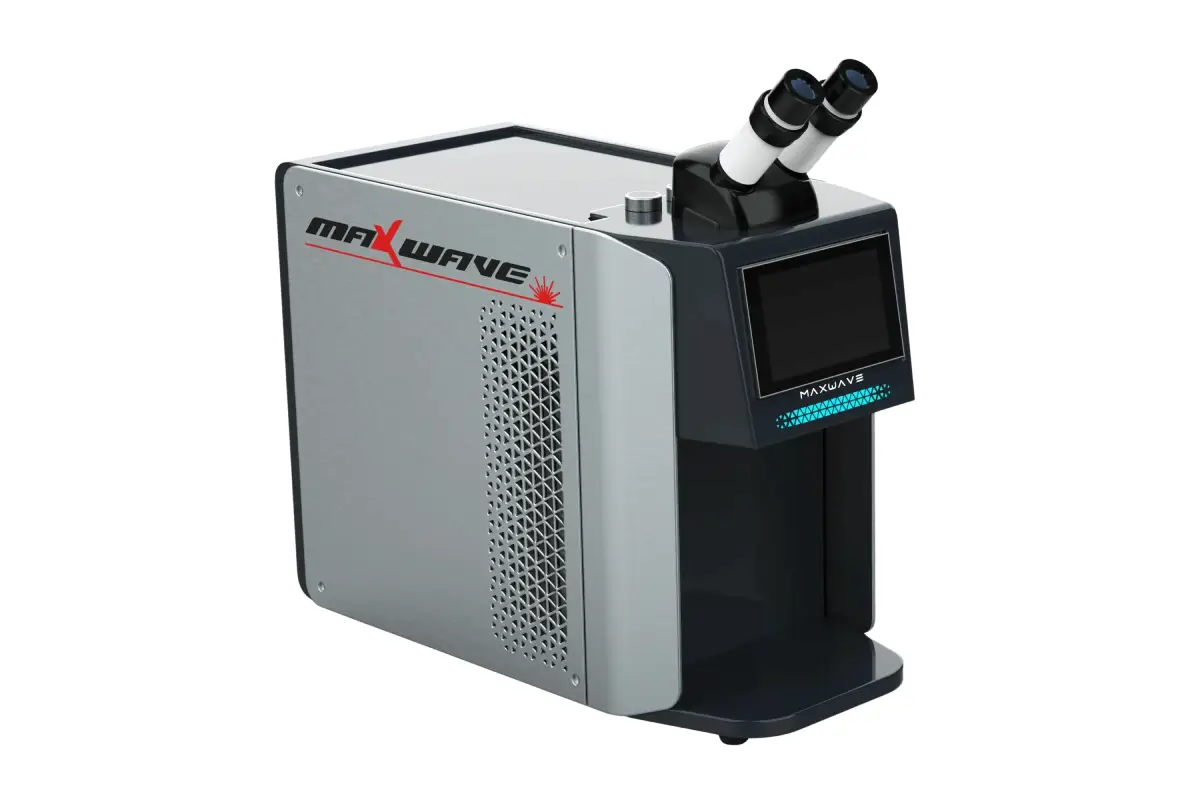
For example, the MaxWave QCW jewelry laser welder is available in multiple power configurations with adjustable welding control and CCD viewing.
Rather than choosing a configuration based only on its advertised power, share your typical materials, repair photographs, workpiece dimensions, and expected workload with the supplier.
A representative sample test can help establish which machine configuration is suitable before you commit to purchasing.
Conclusion
A jewelry laser welder is worth buying when it solves a recurring and measurable problem in your repair business.
For some small shops, that means reducing outsourced repairs and improving turnaround. For others, it means offering precision repairs that were previously difficult to handle.
But purchasing is not always the right move. If repair demand is low, outsourcing works efficiently, or your shop is not ready for training and maintenance, delaying the investment may be the better decision.
Start with your repair records, calculate the realistic financial benefit, and test the equipment on your actual work.
If your numbers support buying, contact MaxWave, a laser welding equipment manufacturer, to discuss your jewelry repair applications and request a suitable laser welding demonstration.
The best investment is not necessarily the most powerful or least expensive machine. It is the one that reliably meets your workshop’s needs.

0 Comments