
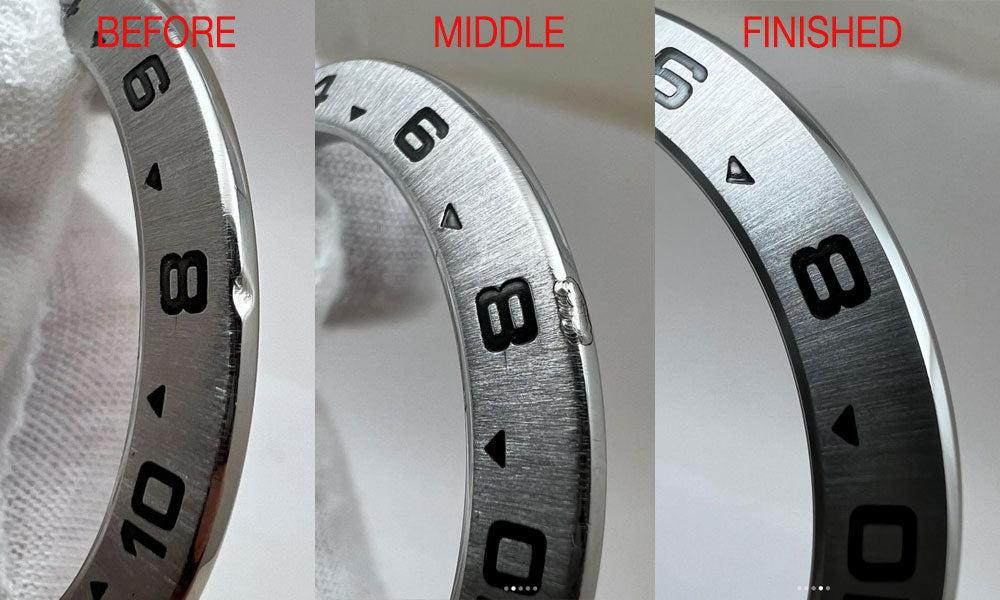
A deep scratch on a watch case is not always a polishing problem. Removing enough surrounding metal to level a gouge can soften the lugs, flatten a chamfer, or alter the watch’s original proportions. Laser welding offers another approach: add compatible metal to the damaged area, then reshape and refinish it.
This guide explains when watch case laser welding makes sense, how professional workshops approach the repair, and why the finishing and final inspection matter as much as the weld itself.
Which Watch Case Scratches and Dents Need Laser Welding?
Laser welding is most useful when the damage involves missing metal or a depression too deep to remove without changing the case geometry. Light scratches usually need only careful refinishing.
| Case damage | Usually consider | Reason |
|---|---|---|
| Hairline scratches and light swirls | Gentle polishing or brushing | Little metal needs to be removed |
| Deep gouges or impact dents | Laser filling followed by refinishing | Preserves surrounding case thickness |
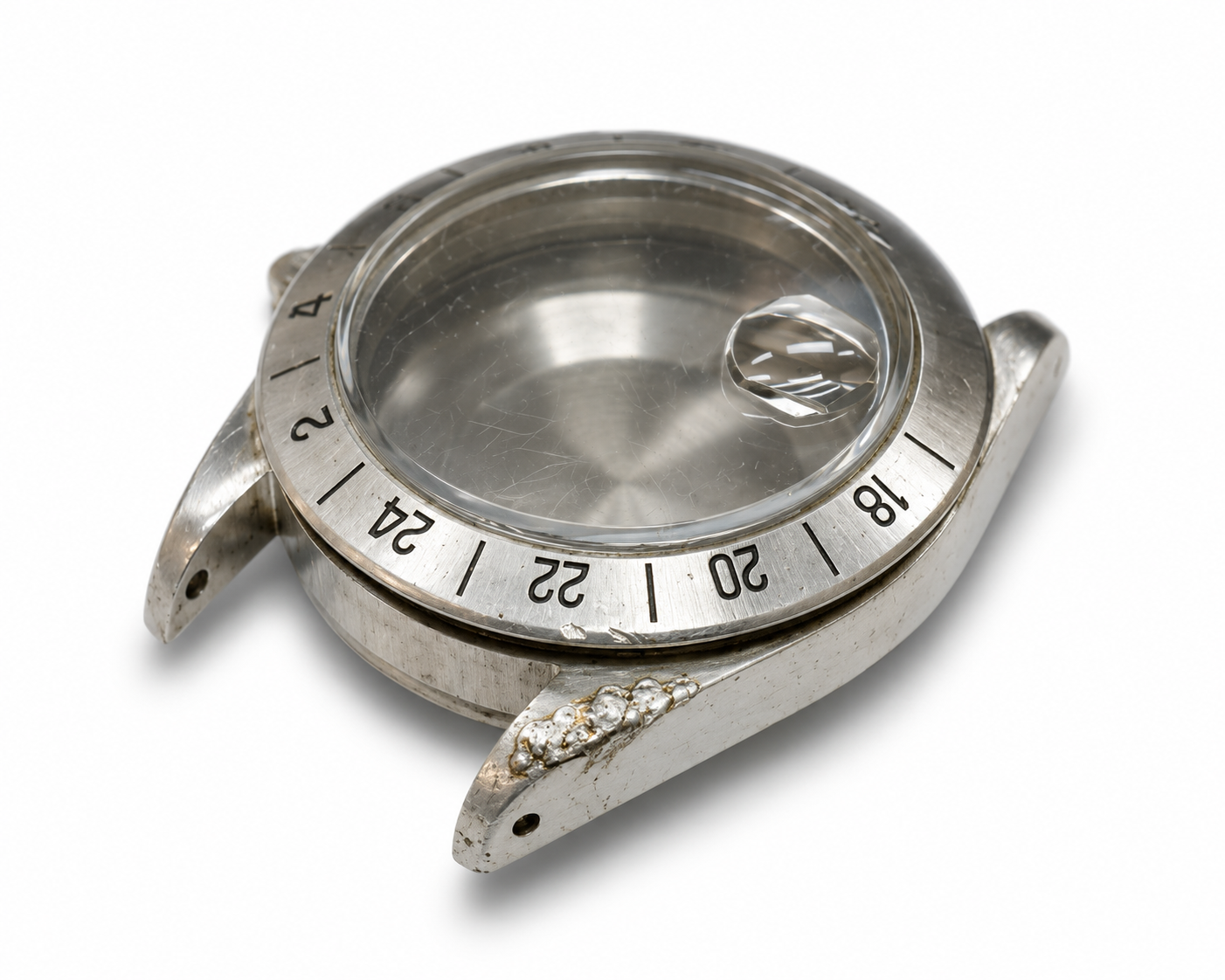
| Chipped lug tips or worn chamfers | Laser buildup and precision reshaping | Restores metal where an edge has been lost |
| Cracks near crown tubes or sealing surfaces | Specialist structural assessment | Appearance alone cannot establish integrity |
A scratch catching a fingernail is a useful warning, not a reliable depth measurement. Examine the mark under magnification and compare the damaged surface with an undamaged side. If polishing would noticeably reduce lug thickness or erase a sharp boundary, additive repair may be preferable.
Do not assume every case should be restored. Advanced corrosion, severe distortion, unidentified alloys, or damage affecting pressure-sealing surfaces may require a replacement component. On collectible vintage watches, original wear and unpolished edges may be worth preserving; discuss the proposed restoration before removing or adding metal. If you are comparing equipment for small watch parts, a permanent jewelry welder supplier can explain which YAG settings suit thin edges.
Which Watch Case Metals Can Be Repaired With Laser Welding?
Many solid-metal watch cases can be repaired with an appropriate precision laser from a handheld laser welder supplier, but filler selection and process settings depend on the actual alloy, not merely its color.
- Stainless steel: 316L and 904L cases are established candidates for localized buildup. Identify the grade and choose compatible filler; do not assume all stainless wires are interchangeable.
- Titanium: Repair may be possible, but hot titanium is highly sensitive to oxygen and nitrogen contamination. Adequate inert-gas shielding and qualified procedures are particularly important.
- Gold alloys: Yellow, white, and rose gold require attention to karat, alloy composition, filler color, and cracking behavior. Matching color alone does not guarantee matching weld properties.
- Platinum: Suitable systems can rebuild local wear, although the filler, heat input, and finishing method must be validated for the alloy.
- Silver: Its high reflectivity and thermal conductivity make welding more challenging; assess whether the particular case and equipment are suitable.
Plated, gold-filled, PVD-coated, and DLC-coated cases require separate evaluation. The laser may damage or remove the surface layer, and welding cannot recreate that coating by itself. Some coated cases are better referred for specialist refinishing or part replacement.
How to Prepare and Protect a Watch Case Before Laser Welding
Preparation starts with documentation, not the laser trigger.
Record the original shape. Photograph the case from multiple angles. Note the lug profile, chamfer width, brushed grain direction, polished sections, hallmarks, crown tube, and gasket seats. Measure important dimensions where possible; these references guide the final reshaping.
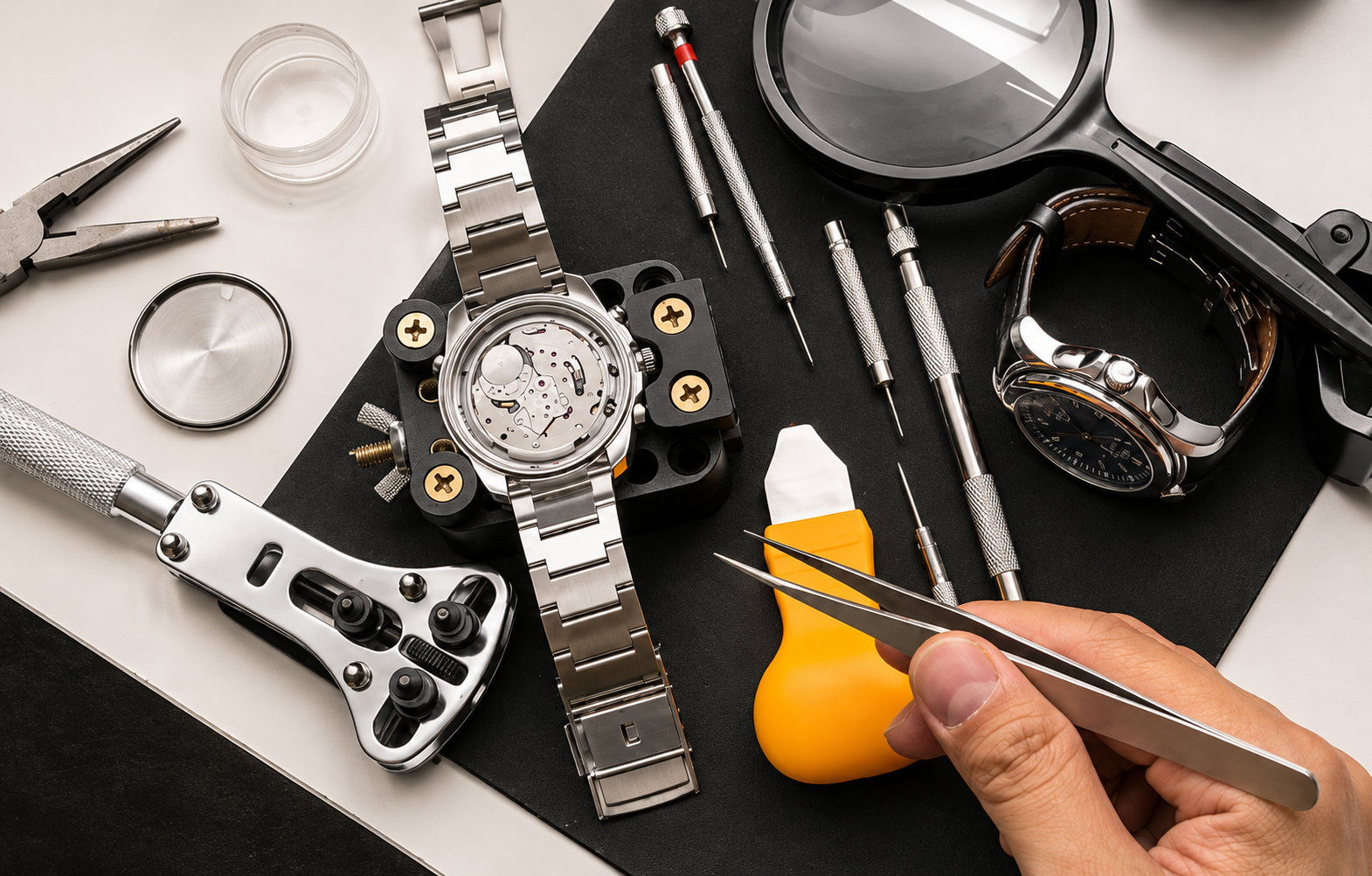
Disassemble appropriately. For professional case refurbishment, a qualified watchmaker should remove the movement and evaluate the removal of the dial, hands, crystal, seals, crown components, and other heat-sensitive parts. Working on an assembled watch risks contamination and damage to components that were never intended to be near a welding process.
Clean and expose sound metal. Remove oil, polishing compound, oxidation, loose material, and unsuitable coatings from the repair area using methods compatible with the case. An ultrasonic bath may be appropriate for selected disassembled metal parts, not automatically for a complete watch.
Fixture the case securely. Support the repair without marking the original finish or blocking the welding head. Protect adjacent surfaces using materials approved for the laser system; reflective fixtures and unsuitable masking can introduce new beam hazards.
Finally, confirm the workstation’s laser enclosure, interlocks, suitable protective measures, and fume extraction. Only trained personnel should operate the equipment. If your bench also handles silver jewelry, compare a sterling silver laser welder supplier that understands reflective, heat-conductive metals.
What Laser Welder, Filler Wire and Settings Are Needed?
Watch case restoration calls for precise, controllable metal deposition, not the high-power continuous welding used for thick industrial sheet metal.
A suitable pulsed Nd:YAG or QCW machine from a jewelry laser welder supplier should offer controllable pulse energy and duration, adjustable spot size, clear microscope or camera viewing, stable positioning, and compatible shielding-gas delivery. Evaluate the machine’s actual welds rather than judging it by average wattage alone.
Choose filler wire according to base-metal composition, repair requirements, and the desired finish. Very fine wire can help rebuild small defects: A. Lange & Söhne describes using 0.1 mm precious-metal wire for selected case repairs. That diameter is an example of a specific restoration practice, not a universal recommendation for steel, titanium, and every precious-metal alloy.
For settings, begin with an approved machine-specific procedure and trial welds on matching material. Assess how pulse energy, duration, focus, spot size, and overlap affect fusion and buildup. A smaller spot increases energy concentration and may cause cratering if used incorrectly. Use suitable argon shielding where the alloy and process require it, particularly for titanium.
For workshops comparing equipment, the MaxWave QCW jewelry laser welder offers adjustable precision-welding configurations. Ask for a sample test on your specific watch-case alloy before assuming it can reproduce a particular finish or repair.
How to Laser Weld Deep Watch Case Scratches and Dents Step by Step
The following is a professional workflow overview, not a universal parameter recipe.
Step 1 — Assess the defect. Inspect its depth, extent, and proximity to threads, gasket grooves, engravings, and thin case walls. Confirm that enough sound metal remains for repair and that the proposed restoration will not compromise the case’s function.
Step 2 — Prepare the repair site. Remove contamination and damaged material only as necessary. Preserve original metal around the defect. Align and secure any separated edges using appropriate tooling.
Step 3 — Validate the welding process. On representative scrap of the same alloy, confirm fusion, filler compatibility, and the effect of each pulse. Change one setting at a time. Do not copy parameters intended for 1,000–3,000 W industrial handheld welders. For delicate case work, compare a jewelry repair laser welding supplier before choosing equipment.
Step 4 — Build up compatible metal. Under magnification, fuse small additions of filler into the sound parent metal. Work progressively across the damaged area, adapting the sequence to the defect geometry. Avoid large deposits or prolonged heating in one location. The aim is a sound buildup that leaves a modest allowance for reshaping.
Step 5 — Inspect between passes. Watch for cracks, pinholes, spatter, lack of fusion, or an unstable molten pool. Correct defects before concealing them with another layer; internal voids often become visible after grinding.
Step 6 — Release the case for finishing. Once the repair has cooled and passed inspection, confirm that adjacent functional features remain undistorted. If the repair affects a structural or sealing area, additional assessment may be needed before reassembly.
How to Restore Watch Case Edges and Finish After Laser Welding
The weld replaces lost metal; careful finishing restores the watch’s appearance. Removing too much of the deposit can undo the benefit of laser repair.
First, use fine files, shaped stones, or controlled abrasive tools to bring the added metal close to the original profile. Compare lug thickness, corner radii, planes, and chamfers with the documented reference. Establish the geometry before using a soft polishing wheel, which can round sharp edges.
Next, restore each surface finish separately:
- Mirror polish: Progress through suitable abrasives and polish only the intended reflective surfaces.
- Brushed or satin: Match the original grain direction and texture.
- Mixed finishes: Protect transitions between polished chamfers and brushed flats.
- Coated finishes: Arrange compatible recoating where needed; welding alone will not restore plating or PVD/DLC layers.
Inspect under angled light and magnification for pits, mismatched color, softened corners, or uneven grain. A repair can be structurally sound yet visually unacceptable.
A qualified watchmaker should then clean the components, inspect or replace seals as appropriate, reassemble the watch, and test its water resistance to the applicable requirement. A smooth weld does not establish that a watch remains waterproof.
Laser Welding vs Polishing: Which Is Better for Watch Case Restoration?
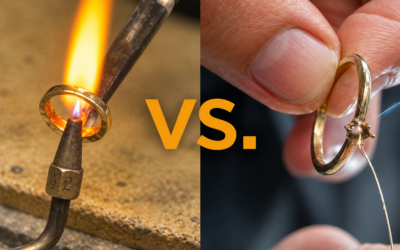
The difference is simple: polishing removes material; laser welding adds compatible metal before finishing.
| Situation | Better starting approach |
|---|---|
| Light surface wear | Conservative polishing or brushing |
| Deep gouge on a broad metal surface | Evaluate laser filling before refinishing |
| Chipped edge or damaged chamfer | Laser buildup with precision reshaping |
| Unidentified alloy, delicate coating, or critical crack | Specialist assessment, not an automatic laser repair |
Laser welding can preserve more original metal when a deep defect would otherwise require aggressive polishing. But it costs more, requires specialist skill, and may still produce visible differences in color or finish. It cannot repair every structural problem.
For historically important or collectible watche
FAQ: Laser Welding Watch Case Repair Questions
Can deep scratches on a watch case be removed?
Often, yes. Light scratches can usually be reduced by careful polishing. Deep scratches that would require excessive metal removal may be filled by laser welding, then reshaped and refinished. The result depends on alloy identification, damage depth, filler compatibility, and the original surface finish. When choosing equipment for this work, ask a laser welding machine supplier which metals and thicknesses each power level can handle.
Can laser welding fix a dented or chipped watch lug?
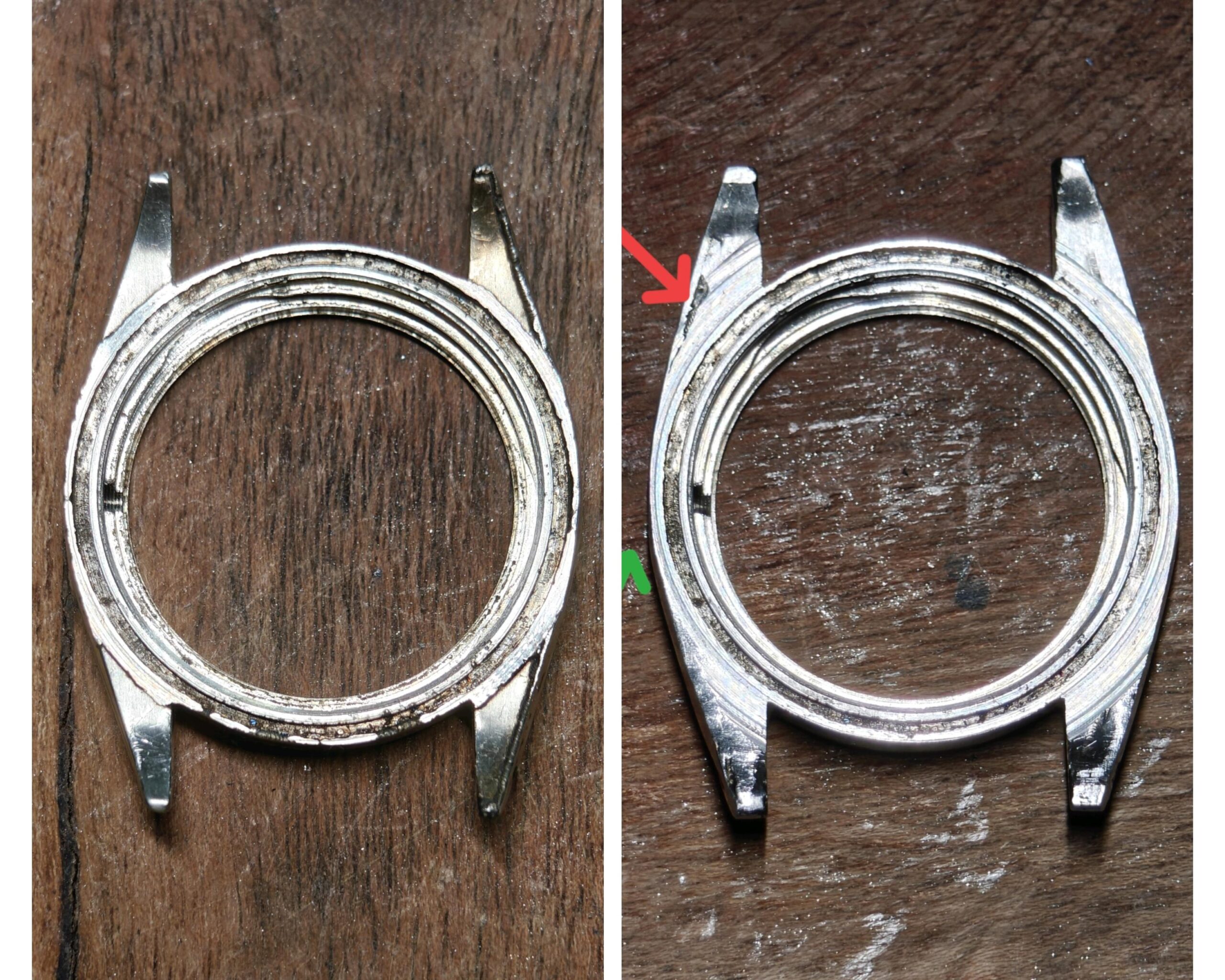
Localized dents or missing metal may be suitable for laser buildup. However, bent, cracked, or weakened lugs need a structural assessment before cosmetic work. A repaired lug must still hold the strap or bracelet securely, and the original dimensions should be checked after finishing.
Is laser welding safe for the watch movement?
Professional case restoration generally separates the movement from the case before welding and refinishing. This protects sensitive components from heat, debris, and subsequent cleaning. A localized laser spot should not be taken as permission to weld an assembled watch.
Will the watch remain waterproof after repair?
Not automatically. Case distortion, worn seals, or damage to a crown tube, crystal seat, or caseback interface can affect sealing. After relevant repairs, a qualified watchmaker should reassemble the case with appropriate seals and perform the required water-resistance test.
Can laser welding make a watch case look new?
It can produce impressive results, especially on solid-metal cases with local metal loss. Still, perfect invisibility is not guaranteed. Alloy color, plating, finish matching, original dimensions, and previous repairs all influence the outcome. Some owners may prefer to retain original wear.
Final Takeaway
Deep watch-case damage often needs metal added back, not more material polished away. Successful laser restoration combines accurate alloy identification, controlled filler deposition, careful reshaping, and appropriate post-repair testing.
If your workshop is evaluating precision welding equipment, get to know MaxWave as a laser welder manufacturer, then request a sample test using your own case material and a representative defect before purchasing.

0 Comments