
TOPCon / PERC SOLAR CELLS | AUTOMATED STRINGING
CTM-15 Solar Cell Tabber Stringer Machine — From Single Cells to Finished Strings
-
Cell Compatibility: TOPCon / PERC · 166–210 mm Half-Cells
-
Automated Stringing: 1,100 Half-Cells/h · Continuous Production
-
CCD Vision Alignment: Precise Positioning · Automatic NG Sorting
-
Infrared Soldering: Controlled Preheating · Dual-Sided Heating
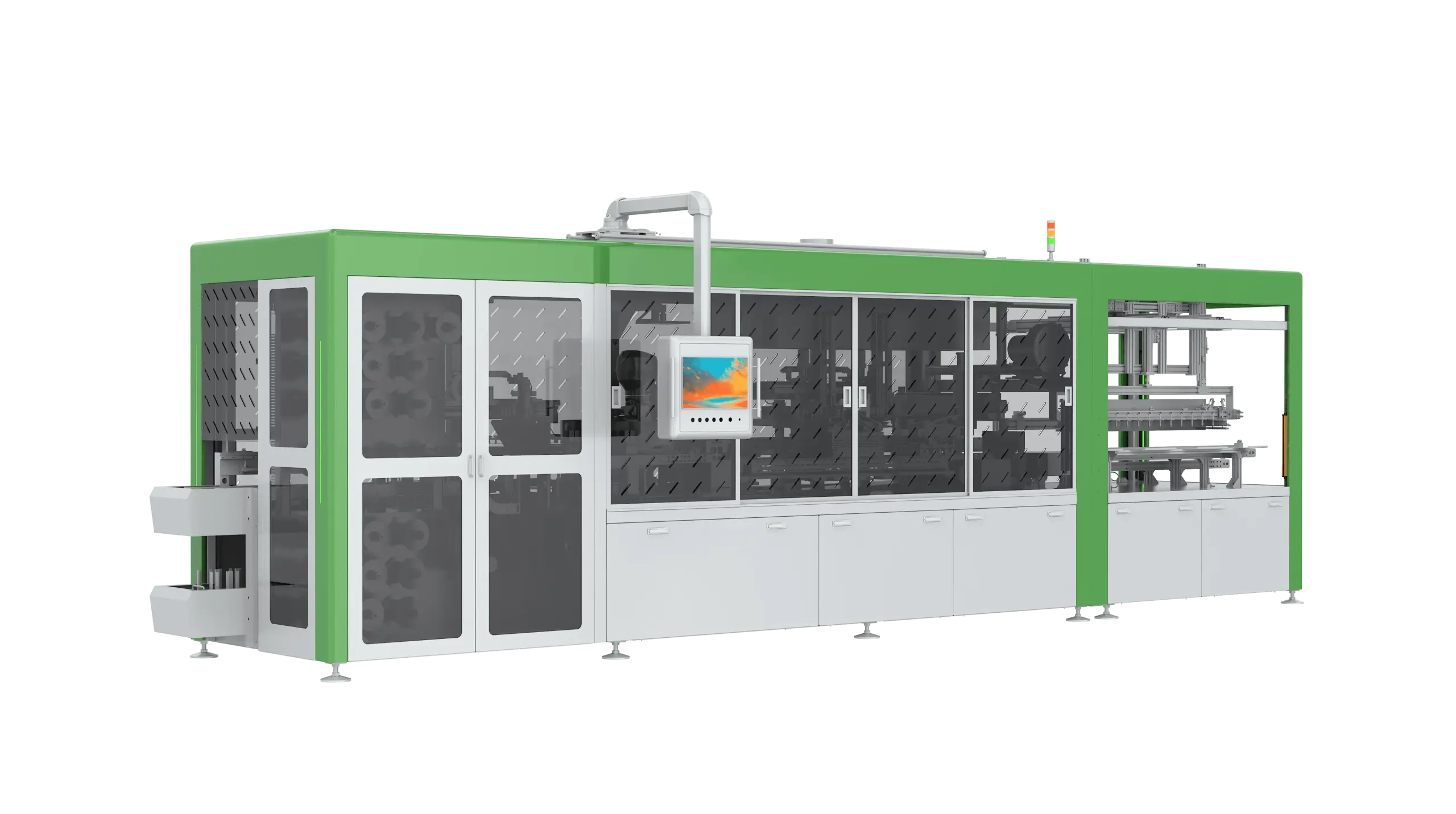
From Solar Cells to Finished Strings — How the CTM-15 Works
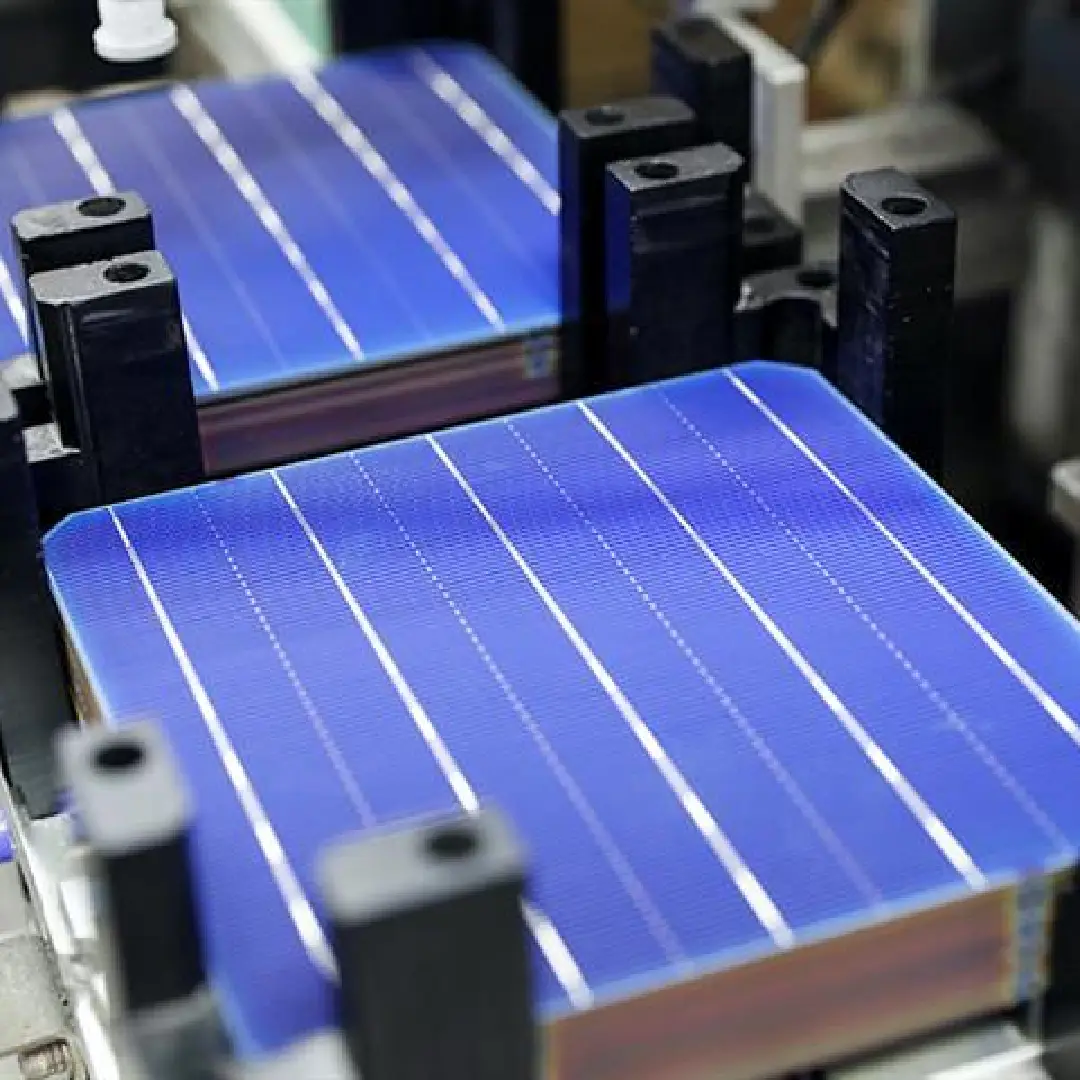
01
Solar Cell Feeding
TOPCon and PERC cells are automatically fed into the stringing system.
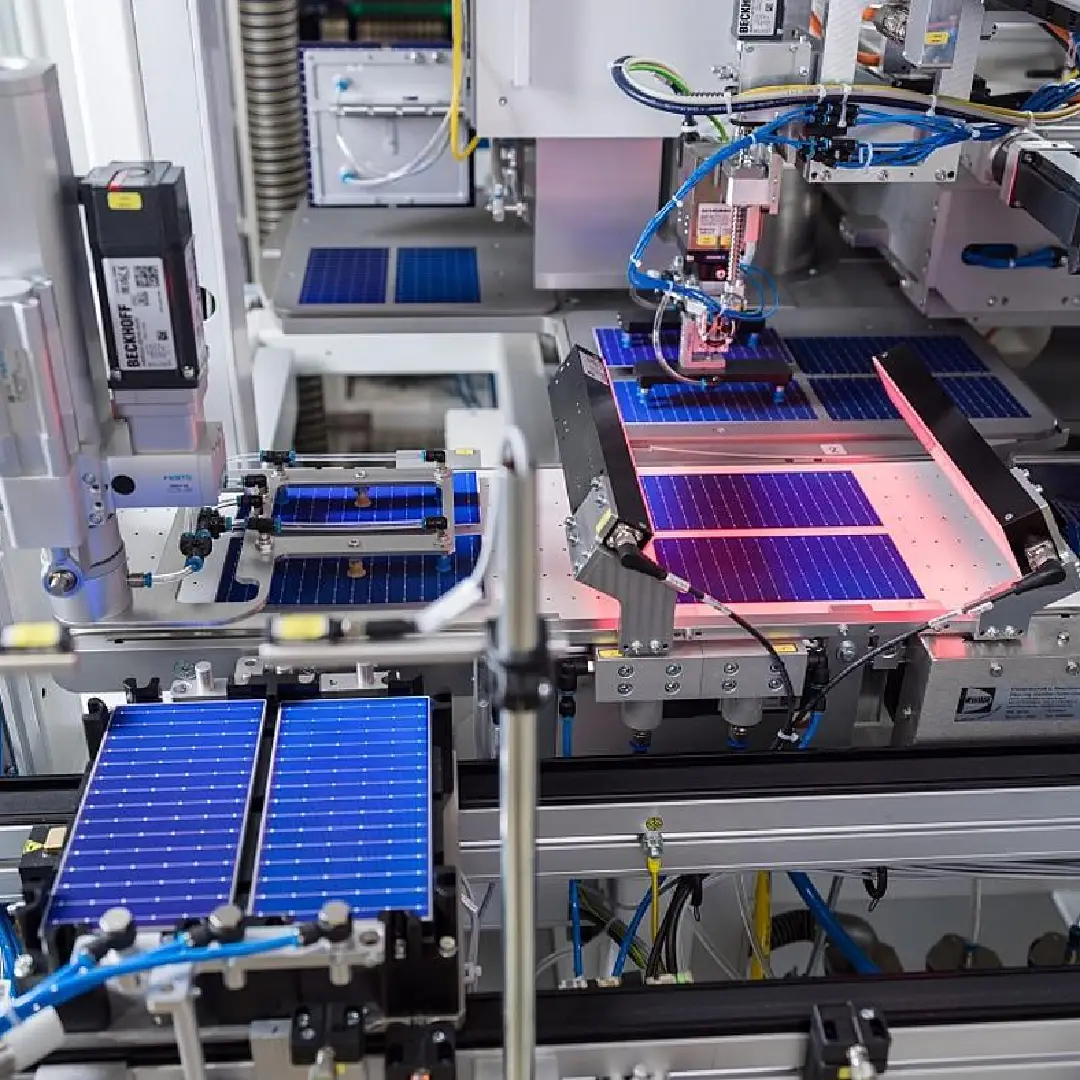
02
Automatic Cell Stringing
CCD alignment and infrared soldering connect cells with solder ribbons.
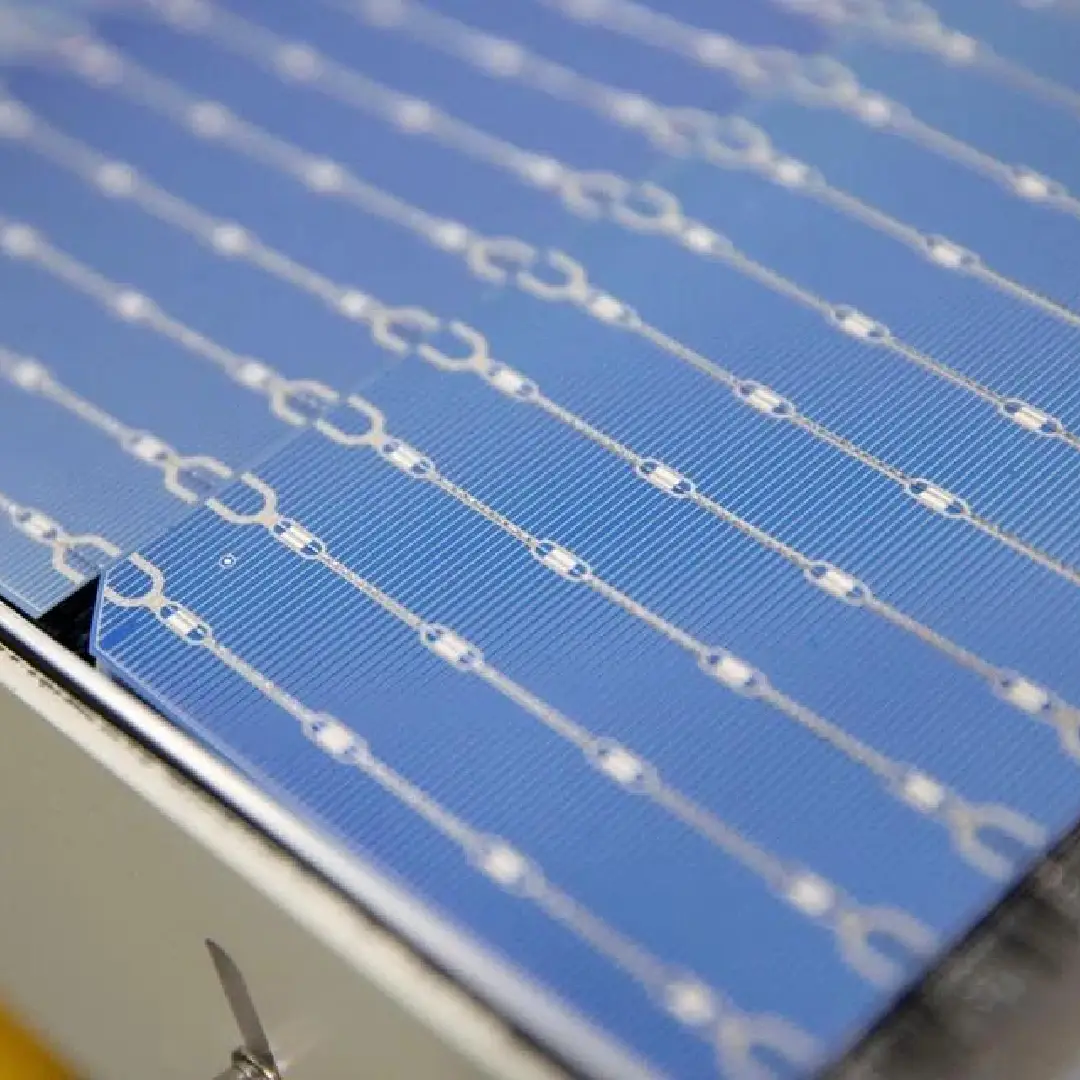
03
Finished Solar Cell Strings
Connected cell strings are transferred for inspection or module layup.
What Can the CTM-15 Solar Cell Tabber Stringer Machine Automate?
Solar Cell Stringing Samples & Finished Strings
Explore finished solar cell strings, half-cut and third-cut cell formats, and multi-busbar ribbon connections supported by the CTM-15 solar cell tabber stringer machine. Actual string configurations depend on cell specifications, busbar layouts, and matching tooling.
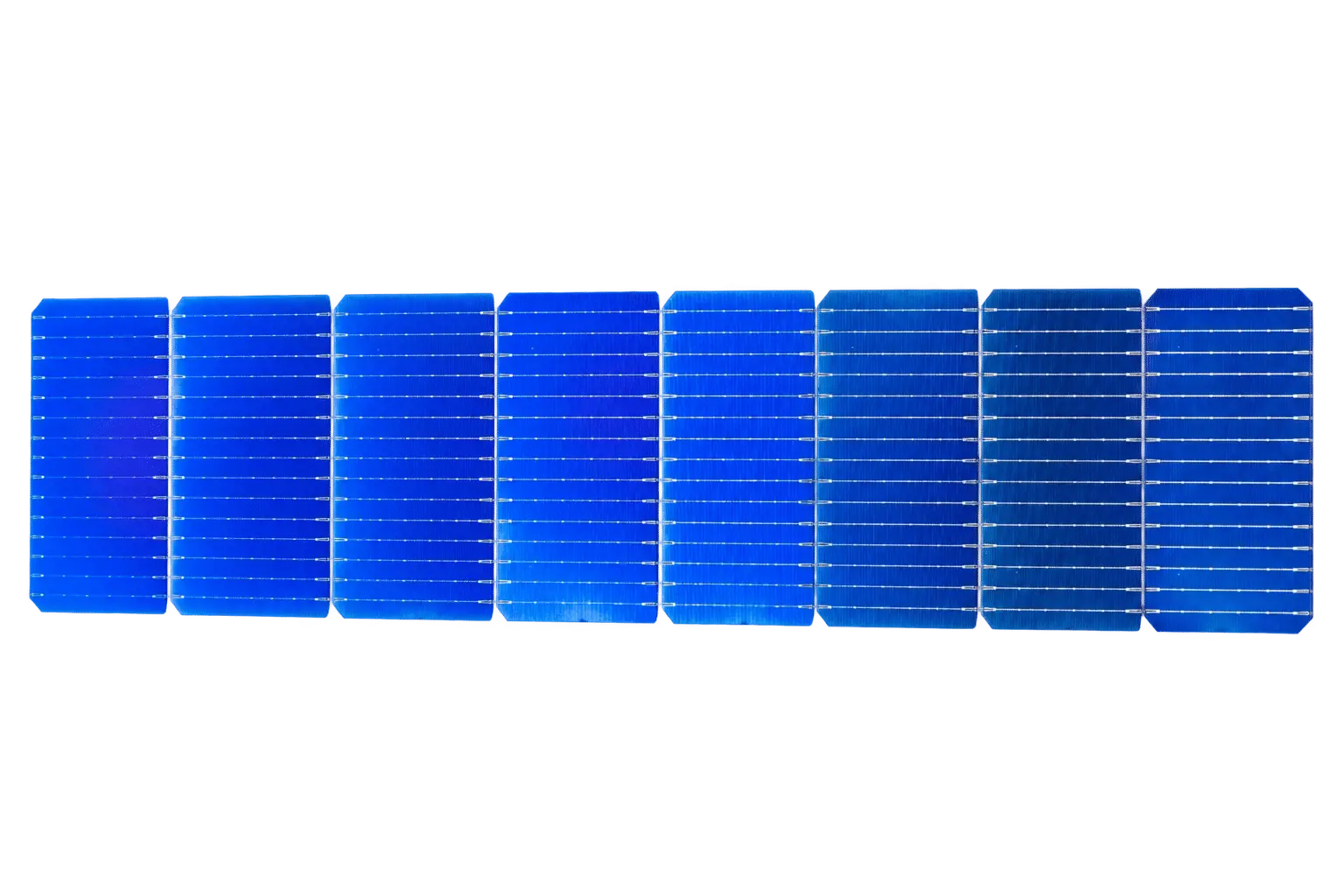
SAMPLE 01
Complete Solar Cell Strings
CONNECTED CELLS · FULL-STRING VIEW
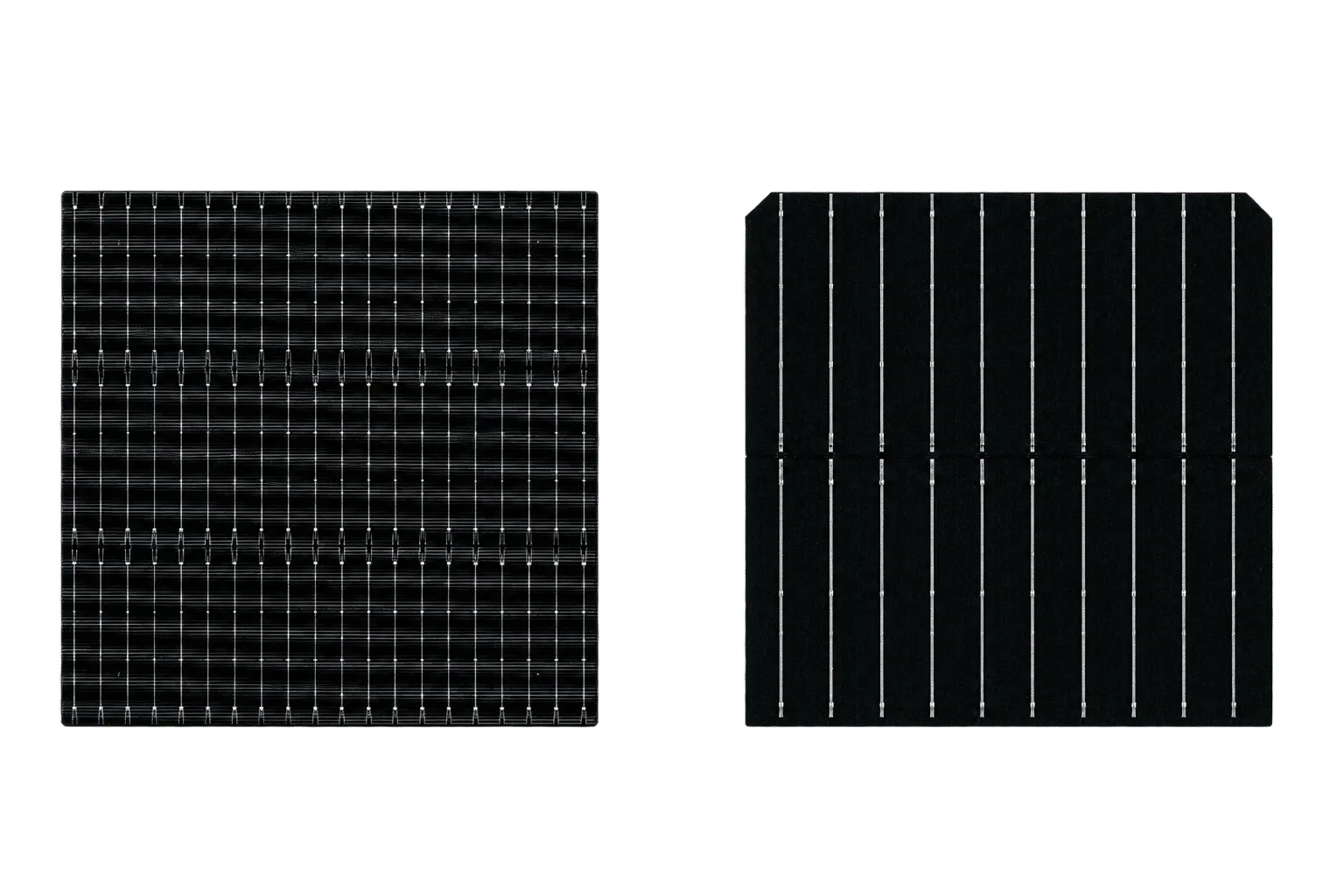
SAMPLE 02
Half-Cut vs. Third-Cut Cells
1/2-CUT · 1/3-CUT · CELL FORMAT

SAMPLE 03
Multi-Busbar Ribbon Connections
MULTI-BUSBAR · SOLDER RIBBONS · CONNECTION DETAIL
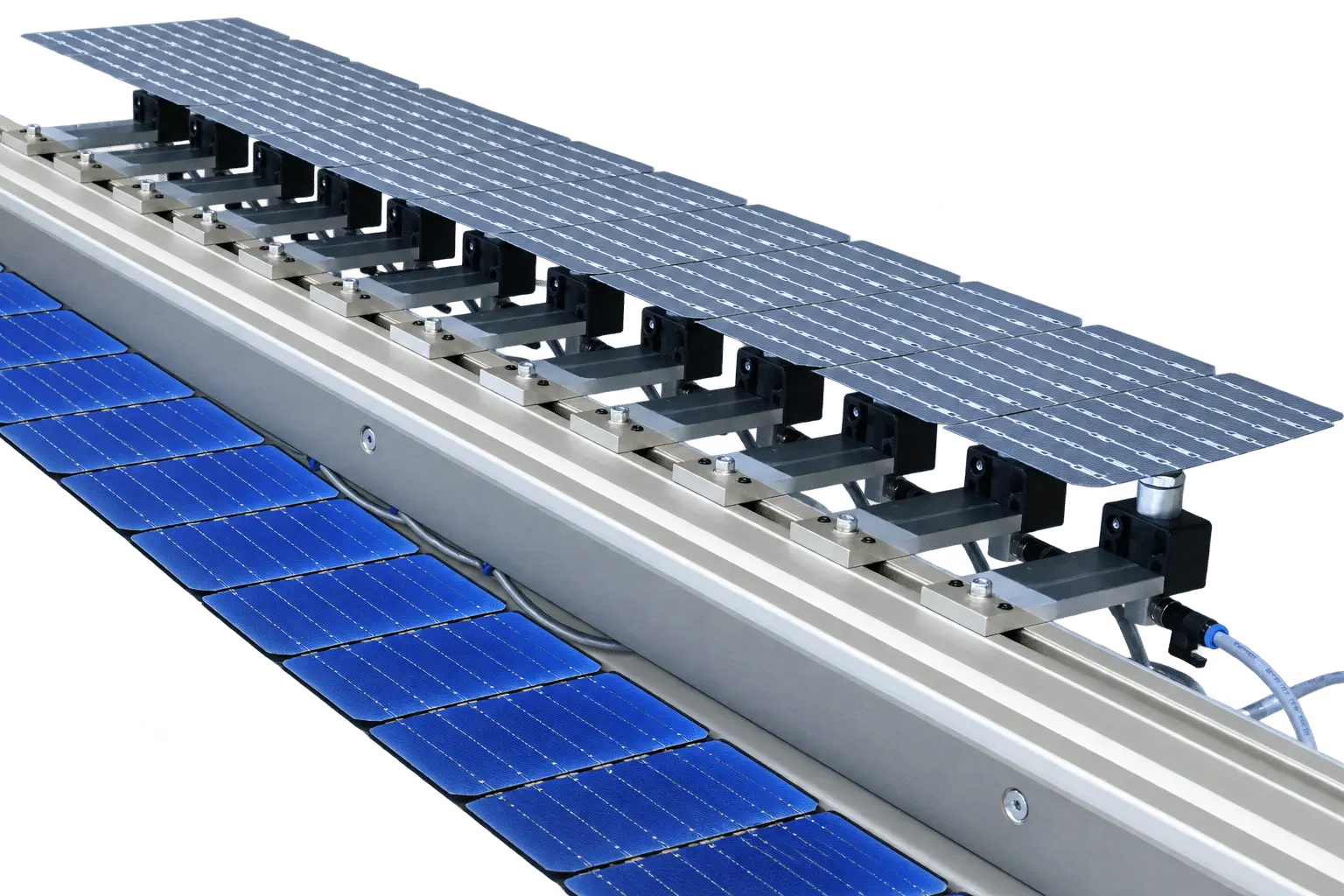
SAMPLE 04
Cell Strings for Module Layup
STRING HANDLING · DOWNSTREAM PRODUCTION
Where the CTM-15 Solar Cell Tabber Stringer Machine Fits
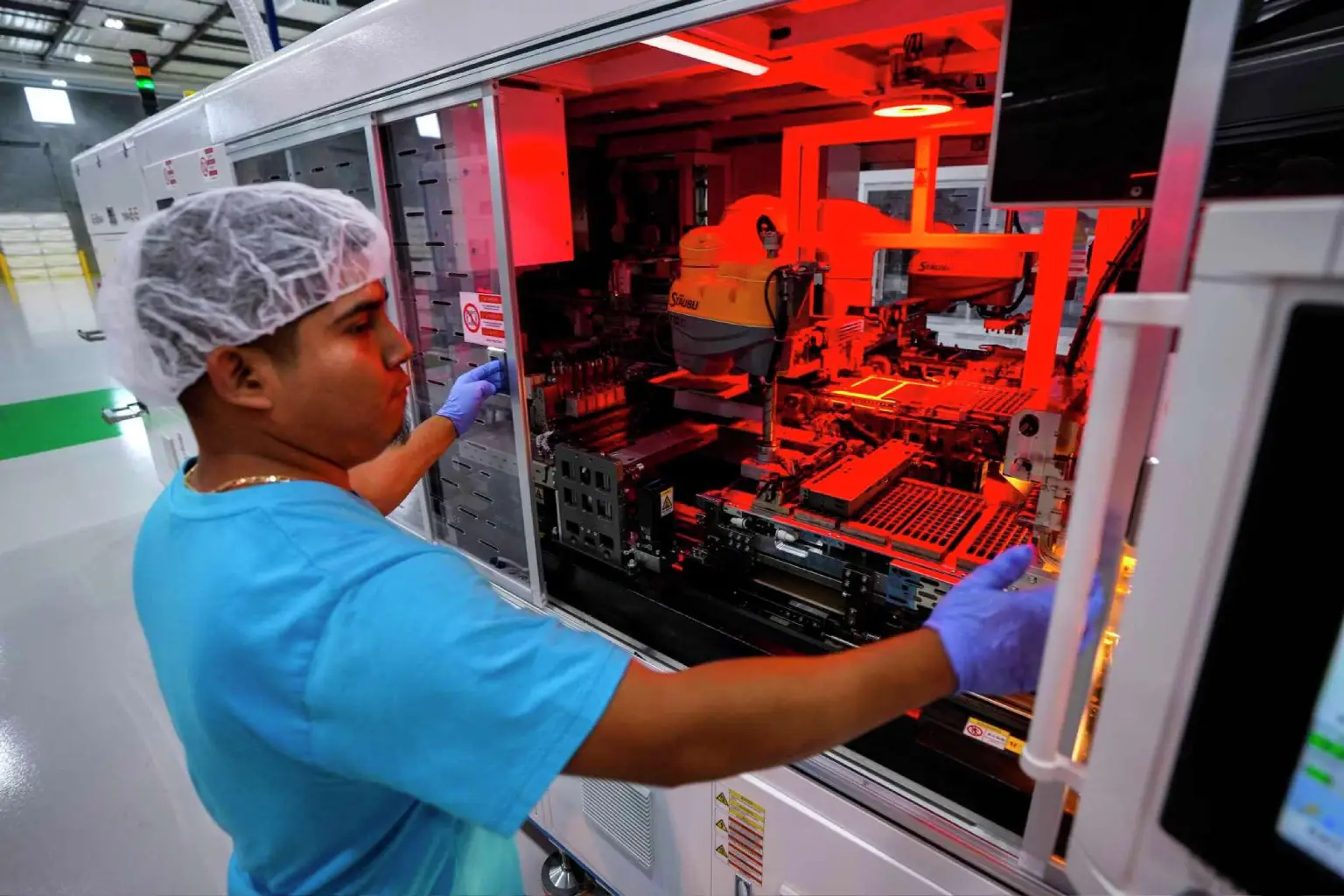
Solar Module Manufacturing
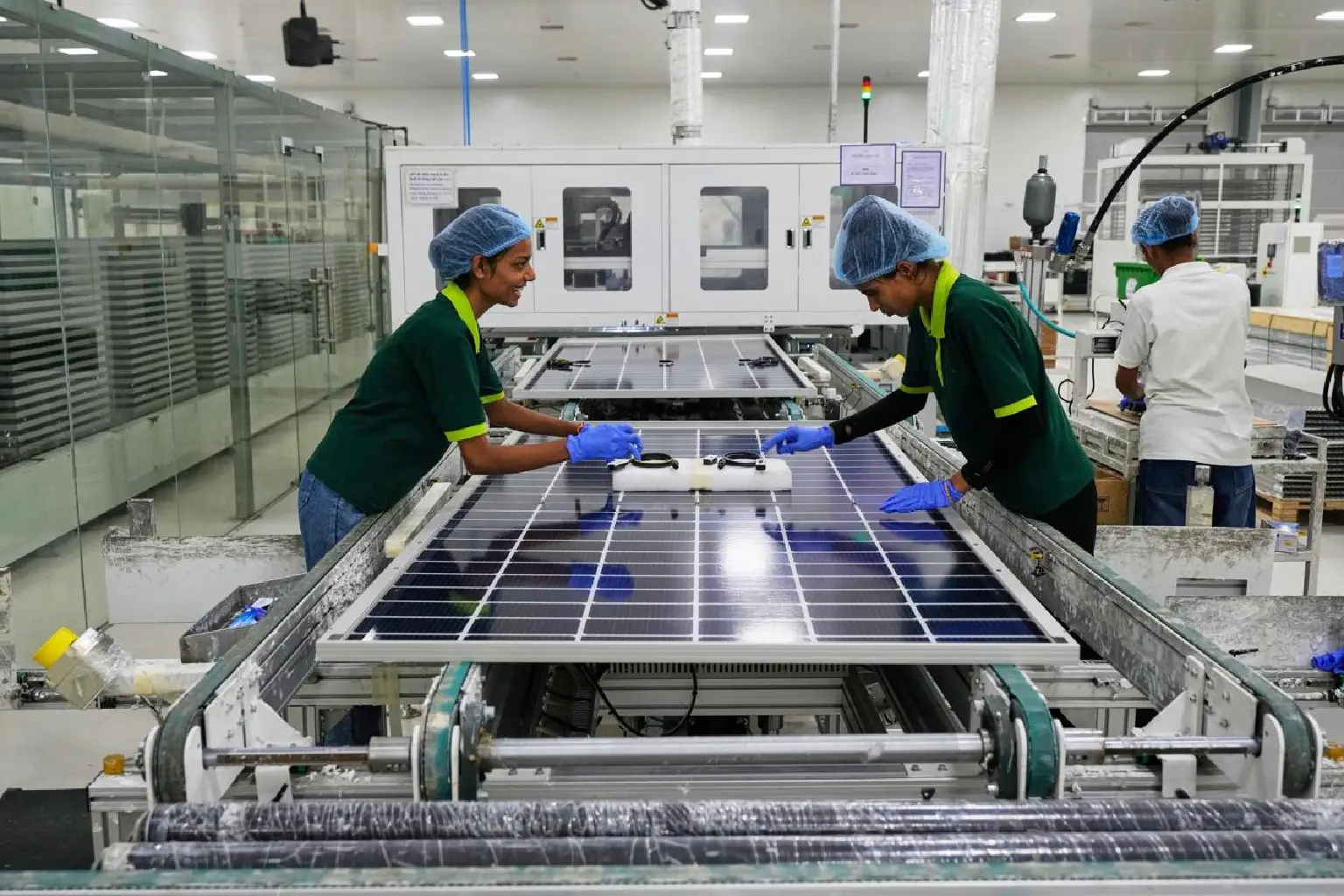
Solar Module OEM & ODM Production
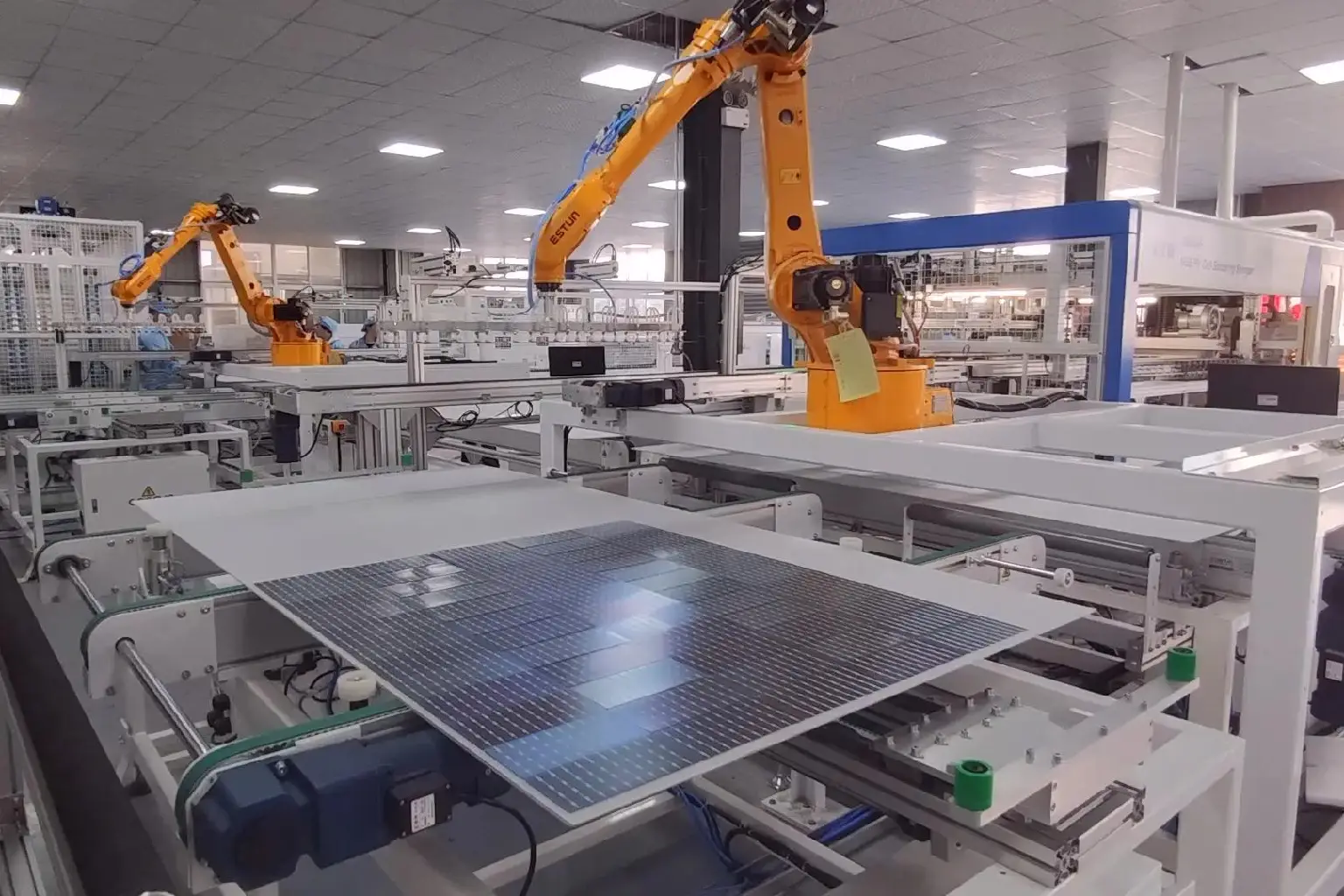
PV Production Line Integration
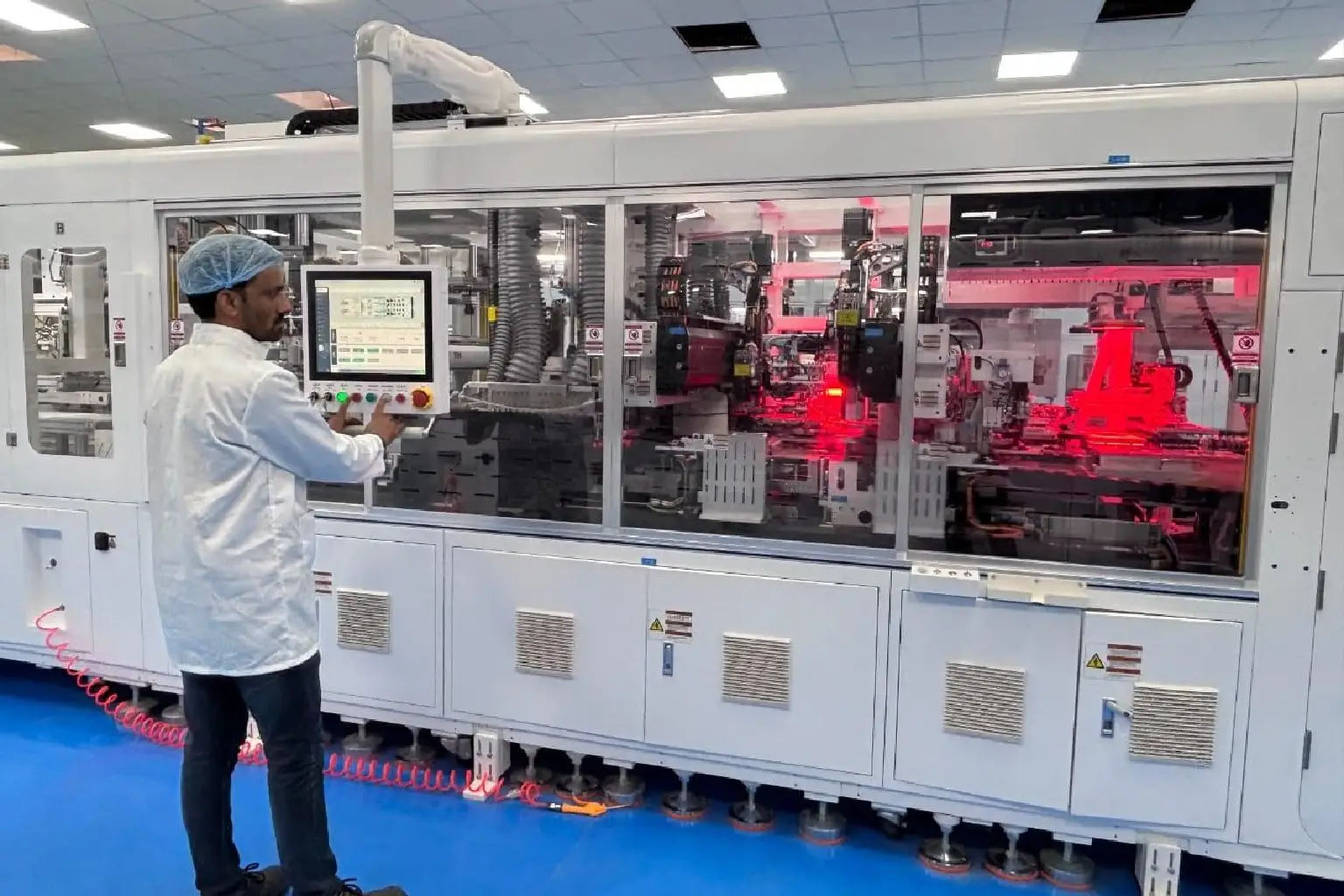
Solar Factory Automation Upgrades
CORE SYSTEM ADVANTAGES
How the CTM-15 Streamlines Solar Cell Stringing
The CTM-15 solar cell tabber stringer machine integrates automatic cell feeding, precise ribbon placement, and finished-string handling. These systems help reduce manual intervention, maintain ribbon alignment, and simplify production flow for TOPCon/PERC solar module manufacturing.
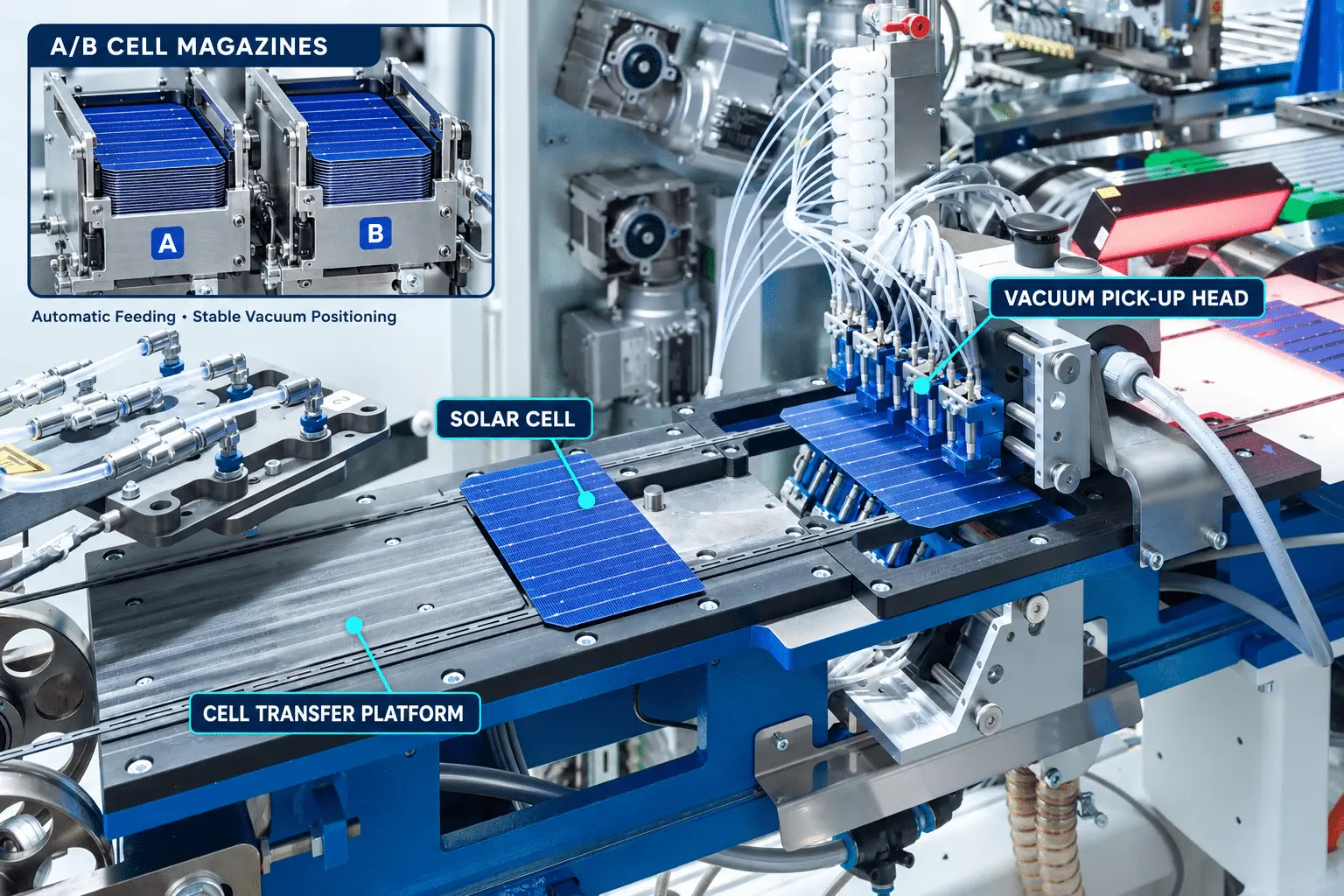
Reduce Manual Cell Handling During Feeding
The CTM-15 uses industrial CCD cameras to detect visible cell defects, including chipped edges, cracks, and printing offsets. Defective cells are automatically separated before soldering, while qualified cells are positioned for stringing. This helps reduce avoidable material waste and rework, giving operators a more controlled and predictable production process.
CELL HOLDING Vacuum-Assisted Positioning
OPERATOR BENEFIT Less Manual Cell Placement
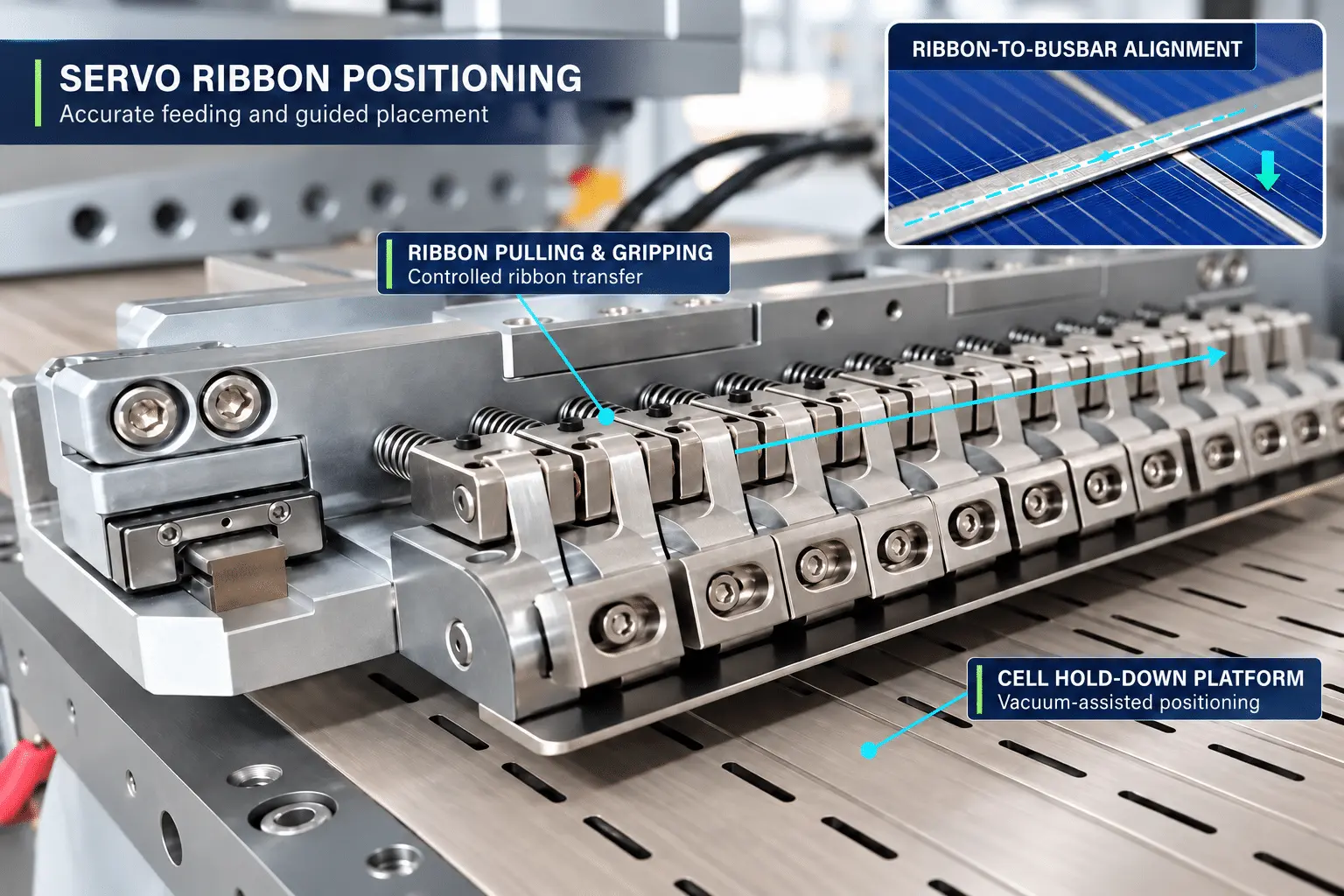
Reduce Ribbon Misalignment Before Soldering
POSITIONING ±0.02 mm Ribbon Pulling Module
BUSBAR SUPPORT 3BB–20BB · Matching Tooling
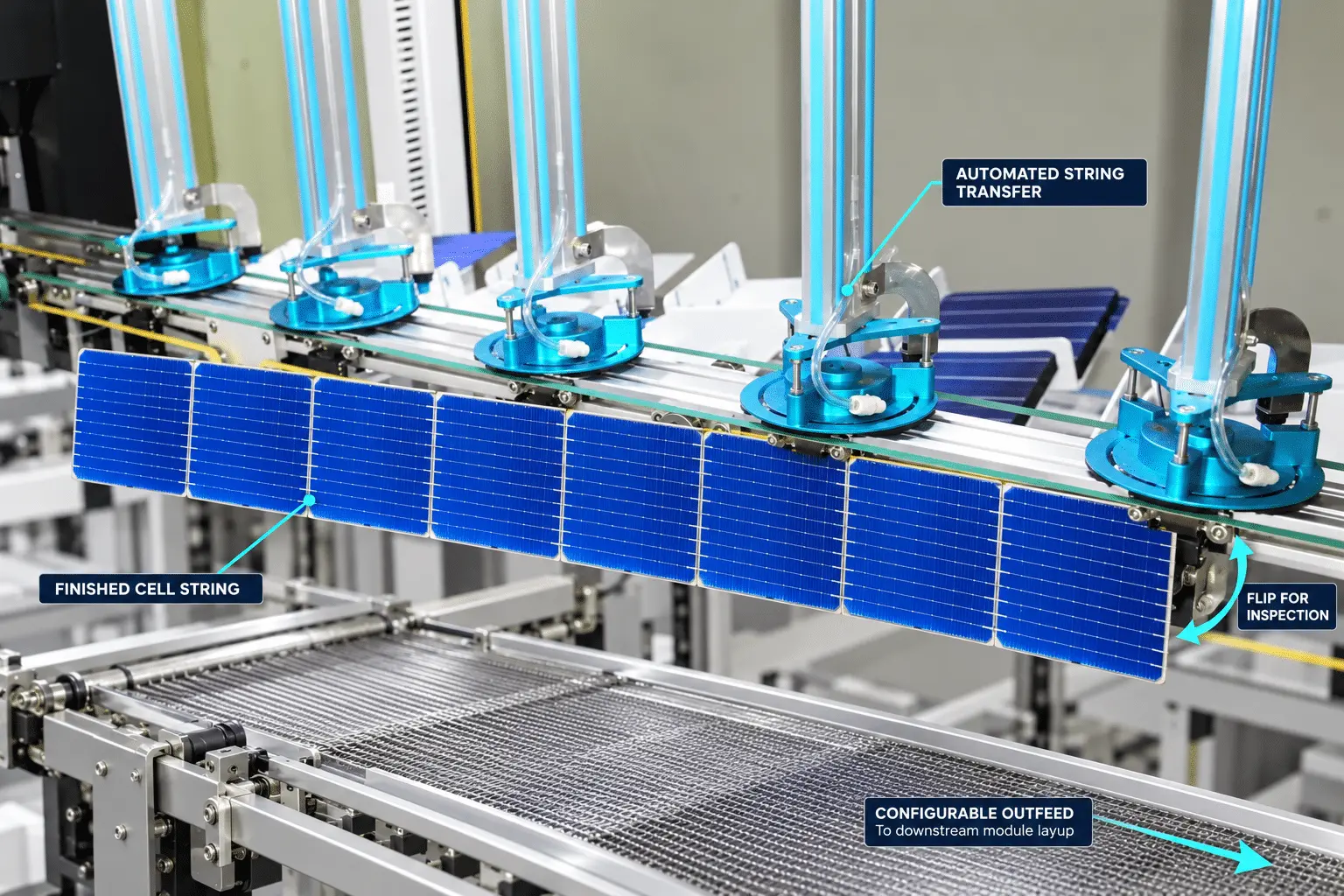
Simplify Finished-String Inspection and Transfer
INSPECTION MODE Automatic Flipping · Visual Checks
OUTPUT CONNECTION Layup Interface · NG Collection
STRINGING QUALITY CONTROL
Two Critical Controls for Reliable Solar Cell Stringing
The CTM-15 combines CCD vision inspection before soldering with controlled infrared heating during string formation. These systems help reduce defective cell processing, soldering defects, and thermal stress in TOPCon/PERC solar cell stringing.
01 · BEFORE SOLDERING
CCD Vision Inspection
Screen visible cell defects and separate rejected cells before soldering.
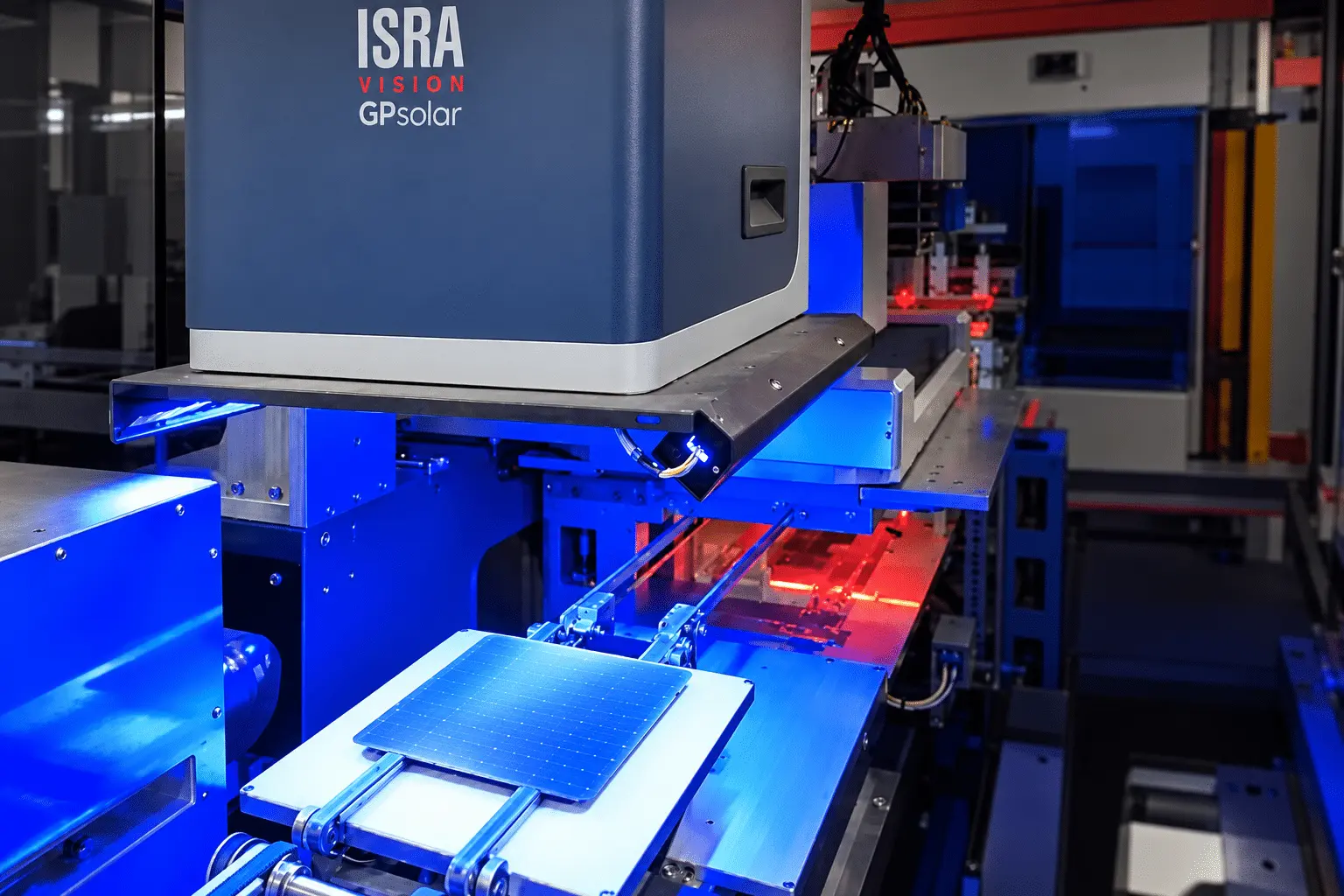
Visible Defect Detection
Identify chipped edges, cracks, and printing offsets.
Automatic NG Rejection
Separate rejected cells before soldering.
Precision Cell Placement
Position qualified cells for ribbon alignment.
02 · DURING SOLDERING
Controlled Infrared Soldering
Control heating to reduce weak joints and thermal stress.
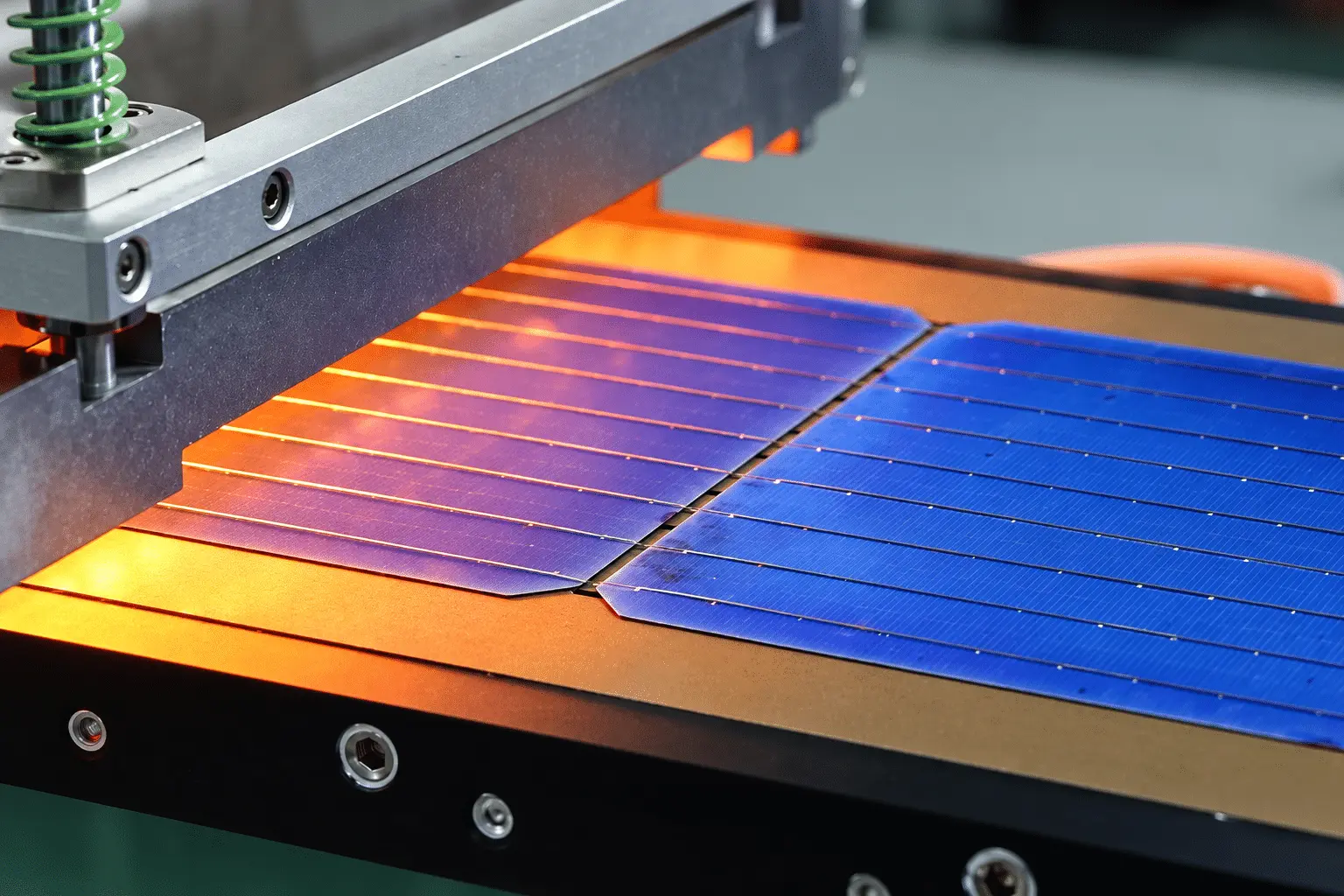
Adjustable Preheating
Prepare cells for a controlled soldering cycle.
Dual-Sided IR Heating
Heat both sides for ribbon-to-cell connections.
Temperature Monitoring
Sensor-based control with ±7.5°C accuracy.
1. Inspect Cells
Screen defects and reject NG cells.
2. Align Ribbons
Position ribbons on cell busbars.
3. Solder Strings
Connect cells through controlled IR heating.
CTM-15 vs CTM-15BC: Choose the Right Solar Cell Stringer
Compare the CTM-15 for TOPCon/PERC cells and the CTM-15BC for back-contact solar cells. Choose the right solar cell stringer machine based on cell technology, supported formats, and production requirements.
MODEL
CELL TECHNOLOGY
SUPPORTED CELL FORMATS
REFERENCE CAPACITY
WHY CHOOSE IT
CTM-15
TOPCon / PERC
166–210 mm · 1/2 & 1/3 Cuts · 3BB–20BB
1,100 Half-Cells/h
Conventional Stringing · Standard-Output Module Lines
CTM-15BC
BC (Back Contact)
166–230 mm · 1/2, 1/3 & 1/4 Cuts · 3BB–20BB
1,200–1,600 Half-Cells/h
BC-Specific Stringing · Cell Warpage Control
PRODUCTION QUALITY & VERIFICATION
Verify Solar Cell String Quality & Production Performance
Share your solar cell specifications, busbar count, solder ribbon dimensions, and target string length. MaxWave will review tooling compatibility, inspection options, and factory requirements to help configure your CTM-15 solar cell tabber stringer machine.
Ribbon Alignment
Check ribbon-to-busbar positioning and solder connection consistency to identify visible alignment issues.
Finished-String Quality
Review cell spacing, string straightness, and solder-joint appearance before module assembly.
Production Performance
Evaluate production throughput and cell breakage under agreed operating conditions.
Quality Inspection
Confirm visual inspection requirements and whether optional EL inspection is needed.
PACKAGE & CONFIGURATION
What’s Included in Your Battery Sorting System?
Explore the main equipment, routine maintenance requirements, and configuration details for your cylindrical battery sorting line.
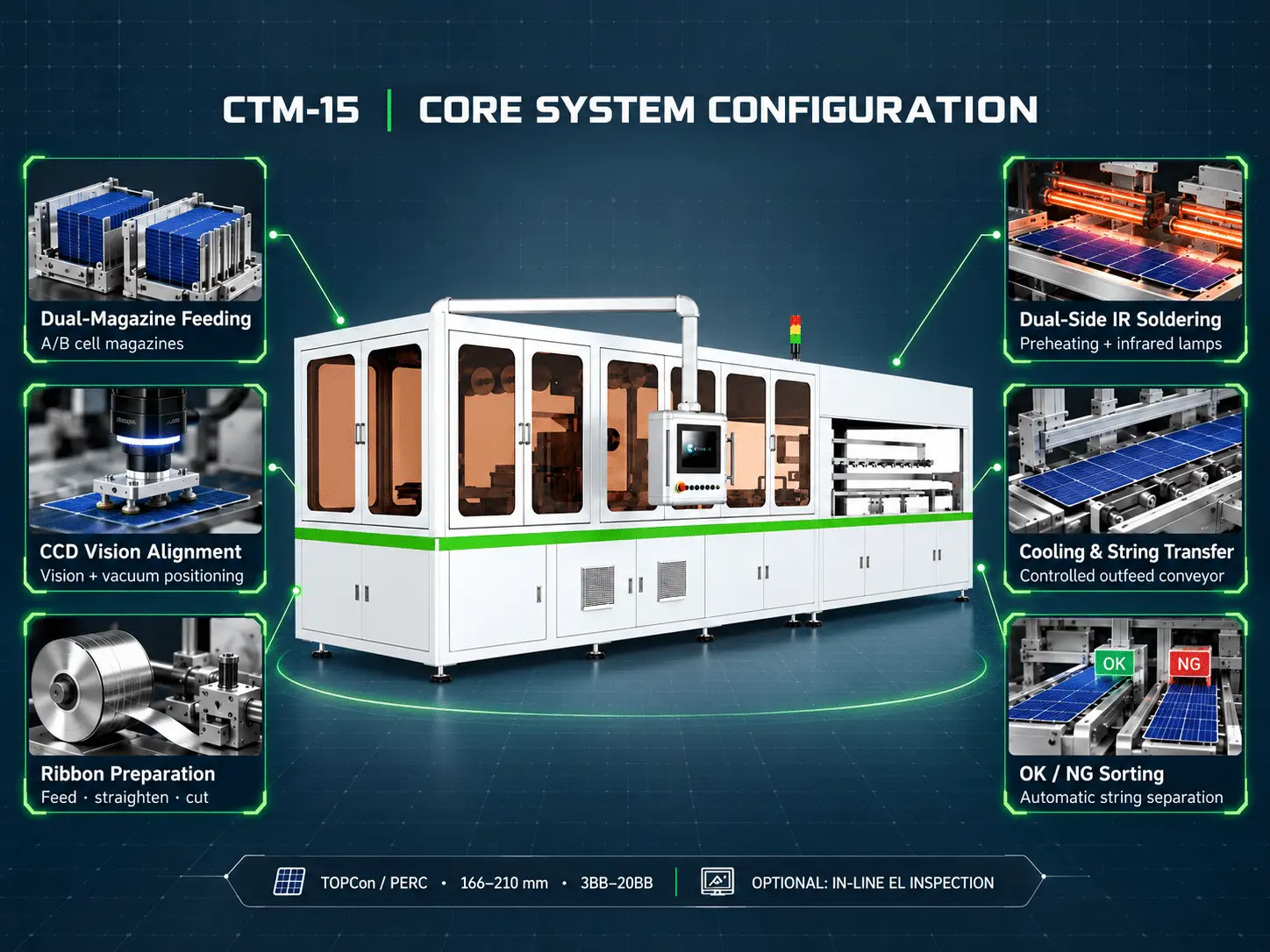
01 Core Equipment
Dual A/B cell magazines and automatic transfer mechanisms move solar cells into the stringing process.
CCD Vision Inspection & Alignment
Industrial cameras inspect cell defects and align qualified cells before soldering.
Ribbon Feeding & Preparation
Automatic ribbon unwinding, flux coating, straightening, bending, and cutting prepare ribbons for precise placement.
Infrared Soldering System
Preheating and dual-sided infrared heating connect solar cells with solder ribbons.
Finished-String Handling
Automatic transfer and inspection modes support finished-string output and downstream handling.
PLC & HMI Control
Adjust process settings and monitor machine operation through the control interface.
02 Routine Maintenance & Wear Parts
Monitor ribbon reels and replenish flux to maintain continuous operation.
Infrared Lamps & Heating System
Inspect infrared lamps, heating components, and the soldering conveyor for wear or residue.
CCD Cameras & Vacuum Pickup
Keep camera lenses and suction points clean for reliable inspection and cell transfer.
Ribbon Guides & Motion System
Check ribbon guides, moving mechanisms, and pneumatic connections during routine maintenance.
03 Configuration to Confirm
Confirm TOPCon/PERC cell size, half-cut or third-cut format, and matching tooling.
Busbar & Ribbon Configuration
Confirm 3BB–20BB layouts, ribbon dimensions, and required feeder upgrades.
Finished String Length
Confirm the required string length and downstream output connection. Standard maximum length is 2,000 mm, upgradeable to 2,500 mm.
Optional Inline Inspection
Inline string inspection and EL inspection are available as optional configurations.
Factory Installation Requirements
Confirm power supply, compressed air, installation space, and downstream line integration.
MAINTENANCE & OPERATOR CHECKS
Keep Your CTM-15 Solar Cell Stringer Ready for Production
Routine checks focus on OCV/ACIR probes, code scanning, robot gripping, and pallet handling. Proper maintenance helps prevent incorrect readings, cell jams, and unexpected interruptions.
ITEM
DAILY CHECK
PERIODIC INSPECTION
SERVICE WHEN
Cell Magazine & Feeding
Check magazines and remove debris
Inspect guides and transfer mechanisms
Frequent misfeeds or cell breakage
2D Code Scanner
Keep scanner window clean
Check alignment and code recognition
Frequent scanning failures
64-Cell Input Box
Check 8×8 cell positions and remove debris
Inspect box guides and locating surfaces
Cell misalignment or feeding jams
NG Rejection Station
Empty NG collection tray
Check rejection mechanism and sensors
Incorrect rejection or jams
Robot Gripper
Keep gripping surfaces clean
Inspect gripper wear and positioning
Cells slip or placement errors occur
Pallet Conveyor & Lift
Keep conveyor path clear
Check chains, stops and lifting alignment
Pallet jams or positioning errors
Compressed Air System
Check air pressure and leaks
Inspect filters and air connections
Low pressure or pneumatic faults
Maintenance intervals and replacement parts should follow the final equipment manual and operating conditions.
SOLAR CELL STRINGING IN ACTION
See the CTM-15 Solar Cell Tabber Stringer Machine in Action
Watch how the CTM-15 automates solar cell feeding, CCD alignment, ribbon preparation, infrared soldering, and finished-string output for TOPCon/PERC solar module production.
SITE READINESS
Prepare Your Factory for CTM-15 Solar Cell Stringing
Before installing your CTM-15 solar cell tabber stringer machine, confirm the power supply, compressed air, installation space, ventilation, and production line connections to support smooth installation and commissioning.
BEFORE SHIPMENT
01 Power Supply
Prepare a grounded three-phase 380V, 50Hz power supply. Allow for 15 kW average and 20 kW peak power requirements.
02 Compressed Air Supply
Provide clean, stable compressed air at 0.6–0.8 MPa, with a minimum flow rate of 600 L/min and a 16 mm inlet hose.
03 Equipment Space & Floor Load
Reserve at least 7,000 × 2,000 × 2,500 mm for installation and operation. Ensure a level, vibration-free floor with sufficient load capacity.
04 Exhaust & Workshop Conditions
Prepare a top exhaust connection with airflow above 300 m³/h. Maintain a workshop temperature of 5–40°C and non-condensing humidity of 5–70%.
05 Cell Feeding & Line Integration
Plan access for cell magazine loading, rejected-cell collection, and finished-string output. Confirm connections to downstream module layup equipment.
SOLAR STRINGER SUPPORT
Support for Your CTM-15 Solar Cell Tabber Stringer Machine
From installation and operator training to CCD alignment, ribbon feeding, infrared soldering, and maintenance, MaxWave provides technical guidance to support reliable TOPCon/PERC solar cell stringing operations.
01
SETUP GUIDANCE
Get Your Stringing Line Ready
Installation & Commissioning Guidance
Get guidance on equipment positioning, power connections, compressed air, ventilation, and finished-string output setup.
Operator & HMI Training
Learn cell magazine loading, process parameter adjustment, machine operation, and finished-string inspection.
02
ENGINEER SUPPORT
Keep Your Stringing Process Consistent
Cell Format & Tooling Setup
Get assistance matching TOPCon/PERC cell sizes, busbar configurations, and tooling for production changeovers.
CCD Vision & NG Sorting Adjustment
Receive guidance on CCD alignment, defect inspection settings, and rejected-cell handling.
Ribbon Feeding & Alignment
Get help adjusting ribbon guides, feeding parameters, and placement positions for consistent busbar alignment.
Infrared Soldering Parameter Setup
Receive assistance setting preheating temperatures, infrared soldering parameters, and temperature monitoring limits.
03
ONGOING SUPPORT
Keep Your Equipment Running
Preventive Maintenance Guidance
Get guidance on inspecting CCD cameras, ribbon feeding mechanisms, vacuum systems, and soldering conveyors.
Fault Diagnosis & Troubleshooting
Share machine alarms, operating photos, or videos to help identify feeding, positioning, and soldering issues.
Spare Parts & Wear Components
Get assistance identifying replacement infrared lamps, conveyor belts, sensors, and other compatible components.
Warranty & After-Sales Service
Receive technical assistance and warranty support according to the confirmed equipment service agreement.
Technical Specifications
Cell Identification
Class IV
>0.7 MPa · 2.0 m³/min
6,900 × 1,800 × 2,300 mm
Approx. 3,000 kg
3-Phase AC 380V, 50Hz
15 kW Average / 20 kW Peak
0.6–0.8 MPa · ≥600 L/min
Inline String Inspection / EL Inspection
CTM-15 Solar Cell Tabber Stringer Machine FAQs
Find answers about TOPCon/PERC cell compatibility, production capacity, tooling requirements, and line integration before choosing your CTM-15 solar cell stringer machine.
What solar cell types and sizes does the CTM-15 support?
What production capacity can the CTM-15 achieve?
The reference capacity is 1,100 half-cells per hour. Actual output depends on cell quality, ribbon specifications, and soldering settings. The specified cell breakage rate of ≤0.25% applies to A-grade cells at least 120 μm thick.
Can the CTM-15 integrate with an existing solar module production line?
Yes. Finished solar cell strings can be transferred to downstream layup equipment, or the machine can operate independently. Output interfaces and string length should be confirmed before ordering. Inline string inspection and EL inspection are optional.
How Can the CTM-15 Improve Your Solar Cell Stringing Process?
The MaxWave CTM-15 Solar Cell Tabber Stringer Machine integrates automatic cell feeding, CCD alignment, ribbon preparation, and infrared soldering into one continuous workflow. Designed for TOPCon/PERC solar module production, it helps reduce manual handling, improve ribbon alignment consistency, and minimize soldering defects. With support for different cell sizes and busbar configurations, the CTM-15 can be configured to match your production requirements.
Plan Your CTM-15 Stringing Setup with MaxWave
Find the Right Laser Machine for Your Needs
Tell us what you want to make — we’ll recommend the best machine for you.
- Not sure which machine to choose? We’ll help you
- Easy to use — even for beginners
- Fast reply within 12–24 hours