
Can stainless steel and carbon steel be welded together with a handheld laser welder?
Yes. Common austenitic stainless steels such as 304 and 316 can be joined to mild or low-carbon steel, and handheld laser welding can be an effective process for many sheet-metal and fabrication applications. If you are comparing a handheld laser welder supplier, check which metals and thicknesses each power level covers.
The challenge is that this is a dissimilar-metal joint. Stainless steel and carbon steel have different alloy compositions, thermal behavior, and corrosion resistance. A weld may look clean on the surface but still develop cracking, excessive hardness, incomplete fusion, or corrosion if the filler wire, joint fit-up, shielding gas, or heat input is not properly controlled.
For repeatable fabrication with relatively tight joints, a handheld laser welder can provide high welding speed, a narrow heat-affected zone, and lower distortion than many conventional processes. The key is to treat the joint as a complete welding system rather than simply increasing power until both metals melt.
This guide explains how to prepare the materials, choose filler wire and shielding gas, establish starting settings, troubleshoot common defects, and decide when handheld laser welding is the right process.
Can a Handheld Laser Welder Join Stainless Steel to Carbon Steel?
Yes, but the material grades matter.
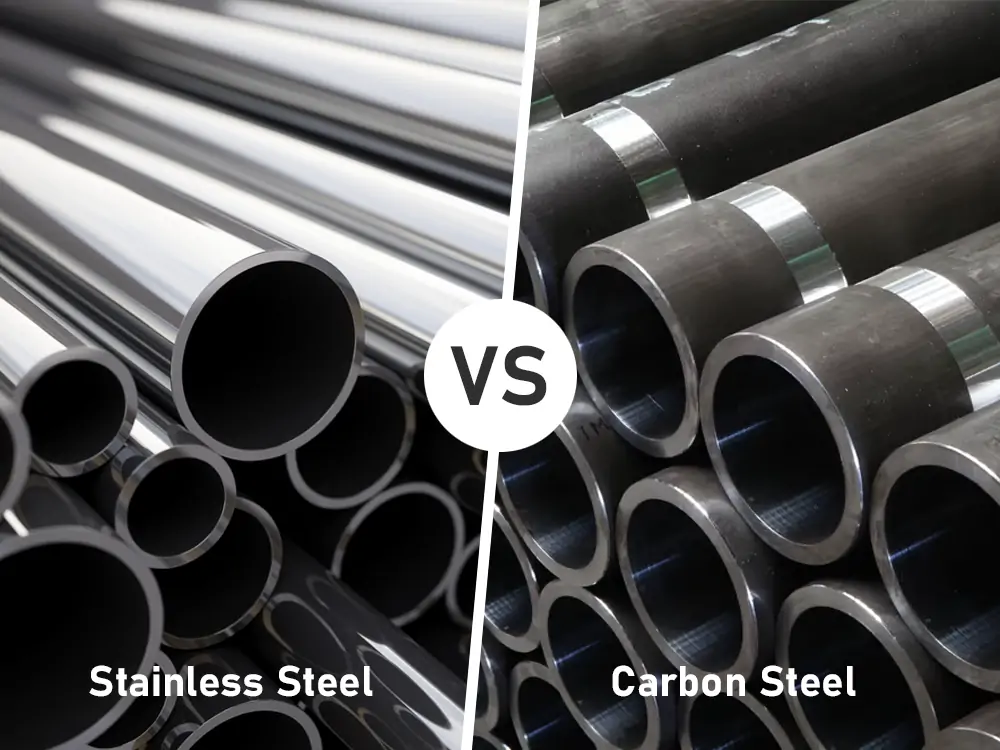
Typical combinations may include 304 or 316 stainless steel joined to mild steel, A36, 1018, Q235, or similar low-carbon fabrication steels. These combinations appear in equipment frames, cabinets, kitchen equipment, brackets, railings, enclosures, and mixed-metal sheet assemblies.
The main difference from same-metal welding is dilution. When the laser melts the joint, material from the stainless side, carbon-steel side, and filler wire—if used—mixes together.
Stainless steel contributes chromium and nickel, while the carbon-steel side can change the carbon and alloy balance of the final weld. Excessive dilution from the carbon-steel side may increase hardness and cracking sensitivity under some conditions.
The materials also respond differently to heat. Their thermal expansion and heat-transfer behavior can create uneven fusion or distortion if the joint is poorly fitted or the heat input is inconsistent.
This is why the objective is not simply to produce a visually smooth bead. The weld must also be appropriate for the required mechanical properties and service environment.
For structural, pressure-bearing, fatigue-critical, or regulated components, production should follow an appropriately qualified welding procedure rather than generic internet settings.

Preparing Stainless Steel and Carbon Steel for a Laser Welder
Start by confirming the actual material grades.
For common fabrication jobs, supplier documentation or material certificates may be enough. Higher-risk applications may require more formal material verification. Do not assume every stainless-looking plate is 304 or that every mild-steel part has the same composition.
Surface preparation is equally important. Oil, grease, rust, paint, mill scale, moisture, and cutting residue can interfere with weld-pool stability and contribute to porosity or incomplete fusion. When sourcing equipment, ask a stainless steel laser welding supplier how they control porosity.
The stainless side should ideally be prepared with stainless-dedicated brushes and abrasives. Using carbon-steel-contaminated grinding tools on stainless material can embed free iron into the surface and create rust spots later.
Joint fit-up also deserves attention. Handheld laser welding generally performs best when the joint is aligned and consistent.
| Joint Type | Common Use | Main Concern |
|---|---|---|
| Butt joint | Flat panels and visible seams | Consistent gap and alignment |
| Lap joint | Covers and sheet assemblies | Good contact between layers |
| Corner joint | Cabinets and enclosures | Accurate edge positioning |
| Fillet / T-joint | Frames and brackets | Beam and filler-wire position |
There is no single universal maximum joint gap for every handheld laser welder. The usable tolerance depends on thickness, beam pattern, wobble width, filler wire, clamping, and machine configuration.
Filler wire and controlled wobble can improve tolerance to small gaps, but poor fabrication should be corrected mechanically before trying to compensate with more laser power.
For a deeper look at wire positioning and delivery, this section can internally link to wire feeding for handheld laser welding.
Choosing Filler Wire for a Handheld Laser Welder
For many common stainless-to-mild-steel joints, ER309L or another 309-type stainless filler is a practical starting choice.
The reason is that 309-type filler generally contains enough chromium and nickel to better tolerate dilution from the carbon-steel side than a filler intended only for same-grade stainless joints.
That does not mean ER309L is the correct answer for every combination.
For 316 stainless, high-temperature service, aggressive corrosion environments, or specially specified components, filler selection should reflect the actual material grades and service requirements.
Ordinary carbon-steel filler should also not be selected automatically just because one side of the joint is carbon steel. The filler affects the chemistry of the entire weld pool.
Wire diameter should be selected according to material thickness, joint geometry, gap, and the amount of filler required. For feed setup details, work with a laser welding wire feeder supplier who can match wire size to your machine.
Can You Weld Without Filler Wire?
Sometimes.
Autogenous laser welding may work when fit-up is tight and the final weld chemistry and bead geometry are acceptable.
Filler wire becomes more useful when the joint has a gap, additional reinforcement is required, the bead shape needs improvement, or the filler is needed to manage the final weld composition.
So the correct question is not simply “Does laser welding need filler wire?”
It is:
Does this particular stainless-to-carbon joint need filler wire to achieve the required fit-up, weld shape, chemistry, and performance?

Handheld Laser Welder Settings, Shielding Gas, and Welding Steps
Argon is a practical starting shielding gas for many stainless-to-carbon steel handheld laser welding applications.
Nitrogen may also be suitable for selected stainless- or carbon-steel applications, but it should not be treated as a universal lower-cost substitute. The material grades, filler wire, welding head, recommendations from your handheld laser welding manufacturer, and required weld properties all matter.
Gas flow should also be validated on the actual machine. Too little shielding can contribute to oxidation, discoloration, and porosity, while excessive gas flow may create turbulence and reduce effective shielding.
Before changing the flow rate, inspect the nozzle position, gas hoses, leaks, workshop drafts, and the effect of local fume extraction.
For a more detailed comparison, naturally link argon vs nitrogen for handheld laser welding here.
The laser settings themselves should be treated the same way: as a coordinated system rather than isolated numbers.
Power affects melting capacity and penetration. Insufficient power can cause incomplete fusion or poor filler melting, while excessive power can increase burn-through, undercut, spatter, or unnecessary dilution.
Travel speed controls how long the beam interacts with each section of the joint. Moving too quickly can reduce fusion; moving too slowly increases localized heat input.
Wobble width changes how widely the laser energy is distributed. A moderate wobble can increase bead width and improve coverage of a small gap, but excessive wobble can reduce energy concentration.
Wire feed must match the size and energy of the molten pool. Excessive feed can create a raised, poorly fused bead, while insufficient wire may leave underfill.
Two handheld laser welders showing the same percentage power may not deliver exactly the same welding result. Laser source design, welding head, focus, wobble pattern, and calibration vary between machines.
That is why online parameter charts should be treated as starting references rather than guaranteed production settings.
Readers looking for broader parameter logic can be sent to your handheld laser welder settings guide.

How to Weld the Joint With a Handheld Laser Welder Step by Step
Once the materials, filler, and shielding are confirmed, reproduce the actual production joint on a test coupon.
Use the same stainless grade, carbon-steel grade, thickness, joint type, filler wire, and shielding gas that will be used in production.
Set the machine using a conservative starting condition recommended for that material thickness and equipment configuration. Keep the torch position, working distance, and travel speed as consistent as possible. For stainless-specific starting values, refer to the settings guide from a stainless steel laser welder manufacturer.
If filler wire is used, feed it steadily into the leading region of the weld pool. The laser should melt both base materials and incorporate the wire without creating a large pile of unmelted filler or an excessively deep keyhole.
After a short test weld, examine the bead and—where relevant—the backside or cross-section.
Check whether both materials have fused, whether penetration is sufficient, whether the bead shape is stable, and whether there is excessive discoloration, porosity, or distortion.
When the weld needs adjustment, change one major variable at a time.
For example, lack of penetration does not always mean “add more power.” Excessive travel speed, an incorrect focal condition, overly wide wobble, or poor joint alignment may produce a similar result.
This test-and-adjust approach is more reliable than copying a parameter table from another brand of machine.
Handheld laser welding also involves Class 4 laser hazards. The work area should use the appropriate laser-controlled environment, PPE, safety interlocks, fume extraction, and operator training required for the specific equipment and local regulations. Reflective stainless surfaces make control of reflected laser energy especially important.
Handheld Laser Welder Defects: Cracking, Porosity, and Incomplete Fusion
A useful troubleshooting approach is to identify the defect first and then determine whether the cause is material, fit-up, shielding, parameters, filler, or equipment.
| Problem | Common Cause | What to Check First |
|---|---|---|
| Porosity | Contamination or poor shielding | Surface cleanliness and gas coverage |
| Cracking | Filler mismatch, dilution, restraint | Material grades and filler wire |
| Lack of fusion | Low effective energy or poor fit-up | Joint gap, focus and travel speed |
| Burn-through | Excessive localized heat | Power, speed and joint support |
| Heavy discoloration | Poor shielding or excessive heat | Gas coverage and heat input |
| Uneven bead | Inconsistent movement or wire delivery | Torch movement and wire feed |
Cracking deserves particular attention in dissimilar joints.
Repeated cracking may indicate that the filler choice, weld chemistry, joint restraint, or material condition is unsuitable. Simply increasing or decreasing laser power may not solve the root cause.
Porosity should likewise be traced back to surface cleanliness, moisture, gas coverage, and weld-pool stability before major parameter changes are made. This defect guide from a handheld laser welding equipment supplier covers porosity fixes in more detail.
For a more complete diagnostic workflow, internally link common handheld laser welding defects here.
Can Stainless-to-Carbon Steel Welds Rust After Using a Handheld Laser Welder?
Yes, the carbon-steel side can still rust.
Joining carbon steel to stainless steel does not transfer stainless steel’s corrosion resistance to the carbon-steel base material.
In indoor dry service, this may not be a major issue. In outdoor, humid, salty, or chemically aggressive environments, corrosion protection should be considered as part of the design.
The carbon-steel side may need paint, coating, sealant, or another protective system.
The stainless side may also require post-weld cleaning if severe heat tint or surface contamination is present.
Cross-contamination is another potential source of rust. Carbon-steel particles left on stainless surfaces by shared brushes or grinding discs can later produce visible corrosion spots.
For corrosion-critical parts, do not judge the joint only by appearance immediately after welding. The expected environment and finishing system matter just as much as the weld bead itself.

Handheld Laser Welder vs TIG and MIG: Which Fits Your Work?
Handheld laser welding is not automatically better than TIG or MIG in every application.
Its strongest advantages appear when the parts have consistent fit-up, distortion needs to be minimized, and production involves many repetitive sheet-metal seams.
| Factor | Handheld Laser | TIG | MIG |
|---|---|---|---|
| Welding speed | High on suitable joints | Lower | Moderate to high |
| Heat-affected zone | Usually narrow | Wider | Wider |
| Thin-sheet distortion | Usually low when properly set | Higher | Moderate |
| Gap tolerance | More sensitive | More forgiving | More forgiving |
| Spatter | Low | Very low | Higher |
| Typical fit | Repeatable sheet fabrication | Precision/manual work | General fabrication |
TIG remains valuable when gaps vary, joints are highly customized, or the welder needs very precise manual filler control.
MIG remains practical for general fabrication where larger gaps, thicker work, or lower initial equipment investment are important.
The most useful productivity comparison should include more than welding speed. Joint preparation, welding time, grinding, straightening, inspection, and rework all contribute to the actual cost of a finished part.
When selecting a machine from a handheld laser welder factory for mixed stainless and carbon-steel work, start with your normal thickness, joint type, daily welding time, and filler-wire requirements.
Then evaluate laser-source stability, wire feeding, wobble control, cooling configuration, safety system, and technical support.
If cooling configuration is part of the decision, naturally link to air-cooled vs water-cooled handheld laser welder.
The main commercial anchor handheld laser welder should point to your product page in this section, where the reader has already understood the process and is more ready to evaluate a machine.
Laser Welder FAQs: Stainless Steel to Carbon Steel
Can you weld stainless steel to carbon steel with a handheld laser welder?
Yes. Common austenitic stainless steels such as 304 or 316 can be joined to mild or low-carbon steel when the materials, filler, fit-up, shielding, and welding procedure are properly matched.
What filler wire should you use?
ER309L or another 309-type stainless filler is a common starting option for many stainless-to-mild-steel joints. The final choice should reflect the actual stainless grade and service conditions.
Can you weld 304 stainless steel to mild steel?
Yes. This is a common dissimilar-metal combination and is suitable for many fabrication applications when the joint is properly prepared.
Can stainless steel and carbon steel be laser welded without filler wire?
Sometimes. Very tight joints may be welded autogenously, but filler wire is often useful when the gap, bead shape, or final weld chemistry needs more control.
Will the joint rust?
The carbon-steel side can still corrode and may require paint, coating, or another protective finish depending on the service environment.
Is handheld laser welding better than TIG?
It can be faster and produce less distortion on repeatable thin- and medium-sheet joints. TIG remains more flexible for variable fit-up, low-volume precision work, and some complex joints.
Conclusion
Welding stainless steel to carbon steel with a handheld laser welder is practical for many fabrication applications, but the joint must be treated as a dissimilar-metal weld.
Successful welding depends on proper material identification, joint preparation, compatible filler wire, effective shielding, and carefully adjusted laser parameters—not simply using higher power.
Before production, test the actual material combination to verify weld penetration, joint quality, and process consistency. A representative test weld provides more reliable guidance than generic machine specifications.
Not sure which handheld laser welder is right for your stainless steel and carbon steel projects? Contact TheLaserTool to discuss your materials, thickness, and welding requirements. Our team can help you evaluate suitable equipment configurations and choose a welding solution for your application.

0 Comments