
Porosity during laser welding of stainless steel is one of the most common and costly defects in industrial production, which directly leads to scrapped workpieces, unqualified pressure tests, increased rework rate and profit loss. For 304/304L, 316/316L austenitic stainless steel with a thickness of 0.5–8 mm, most porosity problems are not caused by a single factor, but the superposition result of keyhole instability, surface pollution, improper shielding gas, unreasonable assembly clearance, mismatched laser parameters and unstable wire feeding.
To completely eliminate and control porosity, it is necessary to start from the root cause identification, carry out systematic optimization from pre-weld preparation, assembly fixture, gas protection, parameter adjustment to advanced process application, and establish a stable and repeatable welding process. This paper comprehensively analyzes the formation mechanism of porosity in stainless steel laser welding, and provides a complete set of practical, operable and verifiable solutions, helping manufacturers quickly reduce the porosity level, improve weld quality and production efficiency, and reduce the cost of defective products.
Root Causes of Porosity in Stainless Steel Laser Welding
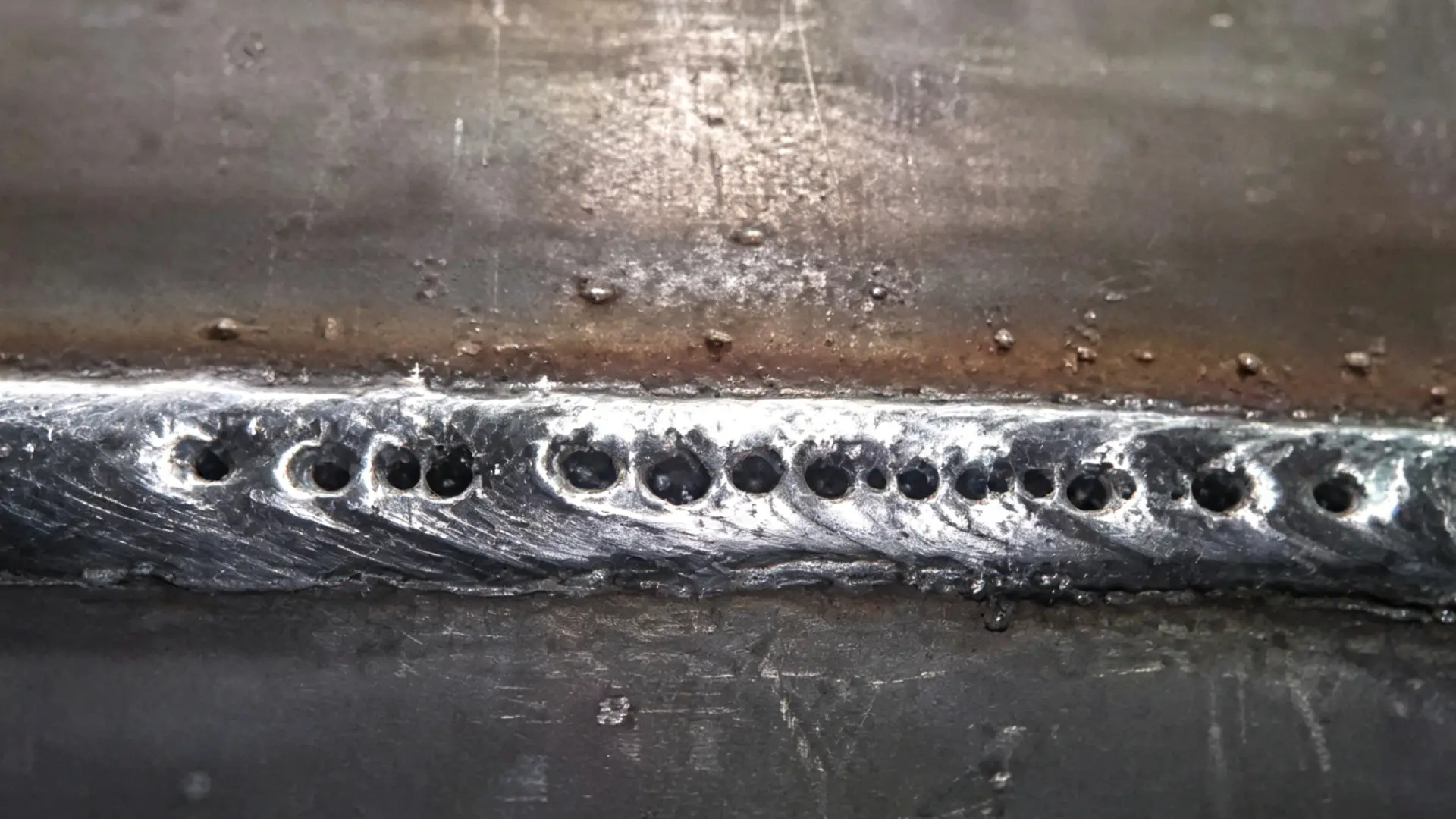
In the process of fiber laser welding and disk laser welding of stainless steel, porosity mainly comes from two completely different formation mechanisms: keyhole-induced porosity and metallurgical porosity. Many manufacturers often confuse these two types of pores, resulting in repeated adjustment of parameters but no obvious effect, and even lead to more serious defects.
| Porosity Type | Formation Mechanism | Appearance & Distribution | Main Inducing Factors |
|---|---|---|---|
| Keyhole Process Porosity | During deep penetration welding, unstable and collapsed laser keyholes trap metal vapor and shielding gas inside the molten pool, forming defects after rapid solidification | Long strip & irregular shape, mostly distributed along weld centerline with uneven pore size | Mismatched welding parameters, defocus deviation, excessive assembly gap, unstable welding speed |
| Metallurgical Material Porosity | Oil stains, moisture and oxide layers on workpiece surface decompose and release various gases under high temperature. Gases fail to escape completely and form pores after solidification | Small round spherical pores, evenly scattered inside the whole weld seam | Insufficient surface cleaning, high ambient humidity, damp & contaminated welding wire, low-purity shielding gas |
There are six core factors that lead to the above two kinds of porosity:
- Surface contamination: oil, grease, moisture, dust, oxide layer, etc.
- Oxide film and coating: high-temperature oxide layer is difficult to remove and releases a lot of gas
- Joint assembly gap: too large or uneven gap will cause the keyhole to be unstable and trap gas
- Shielding gas problem: improper type, flow, purity, angle and distance
- Laser parameter mismatch: power, speed, focus position leading to keyhole instability
- Unstable wire feeding: wire pollution, speed fluctuation, contact tip wear
Only by accurately distinguishing the type of porosity and finding the corresponding root cause can the problem be solved quickly and effectively.Step 1: Pre-Weld Surface Cleaning (The Most Critical Step to Reduce Porosity)
Surface contamination is the number one cause of metallurgical porosity in stainless steel laser welding. Even a very small amount of oil, moisture or oxide layer will decompose rapidly under the laser, releasing a lot of gas into the molten pool, resulting in a large number of scattered small pores. Therefore, sufficient pre-weld cleaning is the most cost-effective and highest-return measure to control porosity.
Solvent Cleaning Standard Operation
- Use industrial grade acetone (≥99%) or anhydrous isopropanol (IPA ≥99%), without additives, fragrance and water
- Use special dust-free polyester cloth, and it is forbidden to use ordinary rags, which will bring fiber contamination
- Wipe strictly along the welding direction, not back and forth, to avoid bringing the pollution back to the surface
- Carry out two vertical wiping passes, and replace the surface of the cloth in time when it is dirty
- Wait for the solvent to volatilize completely before welding. Acetone volatilizes within 30 seconds, and IPA takes about 30–60 seconds
- Wear talc-free nitrile gloves during the whole process to avoid secondary pollution caused by hand contact
- The time from cleaning to welding shall be controlled within 30 minutes in dusty and oily environments, and within 2 hours in clean and dry workshops
Mechanical Removal of Oxide Layer
For stainless steel with serious oxide layer, solvent cleaning alone is not enough, and mechanical treatment must be added:
- Use a special stainless steel wire brush (marked SS ONLY), and it is forbidden to use tools that have touched carbon steel
- For thick oxide skin, use 80–120 mesh grinding sheet, control the material removal amount at 0.05–0.2mm, and do not change the joint size
- After grinding, use oil-free compressed air to clean the debris, and then immediately use solvent to wipe again
Cross Contamination and Environmental Control
Tools used for carbon steel will carry free iron particles. When used on stainless steel, it will cause serious pollution and produce a lot of pores. Therefore, tools must be used separately and marked clearly.
In addition, the environmental humidity should be controlled below 60%. When the humidity is too high, the surface will form a water film, which will reintroduce hydrogen and oxygen, leading to the reappearance of porosity. If the workpiece is placed for too long after cleaning, it must be cleaned again before welding.
Optimize Joint Fit-Up and Fixturing to Control Gap-Induced Porosity
The assembly gap has a decisive influence on the stability of the keyhole. Even a small gap will lead to the collapse of the keyhole, gas entrapment and serious porosity. The core control principle is: the assembly gap is less than 10% of the plate thickness.
Standard of Maximum Assembly Gap
- 0.5mm thick sheet: ≤0.05mm
- 1.0mm thick sheet: ≤0.10mm
- 2.0mm thick sheet: ≤0.20mm
- 3.0mm thick sheet: ≤0.30mm
For high-demand applications such as medical devices and pressure-bearing parts, the gap needs to be controlled at a smaller micron level.
Fixture Design and Use Requirements
- Use precision positioning pins to eliminate assembly deviation
- Adopt multi-point clamping along the weld length to avoid local tilting caused by heat
- The clamping contact surface should be far away from the heat-affected zone to avoid overheating and deformation
- Thin stainless steel is equipped with copper backing plate to speed up heat dissipation and control deformation
- Magnetic clamps are not suitable for austenitic stainless steel
- Pre-spot welding is used to fix the joint shape and reduce thermal deformation
- Recheck the gap after spot welding, and unqualified workpieces are forbidden to weld
Treatment When the Gap Cannot Be Reduced
When the gap cannot be further reduced due to processing errors, the following methods can be used to compensate:
- Adopt real-time seam tracking system to automatically adjust the laser position
- Use laser oscillation (wobble) welding to bridge small gaps
- Adopt laser-arc hybrid welding to improve the gap adaptability
But in any case, reducing the gap is always better than relying on process compensation.
Shielding Gas Optimization to Isolate Air and Reduce Porosity
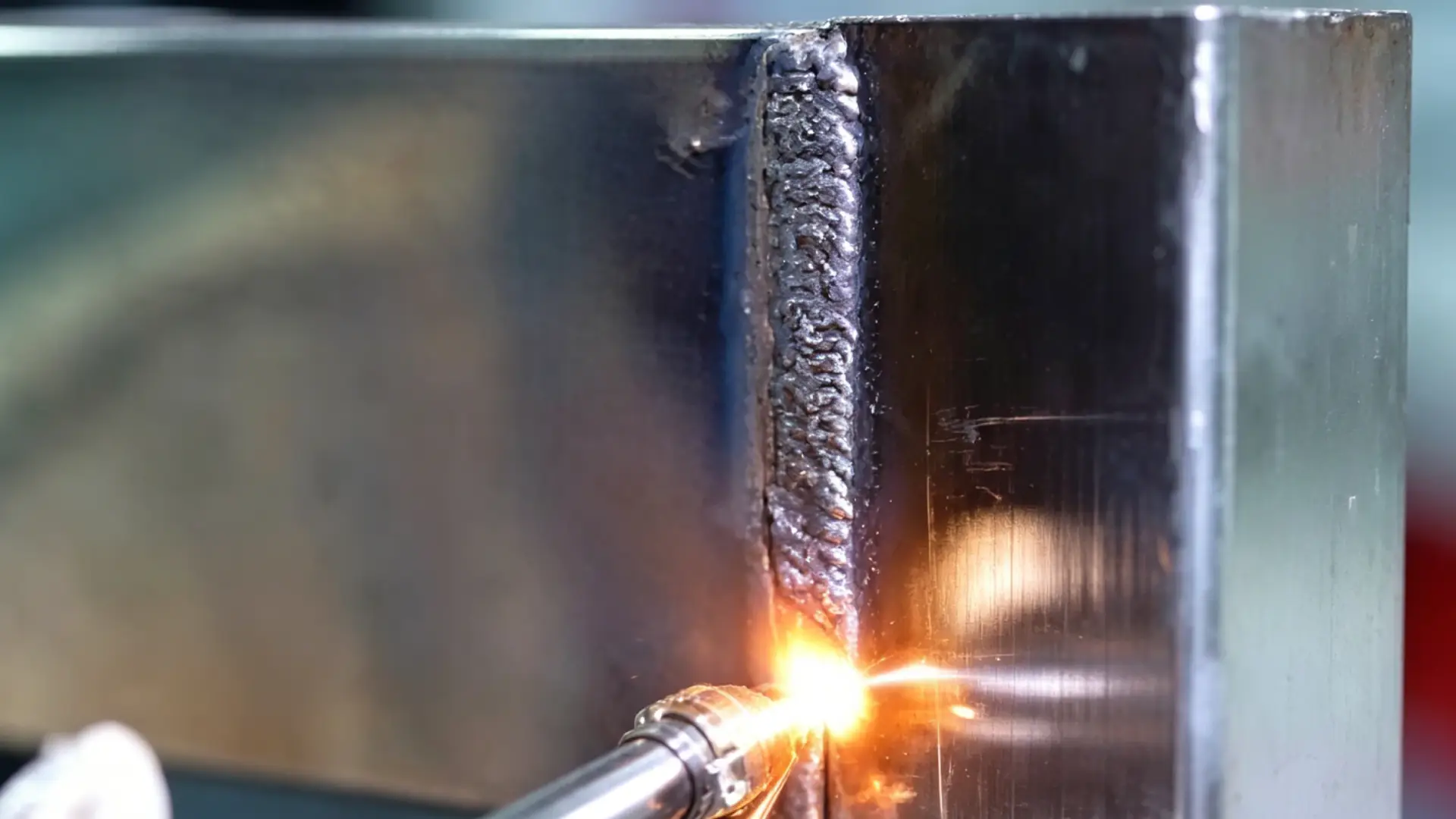
Stainless steel is extremely sensitive to air at welding temperature. Oxygen, nitrogen and hydrogen will dissolve into the molten pool rapidly, resulting in oxidation and porosity. Shielding gas is the core barrier to protect the molten pool, and any error will lead to continuous defects.
Gas Selection and Purity
- The baseline is 99.99% high-purity argon, which is inert and has good protection stability
- Argon-helium mixture can improve the penetration ability, but the flow rate needs to be increased by 20–40%
- The dew point of the gas must be ≤-40°C to avoid moisture carrying hydrogen
- All air passages must be checked for air leakage before each production
Flow Rate Setting
Too low flow rate can not isolate air, too high flow rate will produce turbulence and suck in air.
- Indoor static environment: 12–15 CFH (5.7–7.1 L/min)
- Slight air flow: 20–30 CFH (9.4–14.2 L/min)
- Outdoor with windshield: 30–35 CFH
- The upper limit is 40 CFH, and exceeding it will increase the porosity risk
Nozzle Angle and Distance
- Laser welding gun adopts 5–15° forward inclination
- Nozzle height is controlled at 10–15mm
- Lateral inclination shall not exceed 30°, otherwise the protection will be uneven
- The weld bead is silvery white and light gold, indicating good protection; blue, purple and gray black indicate protection failure
Laser Parameter Adjustment to Stabilize Keyhole and Eliminate Porosity
Keyhole porosity is directly controlled by laser power, welding speed and focus position. The core goal is to establish a stable keyhole without fluctuation and collapse.
Linear Energy Window (q=P/V)
For 1–3mm 304/316L stainless steel:
- Low energy region (<60 J/mm): conduction welding, easy to produce incomplete fusion
- Stable region (60–200 J/mm): porosity can be controlled below 0.1%
- High energy region (>250 J/mm): keyhole is seriously unstable and porosity surges
Parameter Adjustment Logic
- When there is central porosity: first increase the welding speed, then appropriately reduce the power
- When the penetration is insufficient: first reduce the speed, then appropriately increase the power
- Avoid the combination of low speed and high power, which will lead to deep and unstable keyhole
Focus Position Control
- Appropriate negative defocus (–0.2 to –1.0mm) can improve the keyhole stability
- Positive defocus can reduce porosity, but may lead to insufficient penetration
- The effective adjustment range is ±1.0mm, and beyond ±1.5mm, porosity will increase sharply
It is suggested to make a P-V process window for each material and thickness, which can be used repeatedly to avoid repeated testing.
Stable Wire Feeding to Avoid Porosity Caused by Wire and Arc Fluctuation
Unstable wire feeding is a common hidden cause of porosity. Even a short pause or fluctuation will cause arc disturbance and trap gas in the molten pool.
Wire Feeding Stability Requirements
- Wire feeding speed fluctuation ≤±5%
- The wire feeding speed must match the welding speed
- Use ER308L/ER316L special welding wire with clean and dry surface
- The storage environment is 15–25°C, humidity <60%
- The opened welding wire should be used up within 8–24 hours
Common Problems of Welding Wire
- Oxide on the surface: release oxygen when melting
- Lubricant residue: release hydrogen and carbon
- Damp welding wire: directly produce hydrogen porosity
- Contact tip wear: lead to arc instability and porosity
When the inner hole of the contact tip is enlarged by more than 20%, it must be replaced in time.
Advanced Beam Oscillation and Shaping for Stubborn Porosity
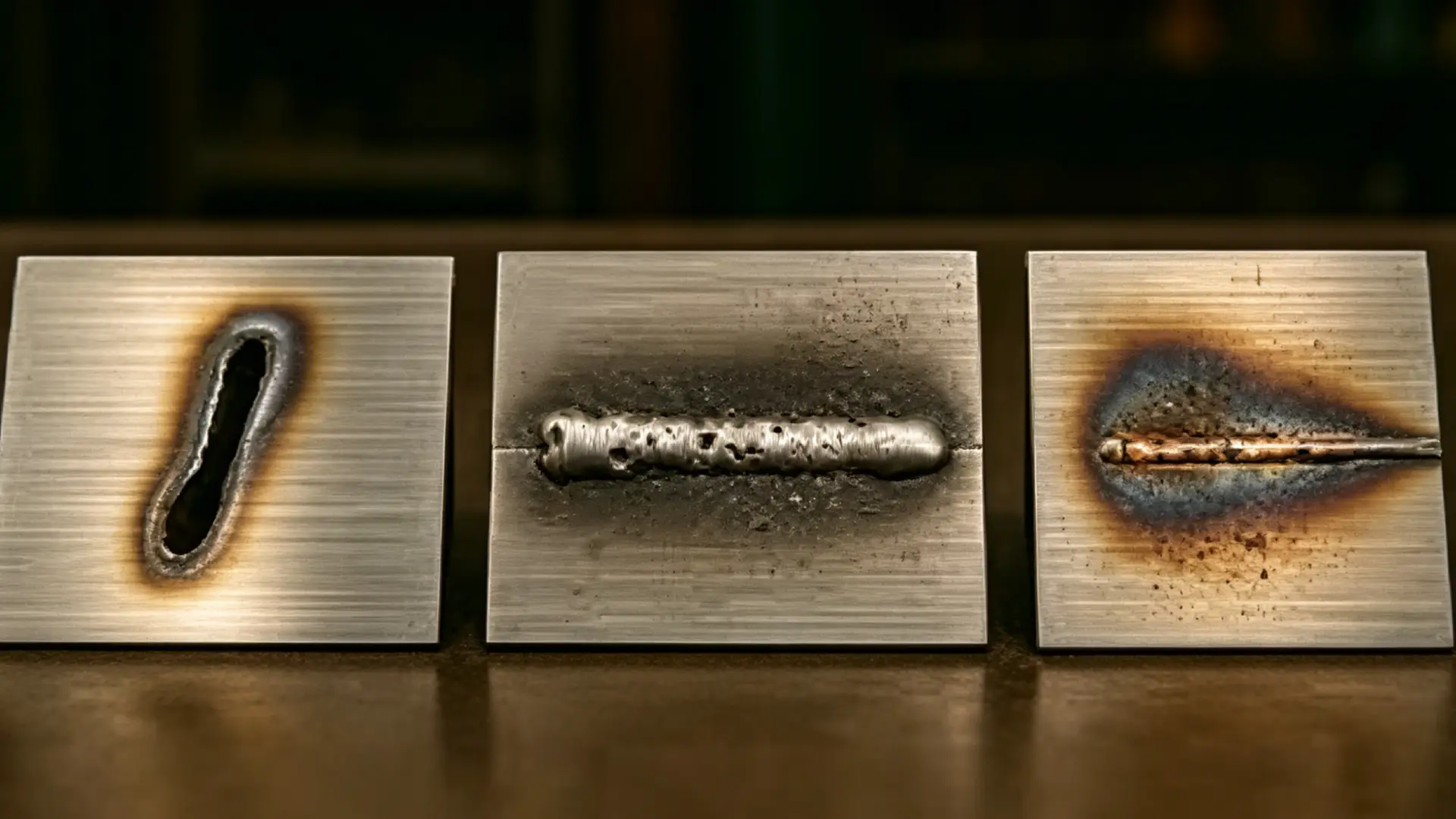
For high-demand applications such as medical treatment and aerospace, when conventional methods cannot further reduce porosity, beam oscillation and special beam shaping can be used.
Laser Oscillation (Wobble) Welding
- Circular oscillation: 0.3–1.0mm amplitude, 100–500Hz frequency, porosity reduced by 50–80%
- Linear oscillation: improve the pressure distribution of the keyhole wall
- 8-shaped oscillation: improve gap adaptability and central stability
Oscillation can expand the molten pool, extend the bubble escape time, and significantly reduce porosity.
Beam Shaping Technology
- Annular beam: smooth the keyhole wall and reduce collapse
- Double focus beam: front beam forms keyhole, rear beam promotes degassing
- Dynamic beam: high-speed adjustable shape, suitable for high-power equipment
These technologies can stably control the porosity below 0.1% in ultra-demanding scenes.
Rapid Diagnosis and Troubleshooting Checklist
- Linear continuous porosity: check assembly gap, air path leakage, nozzle angle
- Clustered porosity: check local pollution, nozzle blockage, arc start-stop position
- Random scattered porosity: check surface cleanliness, gas purity, power stability
Top 5 most effective improvements:
- Standard pre-weld cleaning: reduce porosity by 50–80%
- Strictly control assembly clearance: reduce by 20–40%
- Optimize shielding gas: reduce by 30–60%
- Adjust laser power speed parameters: reduce by 20–40%
- Stabilize wire feeding: reduce by 15–30%
Conclusion
Porosity in stainless steel laser welding is not an unpredictable random defect, but a process problem that can be completely controlled by systematic means. By strictly controlling surface cleaning, assembly clearance, shielding gas, laser parameters and wire feeding stability, most porosity problems can be eliminated at the source. For high-demand scenes, advanced technologies such as laser oscillation and beam shaping can further approach zero-defect welding.
Stable and low-porosity welding process can significantly reduce scrap and rework, improve production efficiency and product qualification rate, and bring real profit improvement for manufacturers.
If you are looking for reliable equipment and solutions to stably control porosity in stainless steel laser welding, Maxwave can provide you with professional laser welding machines, customized process schemes and after-sales support. With 15 years of industry experience, stable equipment performance, perfect quality control and rich process optimization experience, Maxwave helps you achieve high-quality, low-defect laser welding production and improve the stability and competitiveness of production.

0 Comments