
Dropping $8,000 on the wrong laser welder doesn’t just hurt your wallet — it slows every repair job for the next five years.
Gold is unforgiving. Too much pulse energy and you’re scorching prongs. Too little and the weld won’t hold past the first sizing.
We ran hands-on tests and gathered real-world input from working goldsmiths and bench jewelers. From that, we ranked ten laser welders for gold jewelry repair that justify their price tags. The list covers compact desktop units built for delicate filigree all the way up to production-grade machines handling high-volume ring sizing.
Ready to ditch the torch as a one-bench goldsmith? Evaluating a serious equipment upgrade for your shop? This guide gives you the specs, the trade-offs, and the honest verdict you need to buy with confidence.
Head-to-Head Comparison: 10 Laser Welders for Gold Jewelry at a Glance
Ten machines. Four price tiers. One table shows you where each one sits — before you read a single word of the individual reviews.
| Machine | Laser Type | Peak Power | Pulse Energy | Spot Size | Price Range | Best For |
|---|---|---|---|---|---|---|
| MaxWave MW-QW Series | Nd:YAG QCW | 2,000 W | Up to 60 J | 0.01 mm | $2,900–$5,500 | Precision repair, regular bench work |
| LaserStar 993 iWeld | Pulsed solid-state | Multi-kW peak | 60–130 W avg | 0.2–0.8 mm | $16,000–$22,000 | Professional repair studios |
| Orotig Revo X² | Pulsed fiber/solid | 12,000 W | Up to 60 J | 0.04 mm+ | $20,000–$40,000 | High-volume production floors |
| Gesswein/Sisma Line | Pulsed solid-state | >5 kW | 190–300 J | 0.2–2.0 mm | $20,000–$50,000+ | Mixed-metal, mid-to-high volume |
| WTTTOOLS 150W | Nd:YAG | >5 kW | Up to 40 J | 0.2–2.0 mm | $5,099–$5,699 | Solo repair shops |
| ACCTEK 4-in-1 | Fiber | 3,000 W | Adjustable | 0.1–2.0 mm | ~$2,900 | Multi-discipline studios |
| Orion mPulse 2.0 | Pulse-arc | Variable | 1–30 J | 0.5–1.25 mm | $1,699–$2,500 | Permanent jewelry, fine chains |
| Zapp Plus 2 | Pulse-arc | Variable | 1–30 J | 0.5–2.0 mm | $2,400–$2,800 | Mobile PJ artists |
| Mid-Range Hybrid (80–120W) | Nd:YAG + fiber | ≥5 kW | Up to 50 J | 0.1–0.6 mm | $9,000–$15,000 | Gold + platinum mixed bench |
| Riselaser RL-Y40 | Pulsed solid-state | Variable | Adjustable | 0.2–1.0 mm | $3,000–$5,000 | Entry-level bench repair |
Three numbers drive most buying decisions: pulse energy, spot diameter, and price. Get those three right for your workload first. After that, the other details — cooling type, interface, chamber design — are worth a look.
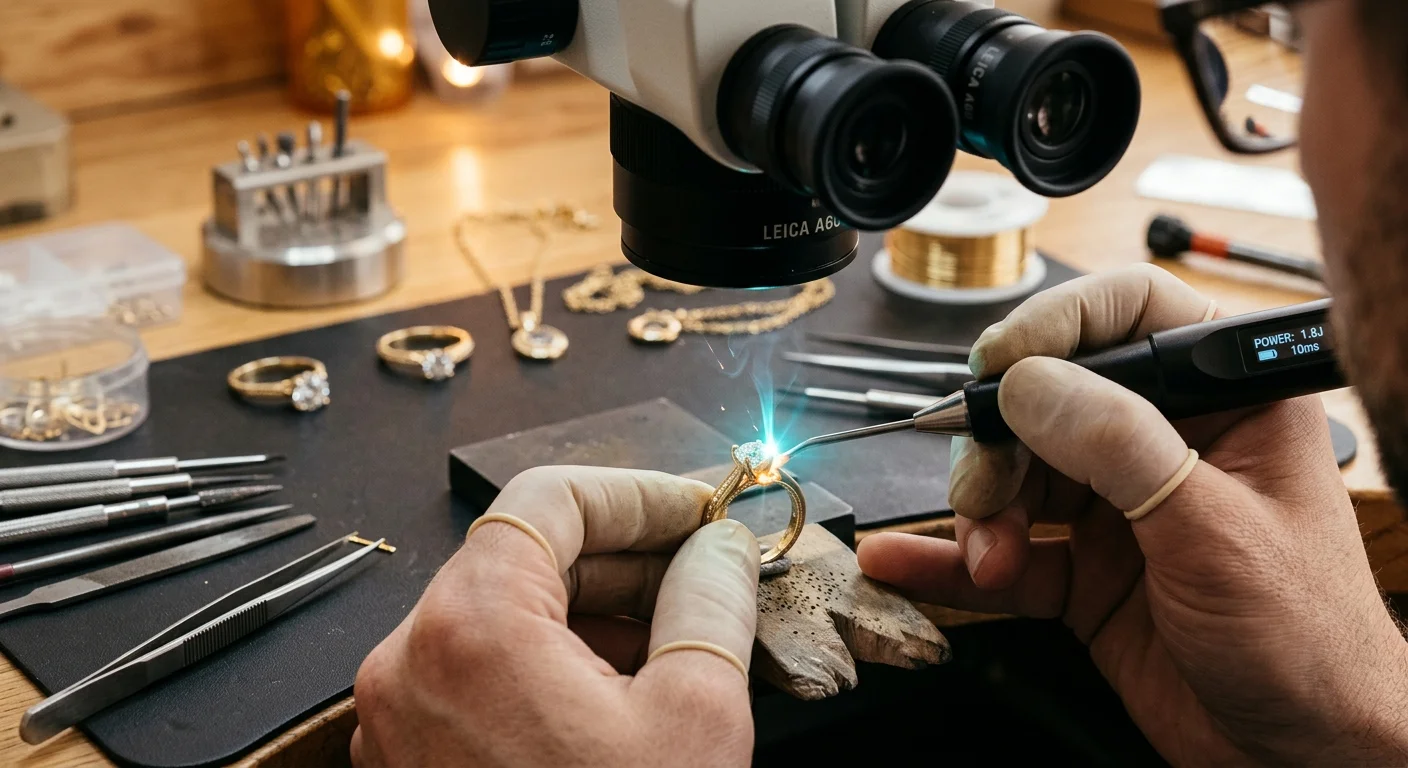
MaxWave MW-QW Series Jewelry Laser Welder: Best for Precision and Value
Models: QW60 / QW120 / QW200 | Price: $3,100–$5,500 | Wavelength: 1064nm | Maximum Peak Power: 2,000W | Minimum Beam Diameter: 0.01mm
The MW-QW Series includes 60W, 120W, and 200W models for everything from light jewelry repair to high-volume production. Its 0.01mm beam supports fine work on prongs, chains, filigree, and heat-sensitive areas, while up to 2,000W peak power provides enough energy for thick ring shanks and multi-metal components.
Key Advantages
- Fine 0.01mm beam with a small heat-affected zone
- Up to 60J pulse energy on the QW200
- Adjustable 0.1–15ms pulse width
- Microscope and CCD viewing system
- Built-in cooling and foot-pedal control
- One-year warranty and lifetime remote support
Which Model Should You Choose?
| Model | Price | Best For |
|---|---|---|
| QW60 | $3,100–$3,700 | Fine chains, small prongs, and light repairs |
| QW120 | $3,700–$4,300 | Daily repairs and occasional custom work |
| QW200 | $4,400–$5,500 | High-volume shops, thick shanks, and multi-metal parts |
Bottom line: The MW-QW Series combines a fine beam, complete viewing system, and multiple power options at a highly competitive price.
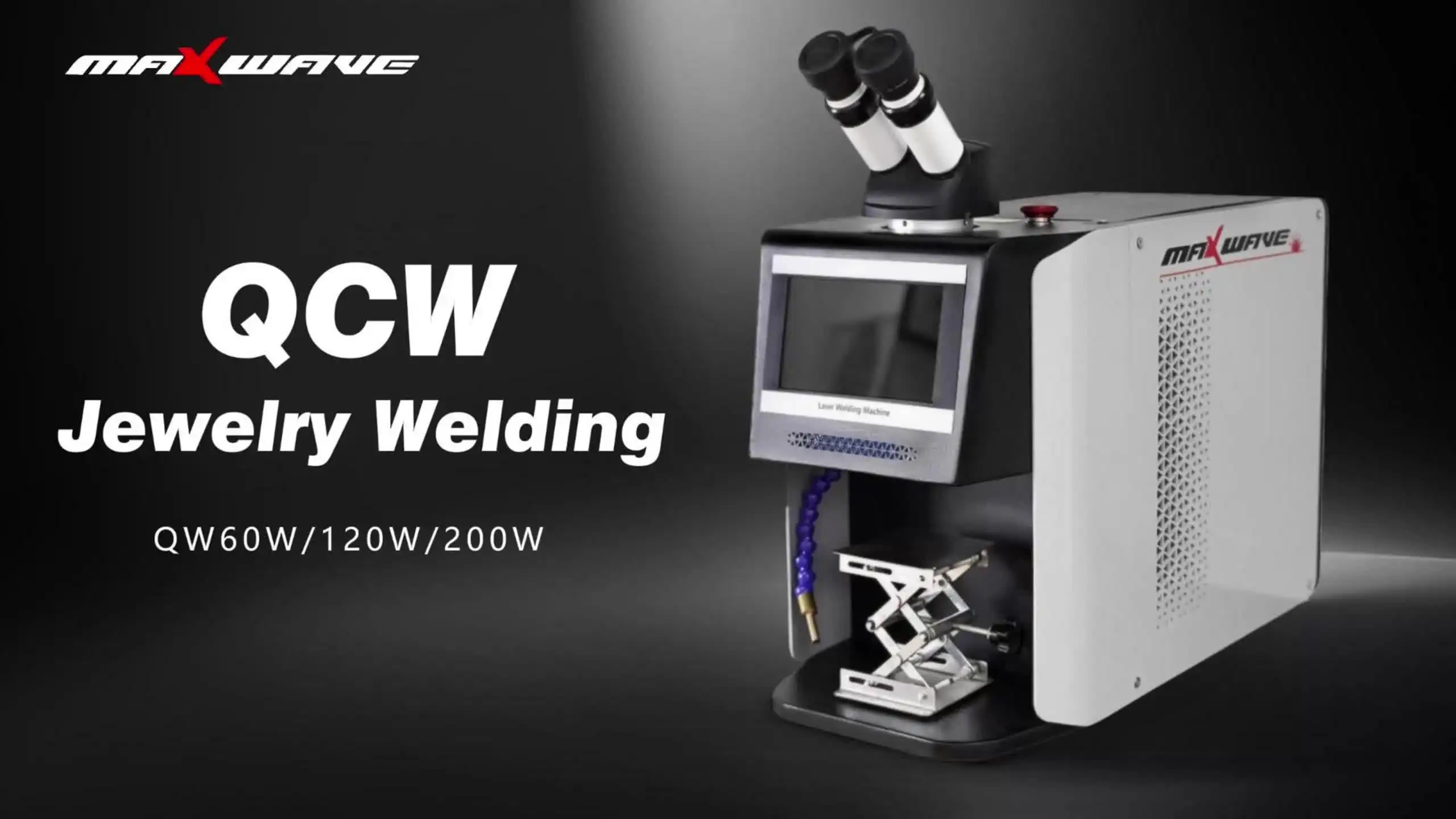
LaserStar Jewelry Laser Welders: Best for Precision Repair and Training
Series: iWeld / iWeld Professional / High-Power Models | Price: $16,000–$32,000 | Key Features: Three-Sided Chamber, Pulse Shaping, Parameter Presets
LaserStar designs its systems specifically for jewelry micro-welding. The iWeld range serves independent repair shops, while its higher-powered machines support platinum, silver, and production-level workloads.
Key Advantages
- Three-sided chamber for rings, necklaces, and eyewear
- Stereo microscope with crosshair targeting
- Adjustable pulse shape and energy-delivery curve
- Presets for gold, platinum, titanium, and silver
- Precise welding close to stones and sensitive components
- Structured application training and technical support
Which Model Should You Choose?
| Shop Type | Recommended Model | Price |
|---|---|---|
| Small shops and daily repairs | iWeld / iWeld Professional | $16,000–$22,000 |
| Platinum, silver, and production work | High-power LaserStar models | $26,000–$32,000 |
Bottom line: LaserStar combines precise hardware, advanced pulse shaping, professional training, and established service support.
Gesswein/Sisma Jewelry Laser Welders: Best for North American Support
Pulse Energy: 190J / 230J / 260J / 300J | Price: $20,000–$50,000+ | Spot Size: 0.2–2.0mm
Gesswein distributes and services Sisma jewelry laser welders in North America. Its Connecticut service center handles calibration, repairs, and warranty support for a wide range of benchtop, floor-standing, and fiber models.
Key Advantages
- Four pulse-energy configurations from 190J to 300J
- Energy adjustment in 0.5–1.0J increments
- Pulse-width adjustment in 0.1–0.2ms increments
- Suitable for gold, white gold, platinum, and silver
- North American service center and application specialists
- Multiple configurations for different workloads
Which Configuration Should You Choose?
| Energy Level | Best For | Estimated Capacity |
|---|---|---|
| 190J | Small studios, kiosks, and light repairs | 30–80 jobs per day |
| 230–260J | Mixed gold, silver, and platinum work | 80–150 jobs per day |
| 300J / SWT-450F | High-volume studios and manufacturers | Continuous production |
Bottom line: Gesswein/Sisma costs more but offers extensive configurations and strong domestic support for shops where downtime is expensive.
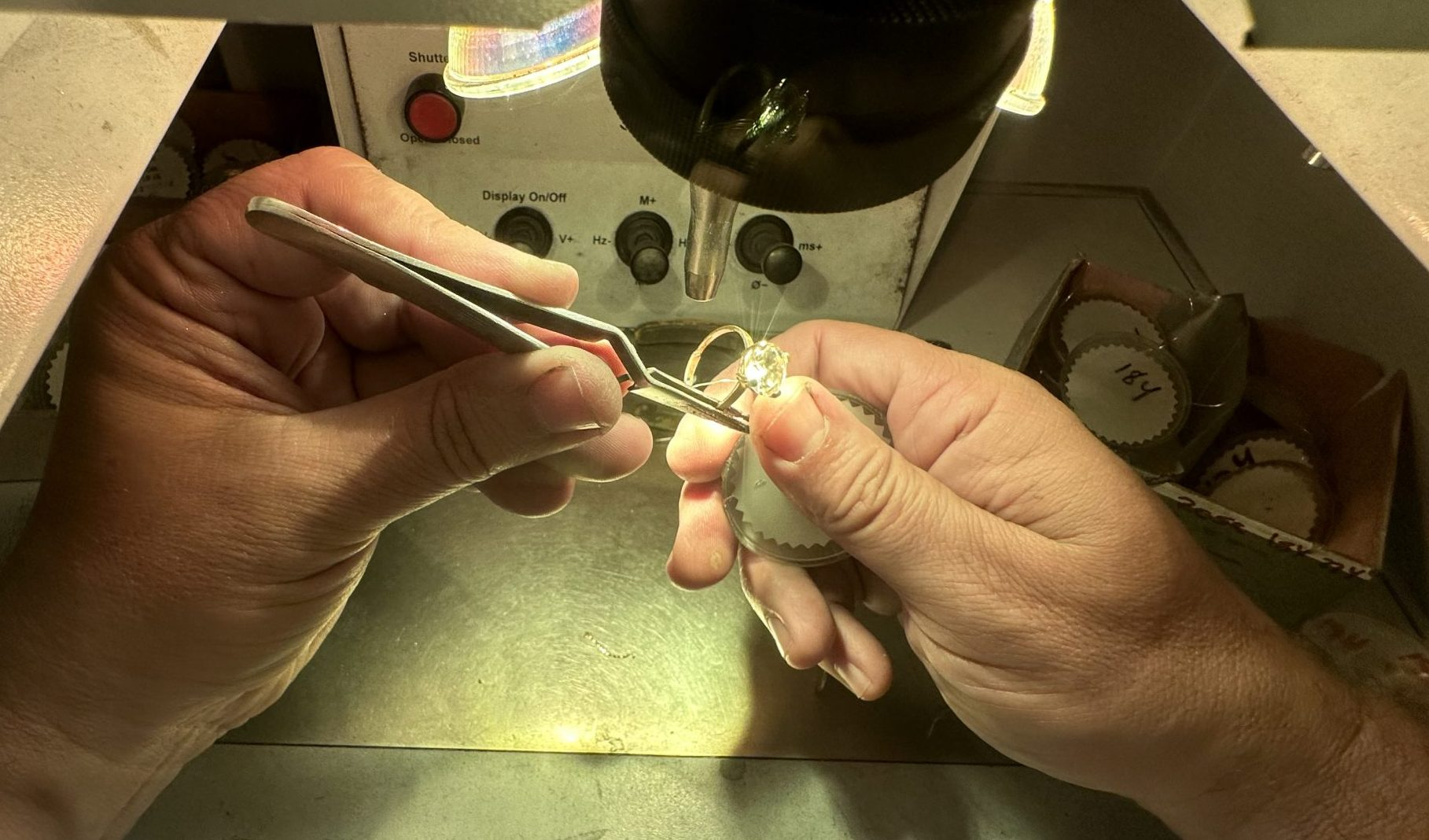
WTTTOOLS Jewelry Laser Welders: Best Mid-Range Practical Choice
Models: 150W Nd:YAG / 1200W Fiber | Price: Approximately $5,000–$6,500 | Applications: Jewelry Repair and Heavier Fabrication
WTTTOOLS offers two machines with different purposes. The 150W Nd:YAG model focuses on prongs, ring sizing, chains, and shank repair. The 1200W fiber model is better suited to heavy chains, bracelets, and mixed-metal fabrication.
Key Advantages
- Up to 40J pulse energy on the 150W model
- Adjustable 0.2–2.0mm spot size
- Welding depth up to approximately 2.5mm
- 1200W model for thicker metal components
- Lower price than many premium brands
Which Model Should You Choose?
| Model | Price | Best For |
|---|---|---|
| 150W Nd:YAG | $5,099–$5,699 | Prongs, chains, ring sizing, and daily repairs |
| 1200W Fiber | $5,000–$6,500 | Heavy chains, bracelets, and mixed metals |
Bottom line: Choose the 150W model for dedicated jewelry repair and the 1200W model for heavier fabrication.
ACCTEK 4-in-1 Jewelry Laser Welder: Best for Multi-Purpose Workshops
Price: Approximately $2,900 | Peak Power: Approximately 3,000W | Spot Size: 0.1–2.0mm | Functions: Welding, Cleaning, Cutting, and Wire Feeding
The ACCTEK 4-in-1 combines several processes on one fiber-laser platform. Its higher power reserve supports thick materials, while its adjustable spot can handle selected gold repairs and joint welding.
Key Advantages
- Welding, cleaning, cutting, and wire feeding
- Automatic wire feeding for 0.5–1.5mm gaps
- Welding depth up to approximately 4mm
- ±0.01mm repositioning accuracy
- Broad functionality at a low price
Who Should Buy It?
It suits workshops handling gold, silver, stainless-steel accessories, and recycled metal parts. If 90% of your work is fine chains and prongs, several of its functions may remain unused.
Bottom line: ACCTEK’s strength is versatility rather than dedicated jewelry micro-welding precision.
Orion mPulse 2.0: Best for High-Volume Permanent Jewelry Studios
Energy Range: 1–30J | Adjustment: From 0.5J | Weld Spot: 0.5–1.25mm | Certifications: UL / CSA / CE
The mPulse 2.0 is designed for permanent jewelry. Sunstone’s Tru-Fire technology initiates the plasma arc before the main discharge, improving ignition reliability at low energy levels.
Key Advantages
- Stable low-energy welding for fine 14K and 18K chains
- 0.5J adjustment increments within the 1–15J range
- Five-inch touchscreen with energy-adjustment wheel
- Six-foot stylus cable for retail counters
- Argon connection for cleaner welds and less polishing
| Application | Recommended Energy |
|---|---|
| Fine 14K/18K chains | 3–7J |
| Heavier jump rings and fittings | 8–12J |
| Stainless steel and base-metal parts | 5–10J |
Bottom line: The mPulse 2.0 is ideal for studios welding 20–40 permanent-jewelry chains per day, but it does not replace a full jewelry laser welder.
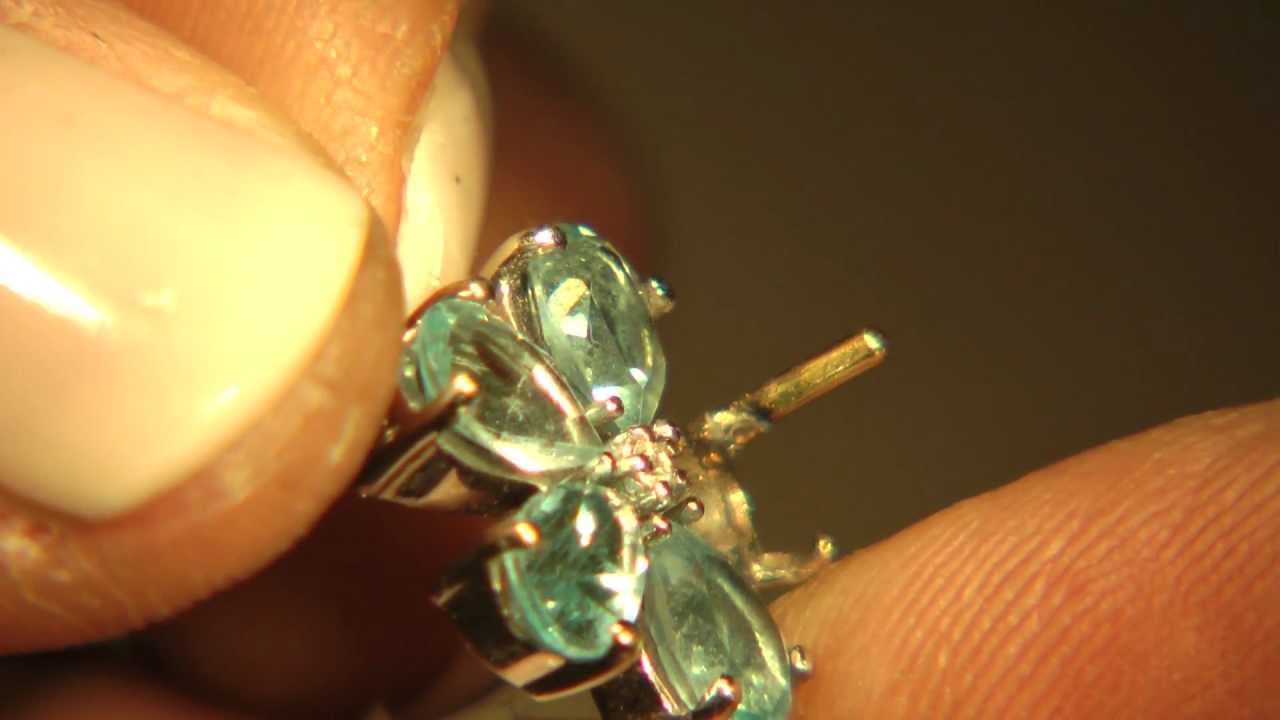
Zapp Plus 2: Best for Pop-Ups and Mobile Jewelry Services
Weight: 1.9lb | Energy Range: 1–30J | Weld Spot: 0.5–2.0mm | Input Voltage: 100–230V
The Zapp Plus 2 is Sunstone’s portable pulse-arc welder. It fits inside a carrying bag and is designed primarily for closing jump rings on permanent bracelets, anklets, and necklaces.
Key Advantages
- Lightweight and easy to transport
- 30 energy levels with simple controls
- 72-inch detachable stylus cable
- Compatible with standard power outlets worldwide
- Suitable for sterling silver, gold-filled, and 14K gold chains
Who Should Buy It?
It is well suited to new permanent-jewelry businesses, pop-up events, and mobile services. However, it cannot handle prong rebuilding, ring sizing, shank repair, or porosity filling.
Bottom line: The Zapp Plus 2 is portable and easy to use, but it is a permanent-jewelry joining tool rather than a full-service jewelry repair laser.
Mid-Range Fiber/Nd:YAG Hybrid Option for Gold & Platinum (~$10,000–$15,000)
Platinum doesn’t forgive hesitation. Its melting point sits at 1,768°C — close to double that of 18K gold. A machine that handles yellow gold prong work with ease can still choke on a platinum setting repair.
That’s the exact gap this price tier fills.
An 80–120W Nd:YAG platform with fiber output capability covers both needs. You get free-space optics through a microscope arm for hand-controlled platinum repairs. Plus, an optional 50–100 μm fiber output head handles fine chain work where beam quality matters more than raw power.
The specs that matter here:
- Peak power: ≥5 kW — enough to push clean fusion into platinum’s high melting threshold
- Pulse width: 0.5–20 ms adjustable — short pulses keep total heat low while stones stay seated
- Spot size: 0.1–0.6 mm (free-space) / 25–100 μm (fiber mode)
- Single pulse energy: up to 50 J
Working presets by metal:
| Metal | Spot | Energy | Pulse Width | Frequency |
|---|---|---|---|---|
| 18K Yellow Gold | 0.2–0.3 mm | 6–15 J | 2–4 ms | 5–10 Hz |
| 18K White Gold | 0.2–0.3 mm | 8–18 J | 2–5 ms | 3–8 Hz |
| Platinum 950 | 0.3–0.4 mm | 12–30 J | 3–6 ms | 1–5 Hz |
Platinum needs a wider spot — and that’s not a flaw. A broader spot compensates for poor wetting behavior at the fusion boundary. Tighten the spot too much and you get spattering, not a clean bead.
Who this tier is for: Shops running a true mixed bench — gold repairs every day, plus regular platinum resizing, prong rebuilding, and bi-metal assemblies. A pure gold repair studio doesn’t need this level of setup. Platinum crossing your bench more than twice a week? The hybrid configuration pays for itself through avoided rework alone.
Street pricing on 100W desktop Nd:YAG units with microscope and cross-slide table runs $9,000–$12,000. Step up to 150W or add a QCW fiber module and you’re at $13,000–$15,000. That’s still far below full-featured fiber systems that start above $22,000.
Production-Grade Laser Welder for High-Volume Gold Jewelry Operations
A shop processing 20,000 ring sizings a year needs more than a tool on the bench. It needs infrastructure.
That’s what separates this tier from everything else on this list. The Orotig Revo X² sets the benchmark — 150 W average power, peak output at 9–12 kW, pulse energy up to 60 J. It’s built from the ground up for high-volume jewelry production. Not adapted from a general industrial platform.
The specs that drive production decisions:
- Duty cycle: >90% at full rated power — 8–10 continuous hours without thermal throttling
- Cooling: External water chiller, 1.5–2 kW capacity, 1–3 L/min flow through the laser head
- HAZ control: Down to 0.04 mm under active cooling and microsecond pulsing
- Throughput: 5–10 pulses/second delivers 18,000–36,000 welds/hour — the operator’s speed is the ceiling, not the machine’s
At that pace, the $20,000–$40,000 price tag starts making sense fast. Spread over five years, capital cost drops to $0.20–$0.40 per job at 20,000+ operations per year. Labor savings alone — 8–15 minutes per repair versus torch soldering — add up to $40,000–$120,000/year at 10,000 jobs. The jewelry welding machine pays for itself in 12–18 months.
Drop your rework rate from 3% to 1% across 10,000 jobs a year. That protects an extra $16,000–$30,000 in gross margin. That’s not a forecast — it’s money already inside your current error rate, waiting to be recovered.
This tier is for: Retail chain service centers, OEM repair workshops, and high-throughput studios running 10,000–50,000 welds per month. Solo bench jewelers don’t need it. Everyone else should run the numbers.

How to Choose a Gold Jewelry Laser Welder: 5 Factors That Determine Your ROI
A laser welder pays for itself only when it matches your metals, repair volume, and daily workflow. Price and wattage alone are not enough.
Here’s the framework.
Factor 1: Metal Type and Task Difficulty Set Your Power Floor
14K–18K gold: A 100–150W machine handles most daily repairs.
24K gold: Requires higher power. An underpowered machine increases welding time and rework.
Platinum: A 150–200W system provides better fusion for prongs, rings, and thicker parts.
Titanium: Check for dedicated presets and stable output at 5–15Hz.
| Repair Type | Spot Diameter | Min. Weld Depth | Key Requirement |
|---|---|---|---|
| Prong re-tipping | ≤0.3–0.4mm | 0.1–0.3mm | Fine spot |
| Ring sizing | 0.5–1.0mm | ≥2.0mm | Deep fusion |
| Chains / hollow parts | 0.2–0.4mm | 0.1–1.0mm | Short pulse |
| Porosity / gap filling | 0.5–1.0mm | 1.5–3.0mm | Longer pulse |
Factor 2: Your Volume Determines the Machine Tier
Under 100 jobs per month:
A 100–150W machine priced at $3,000–$5,000 is usually sufficient for gold, silver, rings, and chains.
Custom design studio:
Choose 150–200W with adjustable pulse settings, a 10X microscope, and stored parameter presets.
500+ jobs per month:
Choose 200W or higher with reliable cooling, stable continuous output, and accurate positioning.
Factor 3: Calculate the Payback Period
Assuming approximately $100 profit per repair:
$3,000–$5,000 machine
- 10 jobs/month → about 3–5 months
- 30 jobs/month → about 1–2 months
$10,000–$15,000 machine
- 15 jobs/month → about 7–10 months
- 30 jobs/month → about 3–5 months
$20,000–$30,000 machine
- 20 jobs/month → about 10–15 months
- 50 jobs/month → about 4–6 months
Bringing 300 outsourced repairs in-house can also save approximately $12,000–$13,500 annually.
Factor 4: Ergonomics Affect Productivity
A 10X microscope with crosshair targeting improves accuracy and reduces eye fatigue.
A larger welding chamber accommodates bracelets, watches, and custom pieces. An open design offers even more flexibility.
A foot pedal keeps both hands free, while stored presets reduce setup time and welding errors.
Factor 5: Support and Training Protect Your Investment
Before buying, confirm:
- Is application training included?
- Is real-time remote support available?
- Where are warranty repairs handled?
- What is the laser-source warranty?
- Are replacement parts readily available?
A cheaper machine that remains incorrectly configured produces no return. Training and after-sales support should be treated as core specifications.
The short version: Match the power to your metals, capacity to your order volume, and price to realistic monthly profit. Good ergonomics, training, and technical support determine how quickly the machine starts earning money.
FAQ: What Gold Jewelry Repair Professionals Ask Before Buying
Experienced goldsmiths don’t ask whether a laser can weld gold. They already know it can. What they want to know is faster, sharper, and more specific.
“What are the starting parameters for 14K gold — and will I burn through a dozen pieces figuring it out?”
Start low. Test on scrap. Move up until you get clean fusion without spatter. For 14K–18K yellow gold, that means pulse width around 1.5–5.0 ms and spot diameter 0.3–1.0 mm. Ask the vendor for a metal-specific parameter sheet before you buy. Not a default setting — a real, tested starting point for 14K, 18K, and white gold.
“What about switching between gold, silver, and platinum on the same machine?”
You can do it. But the parameters shift a lot between metals. Silver needs higher peak power — often ≥6 kW — plus continuous operation at 1.5–2 Hz to stop cold restarts mid-bead. Platinum needs wider spot sizes and longer pulse widths. Ask your vendor whether the machine comes with dedicated presets per alloy. A single adjustable dial won’t cut it.
“What will this cost me to maintain?”
Check three things upfront:
– Lens cleaning intervals
– Cooling system requirements
– Laser source replacement cost
That last number matters more than the machine’s sticker price.
Conclusion
The right laser welder doesn’t just fix jewelry — it transforms what your bench can produce.
Ten machines. Every price point. One truth: the jewelers with the fastest ROI aren’t the ones who spent the most. They matched wattage, pulse energy, and spot precision to their actual workload. Then they stopped second-guessing.
Repairing gold rings every day? A capable Nd:YAG laser welding machine like the MaxWave MW-QW Series pays for itself faster than the numbers suggest. Volume is lighter? Mid-range options still outperform anything traditional soldering can do.
Don’t let perfect be the enemy of profitable.
Pick the machine that fits your bench today. Your skills will grow into its full potential over time. Browse the MaxWave lineup, request a spec sheet, or drop your use case in the comments — let’s make sure your next purchase is one you won’t regret.

0 Comments