
Should you choose an air-cooled or water-cooled handheld laser welder?
For most buyers, the difference becomes clear once you look at how the machine will actually be used.
An air-cooled system is usually easier to move, faster to set up and simpler to maintain, making it attractive for mobile work and flexible shop use. A water-cooled system is often better suited to fixed production environments where the machine stays in one place and works for longer periods.
So the right choice comes down to your workflow: how often the machine needs to move, how long you weld each day, and what materials and thicknesses make up most of your work.
If you are comparing a handheld laser welder, the table below gives you a quick way to see which cooling system is more likely to fit your shop.
| Factor | Air-Cooled | Water-Cooled |
|---|---|---|
| Portability | Usually better | Usually lower |
| Setup | Simpler | More components |
| External chiller | No | Usually yes |
| Cooling maintenance | Lower | Higher |
| Coolant required | No | Yes |
| Overall footprint | More compact | Usually larger |
| Continuous operation | Depends on system design | Strong fit for fixed production |
| Best fit | Mobile and flexible work | Industrial fixed workstations |
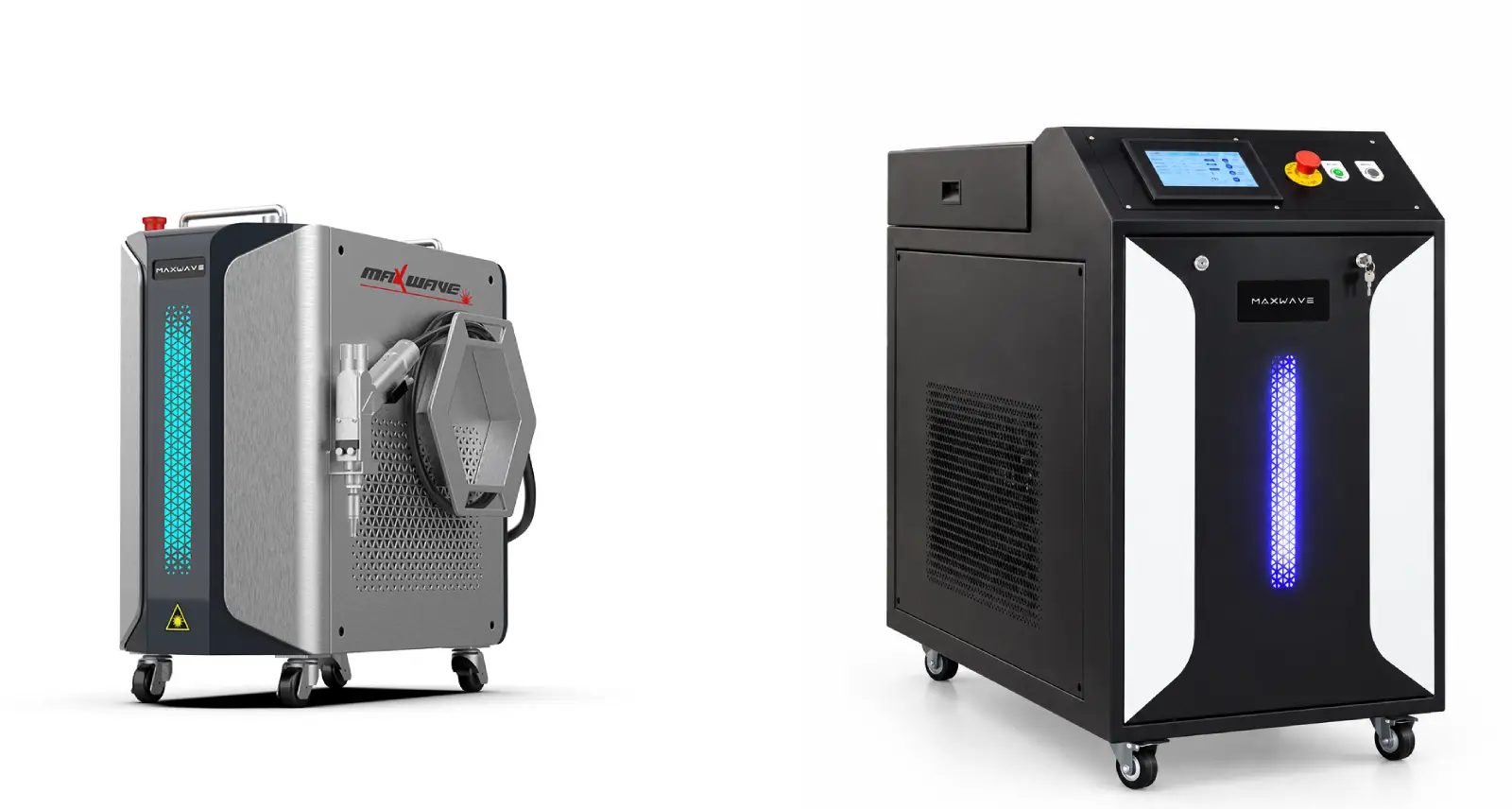
1. What Is the Difference Between Air and Water Cooling?
Both cooling systems have the same basic purpose:
Remove heat from the laser source and other critical components.
The difference is how that heat is transferred away from the machine.
How Air Cooling Works
An air-cooled fiber laser welder uses fans, heat sinks and internal airflow to remove heat.
There is no separate coolant loop or external water chiller.
That makes the complete system simpler and usually easier to move.
The main advantages are:
- Faster setup
- Easier transportation
- No coolant management
- Fewer cooling components
- Smaller overall footprint
This can be especially useful for field repair, door and railing work, automotive applications and workshops where the machine regularly moves between stations.
How Water Cooling Works
A water-cooled system circulates coolant through the machine and transfers heat to a chiller.
Depending on the design, the cooling system may include a pump, reservoir, hoses, temperature sensors and refrigeration unit.
This adds complexity, but it also gives manufacturers another way to manage sustained thermal loads.
Water cooling is therefore common in fixed industrial equipment where portability matters less.
Cooling Does Not Decide Weld Quality
A water-cooled machine does not automatically produce a better weld.
An air-cooled machine is not automatically less powerful or less precise.
Weld quality still depends heavily on:
Laser power, focus, beam control, joint fit-up and welding parameters.
Cooling mainly determines whether the internal system can remain within its designed operating temperature during your workload.
That is why two handheld laser welders at the same nominal power can use different cooling architectures.
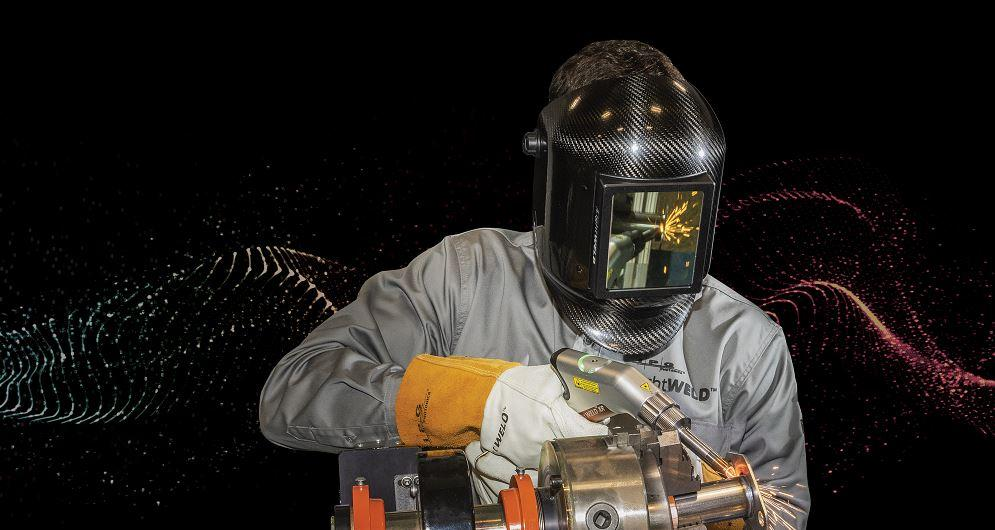
2. When Is an Air-Cooled Welder Better?
Air cooling makes the strongest case when flexibility and simple ownership matter.
Mobile and On-Site Welding
Removing the external chiller reduces the amount of equipment that has to move with the welder.
This is useful for businesses doing:
Field repairs.
Doors and railings.
Automotive work.
On-site fabrication.
For a portable laser welder, portability should be judged by the complete system—not only the weight of the welding gun.
A lighter overall setup can save significant time when the machine is transported regularly.
Small and Medium Fabrication Shops
Air cooling can also fit shops producing cabinets, kitchen equipment, enclosures, furniture and general sheet-metal products.
These businesses may value a machine that can be switched on and used without managing an additional coolant system.
For a workshop without dedicated maintenance staff, fewer cooling components can also simplify ownership.
Frequent Job Changes
A shop may weld a stainless cabinet in the morning, move the machine for railing work later, then use it for another custom job.
In this workflow, setup time becomes part of productivity.
The easier the machine is to reposition and restart, the more useful it becomes.
Air Cooling Is Not Only for Light Work
One outdated assumption is:
“Air-cooled machines are only suitable for low power or short welding cycles.”
Modern thermal designs have changed that.
Higher-power air-cooled handheld laser welders are now available, so cooling type alone should not be used to predict duty cycle.
Instead, ask the supplier:
Can this exact model maintain rated performance during my normal welding cycle?
That is much more useful than simply asking whether the machine is air-cooled.
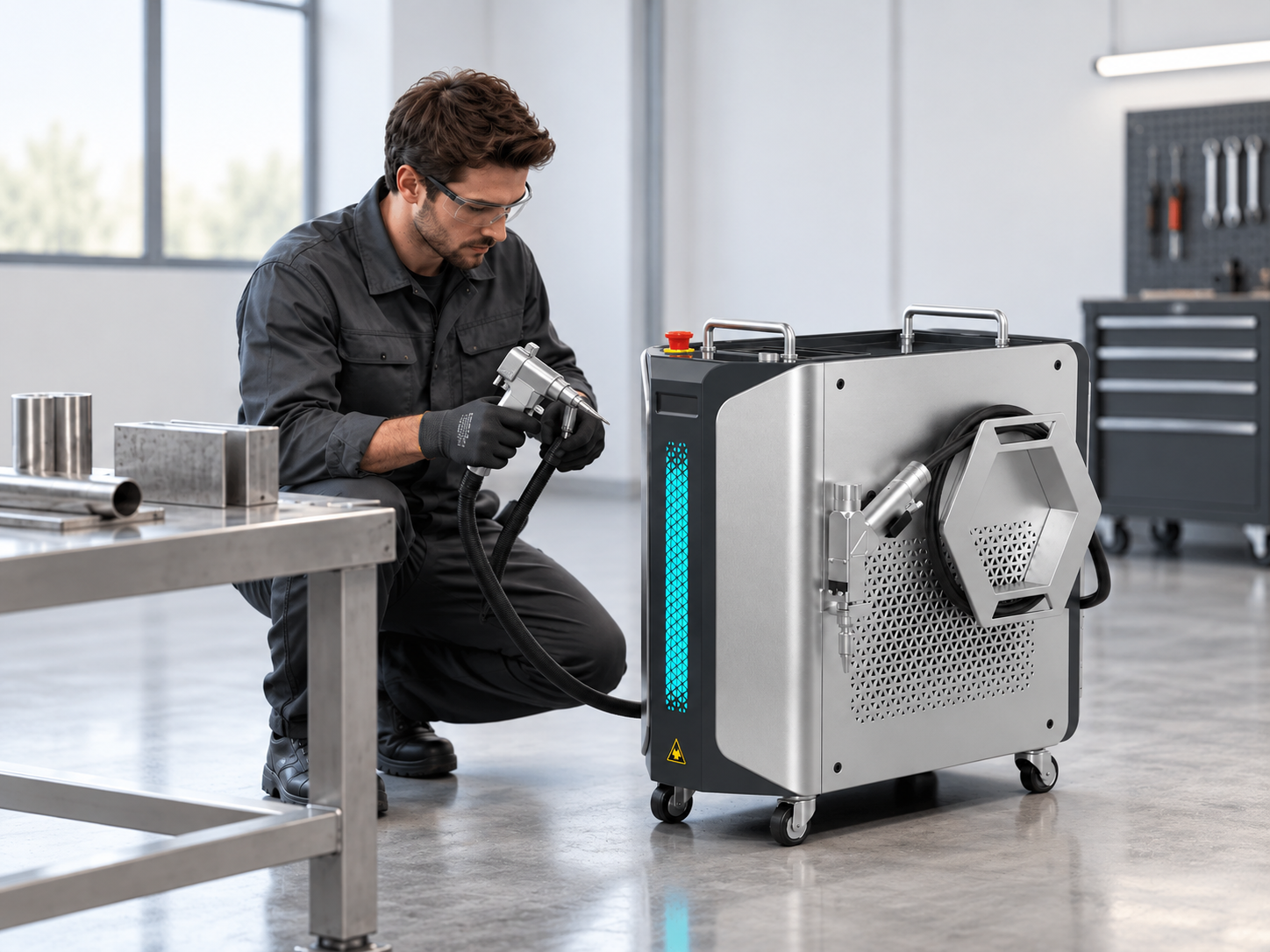
3. When Is a Water-Cooled Welder Better?
Water cooling becomes more attractive when the machine stays in one place and production stability matters more than portability.
Fixed Production Workstations
If the laser welder remains beside the same production line every day, extra cooling hardware creates less inconvenience.
The priorities shift toward:
Stable output.
Thermal management.
Long production runs.
Serviceability.
In this environment, a water-cooled design may be entirely appropriate.
Heat-Heavy Machine Designs
Some laser sources and system architectures are specifically designed around liquid cooling.
In these machines, the water loop is part of the intended thermal design rather than simply an optional accessory.
This is why the correct question is not:
“How many watts before I need water cooling?”
It is:
“What cooling architecture was this exact laser system designed to use?”
Power matters, but it does not determine cooling type by itself.
Hot Workshop Environments
Air-cooled machines ultimately release heat into the surrounding air.
When the workshop itself is very hot, thermal management may become more challenging.
A water-cooled design can provide more controlled heat removal in some fixed industrial environments.
However, water cooling does not eliminate temperature limits.
Always confirm the manufacturer’s recommended ambient operating range.
Maintenance Is the Main Trade-Off
Water cooling adds parts that an air-cooled system does not have.
These can include coolant, filters, pumps, hoses and a chiller.
That means more components need inspection and maintenance.
This does not make water cooling unreliable.
It simply means:
More cooling hardware creates more maintenance points.
For a production factory, that may be a reasonable trade-off.
For a mobile repair business, it may not be.
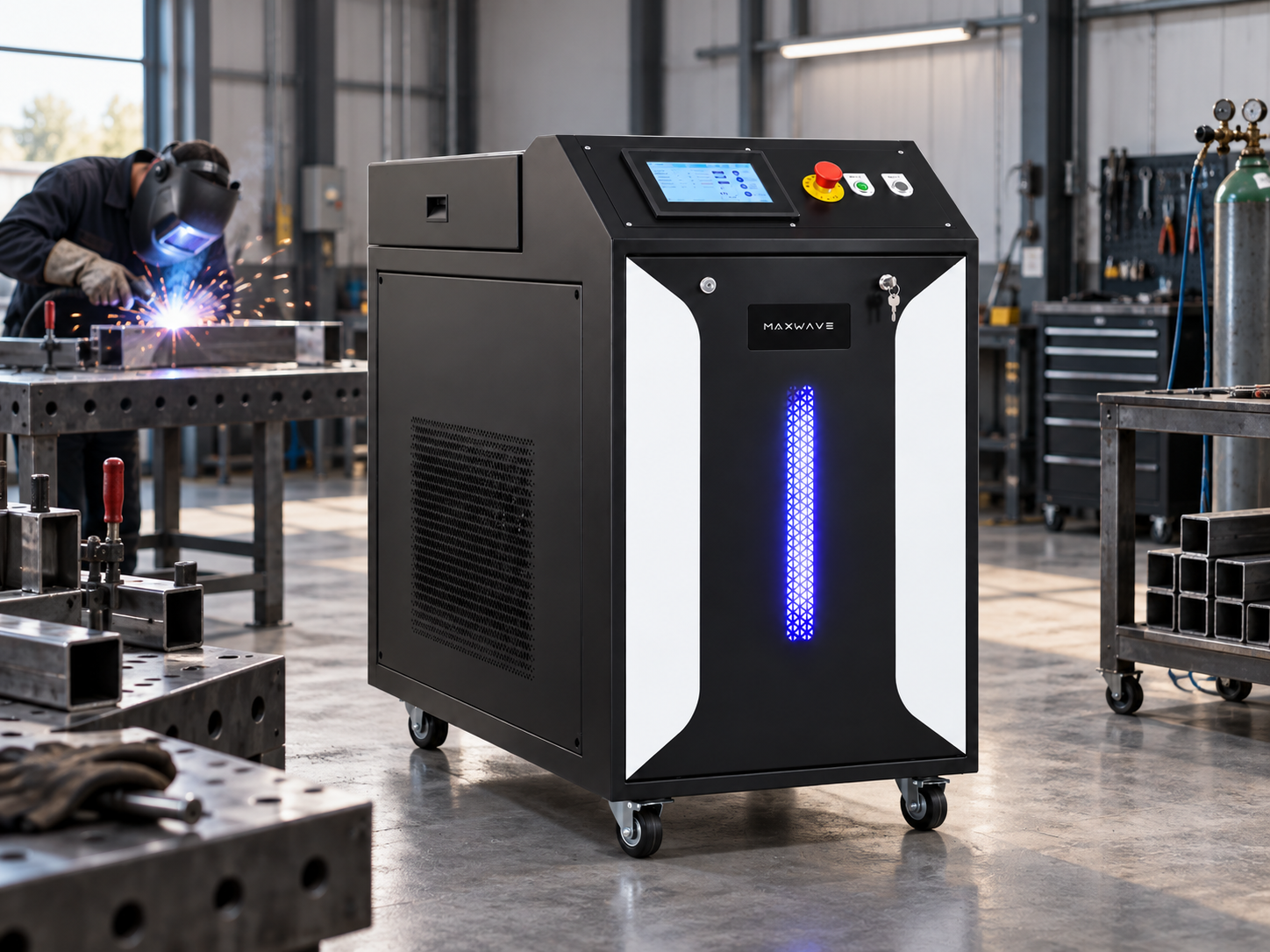
4. How Should You Choose the Right Cooling System?
Do not start with wattage alone.
Start with how the machine will actually be used.
Check Your Workload
First ask:
- Does the machine stay in one place?
- How long are your normal welding runs?
- How often does the machine need to move?
- What is your normal workshop environment?
If mobility is a major requirement, air cooling gains a clear advantage.
If the laser welding machine stays in one production cell, compare the sustained-performance characteristics of both systems.
Check Continuous Operation
Instead of asking:
“Is water cooling better?”
ask:
“Can this machine maintain rated output during my normal production cycle?”
You should also know what happens when the machine approaches its thermal limit.
Does it alarm?
Reduce output?
Shut down?
The protection strategy tells you much more about real production reliability than the cooling label alone.
Compare Maintenance
For air-cooled systems, ask about:
Fans, air filters and airflow maintenance.
For water-cooled systems, ask about:
Coolant, filters, pumps and chiller maintenance.
Do not assume a universal maintenance schedule.
The correct service interval depends on the specific machine design and manufacturer recommendations.
Test Your Actual Work
The most reliable comparison is a real production-style test.
Give the supplier the metal and thickness you weld most often.
Then ask them to run the machine under a workload similar to yours.
Compare:
Weld quality + Welding speed + Operating stability + Setup time
This tells you whether the cooling system creates a real advantage in your business.
Conclusion
Air-cooled vs water-cooled handheld laser welder—which should you choose?
Choose air cooling when portability, quick setup, compact size and simpler maintenance are important.
Choose water cooling when the machine is designed around liquid cooling and your priority is fixed industrial production rather than mobility.
Do not assume:
Air-cooled = low power
or:
Water-cooled = better welding.
Neither statement is universally true.
The better buying sequence is:
Choose the welding capability first → confirm the workload → check whether the cooling system can support it.
For many mobile and small-to-medium fabrication businesses, an air-cooled handheld laser welding machine can reduce setup and maintenance complexity.
For fixed industrial production, a properly designed water-cooled system may provide a better fit.
We can recommend the appropriate power and cooling configuration based on the work you actually need to perform.

0 Comments