
Most buyers negotiate laser cleaning machine pricing blindfolded. Vendors know the margins. You don’t.
That gap costs thousands—through overpayments, mismatched specs, and equipment failures on the shop floor. This guide strips away the fluff and gives you exactly what you need: real 2026 pricing across every power tier, a clear cost comparison against sandblasting and chemicals, and a checklist to use before signing any quote.
2026 Laser Cleaning Machine Price Ranges by Power & Type
Four power tiers. One brutal spread. Here’s where every dollar goes.
The global laser cleaning market in 2026 runs from $2,499 to $90,000+ — depending on power, laser type, and where you buy. Know which tier fits your application before you talk to any vendor. That single step separates a smart capital investment from an expensive mistake.
Entry Level: 20W–100W Pulsed Systems
light rust. Small parts. Occasional jobs.
- China factory-direct: $2,499–$5,000
- US/EU distributors: $4,000–$8,000+
These portable Laser cleaning machines handle light-duty surface prep. They are not built for 24/7 industrial throughput. Run continuous production shifts? This tier will let you down.
Floor warning: Be skeptical of anything marketed as “industrial” under $3,800–$4,000. Multiple suppliers have flagged sub-$5,000 units as a poor fit for serious production environments. Take that seriously.
Mid-Range: 100W–500W Pulsed / 1000W CW Systems
This is where most workshop buyers land — and where the widest price variation lives.
- Factory-direct pulsed (100–500W): $5,000–$23,100
- Low-cost Chinese handhelds (200–500W pulsed / 1000W CW): $2,999–$8,500
- US/EU distributors: Add 40–60% across the board
Mid-range fiber laser cleaning machines cover general rust removal, paint stripping, and oxide layer cleaning. They work well across fabrication and metalworking shops.
Industrial: 500W–2000W Systems
Production-grade laser rust removal costs jump at this tier — pulsed configurations hit hardest.
| Type | Factory-Direct | US/EU Distributor |
|---|---|---|
| 1500–3000W CW | $3,000–$6,500 | $8,000–$20,000+ |
| Reliable 1500W CW (quality spec) | $8,000–$12,000 | $15,000–$30,000 |
| 1000–2000W pulsed | $27,500–$90,350 | Varies by brand |
Branded industrial systems — PULSAR SHARK-300, PANDA-2000 — land at $8,500–$35,000 through supported channels.
Heavy Industrial: 2000W+ CW and High-Power Pulsed
- 6000W CW factory-direct: ~$13,000
- Premium pulsed systems (CleanLASER CL 1000, Laserax LXQ-500): $40,000–$85,000
- Integrated cells with robotics: $80,000–$200,000+
The pulsed laser cleaning system price gap is real and steady. Pulsed units run 2–5× more expensive than CW systems with similar average power. Better pulse control electronics, precision optics, and stronger thermal management all push the price up. Each component adds to the final cost.
The 40–60% Distributor Markup Reality
This markup shows up at every power tier without exception. A $5,000 factory-direct entry unit becomes $8,000+ at a US distributor. A $13,000 professional CW system reaches $20,000–$30,000 through reseller channels.
That markup pays for local support, warranty infrastructure, and compliance handling. Those are real costs with genuine value. Still, you need to decide whether that value fits your specific operation — before you sign anything.
Pulsed vs. CW Laser Cleaner: Which Type Fits Your Budget and Application?
Two machines. Same category. Different physics — and a price gap that can make or break your budget.
This isn’t a preference call between pulsed and continuous wave (CW) laser cleaners. It’s an engineering decision. Pick the wrong type, and you’re either burning through base material or running a $40,000 machine on jobs a $10,000 unit could finish in half the time.
Here’s the core split:
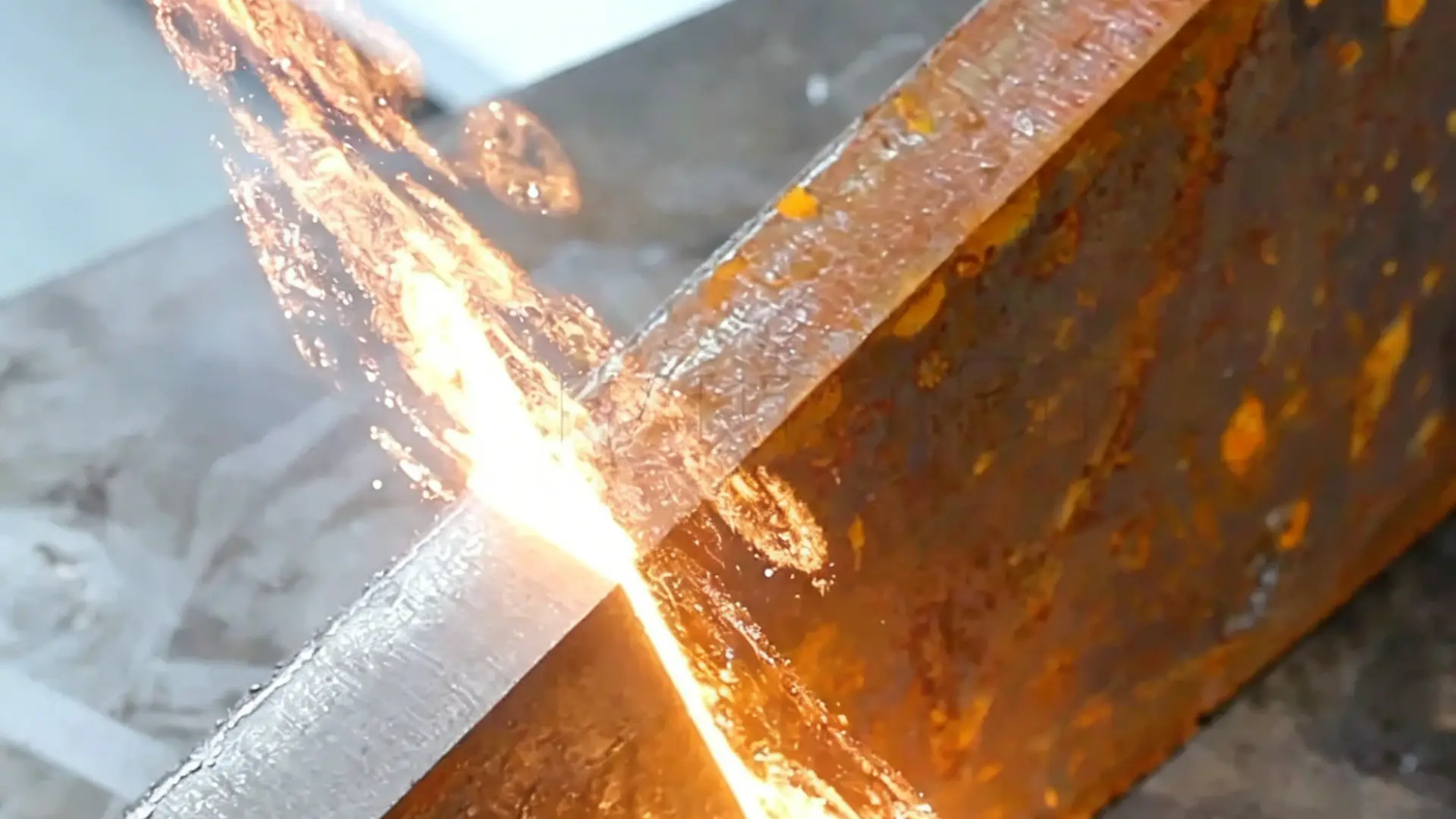
Continuous Wave (CW) delivers sustained laser output. Surface temperatures climb to ≈400°C. That heat is a feature — it blasts through heavy rust, thick oxide scale, and large-area Weld prep fast. A 2000W CW system clears 6–12 m²/h on medium rust. Direct operating cost sits at $0.10/m². That makes it the lowest cost-per-area option for bulk industrial work.
Pulsed laser cleaning systems fire in nanosecond bursts. Peak power spikes high. Surface temperatures stay between 40–96°C. The base material never absorbs sustained heat. That’s the reason precision mold cleaning, electronics, aerospace composites, and heritage stone restoration need pulsed — not CW.
Where Each Type Wins
| Application | Right Choice | Why |
|---|---|---|
| Heavy structural rust, ship hulls, steel beams | CW 1500–3000W | High throughput, low $/m² |
| Thick paint / multi-layer coatings | Pulsed 100–300W | High peak power strips without base damage |
| Precision molds (tire, injection) | Pulsed 100–200W | No tempering, no cavity distortion |
| Electronics, PCB, battery tabs | Pulsed (ns range) | 400°C CW temp destroys components |
| Cultural artifacts, stone carving | Pulsed 50–200W | Controlled ablation, no thermal cracking |
The Budget Reality
Pulsed systems run 2–5× the price of equivalent CW machines. A 200W pulsed unit costs $15,000–$40,000. A 2000W CW system? You can source it for $7,000–$15,000 direct from Chinese manufacturers.
Operating costs tell the same story — just in reverse. CW runs ~$0.75–0.80/hr. Pulsed runs ~$0.40–0.45/hr.
- High-precision, low-volume work? Pulsed wins on running cost.
- High-volume surface prep? CW wins on throughput and cost per job.
Bottom line: Match the laser type to what your material can handle thermally — not to your price preference. The cheaper machine on the wrong job ends up costing more than the right machine at full price.
The Real Cost Breakdown: What’s Included in the Price Tag
That $5,000 quote sitting in your inbox? It’s not $5,000.
Most vendors quote the bare machine price — the chassis, the laser source, the basics. Everything else gets added later, line by line, without much notice. By the time the unit reaches your floor and your operator knows how to run it, the real number looks very different.
Here’s what a complete price contains:
Hardware (the visible part): – Laser source — the single biggest cost driver. It determines power, lifespan, and brand premium – Scan head or handheld gun — often priced as a separate line item – Cooling system — air-cooled is cheaper; water-cooled adds cost and more maintenance work – Safety enclosure, interlocks, warning systems — low-price quotes often leave these out
Delivery costs (the part that surprises buyers):
– International freight and cargo insurance
– Import customs clearance, brokerage fees, and port handling
– Local electrical upgrades — voltage conversion, grounding, circuit capacity
Setup and training (not free):
– On-site installation and parameter calibration
– Operator training and EHS safety certification
– First-year spare parts kit
Always request two quotes side by side:
| Line Item | EXW / Bare Machine | Delivered / Turnkey |
|---|---|---|
| Base unit | ✓ | ✓ |
| Shipping + insurance | ✗ | ✓ |
| Import duties + clearance | ✗ | ✓ |
| Installation + calibration | ✗ | ✓ |
| Operator training | ✗ | ✓ |
| Annual maintenance contract | ✗ | ✓ |
The gap between those two columns is typically 20–40% of the bare machine price on cross-border industrial equipment purchases. That’s a real number, not an edge case.
The traps that catch experienced buyers:
A low headline number is a filter, not a final price. Vendors who lead with bare-machine pricing are betting you won’t ask follow-up questions. Some bury electrical modification costs, calibration fees, and warranty exclusions in the fine print. They count on you not reading that far.
Warranty scope needs a close look. Ask straight out: does it cover parts, labor, on-site response, and software updates — or just component replacement? The gap in real protection is huge.
One useful reference point: retail pricing across industrial equipment categories averages 2–4× production cost. A $4,000 unit didn’t cost $3,800 to build. Keep that in mind. It helps you read any quote with clearer eyes.
TCO Analysis: 3-Year Total Cost of Ownership vs. Sandblasting & Chemical Cleaning
Three years of operating costs tell a story that the purchase price never does.
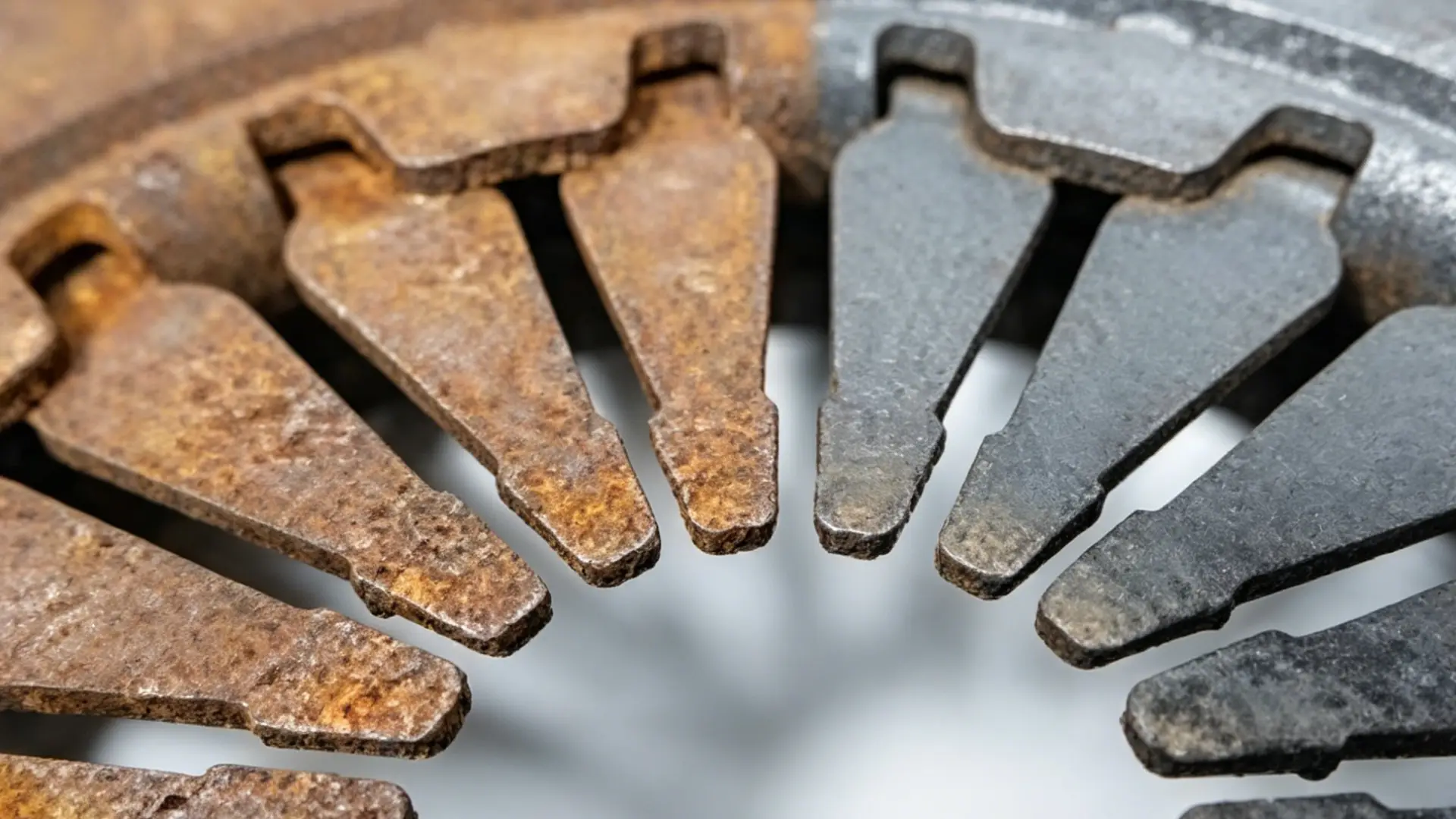
Most capital equipment decisions get made on the sticker — the machine number, the freight quote, the installation estimate. The number that matters gets ignored: what the machine costs you from Day 1 through the end of Year 3. That’s where sandblasting and chemical cleaning drain budgets that looked fine on paper.
Here’s the model, built on uniform assumptions so the comparison is honest:
- Annual operating days: 250
- Daily runtime: 6 hours → 1,500 hours/year → 4,500 hours over 3 years
- Baseline equipment price for each method: $10,000 (same starting point, clean comparison)
- Industrial electricity rate: $0.10/kWh
The 3-Year TCO Comparison Table
| Cost Category | Laser (CW) | Sandblasting | Chemical Cleaning |
|---|---|---|---|
| Equipment purchase | $10,000 | $10,000 | $10,000 |
| Energy (electricity) | $675 | $5,400 | $3,150 |
| Consumables (abrasive / chemicals) | ~$500 | $6,750 | $5,400 |
| Maintenance | $900 | $2,100 | $1,500 |
| Waste disposal | $500 | $1,350 | $18,000 |
| Subtotal (gross cost) | $12,075 | $26,800 | $38,050 |
| 3-year residual value | −$3,000 (30%) | −$2,000 (20%) | −$1,500 (15%) |
| 3-Year Net TCO | ≈ $9,075 | ≈ $24,800 | ≈ $36,550 |
Same $10,000 entry point. Three very different end results.
Where the Gap Comes From
The laser advantage doesn’t live in one line. It spreads across three separate cost categories that build up over time.
Energy consumption is the first gap. A 100–200W CW laser cleaning machine draws about 1.5 kW total system input. Over 4,500 hours, that’s 6,750 kWh — costing $675 at industrial rates. A sandblast cabinet running a 12 kW compressor pulls 54,000 kWh over the same period. That’s a $5,400 electricity bill. The laser uses 8× less power on equal work.
Consumables are the second gap. Laser cleaning needs no abrasive media, no chemical baths, no regular replenishment cycles. Protective lens films and filter cartridge replacements top out around $500 over three years — a minor cost. Sandblasting burns through about 4,500 kg of steel grit per year at $0.50/kg. That adds $6,750 in abrasive costs alone. Chemical cleaning lines spend $1,800/year on process chemistry — $5,400 over three years.
Waste disposal is where chemical cleaning breaks down. Spent chemical bath solution runs 6 cubic meters per year at a hazardous waste disposal rate of $1.00/l. Over 36 months, that single line item reaches $18,000 — close to double the original equipment cost. No other category hits that hard on chemical TCO. Laser surface cleaning generates no secondary waste stream. Dust extraction filtration over three years runs $300–$500.
The ROI Math: When Does the Laser Pay Back?
Payback period depends on what you’re replacing and how hard you’re running the machine.
Against sandblasting: The laser saves about $15,700 in operating costs over three years ($24,800 minus $9,075 differential). On a $10,000 laser rust removal machine, that’s a payback period under 24 months on consumables and energy savings alone. Labor savings haven’t even entered the calculation yet.
Against chemical cleaning: Operational savings over three years reach $27,475. That’s close to three times the machine purchase price recovered in running costs. Payback on consumable and waste savings alone clears well under 14 months.
Labor savings push the timeline even shorter. Say your laser setup cuts out 0.33 of a full-time operator position — realistic in most mid-volume shops — at $20/hour. That’s 500 hours of annual labor recovered, worth $10,000/year. Add that to the operating cost gap, and a $10,000 CW Laser cleaning machine can return its full investment in 8–12 months under standard production conditions.
The 12–18 month ROI window most industrial buyers cite isn’t a marketing claim. It’s real at 6 operating hours per day, 250 days per year, replacing work done by sandblasting or a chemical process line. The threshold is simple: free up the equivalent of 0.22–0.33 of one operator’s shift hours, and the numbers close within that window.
For shops running at $30/hour labor rates — common in North American or Western European manufacturing — that timeline shrinks by about one-third.
The Number That Wins Budget Approvals
Bring a capital expenditure request to a finance committee. The purchase price is the first thing they challenge and the last thing that decides the outcome. What moves decisions is the three-year net cost position.
A $10,000 laser cleaning machine at $9,075 net TCO over three years sits in a different category than a sandblast system at $24,800 or a chemical line at $36,550. The laser isn’t cheaper to buy. It’s far cheaper to own — and that’s the number worth putting in front of management.
Key Buying Factors That Drive Price: A Spec-by-Spec Breakdown
Five specifications drive about 80% of the price difference between two machines in the same power tier. Miss one, and a vendor can quietly swap in a cheaper component. You won’t notice until the machine is already on your floor.
Power Rating: The Largest Single Price Driver
The laser source alone makes up 40–60% of the total bill of materials on most fiber Laser cleaning machines. No other single component shapes the final price more than this one.
Every step up the power ladder adds cost in a predictable pattern:
- Each 1 kW increase in source power adds $2,000–4,000 to the factory-direct price. That covers the laser source itself plus forced upgrades to chillers, optics, and power supply.
- On entry-level pulsed systems, each power step (20W → 30W → 50W → 100W) adds $150–250 per tier to the ex-factory price.
The cost-to-power relationship stays linear — until cooling hits a hard wall at 500W.
Cooling System: The Spec That Hides in the Fine Print
Air-cooled laser cleaning systems top out at ≤500W. Above that point, heat builds faster than fin arrays and heat pipes can handle. Every major source manufacturer — Raycus, MAX, IPG, JPT — draws the same line in their product lineups. Above 500W, water-cooled is the only path forward.
Here’s what that adds to your quote:
| Configuration | Added Cost to Machine Price |
|---|---|
| Air → water-cooled (small systems) | +$200–400 |
| Water-cooled chiller, 1–3kW | +$1,200–2,000 |
| Dual-circuit chiller, 6–12kW | +$3,000–6,000 |
Watch out for this common trick: some vendors pair an undersized chiller with a larger laser source to cut the headline price by $300–500. Under full summer load, that combination triggers thermal protection shutdowns on a regular basis. Ask for the chiller’s rated cooling capacity matched against the laser source’s heat dissipation spec — not just the kW output number.
Laser Source Brand: Real Price Gap, Shrinking Performance Gap
IPG carries a 40–80% price premium over domestic Chinese sources (Raycus, MAX) at equivalent CW power. On pulsed marking-class sources, that gap stretches to 30–100% depending on pulse configuration.
The honest 2025–2026 picture on that premium:
- Power stability: IPG holds ±1–2%. New-generation Raycus and MAX models now land at ±1.5–3%. The gap has closed to 1–2 percentage points.
- Declared service life: IPG rates its continuous-wave sources at >100,000 hours MTBF. Current Raycus/MAX CW series clock in at >80,000–100,000 hours.
- Real-world lifespan difference: Early-generation comparisons showed a 2–3× gap. Field data from cutting shops and system integrators now puts that number at 1.1–1.3× under the same working conditions and maintenance schedules — IPG at 6–8 years, domestic sources at 5–7 years.
The IPG premium has shrunk from 2–4× down to 1.3–2×. Its reliability edge over domestic top-tier sources now sits at 20–30% — a far cry from the large gap it used to be. For a handheld laser cleaning gun running one shift per day in a mid-volume shop, that gap doesn’t justify the extra cost. For a 24/7 heavy industrial line processing ship hulls or structural steel, the math shifts in IPG’s favor.
MOPA vs. Standard Pulsed: The Pulse Architecture Premium
JPT MOPA sources run $100–250 more per unit than standard Q-switched sources at the same wattage. At the finished machine level, that jumps to a $200–400 difference on the shelf price.
So what do you get for it? Adjustable pulse width and frequency, each controlled on its own. On laser paint stripping machines and precision mold cleaning jobs, that control stops substrate damage that a fixed-pulse system simply can’t avoid. Jobs sensitive to heat input — thin-gauge metal, coated aluminum, electroplated surfaces — MOPA earns back its cost through scrap reduction. Running high-volume structural rust removal? Standard pulsed or CW is the smarter spend.
Scan Head and Optics: The Component Most Buyers Never Ask About
The scan head is where low-price quotes silently eat their margin. A premium import scan head (Scanlab-class) costs $1,000–2,000. A mid-tier domestic unit runs $400–800. An unbranded budget head comes in at $150–300.
That one swap creates a $300–1,500 spread in machine price — with zero visible difference on the spec sheet. You’d only catch it by asking the right question.
The throughput gap is real and measurable. High-end scan heads hold trajectory accuracy at 3,000–5,000 mm/s. Budget heads lose reliability above 800–2,000 mm/s under production conditions. On a 100×100mm surface fill task, that gap translates directly to cycle time: 2–3 seconds per part vs. 4–6 seconds per part — a productivity difference of more than 50%. On a production line running hundreds of parts per shift, that’s the gap between needing one machine and needing two.
The spec question to ask every vendor: “What scan head brand and model is installed, and what is its rated MTBF?” Can’t get a straight answer on the second part? The component likely isn’t worth pursuing further on the first.
How to Verify If a Low-Price Quote Is Legitimate or a Red Flag
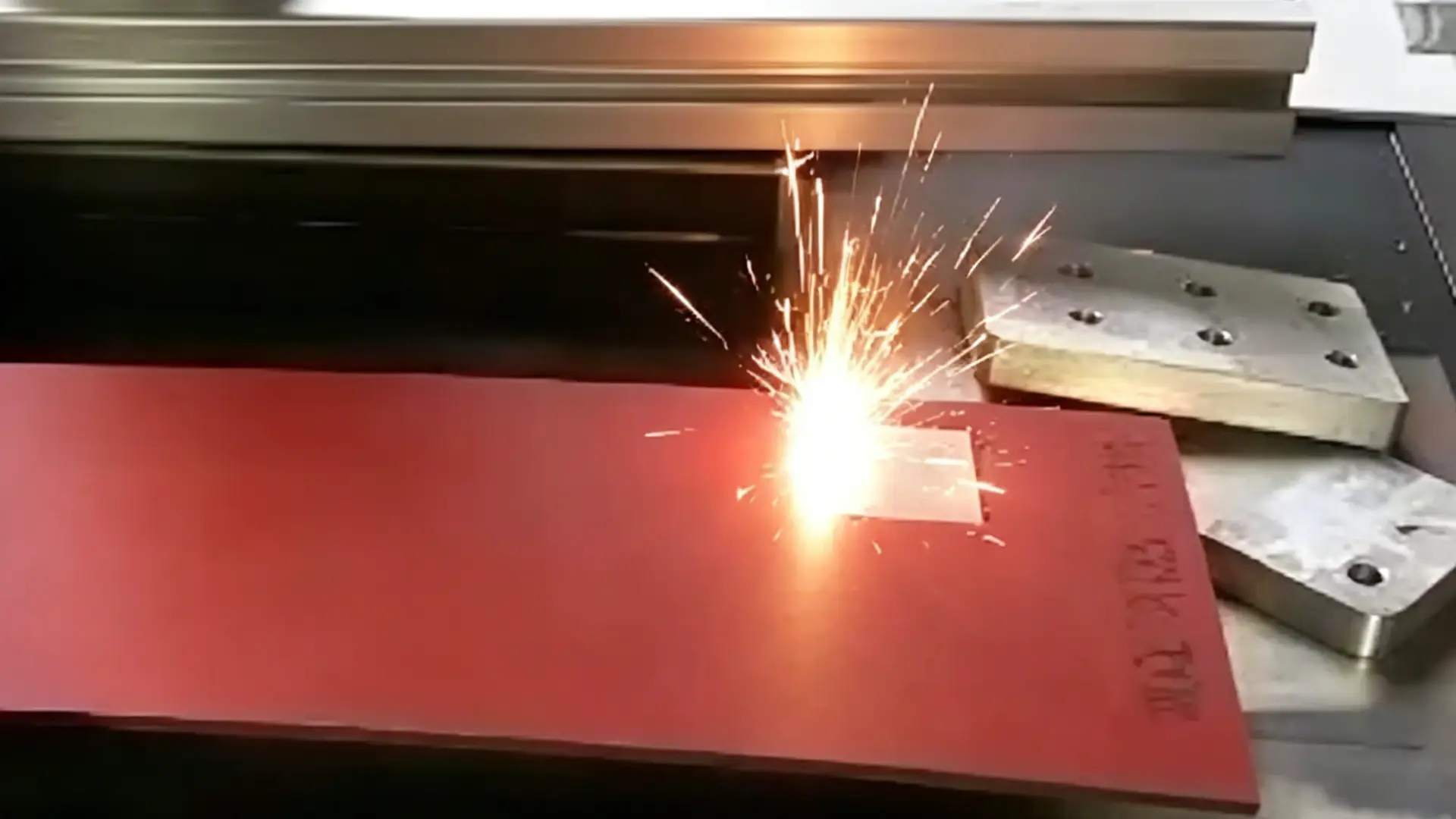
A legitimate low price leaves a paper trail. A trap doesn’t.
That’s the whole test. Everything else is just running the trail down.
A quote comes in 30–40% below every competing offer. Two things are possible: the supplier found a real cost advantage, or they’re hiding what they cut. Find out which one — before the wire transfer clears.
The minimum proof package a real supplier can hand over without hesitation:
- Serial number list tied to the exact unit quoted
- Unit-level power test report (test date, measured output, test method — not a brochure spec)
- Cooling system brand, model, rated capacity, and flow rate
- Signed Factory Acceptance Test (FAT) report with photos or video
- Official company registry screenshot
- Two contactable customer references in your industry
Any item on that list triggers a delay, a deflection, or a “we don’t normally do that”? Stop. That’s your answer.
The “Fake Power” Problem
The most common low-price trick isn’t outright fraud. It’s spec inflation.
A quote states 1500W nominal power. The real usable output is 800–1000W. Why? The build uses a reduced-drive pump source, a conservative internal power limiter, or an undersized chiller. That chiller forces thermal throttling under load.
The machine ships. It runs. It just never performs the way the quote implied.
The fix is simple. Insist on unit-specific power testing using the exact serial number you’ll receive — not a sample unit pulled for the demo.
Five Verification Steps
1. Trace the serial numbers. Request the laser source serial number list. Check that the same IDs appear across the factory test record, packing list, and warranty document. A mismatch between any two of those means the quote doesn’t describe what you’re buying.
2. Demand a unit-level power report. Broad “nominal power” claims tied to a brochure mean nothing. The report you need states the test date, measured output, and the specific fixture used — for that unit, not a category average.
3. Check the cooling specs against the laser load. “water cooling included” is not a spec. Ask for the chiller model, rated cooling capacity in kW, flow rate, and temperature control range. Then check it against the laser source’s actual thermal dissipation requirement. An undersized chiller is the top reason cheap machines fail at full power in summer.
4. Require a Factory Acceptance Test before shipment. This covers power output, beam stability, cooling performance, and sustained run-time under load — witnessed or documented with signed results. A supplier who refuses FAT is telling you something important about what the test would show.
5. Verify the legal footprint on your own. Pull the company registration from an official government database. Cross-check the business name, address, and phone number against the website and invoice. Gaps between those records — or a registration date from six months ago — are not small admin details. They are risk signals.
High-Risk Quote Signals at a Glance
| Signal | What It Means |
|---|---|
| Price far below market, no explanation | Cost cut somewhere in the build |
| No serial-number traceability | Quote may not match actual unit |
| Nominal power only, no measured output | Spec inflation risk |
| Generic “water cooling” language | Undersized or unbranded chiller |
| No verifiable company registration | Legal recourse is limited |
| “Pay today to lock price” pressure | Classic high-risk close tactic |
The cheapest quote in your inbox isn’t a trap by default. A legitimate supplier at a real price point has nothing to fear from serial numbers, test reports, and a registry check. They’ll send the documentation before you finish asking.
The ones who can’t — won’t.
Laser Cleaning Machine Price by Industry & Use Case (2026 Buyer Scenarios)
Different industries don’t just buy different machines — they operate in different price worlds.
A shipyard maintenance manager and a mold shop owner are both searching “laser cleaning machine price 2026.” One needs a $6,000 handheld. The other needs a $60,000 pulsed system. Send either one to the wrong price range and you’ve wasted their time.
Here’s the breakdown by what you do.
Shipbuilding & Heavy Industry: $30,000–$80,000
Hull rust. Thick coatings. Large weld prep on structural steel. This work demands 2000W–3000W CW systems — and a serious automation budget.
A bare 3000W CW handheld from a Chinese OEM starts at $8,000. That price changes fast. Add robot integration, a safety enclosure, fume extraction, and an EU/US brand premium — and the bill climbs quickly. Full shipyard-grade packages land at $40,000–$80,000.
Branded reference points:
– Laserax LXQ-500 (pulsed): $60,000–$85,000
– CleanLASER CL 1000: $40,000–$60,000
– IPG CleanTech IR-3040: $50,000–$70,000
Realistic budget for serious heavy-industry work: $30,000+. Below that, you’re looking at a manual handheld, minimal automation, and spot work only.
Automotive Manufacturing & Pre-Weld Cleaning: $8,000–$40,000
weld seam prep, oxide removal, chassis rust — the auto sector runs on 1000W–1500W CW handhelds. That’s the balance between throughput and portability on the production floor.
| Buyer Type | Configuration | Budget Range |
|---|---|---|
| Auto repair shop | 1000W CW, China direct | $3,800–$6,000 |
| Mid-market fabricator | 1500W CW, quality mid-tier | $6,000–$8,500 |
| OEM / Tier-1 integration | 1000–1500W CW automated cell | $20,000–$40,000 |
Branded options in this segment: Adapt Laser AL-150 ($10,000–$28,000), PULSAR PANDA-2000 ($12,000–$35,000).
Precision Molds & Aerospace: $20,000–$60,000+
Heat is the enemy here. Surface integrity can’t be compromised. That makes pulsed fiber laser systems — 50W to 500W — the clear choice for this work.
- Mold shop, 100–300W pulsed from a reputable integrator: $20,000–$40,000
- Aerospace MRO with process certification requirements: $40,000–$60,000+
Budget pulsed units (20–100W) from Chinese factories start at $2,499–$5,000. They handle low-volume, low-stakes jobs fine. They won’t meet aerospace qualification requirements.
SME Fabrication Shops: The $8,000–$12,000 Floor
The real minimum for a machine that handles daily production shifts without problems is $8,000. Drop below that and you’ll hit compromises fast under real load.
In the $8,000–$12,000 range, you can get a 1500W CW handheld with a Raycus/JPT source, water chiller, 10–15m fiber, and basic safety interlocks. It won’t include robot integration, refined parameter libraries, or full CE system-level certification. But it will hold up shift after shift.
Drop to $5,000–$8,000? You’ll still find 1500W CW hardware. Expect minimal documentation, no onsite training, and a lot of self-integration work on your end.
Portable & Handheld Units: $2,500–$20,000+
Field crews, pipeline contractors, and on-site maintenance teams belong in this category. Form factor matters more than throughput here.
| Power | Price Range (2026) |
|---|---|
| Basic 1000W CW handheld | $2,500–$4,000 |
| Quality 1000–1500W CW | $4,000–$8,000 |
| High-power 2000–3000W CW | $10,000–$20,000 |
| Pulsed handheld systems | $6,000–$20,000+ |
The Laser Photonics CleanTech CT-100 runs $4,000–$12,000 depending on configuration. Three-in-one welder/cleaner/cutter portables start around $3,699.
Fixed automated cells start at $15,000 and push past $80,000 with full robot integration. That’s a separate purchase category.
FAQ: Laser Cleaning Machine Pricing — Straight Answers to Common Questions
These are the questions buyers send. Here are the answers, without the sales pitch.
How much does a laser cleaning machine cost in 2026?
CW systems start at $1,500–$4,000. Pulsed/MOPA starts at $5,000+. Most production shops buy in the $9,000–$18,000 range — that’s where reliable, capable machines sit. Go above $60,000, and you’re in heavy industrial territory.
Is laser cleaning cheaper than sandblasting?
On consumables, yes — laser runs on electricity. A 1000W system costs around $1.00–$1.50/hour to run. That said, sandblasting can still beat laser on upfront cost. This is true for large-volume jobs with no compliance pressure. Run the full TCO. Don’t just compare sticker prices.
Why are pulsed machines so much more expensive?
It comes down to engineering. Pulsed systems require precision pulse-control electronics, tighter optics, and more thermal management. Each of those adds real build cost. That’s not a markup — it’s what the hardware demands.
What’s the minimum budget for something reliable?
$9,000–$18,000 gets you a capable, production-ready machine. Drop under $5,000 and your application options shrink fast. You’ll hit limits on material types, surface conditions, and cycle speeds.
Conclusion
Laser cleaning machine pricing in 2026 isn’t about finding the cheapest quote—it’s about matching power, laser type, and component quality to your exact application. CW systems dominate high-volume rust removal. Pulsed systems protect precision work. The 3-year TCO always favors laser over sandblasting and chemicals, with payback periods under 24 months.
Verify every claim with serial numbers, test reports, and itemized quotes. Skip the bare-machine pricing traps. Focus on delivered cost and long-term reliability.
Ready to stop overpaying for underperforming equipment? MaxWave manufactures in-house, tests every unit with your actual materials before shipment, and provides full process support to hit your production targets without budget blowouts.

0 Comments