
Buying the wrong laser cleaning machine costs real money. A 2000W unit scorches thin aluminum panels. A weak 100W handheld needs four passes to match one proper cycle. Fiber laser cleaning machines range from a few thousand to over $50,000 — and spec sheets won’t tell you if it actually fits your rust, paint, or oil removal workflow.
Skip the guesswork. Here’s exactly how to match the right machine to your shop’s daily work.
What Type of Contamination Are You Dealing With?
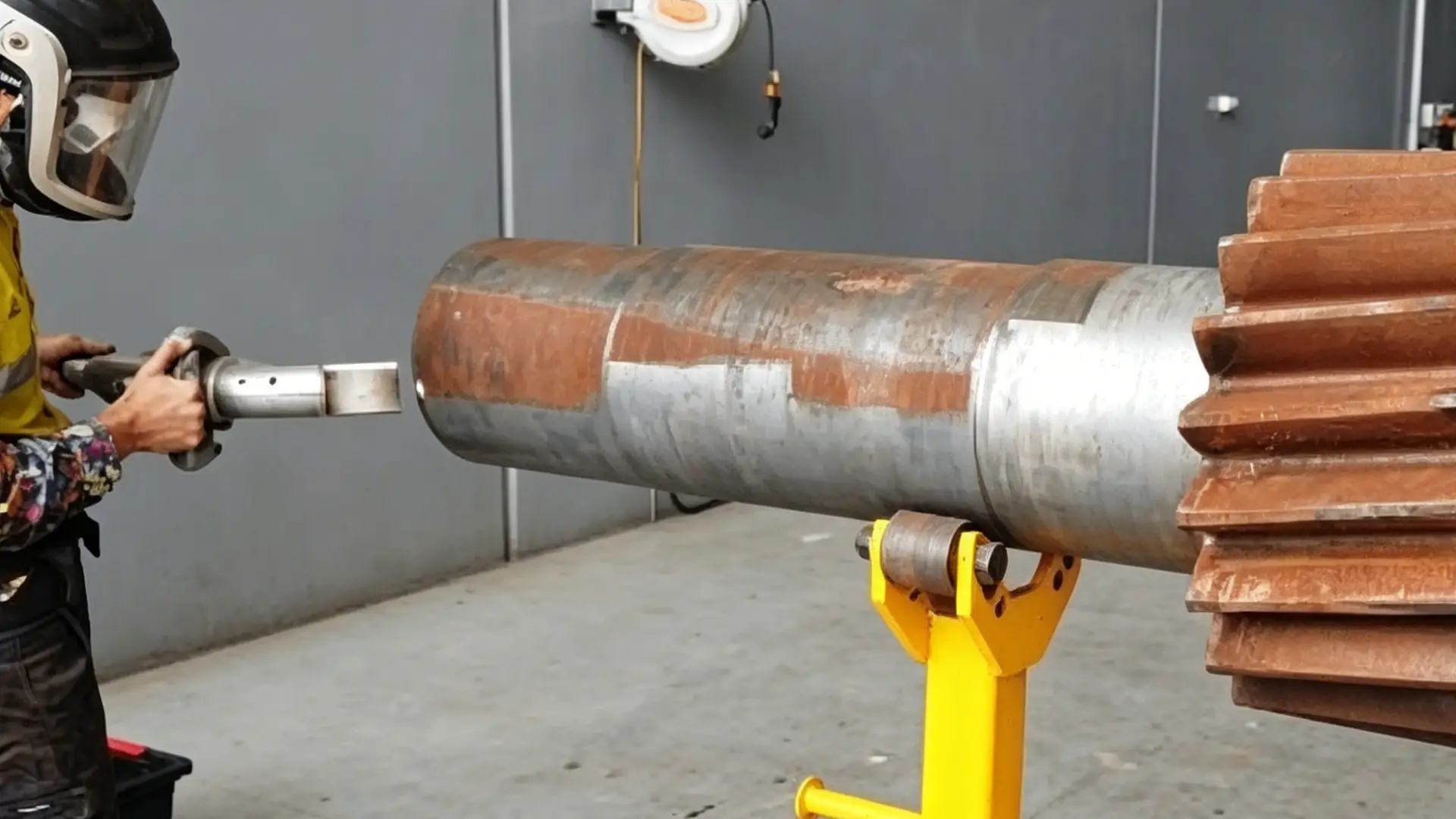
Get the contamination type wrong, and the Machine specs mean nothing.
Rust, paint, and oil each react differently under a laser beam. Each one needs its own energy strategy. Misread your contamination, and you’ll either underpower the job or burn through the substrate beneath.
Here’s how to read what you’re dealing with:
Rust: How Thick, How Deep?
Rust bonds to steel at the grain level. This isn’t a coating — it’s a structural change to the surface itself. Iron oxides absorb 80–95% of NIR laser energy at 1064 nm. Clean polished steel absorbs just 30–40% by comparison. So the laser couples well with rust. The real variable is thickness.
Three levels worth knowing:
- Light flash rust — yellow-brown film, original machining marks still visible, no flaking. Target fluence: 0.5–2 J/cm²
- Moderate rust — uniform brown, partial pitting, surface texture obscured. Target fluence: 2–5 J/cm², multiple passes
- Heavy scale — dark, layered, flaking, deep pits. Target fluence: 4–10 J/cm², slow scan speed; knock off loose scale by hand first
Paint: Know Your Stack Thickness
Industrial paint systems aren’t one layer. A typical primer + mid-coat + topcoat stack runs 60–120 µm. Heavy marine or structural coatings can reach 200–300 µm.
Dark paints absorb over 90% of Laser energy. Bright or reflective paints? Often below 60%. That gap has a direct impact on how much fluence you need — and whether you risk scorching the base metal beneath.
Oil: Fresh vs. Baked — Two Completely Different Problems
Fresh machining oil sits as a 1–10 µm wetting film with weak mechanical adhesion. Use the wrong parameters — pulse too long, fluence too low — and you spread it across the surface instead of removing it.
Baked or carbonized oil is a different problem. It acts closer to a thin paint layer. Absorptivity jumps to 80–90%, and adhesion is strong. You’ll need 0.5–2 J/cm² to break through the char layer.
Quick field check: glossy and smears = fresh oil. Dark, sticky, rubbery flakes when scraped = baked. Each one calls for a different laser setup.
Understanding Your Substrate: The Factor Most Buyers Overlook
Most buyers fixate on wattage. The substrate question rarely makes the list — and that’s where expensive mistakes happen.
Here’s the problem: a 500W fiber laser cleaning machine can deliver flawless results on structural carbon steel and cause immediate surface damage on polished aluminum. Same machine. Same settings. Totally different outcomes. The metal under your contamination changes everything.
Why absorption rates matter more than power numbers:
At the standard 1064 nm wavelength, most fiber laser cleaners hit different metals in very different ways:
| Material | Absorption Rate (1 µm) | Risk Level |
|---|---|---|
| Carbon steel | 55–65% | Low — handles CW and pulsed well |
| Stainless steel (304/316) | 35–45% | Medium — sensitive to heat color |
| Aluminum alloy | 5–20% | High — melting threshold is narrow |
| Copper | 2–10% | Very high — back-reflection hazard |
Aluminum and copper aren’t just poor absorbers. They push laser energy back toward the source. Standard industrial fiber lasers can handle back-reflection below 1% of output power. Cleaning a polished aluminum surface can send back 5–10% of that energy — enough to damage the laser head itself.
For these materials, you need one of two things: – A built-in optical isolator rated at ≥30 dB isolation – A MOPA pulsed laser rated for high-reflectivity surfaces
Precision parts versus structural steel: the tolerance gap is huge.
Structural steel forgives a lot. A heat-affected zone of several hundred microns? Acceptable. Minor surface recast? It gets painted or welded over anyway.
Precision components are a different story. Mold cavities, bearing seats, aerospace seals, and medical parts all have tight surface roughness requirements — often Ra ≤ 0.2–0.8 µm. A HAZ wider than 20–50 µm risks hardness gradients and micro-cracking. Any visible heat discoloration on these parts means rejection.
That tolerance gap is why substrate type — not contamination type — should be the first question you answer before picking a laser surface cleaning system.
Pulsed vs. Continuous Wave : The Most Critical Decision in Your Selection
Two machines. Same fiber laser label. One will ruin your precision mold. The other takes four hours to clean what a well-matched unit finishes in forty minutes. That gap comes down to one decision you make before you look at a single spec sheet: pulsed or continuous wave.
This isn’t a minor setting. It’s a core difference in how energy reaches your surface.
How Each Mode Works
A continuous wave (CW) laser does what the name says — it pushes power out in a steady, uninterrupted stream. A 1500W CW machine delivers 1500W the whole time. That constant energy input drives throughput. It also drives heat.
A pulsed laser fires in short bursts — nanosecond-range pulses at a set repetition rate. A 500W pulsed machine averages 500W, but during each pulse, peak power spikes far above that average. That spike triggers laser ablation: the contamination layer vaporizes before heat has time to move into the substrate below.
The physics matter here. Peak power decides whether you get ablation or melting. CW lasers run with peak power close to average power. pulsed lasers can hit peak values 10 to 50 times higher than their rated average. That changes everything about what happens to your base material.
The Heat Affected Zone Gap
| Parameter | Pulsed Laser | CW Laser |
|---|---|---|
| Typical power range | 100–500W average | 1500–3000W continuous |
| Peak power behavior | Far exceeds average | Equals average |
| Heat affected zone | Minimal | Much larger |
| Substrate risk | Low | Moderate to high |
| Parameter tolerance | More forgiving | Narrow operating window |
| Best fit | Mixed tasks, sensitive materials | Large-area, single-material rust |
CW’s larger heat affected zone (HAZ) is fine on thick structural steel headed for repainting. On a mold cavity, a bearing seat, or any precision part with a surface roughness spec tighter than Ra 0.8 µm — it’s a hard stop.
Where CW Makes Sense
CW laser cleaners exist for a reason: speed at scale. A 2000W CW industrial laser cleaner clears heavy rust from large steel panels faster than any pulsed unit at the same cost. For shipyard hull prep, bridge steel, or structural sections that get blasted and repainted anyway, CW throughput wins.
The tradeoff is a narrow operating window. Get the scan speed a bit off, or let the focal distance drift, and you get heat discoloration, surface reflow, or micro-melting. CW machines are less forgiving of parameter drift than pulsed systems.
Why Most Small-to-Mid Industrial Buyers Choose Pulsed
Most facilities don’t run one job. They do rust removal on Monday, paint stripping on Tuesday, mold cleaning on Wednesday, and de-greasing before a weld on Thursday. Pulsed systems handle that full mix. CW systems handle one part of it well.
Pulsed lasers also protect expensive substrates. A 500W pulsed machine puts less thermal input into the part per pass. So if settings drift a little, you get reduced cleaning efficiency — not a scorched surface. That error tolerance matters a lot. The part sitting under that contamination often costs more than the machine itself.
One practical note on pricing: a 500W pulsed unit often costs as much as — or more than — a 1500–2000W CW machine from the same manufacturer. Pulsed laser sources use higher-cost components. You’re paying for precision and versatility, not raw wattage.
Your work is large-scale structural steel and surface finish is secondary? CW is efficient and cost-effective. You’re dealing with mixed contamination types, sensitive substrates, or tight surface specs? Pulsed is the safer default.
Power Selection Guide: Matching Wattage to Your Specific Cleaning Task
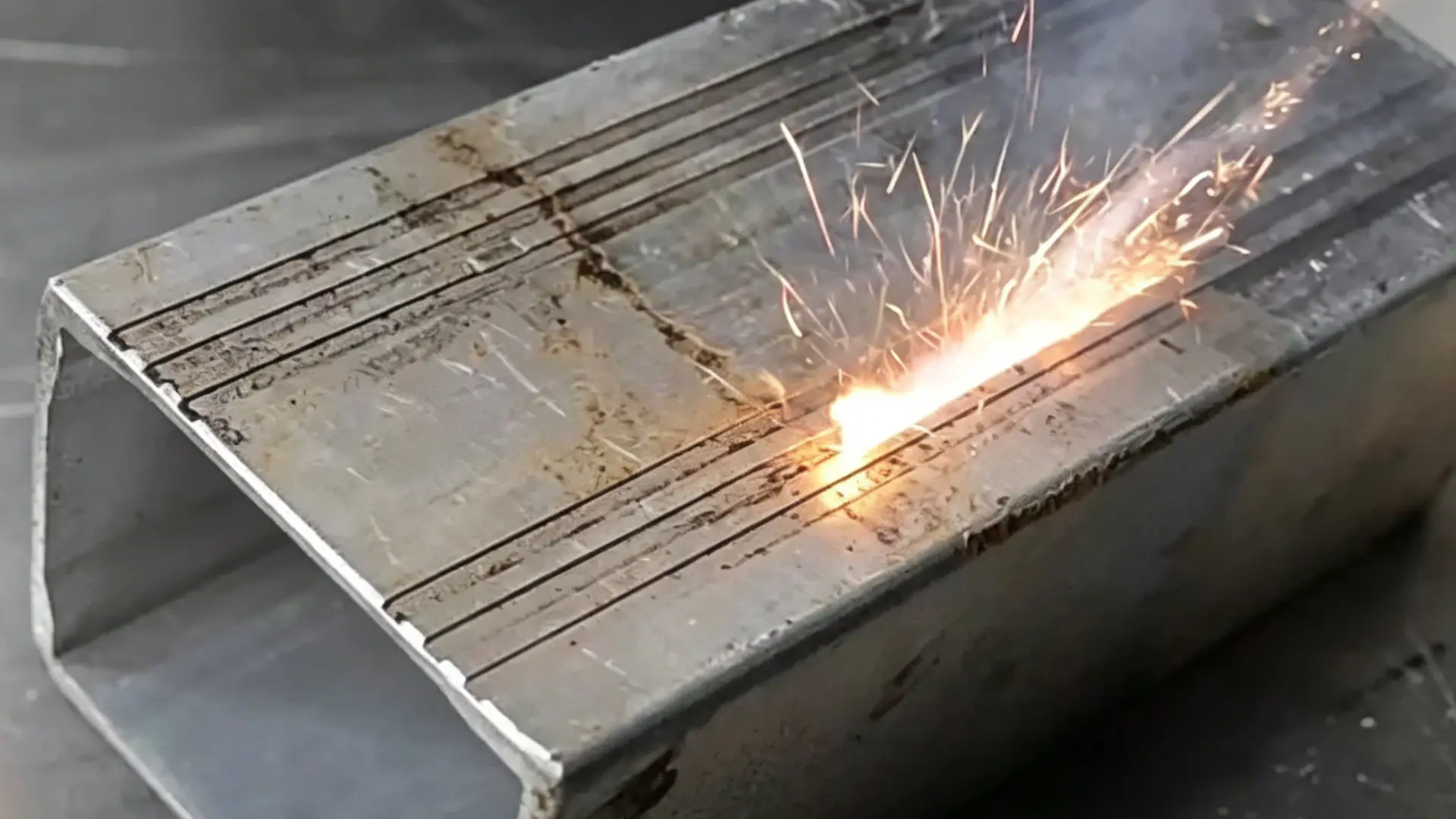
Wattage is the number everyone quotes first and understands last.
The right way to think about power isn’t “bigger is safer.” Ask yourself two things: how many square meters per hour do you need to clean, and what’s the surface underneath? Start from those two numbers. The correct wattage range follows naturally.
Here’s how each power tier maps to real work:
20–100W: Precision Work, Not Production
This range fits a specific type of problem — mold cavities, heritage artifacts, polished surfaces where a Ra spec exists and matters. Expect cleaning rates under 1 m²/h. That’s not a flaw. That’s the point. A 50W pulsed laser on a precision mold cavity keeps you just 10–30% above the contamination removal threshold. The base material stays untouched.
Got a throughput problem? Don’t solve it by pushing wattage up. The right move is a slower scan speed with multiple light passes.
100–200W: The Workshop Default
Automotive shops, maintenance facilities, and small fabrication floors processing 3–10 m² of surface per day — this tier fits all of them well.
Rusted steel parts (light to moderate): 1–2 m²/h
Light-to-medium paint removal: 1–2.5 m²/h
Tooling and fixture degreasing: 1–1.5 m²/h
Most machines here run on standard 220V supply and need basic air or water cooling. Operating costs stay low — around 0.1–0.2 kWh per hour. The process window is also more forgiving than higher-powered units. That matters a lot when operators are still getting comfortable with the equipment.
200–500W: The Jobshop Workhorse
Job shops and mid-scale manufacturers — this is where laser cleaning machines earn their keep.
| Power | Moderate Rust | Heavy Rust + Scale | Thick Coatings (200–300 µm) |
|---|---|---|---|
| 200–300W | 3–6 m²/h | — | 1–3 m²/h |
| 400–500W | 6–10 m²/h | 5–10 m²/h | 3–6 m²/h |
Per shift (8 hours, including setup and movement), a 300W unit delivers 20–40 m² of cleaned surface. A 500W unit pushes that to 40–70 m². At that volume, the cost per square meter makes the machine pay for itself — especially when you’re pricing jobs for customers.
The other big advantage here: flexibility across job types. Dial power down and slow the scan for thin coatings. Open it up for heavy scale. One machine handles multiple workflows.
1000–3000W: Heavy Industrial Scale
Shipyards, bridge steel, wind turbine towers, large structural fabrication. These are focused, large-scale applications. The infrastructure needs are firm — no shortcuts.
1000–2000W CW: 10–20 m²/h on moderate rust and mill scale
3000W CW: up to 20–30 m²/h on heavy rust and thick anti-corrosion coatings
Per-shift capacity: 80–150 m² after real-world movement and positioning losses
This tier makes economic sense in two situations: a single project covering 1,000 m² or more, or a daily throughput target of 100+ m². You’ll also need three-phase 380–480V power, a dedicated chiller unit, fume extraction, and a robot or rail-guided scan head to keep overlap rates consistent.
No project to justify that setup? A 500W unit with more passes is often the smarter choice.
The Over-Spec Trap: Why Buying High “Just in Case” Backfires
A 300W fiber laser cleaning machine dialed down to 30% output is not the same as a purpose-built 100W unit. On precision surfaces, the beam characteristics and modulation limits of a high-wattage machine running at reduced power can still cause surface melting, heat discoloration, or permanent texture damage. A matched lower-power system avoids those problems altogether.
Higher power also shrinks your process window. Scan speed, focal distance, and overlap rate all have tighter margins. Drift a little on a 2000W CW machine and you go from cleaning to scorching. That same drift on a 200W pulsed system costs you some efficiency — not your workpiece.
Before you upgrade wattage, try these first:
1. Reduce scan speed — dropping from 2 m/min to 1 m/min doubles energy per unit area at the same power setting
2. Increase pass count — more passes at lower energy per pulse protect sensitive surfaces better than one high-energy pass
3. Adjust pulse frequency — on pulsed systems, lowering the repetition rate raises peak power without changing average wattage
Match the power to the job. Not to the catalog’s top tier.
Form Factor & Configuration: Handheld, Fixed, or Cabinet System?
The machine that cleans your parts and the machine that fits your operation are not always the same thing.
Form factor is where that gap shows up. A portable laser cleaning machine gives you reach. A fixed robotic system gives you throughput. A cabinet system gives you safety and repeatability on small parts. Each one trades something to gain something else.
Handheld: Maximum Reach, Variable Results
Portable units run 50–200W. Gun heads weigh 0.7–1.5 kg. Fiber cables reach 5–10 m. You wheel the cabinet to the workpiece. No fixturing required.
The catch is consistency. An operator’s hand speed can vary by ±30%. That swings energy density at the surface by ±20–40%. The result is the difference between clean steel and scorched steel — or a contamination stripe you missed completely.
Expect 1–3 days to train a new operator to basic competency. Stable, consistent output takes 1–4 weeks.
For maintenance work, field repairs, and large irregular structures that can’t move to a machine, handheld is the practical choice — often the only one. Build in process cards and defined speed ranges before your first production run.
Fixed & Robotic: Where the Math Gets Interesting
A 6-axis robot paired with a 1kW Fiber laser cleaning machine cleans automotive Weld zones in 20–60 seconds per body. That’s up to 180 jobs per hour. The same area by hand takes two to three times longer, with less consistent overlap.
The ROI case for robotic integration is clear. Total capital runs $80k–$200k — covering the laser source, robot, safety enclosure, and fume extraction. Set that against $120k+ in annual labor savings and 30% throughput gains on a production line. Payback periods under 12 months are realistic.
Fixed systems don’t suit every shop. High mix, low volume, or extreme part geometry variation pushes fixture costs up fast. Job types change weekly? Handheld wins on economics.
Cabinet Systems: Precision, Safety, and Batch Efficiency
Enclosed cabinet systems are built for small parts in volume — connectors, tooling, sensors, precision mold components. Load a fixture with 10–100 pieces, run a galvo-scanned cycle, and the parts come out clean. No operator in the laser path. No exposure risk.
Working chambers range from 300×300 mm to 800×800 mm. Most run 100–300W pulsed sources with water cooling above 200W. The enclosure handles Class 1 laser compliance on its own — no PPE requirement, no separate interlocked safety zone needed.
For electronics manufacturers or precision shops where particle contamination matters, cabinet systems centralize fume extraction inside the chamber. Filter airflow runs 300–1,000 m³/h. That’s enough to keep the work environment clean without facility-wide ducting changes.
Application-Specific Selection: Rust vs. Paint vs. Oil Removal
Contamination type overrides every other spec decision. Get this wrong, and your wattage choice, mode selection, and budget all mean nothing.
Here’s what each job requires.
Rust: Match Power to Rust Depth, Not to Steel Thickness
Three tiers of rust severity need three distinct power strategies.
Light rust (<30–50 µm): 100–200W pulsed fiber laser. Scan at 300–800 mm/s with a slight defocus (+1 to +5 mm). This lowers power density and protects the base. Use this range for precision mold surfaces, automotive body panels, and rebar. Surface texture must stay intact for bonding.
Moderate rust (50–150 µm, some pitting): 500–1000W pulsed or QCW. Target 1–3 J/cm² energy density. Run 2–4 passes at 45° or 90° crossing angles. This covers industrial equipment frames, weld preparation zones, and chassis components. Expect established red rust, but no perforation.
Heavy scale (>200–300 µm, flaking): 2000–3000W CW at 100–300 mm/s with a large spot (2–5 mm) and 60–80% overlap. For shipyard and bridge work, knock off the thickest loose scale by hand first. Running CW laser alone over severe flaking wastes time. It also risks overheating structural members.
One note on automotive body panels: thin sheet under 0.8 mm needs power dropped to 50–120W. Push scan speeds up to 600–1000 mm/s. Distortion and heat discoloration show up fast on outer panels.
Paint: Stack Thickness Determines Your Entire Approach
Industrial paint isn’t one layer. Total system thickness changes everything about how you approach the job.
Thin coatings (20–60 µm): 50–150W pulsed at 800–1500 mm/s, energy density 0.3–0.8 J/cm². Watch for the moment smoke thins and base texture becomes visible — that’s your stop signal.
Automotive multi-layer systems (80–250 µm): Two options. Stripping for spot repair? Go layer-by-layer — low power and defocus for the clearcoat first, then step up a bit for the color and primer coats. Stripping to bare metal for a full respray? Use 200–500W pulsed at 0.8–2 J/cm², multiple passes, and slow to 200–300 mm/s on areas repainted more than once.
Heavy industrial coatings (>300 µm epoxy/polyurethane): 1–2kW CW or 500–1000W high-energy pulsed, 100–400 mm/s, multi-pass. Total coating stack over 600–800 µm on a large surface area? laser cleaning alone gets expensive fast. Use mechanical or abrasive methods for bulk removal. Save the laser for weld seams, corners, and precision zones where surface finish matters.
Quick diagnostic: Still seeing >50% coating after one pass with heavy smoke and erratic sparks? Power density is too low — increase energy or slow down. Getting clean metal in one pass but with visible base discoloration? Power is too high — drop 20–30% or add defocus.
Oil: Fresh Film vs. Baked-On Residue — Treat These As Different Materials
Fresh machining oil (under 5–10 µm) vaporizes fast under laser exposure. At this thickness, the oil itself isn’t the problem. The real risk is using the wrong pulse duration and spreading the film instead of removing it. Use short nanosecond pulses, moderate energy density, and high scan speed. This is pre-weld cleaning — the goal is a contamination-free fusion zone 20–30 mm wide. Nothing more.
Baked or carbonized grease is a different material. Absorptivity jumps to 80–90%. Adhesion is strong. Treat it like a thin, stubborn coating: 0.5–2 J/cm², slower scan, and more than one pass may be needed. Scrape the surface — if it flakes and leaves a dark residue, that’s the baked version. It needs more energy to break through the char layer before the residue underneath can clear.
Key Technical Parameters You Must Evaluate Before Buying
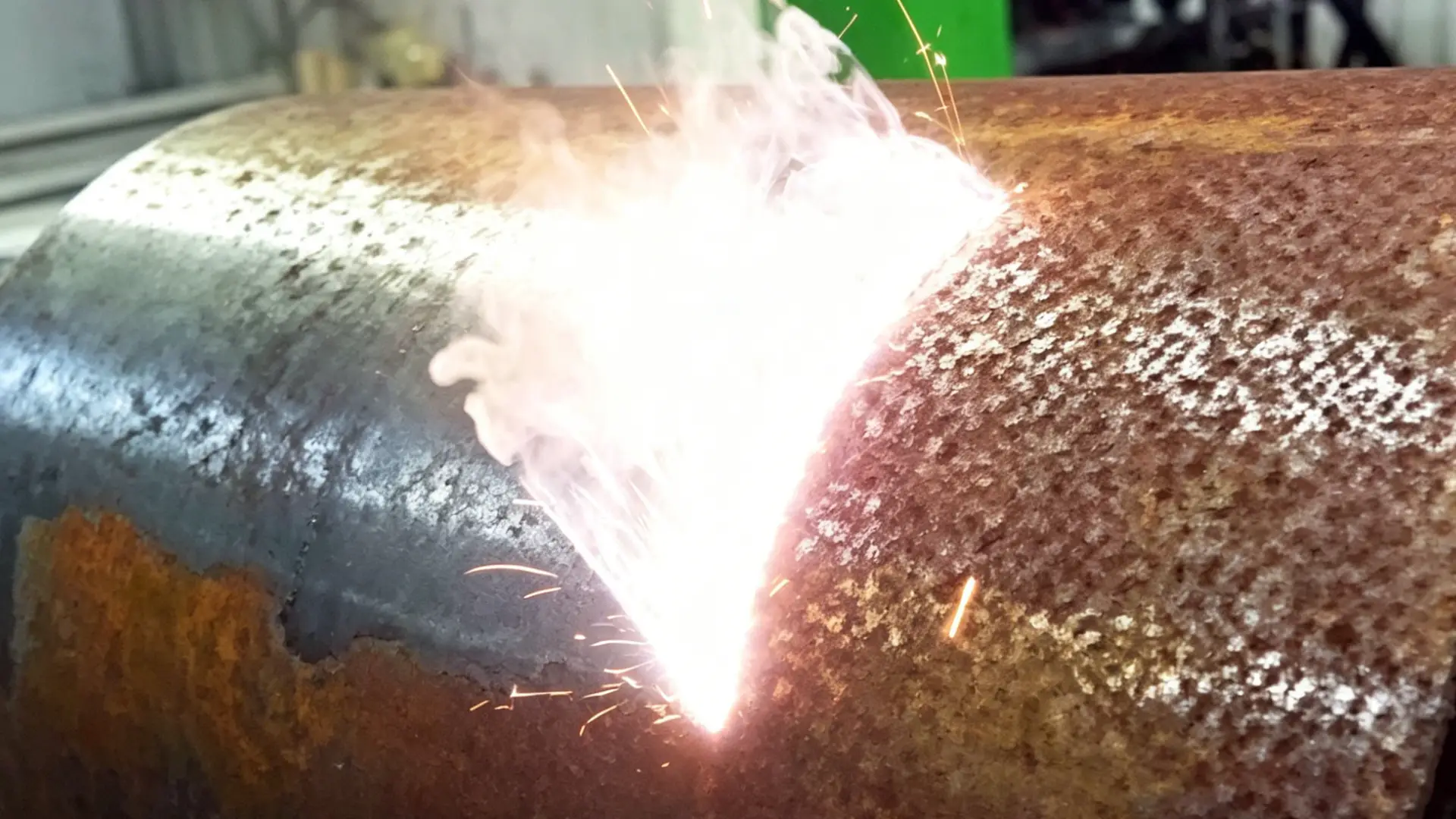
Two machines. Same wattage printed on the spec sheet. One cleans your parts; the other damages them. The difference comes down to four parameters most buyers never think to ask about.
Pulse Energy: The Number Behind the Number
Wattage alone tells you very little. Pulse energy is what decides whether contamination lifts off or your part gets damaged — and you calculate it yourself, it’s not listed on the spec sheet:
E_p (mJ) = Power (W) ÷ Frequency (kHz)
A 200W machine running at 20 kHz delivers 10 mJ per pulse. The same 200W machine at 100 kHz delivers 2 mJ. Same power rating. Five times the performance difference on heavy rust.
Here’s the practical window:
| Cleaning Task | Pulse Energy Needed | Energy Density |
|---|---|---|
| Rust / metal oxides | 1–10 mJ | 1–5 J/cm² |
| Paint / coating removal | 5–20 mJ | 3–10 J/cm² |
| Precision mold cleaning | 0.2–2 mJ | 0.5–2 J/cm² |
Contact your supplier and ask for the pulse energy curve across the full frequency range — not just peak power at one operating point. A supplier who can’t provide it? That tells you something too.
Spot Size and Scan Head: Where Efficiency Lives
Spot diameter changes energy density by orders of magnitude. At 10 mJ:
- 0.2 mm spot → ~318 mJ/mm² — precision mold work territory
- 1.0 mm spot → ~12.7 mJ/mm² — suitable for large-area rust removal
Larger scan widths (≥300 mm) cover more ground per pass. The trade-off is edge distortion and uneven energy distribution. Ask suppliers for field uniformity data. A solid system stays within ±10–20% from center to edge. They hand you a brochure instead of a test report? Keep pushing.
Wavelength: Match It to Your Material
Most industrial laser cleaners use 1064 nm fiber laser sources. For rust, mill scale, oil, and standard coatings on steel or aluminum, this is the right choice. Oxide layers and contamination absorb 1064 nm well. The base metal reflects more of it. That selective absorption is what makes the process work.
Specialty wavelengths exist for specific problems:
- 532 nm (green): Higher absorption on certain metal oxides and fine coatings. Better for precision mold cleaning. Lower average power, higher cost.
- 355 nm (UV): Near-zero heat input, photochemical removal. Used in electronics and semiconductor applications. Not practical for large-area rust or paint removal.
- 10.6 µm (CO₂): Strong on non-metals. Poor choice for metal substrates.
For precision electronics or high-value mold work, specialty wavelengths make sense. For everything else, 1064 nm pulsed fiber laser is the go-to option.
Duty Cycle and Sustained Output: Read Past the Peak Rating
A rated 200W machine and a machine that delivers 200W for eight hours are not the same product. Many laser sources list peak average power. Real output under continuous operation can drop 20–30% lower once the system hits its thermal limits.
Before you sign anything, ask:
- What is the recommended operating power for continuous 8-hour use — not peak?
- What cooling system is included, and what ambient temperature range does it cover?
- Is there a de-rating curve showing power vs. duty cycle?
A supplier who gives you actual numbers — not marketing language — is worth your time. One who can’t answer all three? Move on.
Safety Requirements and Fume Management: Non-Negotiable Checklist
Laser cleaning creates four hazards at once: laser radiation, metal oxide particles, VOCs from paint and coatings, and back-reflected energy from high-reflectivity surfaces. Skip any one of them, and you’re not running a cleaning operation — you’re running an exposure event.
Before any job starts, run through this checklist. All six items are required. None are optional.
- PPE: Use laser goggles matched to your wavelength (1064 nm for fiber laser cleaners). Check that the OD rating is printed on the lens.
- Zone control: Restrict entry, post warning signs, and test the emergency stop. Make sure it’s reachable.
- Training: Every operator and bystander must complete equipment-specific safety training before first use.
- Extraction: Keep source-capture fume extraction running. Position the capture hood within 150–300 mm of the work zone.
- Filtration: Run a pre-filter + HEPA + activated carbon in series. Paint removal jobs produce both particles and VOCs. A single-stage particle filter won’t cover both.
- Back-reflection protection: Cleaning aluminum or copper? Check that the system has back-reflection monitoring and auto-shutoff. These materials can send 5–10% of beam energy back toward the laser head and operator.
Your process generates laser radiation, fume, VOCs, and reflected energy all at once — all five controls must be active before you start.
Total Cost of Ownership: Price, ROI, and Hidden Costs
The purchase price is just the start. A Laser Cleaning Machine carries more costs than the sticker price shows.
Here’s a realistic price baseline before anything else:
- 100W pulsed unit: $20,000–$40,000
- 500W pulsed unit: $50,000–$120,000
- 2000W CW system: $150,000–$300,000+
These numbers shift based on laser source brand, automation level, and safety package. The sticker price rarely catches buyers off guard. The real surprises show up later, in the costs you didn’t plan for.
What your TCO model needs to include:
| Cost Category | Laser Cleaning | Sandblasting | Chemical Cleaning |
|---|---|---|---|
| Consumables | Near-zero (process); optics + filters | Abrasive media, recurring | Solvents, recurring |
| Waste disposal | Low — particulate only | High — spent grit + debris | High — hazardous waste compliance |
| Labor | Lower with automation | Higher — setup, cleanup, rework | Higher — application, rinse, verify |
| Hidden costs | Fume extraction, electricity, training, spare optics | Dust control, PPE, containment | Regulatory compliance, ventilation |
The hidden costs worth budgeting as separate line items:
- Fume extraction — required for paint, rust, and oil removal. Not optional.
- Electricity — calculate it: kW draw × operating hours × local rate. High-power CW units push this number up fast.
- Protective lenses — spatter damages them. Set a replacement budget from day one.
- Training — plan for initial certification plus regular refreshers. Both laser safety and process tuning need coverage.
The ROI math is simple: Take your annual savings — avoided consumables, disposal, labor, and downtime — then divide by the purchase price. That gives you the payback period.
The TCO advantage is strongest in three situations. First, high production volumes. Second, significant disposal costs. Third, expensive labor or downtime. In those cases, payback under two to three years is a realistic target.
Conclusion
Picking the right fiber laser cleaning machine means matching to your contamination type, substrate, and production setup — not chasing wattage numbers.
MaxWave builds exactly these machines. Factory-direct. In-house assembly. Full testing before shipment. Whether you need a 100W pulsed unit for precision or a 500W jobshop workhorse, MaxWave delivers real specs for rust, paint, and oil removal. No middlemen. No guesswork.
Visit MaxWave to get matched to the right machine — not a catalog page.

0 Comments