
Sterling silver is one of the most common metals used in rings, chains, bracelets, and other jewelry. Yet repairing it can be surprisingly difficult, especially when the piece is thin, highly polished, or set with gemstones.
Traditional torch soldering works for many silver repairs, but its broader heat input can create problems around delicate details and finished surfaces. Laser welding offers a more localized alternative—provided the operator understands how silver responds to laser energy.
This guide explains how to laser weld sterling silver, which repairs are suitable, how to prepare and adjust the process, and when traditional soldering is still the better choice.
Can You Laser Weld Sterling Silver Jewelry?
Yes, sterling silver (925 silver) can be laser welded. Successful repairs require clean, closely fitted joints, suitable laser settings, and test welds on comparable material. Silver reflects much of the incoming laser energy and conducts heat rapidly, making it harder to weld consistently than many jewelry alloys. Thin, porous, or gemstone-set pieces need additional care.
Why Is Sterling Silver Difficult to Laser Weld?
Sterling silver contains 92.5% silver and 7.5% other metals, usually copper. This alloy composition improves hardness for everyday jewelry, but it also affects how the material behaves during welding.
Two properties make silver laser welding challenging:
- High reflectivity: A polished silver surface reflects much of the energy from common near-infrared jewelry lasers, making initial melting less predictable.
- High thermal conductivity: Heat moves quickly away from the weld area, so the operator must deliver enough energy for fusion without overheating nearby components.
Silver’s behavior also changes as its surface heats and begins to melt. This is why repeatedly increasing laser power without adjusting other settings can lead to craters, spatter, or damaged jewelry.
Pure silver can also be processed with lasers, but it behaves differently from sterling silver. Its high reflectivity and thermal conductivity remain challenges. The copper content in traditional sterling changes its response; it is not what makes laser welding possible in the first place.
For jewelry repair, the condition of the piece matters as much as the alloy. A clean, solid ring shank is usually more predictable than a hollow chain link or an old porous casting.https://www.youtube.com/embed/OxHj-wMqtIE
Which Sterling Silver Jewelry Repairs Work Best With Laser Welding?
Laser welding is particularly useful for small, accessible repairs where precise heat placement helps preserve surrounding details. Shops comparing a jewelry repair laser welder supplier can review MaxWave’s repair examples.
| Repair application | Suitability | Main consideration |
|---|---|---|
| Ring sizing and shank cracks | Good | Proper joint preparation and sufficient weld depth |
| Broken chain links and jump rings | Good for suitable solid links | Thin or hollow sections can melt through |
| Prong repair and retipping | Good when sound metal remains | Gemstone safety and prong strength |
| Small holes and surface porosity | Often suitable | Hidden casting defects may extend below the surface |
| Clasps, hinges, and fine components | Case-dependent | Springs, moving parts, and adjacent materials |
| Large gaps or severely damaged castings | Often unsuitable without reconstruction | Missing or weakened metal must be addressed first |
Ring Repairs
A sterling silver ring with a cracked shank or a prepared sizing joint is a common laser welding application.
The jeweler can align the edges, secure the joint with initial welds, and build a continuous seam. For a sizing joint, a shallow bevel may provide room for appropriate filler material.
The finished seam still needs enough sound metal to withstand normal wear. A smooth appearance alone does not prove that the joint is strong. For shops planning regular ring work, a jewelry repair laser welding machine manufacturer can explain which settings suit sterling silver.
Chains, Clasps, and Prongs
Laser welding can help repair broken chain links, jump rings, and small clasp connections without heating a large section of the jewelry.
However, extremely thin links and hollow chains are difficult because a concentrated pulse may remove more material than it joins.
Prong repair is another useful application. When enough sound metal remains, a jeweler may rebuild a worn prong or reinforce a small crack. Severely worn prongs may need replacement rather than additional welding.
For workshops that frequently handle chains and small jewelry components, a dedicated permanent jewelry welder system from a YAG jewelry welder supplier may be worth evaluating. The important question is whether it can produce reliable welds on the specific chain materials and dimensions you repair.
What About Jewelry With Gemstones?
Laser welding can reduce the area exposed to high temperatures compared with torch soldering, but it does not make every gemstone-set repair safe.
Silver conducts heat away from the weld quickly, including toward nearby settings. Direct laser exposure, reflected energy, and heat conducted through the metal can all damage gemstones.
Pearls, opals, treated emeralds, and other heat-sensitive materials require particular caution. For example, GIA’s pearl-care guidance warns that excessive heat can discolor or crack pearls.
Before welding, identify the gemstones, assess their treatments and settings, and determine whether they must be removed. If the risk cannot be controlled, choose another repair method.
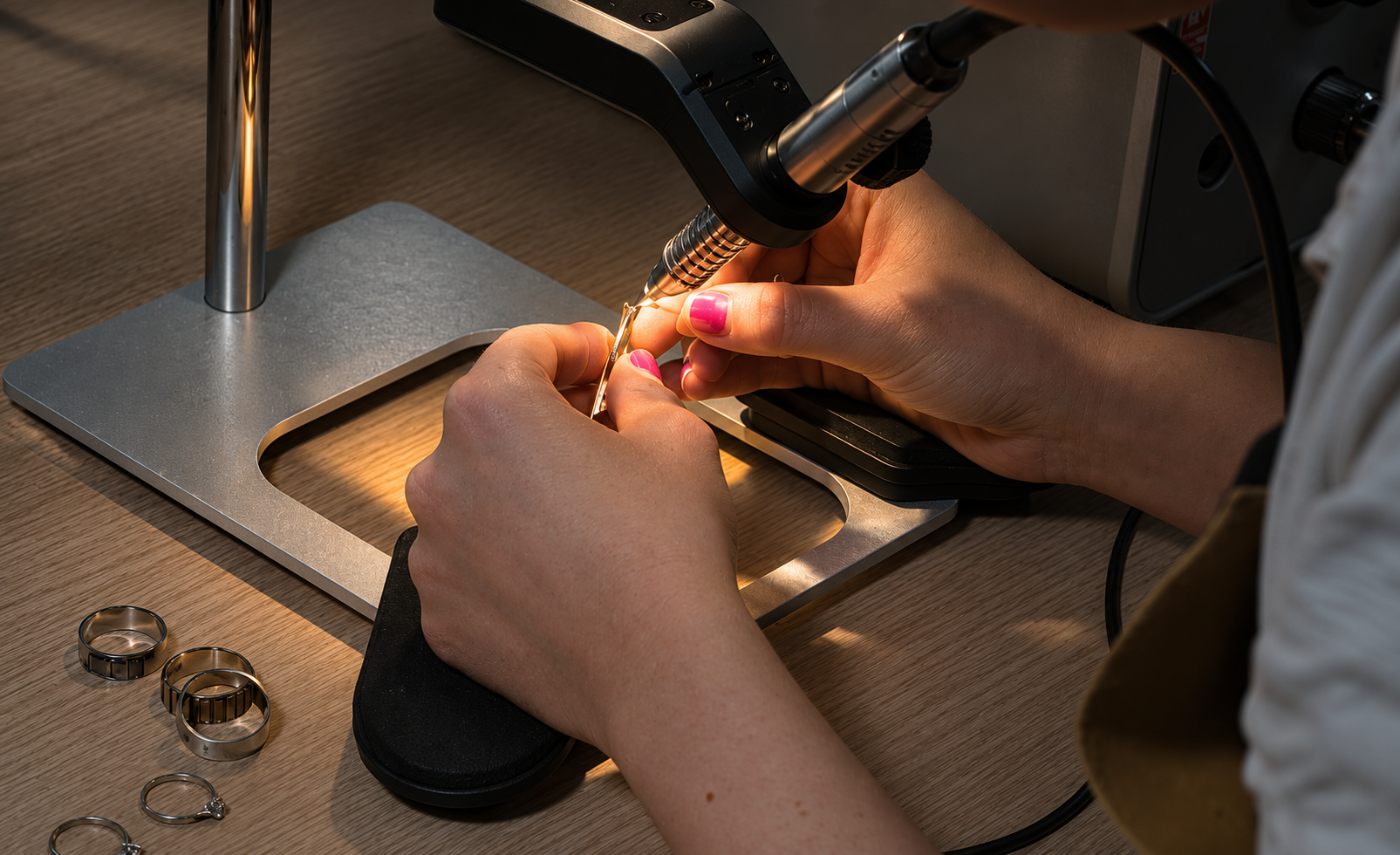
How to Prepare Sterling Silver Jewelry for Laser Welding
Good preparation improves laser absorption, reduces contamination, and makes the joint easier to weld consistently.
1. Identify the Metal and Inspect the Jewelry
Confirm that the piece is sterling silver rather than silver-plated base metal.
A 925 hallmark is helpful, but older or repaired jewelry may contain multiple alloys, previous solder joints, or replacement components.
Inspect for:
- Cracks extending beyond the visible break
- Loose or unstable gemstones
- Plating, enamel, adhesives, and other heat-sensitive finishes
- Existing solder and contaminated repair areas
- Thin walls, hollow construction, or casting porosity
If the jewelry is structurally unsound, repair planning may require reinforcement or replacement rather than simply closing the visible crack.
2. Clean the Welding Area
Remove grease, polishing compounds, dirt, and loose debris from the joint.
Use cleaning methods compatible with the entire piece. A suitable solvent wipe or careful mechanical cleaning may be enough.
Do not automatically place gemstone-set jewelry in an ultrasonic cleaner. Some stones, treatments, and settings can be damaged by ultrasonic cleaning.
Old solder or contaminated material may also need to be removed from the area intended for fusion, depending on the repair design.
3. Prepare and Align the Joint
For a cracked ring or broken component, remove damaged material where necessary and bring the edges into close alignment.
A well-fitted joint requires less additional metal and is easier to weld consistently.
For ring sizing, a carefully prepared bevel can provide space for filler wire. Very thin components need a different approach because removing too much metal can weaken the joint.
Secure the jewelry so the parts cannot move during the initial pulses.
4. Reduce Surface Reflectivity
A mirror-polished surface can make initial laser absorption difficult.
Lightly roughening the intended weld area with a fine abrasive, radial-bristle brush, or Scotch-Brite wheel can help create a more consistent starting surface.
Keep the treatment localized. Excessive grinding can reduce the thickness of an already fragile component.
Some jewelers use temporary darkening methods on reflective metals, but coatings may introduce contamination or interfere with finishing. Mechanical surface preparation is generally easier to control.
Finally, prepare the approved shielding-gas arrangement, fume extraction, and the laser workstation’s required protective systems before starting.
What Laser Welder Settings Work for Sterling Silver?
There is no universal laser welder setting for sterling silver.
The correct settings depend on the machine, laser source, alloy, surface condition, jewelry thickness, joint geometry, and whether filler wire is used.
Copying a power percentage or voltage value from another machine can produce very different results.
Understand the Four Main Settings
| Parameter | What it controls | What to watch for |
|---|---|---|
| Pulse energy | Energy delivered in each pulse | Insufficient fusion or excessive melting |
| Pulse duration | How long energy is delivered | Melt-pool behavior, spatter, and thermal effects |
| Spot size | Energy concentration and weld width | Burn-through or insufficient penetration |
| Frequency | Rate of successive pulses | Heat accumulation and operator control |
A smaller spot concentrates energy into a smaller area. It is useful for precise work but can also burn through thin silver.
A larger spot spreads the energy over a wider area, although adequate fusion still depends on the energy and pulse duration.
Frequency should be selected according to the repair and working rhythm. A higher pulse rate is not automatically faster or better if the operator cannot inspect the developing seam or control accumulated heat.
Published Settings Are Machine-Specific
One example appears in Stuller’s technical guidance for laser welding 925 silver.
For certain Rofin jewelry laser systems, Stuller describes approximately:
- Voltage: 280–300 V
- Pulse duration: 4.5 ms
- Focus setting: 8–18
These figures are specific to the referenced equipment and should not be used as universal settings. Voltage and proprietary focus controls may not correspond to those on another machine.
Similarly, a jewelry laser welder manufacturer‘s machine rated in average watts cannot be evaluated by that figure alone. Pulse energy, peak pulse power, pulse shape, and spot adjustment all affect welding performance.
How to Find Suitable Settings
A safer and more reliable approach is to establish a controlled test procedure:
- Use sterling silver scrap with similar thickness and composition.
- Begin with a conservative setting recommended for that machine.
- Fire an individual test pulse and examine the result under magnification.
- Adjust one parameter at a time.
- Verify that the test produces fusion without excessive cratering or burn-through.
- Record successful settings for similar future repairs.
If the laser barely affects the silver, investigate focus, surface condition, and delivered energy before simply increasing power.
If the metal spits, pits, or melts through, reduce excessive energy concentration and reassess the pulse duration and joint condition. Before buying, ask an OEM laser welder supplier to run a material test on your silver samples.
For equipment selection, our guide to choosing a laser welder for gold and silver jewelry explains which machine specifications are worth comparing before purchase.
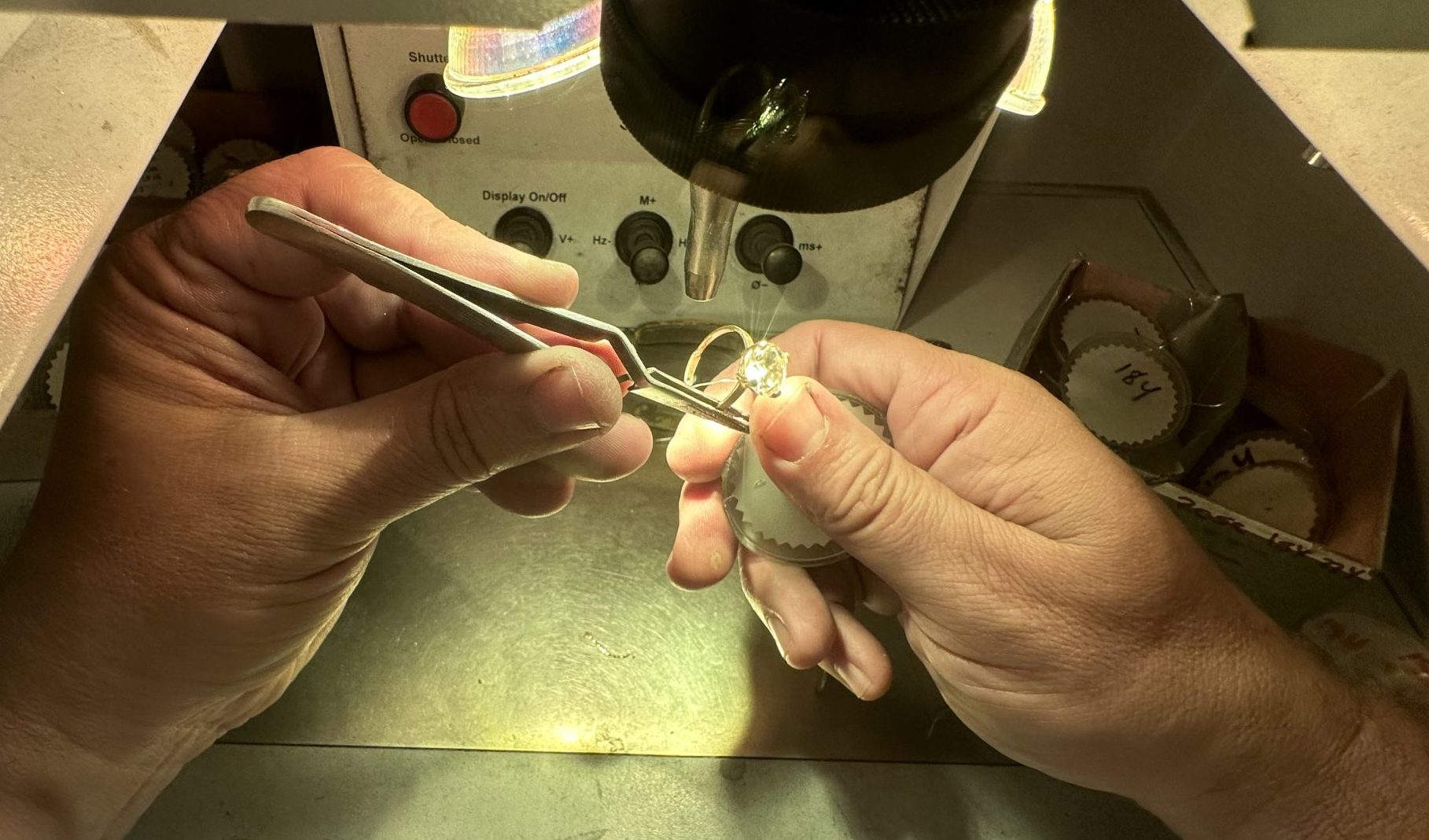
How to Laser Weld Sterling Silver Jewelry Step by Step
Once the piece is inspected, cleaned, and aligned, the actual welding process should be controlled and progressive.
The following workflow is intended for trained jewelry technicians using a properly configured laser workstation.
Step 1: Perform a Test Weld
Before welding the customer’s jewelry, test the process on comparable sterling silver whenever possible.
Inspect the molten area for excessive splatter, deep craters, or incomplete fusion.
For critical repairs, use representative test pieces to assess weld strength or penetration. Surface appearance alone may not reveal a weak internal joint.
Step 2: Secure the Joint With Initial Welds
Use the validated setting to establish small tack welds that hold the joint in alignment.
For ring seams, placing initial welds at separated locations can help reduce movement while the joint is secured.
Inspect the alignment before continuing. It is easier to correct a poorly aligned joint at this stage than after the seam is fully welded.
Step 3: Build the Weld Gradually
Continue along the joint with controlled, partially overlapping weld spots.
Avoid trying to complete a deep seam with one excessively energetic pulse.
On thicker sections, the repair may require multiple passes or access from more than one side. Thin chains and hollow components require particular restraint.
Monitor the weld pool and surrounding piece. Pause when necessary to limit heat buildup, particularly near gemstones, soldered components, or delicate finishes.
Step 4: Add Filler Wire When Needed
Laser welding does not always require solder or filler wire.
When clean edges meet closely and sufficient parent metal is available, direct fusion may be possible.
Filler material is useful when:
- The repair requires additional metal
- A ring-sizing joint has a prepared groove
- A prong needs rebuilding
- A small missing section must be restored
- Surface defects need carefully controlled filling
Choose a filler compatible with the base alloy and the required appearance and strength.
For example, Stuller discusses Silver Weld Hard wire for certain sterling silver repairs. This is a specialized silver-based filler with a lower silver content than 925 sterling, so its appearance and properties are not identical to the parent metal.
Other jewelers use alternative silver welding alloys, including some platinum-containing formulations. The best choice depends on the application; no single wire suits every sterling repair.
Feed small amounts of wire into a controlled molten area rather than attempting to fill a large gap with one pulse.
For thin chain work, filler-wire geometry also matters. A round wire may require more heat than the delicate component underneath it, so a flatter wire profile may be more suitable.
Step 5: Inspect and Finish the Weld
Allow the jewelry to cool appropriately before handling or finishing.
Inspect the seam under magnification for:
- Hairline cracks
- Pinholes or porosity
- Incomplete fusion
- Undercutting
- Burn-through
- Distortion around the joint
Where practical, inspect both sides of the repair.
A seam that looks smooth after polishing may still be weak. For load-bearing parts such as ring shanks, clasps, and prongs, verify the repair using an appropriate inspection or functional test.
Once the joint is sound, complete the normal finishing sequence:
- Remove excess filler or raised weld metal.
- Refine the surface with suitable abrasives.
- Polish the repaired area.
- Check the surrounding finish, plating, and stone security.
Plated jewelry may require localized refinishing or replating. Laser welding can reduce the affected area, but it cannot guarantee that the original coating remains untouched.
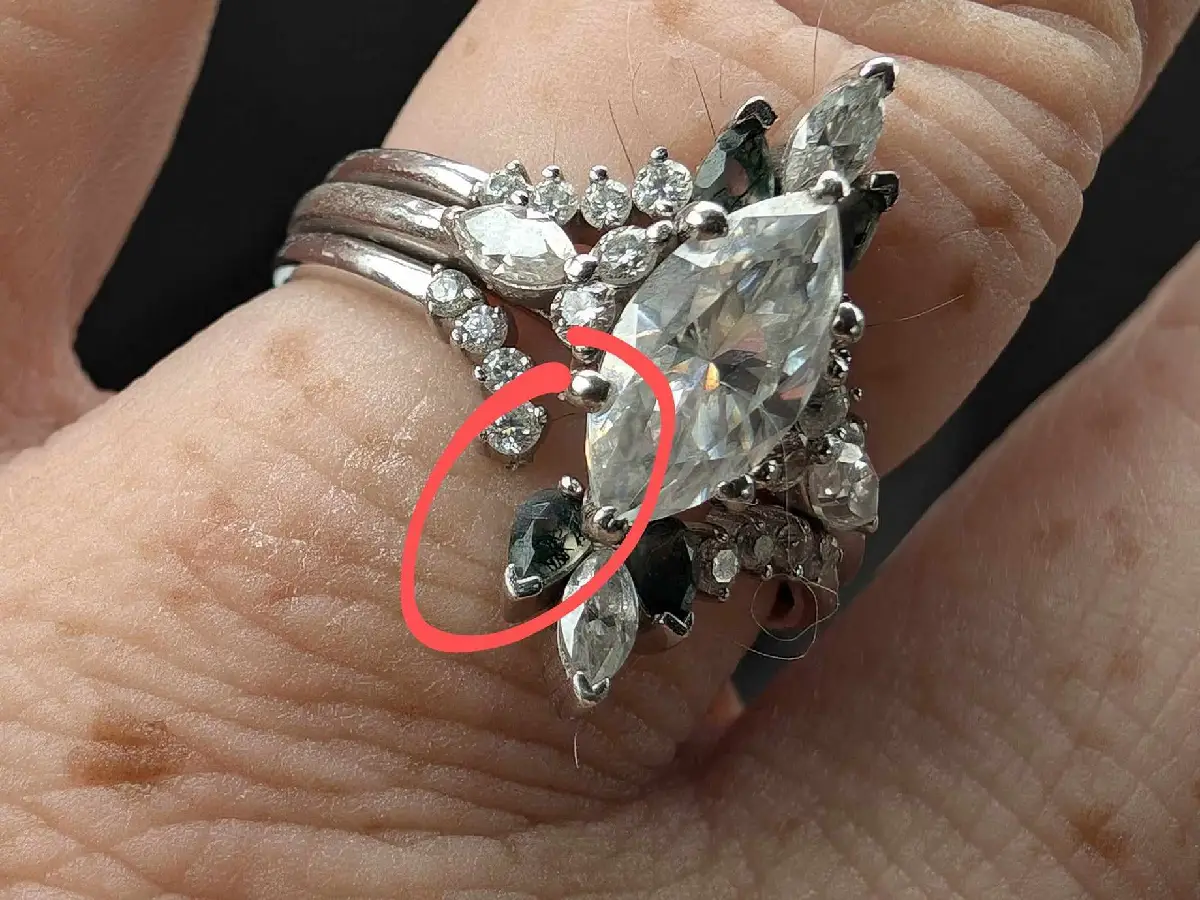
Why Does Sterling Silver Laser Welding Crack, Pit, or Fail?
The most common problems in sterling silver laser welding are incomplete fusion, porosity, cracking, and excessive melting.
These defects do not always have a single cause. Material condition, joint preparation, laser settings, and filler selection can interact. If problems persist, a laser welding machine supplier can run material tests on your alloy.
| Problem | Possible causes | Recommended response |
|---|---|---|
| Weak weld or incomplete fusion | Poor fit, contamination, incorrect focus, insufficient energy | Reclean and align the joint; verify focus and adjust energy through testing |
| Pitting or deep craters | Excessive energy concentration, unstable melting, contamination | Review pulse settings, surface preparation, and filler compatibility |
| Cracks after welding | Alloy sensitivity, solidification behavior, unsuitable filler, excessive thermal stress | Inspect base metal, reconsider filler, and evaluate pulse shaping |
| Porous or spongy weld | Casting defects, contaminants, unstable melt pool | Remove unsound material where practical; test a compatible filler and pulse program |
| Burn-through | Thin section, concentrated energy, poor joint support | Reduce excessive energy concentration and reconsider repair geometry |
| Dark discoloration | Oxidation, contamination, previous surface treatments | Improve cleaning and appropriate gas shielding; reassess the heat input |
Why Does Silver Sometimes Crack After Polishing?
A weld may appear acceptable immediately after welding, then reveal tiny cracks or pits once excess metal is removed.
This can indicate that the weld contained internal defects or that the filler and parent metal behaved differently during cooling.
Increasing power is not always the solution.
On some pulsed laser systems, a controlled ramp-down pulse shape may improve solidification behavior. However, this must be evaluated on the actual machine and alloy.
If cracks repeatedly return, investigate the underlying metal condition. An old, porous casting may require rebuilding or component replacement rather than repeated welding.
Does Argon Help With Sterling Silver Welding?
Argon shielding can help limit oxidation around the molten weld pool and improve consistency when used correctly.
It is particularly useful when maintaining a clean weld surface is important.
However, argon cannot compensate for contaminated metal, poor fit-up, or unsuitable laser settings. It also does not completely eliminate the possibility of firescale or finish damage.
Use the gas arrangement and flow recommended for the particular jewelry laser welder.
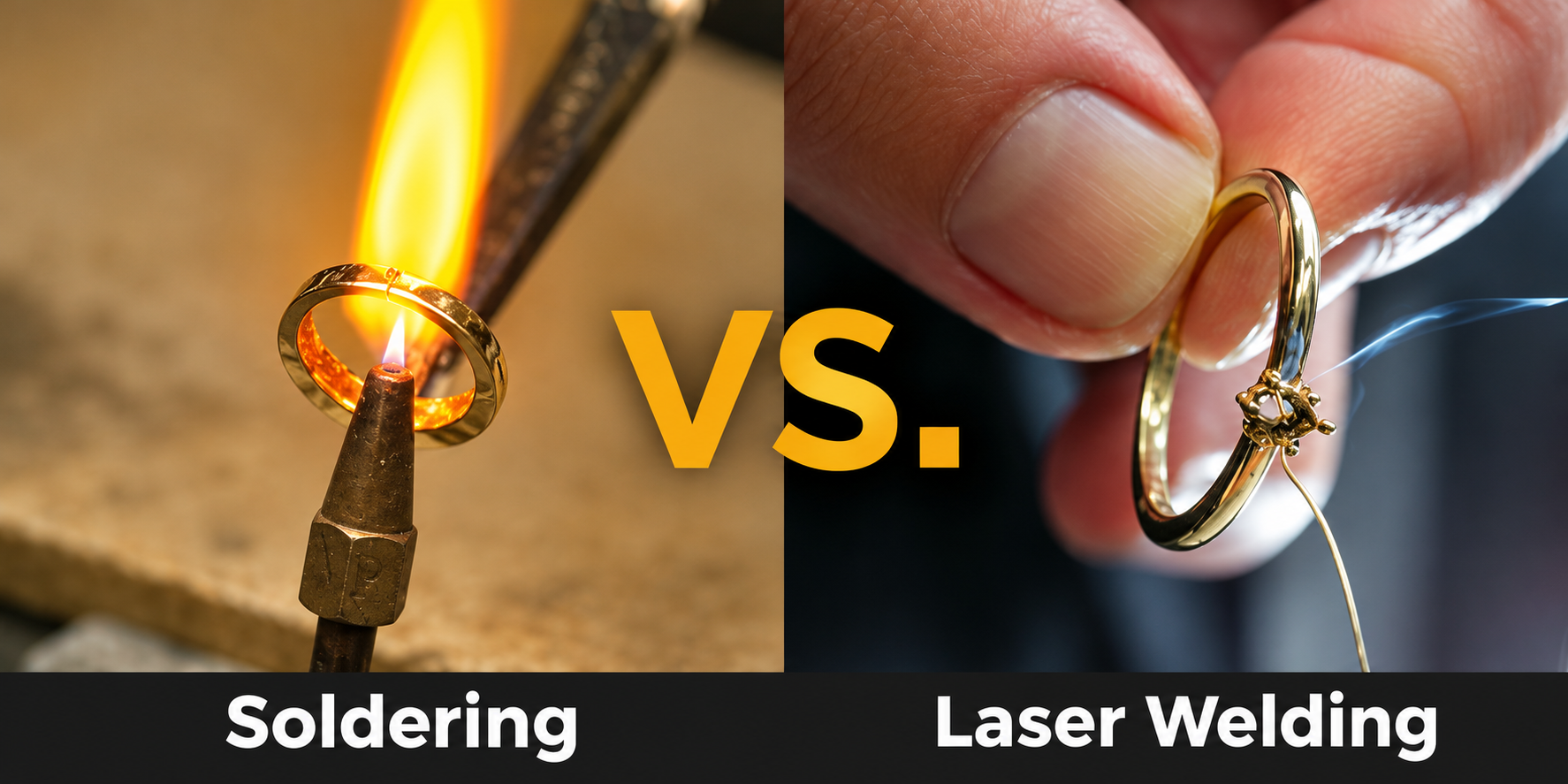
Laser Welding vs Soldering: Which Is Better for Sterling Silver?
Laser welding and traditional silver soldering both have important roles in jewelry repair.
The better choice depends on the repair location, joint design, metal condition, nearby gemstones, required finish, and workshop equipment. If you are weighing equipment costs for fine repairs, a jewelry laser welder wholesale option may be worth comparing.
| Factor | Laser welding | Traditional silver soldering |
|---|---|---|
| Joining method | Localized melting and fusion, sometimes with filler | Lower-melting solder flows between prepared surfaces |
| Heat distribution | Concentrated around the weld | Broader heating of the surrounding metal |
| Fine repairs | Well suited to accessible small joints | Can be difficult near delicate details |
| Gemstone-set jewelry | May reduce heat exposure, but still requires risk assessment | Often requires stone removal or significant protection |
| Surface finish | Smaller area may need refinishing | Larger areas may require cleaning and refinishing |
| Joint preparation | Close fit and sound base metal are important | Close-fitting, properly prepared surfaces are also important |
| Equipment cost | Higher initial investment | Generally lower initial investment |
| Best use | Precision repair and localized rebuilding | General fabrication, assembly, and many routine repairs |
When Is Laser Welding the Better Choice?
Laser welding is often worth considering for:
- Small cracks in finished sterling silver rings
- Prong repairs where enough sound material remains
- Accessible chain-link and clasp repairs
- Fine decorative components
- Localized repairs on pieces where broad heating would be undesirable
A smaller heat-affected area can reduce distortion and finishing work, although the result still depends on the alloy and the operator’s technique.
When Should You Choose Traditional Soldering?
Torch soldering remains a practical choice for:
- General sterling silver fabrication
- Assembly of multiple components
- Joints designed for capillary solder flow
- Repairs where broader heating is acceptable
- Workshops with limited repair volume or equipment budgets
Neither method should be expected to compensate for severely damaged metal or poorly designed joints.
Pulse-arc or micro-TIG equipment provides another option for some precision repairs. It uses a different joining process from laser welding and may be suitable for certain bench applications, but tool access, electrode positioning, and workpiece compatibility must be considered.
For professional jewelry workshops, laser welding is best viewed as a complementary repair method rather than a universal replacement for soldering.
FAQ: Laser Welding Sterling Silver Jewelry
Can You Laser Weld 925 Sterling Silver?
Yes. A suitable pulsed jewelry laser welder can join and repair 925 sterling silver. The main challenges are the metal’s high reflectivity, rapid heat conduction, and sensitivity to joint conditions. Reliable results depend on cleaning, accurate alignment, controlled settings, and testing on comparable material before repairing valuable jewelry.
Can You Laser Weld Sterling Silver Without Filler Wire?
Yes, provided the joint has enough sound metal and the edges can be fused properly. Filler wire becomes useful when rebuilding prongs, repairing worn material, or filling a prepared seam. The filler must be compatible with the sterling alloy and the repair’s strength and appearance requirements.
Can You Laser Weld Silver Jewelry With Gemstones?
Sometimes, but not automatically. Laser welding concentrates heat more locally than torch soldering, yet heat can still travel through silver to a gemstone. The stone’s identity, treatments, condition, and distance from the weld must be assessed. Heat-sensitive or high-risk stones may need removal before repair.
Why Is Sterling Silver Harder to Laser Weld Than Gold?
Sterling silver reflects a large amount of near-infrared laser energy and transfers absorbed heat away from the weld zone quickly. These properties can make melting less predictable than with many gold jewelry alloys. Surface preparation, joint fit, appropriate pulse control, and compatible filler materials help improve consistency.
Final Takeaway
Sterling silver jewelry can be laser welded successfully, but good results depend on more than laser power.
Start with a clean, well-fitted joint. Test the settings on comparable material. Build the weld gradually, use filler only when necessary, and inspect the finished repair for defects.
Most importantly, choose the repair method based on the jewelry itself. Laser welding is valuable for localized precision work, while traditional soldering remains useful for many other silver jewelry applications.
For workshops considering a new machine, the best evaluation is a real welding test on the types of jewelry they repair most often. Explore the MaxWave QCW jewelry laser welder or request a sample test using your sterling silver repair requirements before choosing a configuration.

0 Comments