
The welder shortage is putting pressure on welding shops that already have enough orders but not enough skilled people to complete them. Hiring more welders is one solution, but it is not the only way to increase production capacity.
Welding shops can respond by improving recruitment, retaining experienced employees, cross-training existing workers, standardizing production, and introducing suitable welding technology. Handheld laser welding may help with certain repetitive metal fabrication tasks, although it cannot replace every skilled welder or conventional welding process.
The best approach is to identify where your shop loses time and choose solutions that address those specific problems.
1. Why Are Welding Shops Struggling to Find Skilled Welders?
The welder shortage is a genuine workforce challenge, particularly for manufacturers that depend on experienced employees to maintain production quality and meet delivery schedules.
According to the American Welding Society’s welding workforce data, the United States is projected to need approximately 320,500 new welding professionals by 2029, with an average of around 80,000 welding-related positions to be filled annually between 2025 and 2029.
These figures include demand created by industry growth, retirement, and people leaving or changing occupations. They should not be interpreted as the number of currently vacant welding jobs.
The U.S. Bureau of Labor Statistics reported approximately 437,700 jobs in the narrower occupational category of welders, cutters, solderers, and brazers in 2025. Manufacturing accounted for about 63% of those jobs.
The two organizations measure different workforce groups, but both highlight the importance of skilled welding labor to industrial production.
Several factors make recruitment difficult.
Experienced welders are leaving the workforce, while new employees need time to develop practical skills. Welding also requires physical stamina, safety awareness, and the ability to produce consistent results under different working conditions.
For a small welding shop, these problems quickly become operational challenges.
A shortage of qualified workers may lead to longer production backlogs, additional overtime, delayed deliveries, and greater dependence on a few experienced employees. When those employees are unavailable, the shop may have to turn down otherwise profitable work.
The important question is therefore not simply how to hire more welders, but how to maintain reliable production with the workforce already available.
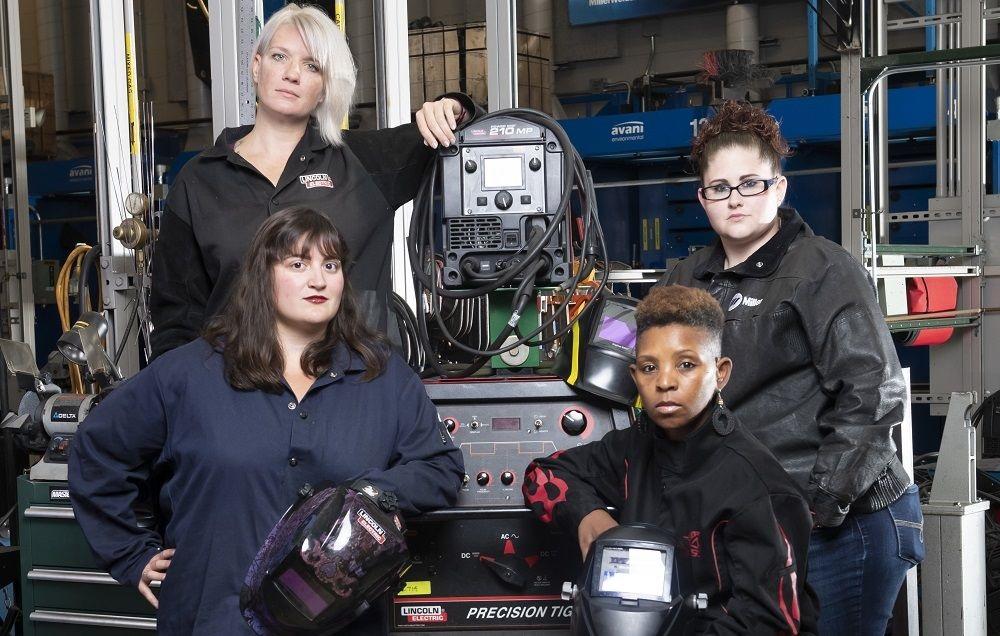
2. 5 Practical Ways Welding Shops Can Handle the Welder Shortage
There is no single solution to the welding labor shortage. Shops usually benefit most from combining improvements in staffing, training, workflow, and equipment.
The following five approaches address different causes of lost production capacity.
| Solution | Practical Action | Main Benefit |
|---|---|---|
| Improve recruitment | Work with technical schools, apprenticeship programs, and local training providers | Build a more reliable hiring pipeline |
| Retain skilled welders | Improve ventilation, working conditions, scheduling, and career development | Reduce employee turnover |
| Cross-train existing workers | Train suitable employees in preparation, fixturing, approved welding tasks, and inspection | Make better use of available staff |
| Standardize welding processes | Use qualified procedures, repeatable fixtures, and clear work instructions | Reduce setup errors and rework |
| Introduce selective automation | Automate suitable repetitive tasks and evaluate new welding equipment | Increase output without proportional staffing growth |
Make Better Use of Experienced Welders
One of the most practical improvements is to stop assigning every task to the most experienced person.
Senior welders are especially valuable for complex joints, troubleshooting, procedure development, and quality decisions.
Routine preparation, part positioning, material handling, and other appropriately assigned tasks can be performed by trained employees.
For repeatable welding work, experienced personnel can help establish approved parameters and inspection requirements before other qualified operators begin production.
This approach allows shops to use scarce welding expertise where it creates the greatest value.
Standardize Work Before Adding Equipment
Poor production consistency can create a labor problem even when a shop has enough employees.
Inconsistent joint preparation, missing fixtures, and repeated adjustments increase the time required to complete each part.
Standardized work instructions, reliable positioning fixtures, and documented welding parameters can reduce unnecessary variation.
Shops should also measure welding time, setup time, finishing work, and rework rates before changing their processes.
These measurements establish a baseline for evaluating whether training, automation, or a new welding machine actually improves productivity.
Automation can be valuable when parts repeat frequently. For low-volume custom work, however, the cost of programming, fixtures, and changeovers may limit its benefits.
This is where more flexible equipment, including handheld laser welders, may deserve consideration.
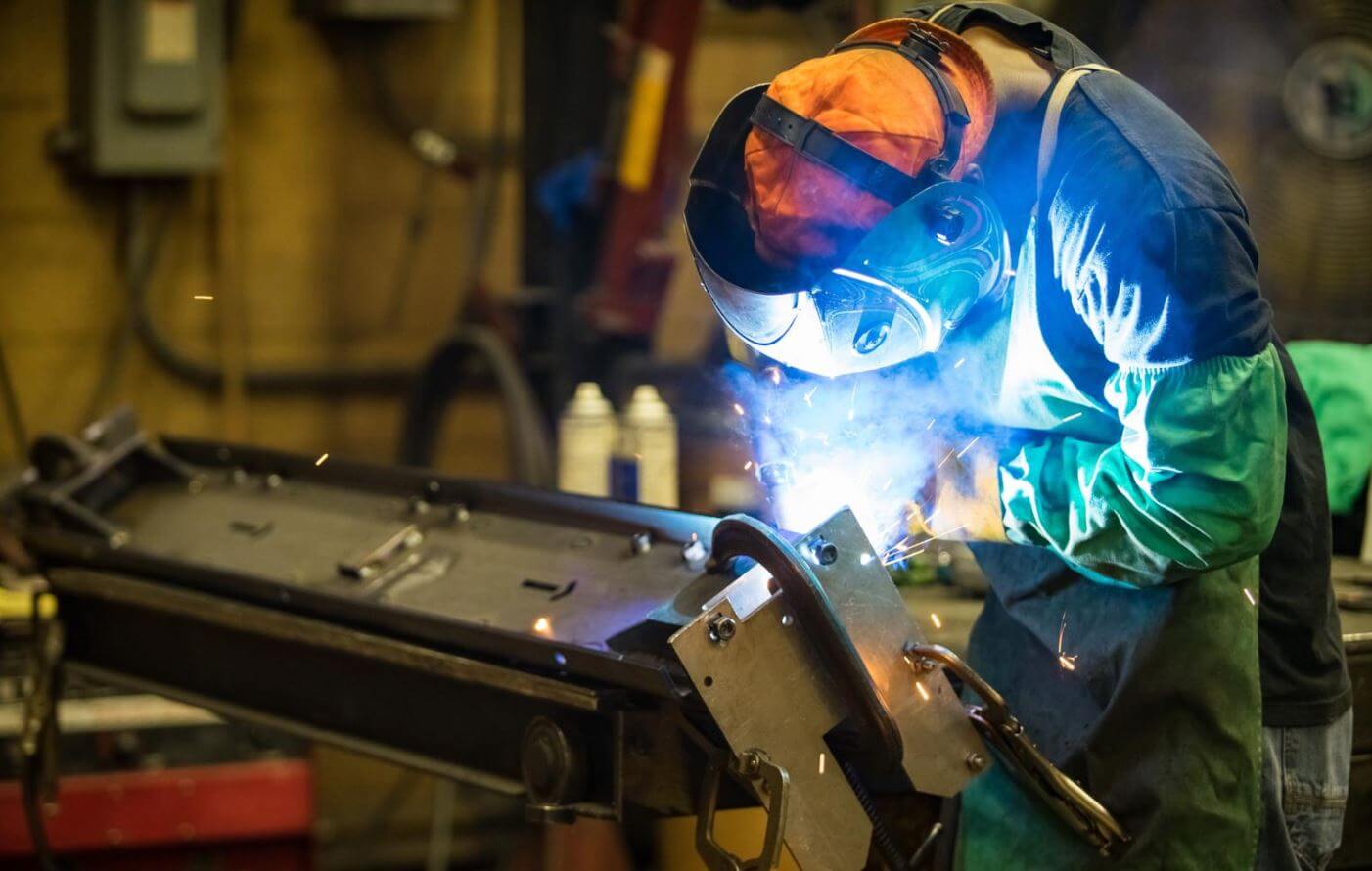
3. Can Handheld Laser Welding Reduce the Need for Skilled Welders?
Handheld laser welding can reduce dependence on highly skilled manual welding labor for some suitable applications, but it does not eliminate the need for welding expertise.
The potential advantage comes from how the welding process is controlled.
A handheld fiber laser welder uses a concentrated laser beam to create a weld. With an appropriately developed procedure, the operator can follow defined settings for laser power, travel speed, beam oscillation, and filler-wire delivery when required.
For some repetitive joints, this can reduce the manual coordination needed compared with processes such as TIG welding.
However, learning basic machine movements is different from becoming qualified to produce acceptable welds independently.
Operators still need supervised practice, laser safety training, and a demonstrated ability to meet the required weld quality.
Where Handheld Laser Welding Can Improve Productivity
Consider a metal fabrication shop producing stainless steel cabinets and equipment enclosures.
If its current process requires substantial welding, grinding, and straightening, improving the weld itself may reduce work at several production stages.
A properly configured laser welding process may offer advantages in three areas.
1. Less distortion on suitable thin-sheet joints
Laser welding concentrates energy in a relatively small area. Under appropriate conditions, this can reduce unwanted heating and distortion.
The result may be less time spent correcting warped components.
2. Less finishing work
A controlled laser weld may require less grinding or polishing, particularly for visible joints in stainless steel products.
The benefit depends on the required appearance and the actual weld quality.
3. More consistent repetitive work
When materials, joint geometry, and fit-up remain stable, documented laser parameters can help operators repeat an approved welding process.
This can be particularly useful for workshops producing similar parts throughout the week.
Kemppi’s published laser, MAG, and TIG welding productivity comparison demonstrates why welding speed and heat input deserve attention. However, its test results are specific to the materials and joints examined and should not be treated as universal performance guarantees.
For shops working with stainless steel, carbon steel, or aluminum assemblies, a handheld laser welder may be worth evaluating alongside existing equipment.
The MaxWave air-cooled handheld system offers preset parameters and different power configurations, including 1500W and 2000W options. The appropriate configuration depends on the material, thickness, joint design, and required weld performance.
Measure Output, Not Just Welding Speed
A faster welding process does not automatically mean a more productive shop.
The complete production cycle also includes part preparation, positioning, welding, inspection, and finishing.
A useful comparison should measure:
- Total processing time per part.
- Accepted parts produced per shift.
- Welding and finishing labor hours.
- Rework and scrap rates.
If laser welding reduces the total time required to produce an acceptable part, the shop may gain capacity without increasing its workforce.
That is the benefit that matters most when skilled welders are difficult to recruit.
For a detailed comparison of the processes themselves, see our guide to laser welding vs TIG welding.
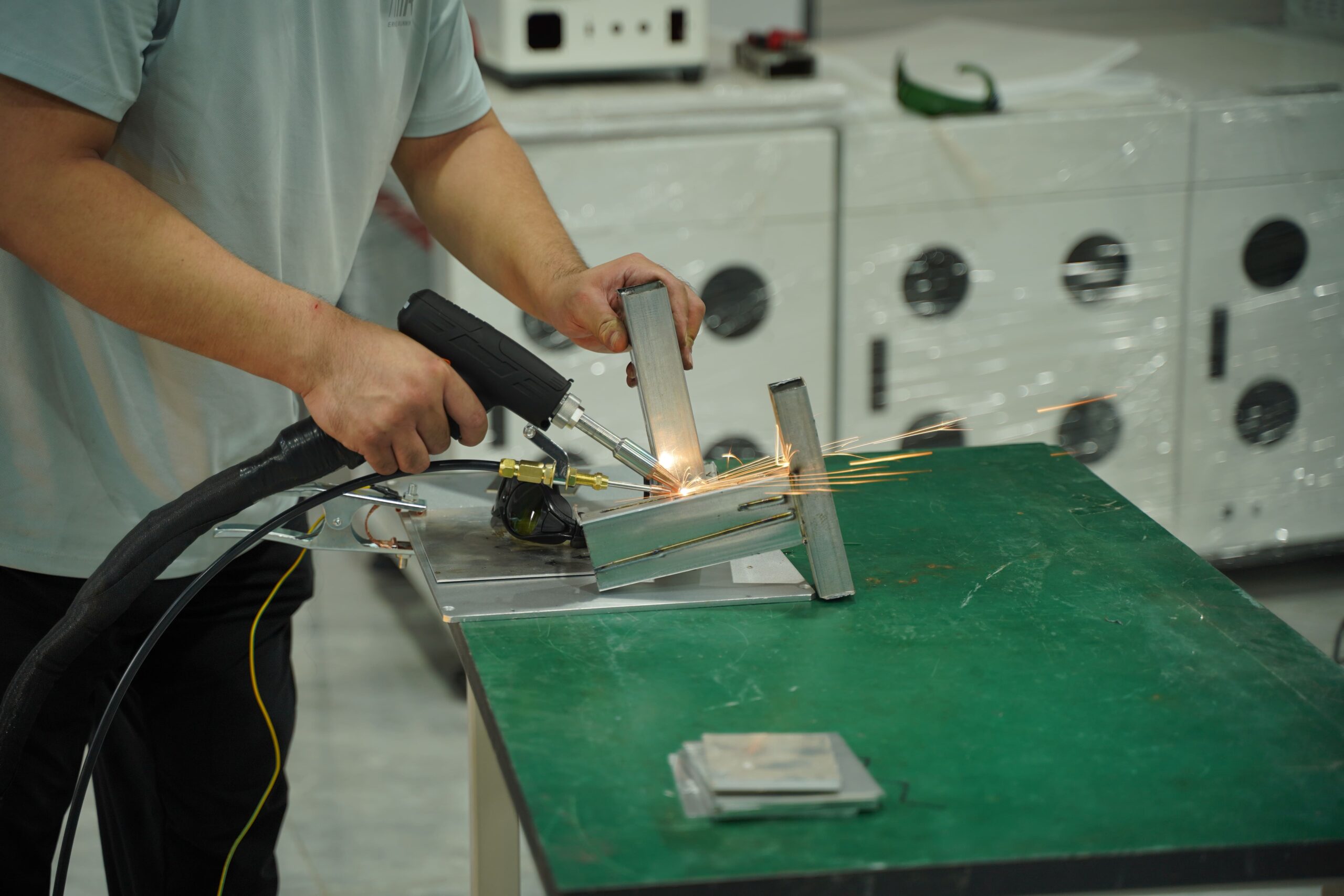
4. When Is Laser Welding Not the Right Solution?
Laser welding is not suitable for every shop or every welding task.
Its advantages depend heavily on material properties, joint preparation, equipment configuration, and production requirements.
Joint Preparation and Material Limitations
Handheld laser welding generally benefits from consistent joint fit-up and clean material surfaces.
Large or irregular gaps, unstable positioning, and contaminated surfaces can make it difficult to achieve reliable weld quality.
For workshops regularly handling poorly fitted parts or heavy sections requiring substantial filler-metal deposition, conventional MIG welding may remain more practical.
TIG welding can also remain valuable for specialized fabrication, complex repairs, or work requiring experienced manual control.
Laser welding should not be introduced into structural or safety-critical applications without confirming the applicable welding procedures, qualifications, testing, and acceptance requirements.
Training and Laser Safety Still Matter
Most industrial handheld fiber laser welding systems use Class 4 laser sources.
Direct or reflected laser radiation can cause serious injuries. Welding can also produce hazardous fumes, and the equipment may introduce fire risks.
A safe installation may require appropriate beam containment, controlled access, interlocks, warning systems, wavelength-specific protective equipment, and effective fume extraction.
OSHA’s guidance on laser hazards provides background on these risks.
Protective eyewear alone is not a substitute for suitable engineering controls.
Shops should also review the manufacturer’s instructions, applicable workplace requirements, and relevant laser safety standards, including ANSI Z136.1.
The correct objective is not to remove skilled people from the welding process. It is to give trained employees better tools while maintaining safety and quality.
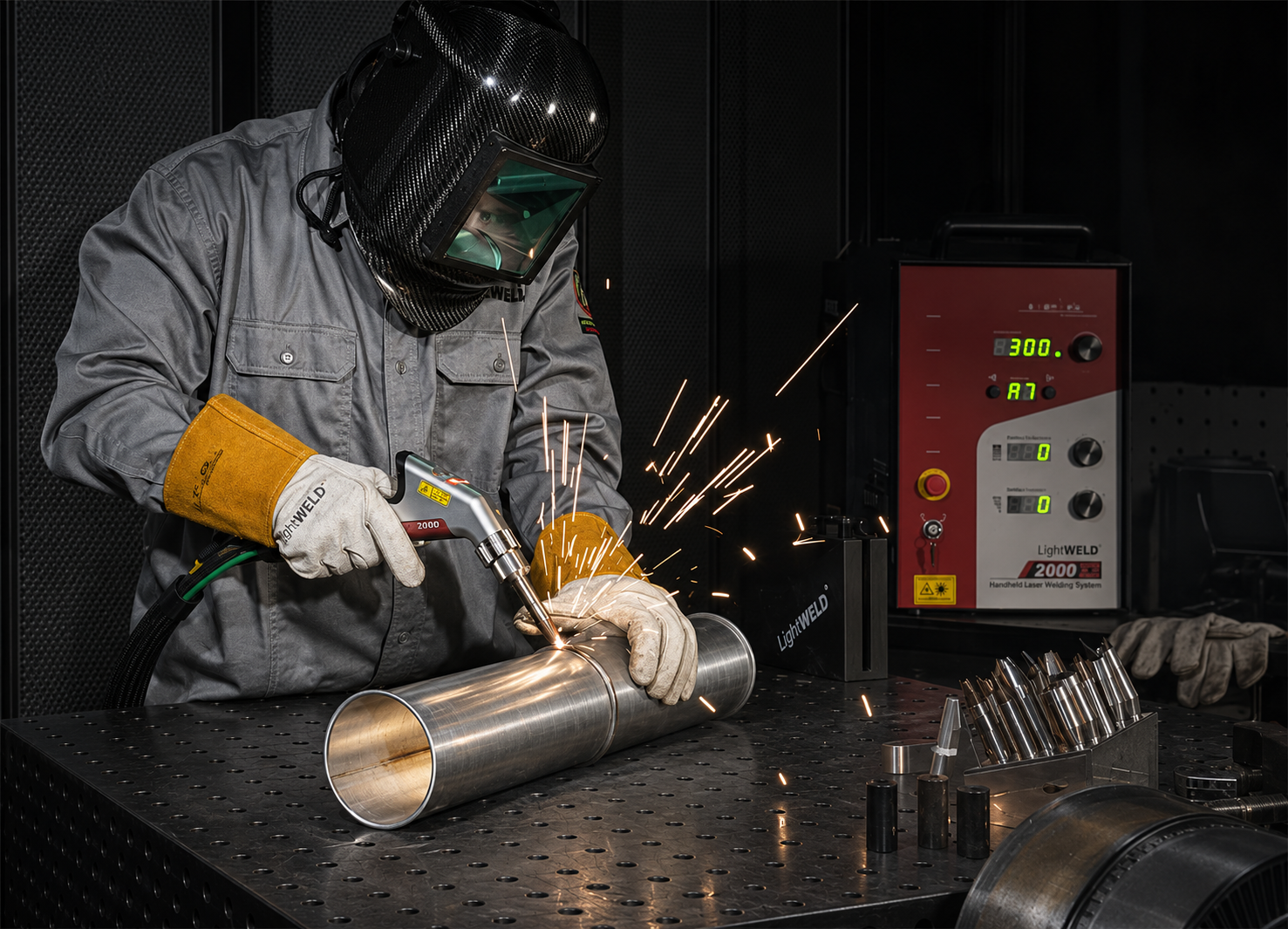
5. Is Investing in Laser Welding Worth It for a Small Shop?
A handheld laser welder can be a worthwhile investment when it addresses a measurable production bottleneck.
However, the equipment price alone cannot determine whether the investment makes financial sense.
Calculate the Total Cost of Ownership
The initial investment may include the welding machine, suitable accessories, installation, fixtures, operator training, and necessary safety infrastructure.
Operating costs may include electricity, shielding gas, filler wire, maintenance, and consumables.
A shop should compare these costs with the actual financial benefits from reduced overtime, lower finishing costs, fewer rejected parts, or additional production capacity.
A simple payback calculation is:
Payback Period (Months) = Total Initial Investment ÷ Monthly Net Financial Benefit
Monthly net financial benefit includes realized savings and additional contribution margin, minus new operating expenses.
For example, consider the following hypothetical workshop calculation.
| Item | Illustrative Value |
|---|---|
| Parts produced monthly | 500 |
| Time saved per part | 6 minutes |
| Monthly labor capacity released | 50 hours |
| Value of usable capacity | $30/hour |
| Potential monthly benefit | $1,500 |
| Additional monthly operating cost | $200 |
| Net monthly benefit | $1,300 |
| Total installed investment | $18,000 |
Under these assumptions, the estimated simple payback period is approximately 14 months.
This is an illustrative calculation, not a typical or guaranteed result.
It assumes the shop can convert the released 50 hours into genuine financial value—for example, by reducing paid overtime or completing additional profitable orders.
If employees remain fully paid and no additional work is completed, the same time reduction may improve capacity without producing immediate cash savings.
Which Shops Should Consider Laser Welding?
Handheld laser welding is particularly worth investigating when a shop repeatedly produces well-fitted thin-sheet components and spends significant labor time on welding or finishing.
Typical candidates include stainless steel enclosures, commercial kitchen equipment, cabinets, architectural metal components, and similar fabricated assemblies.
For highly repetitive precision parts, a programmed automatic fiber laser welder may be more appropriate than handheld operation.
By contrast, workshops focused mainly on heavy fabrication, inconsistent custom joints, or occasional repair jobs may benefit more from improving their existing processes.
Test Your Actual Parts Before Buying
Before investing, select two or three representative parts that currently consume significant welding labor.
Record the existing processing time and quality results, then have the parts welded using a proposed laser configuration.
Compare weld penetration, required strength, appearance, distortion, inspection results, total cycle time, and finishing requirements.
The goal is to determine whether the new process meets the same acceptance criteria while reducing production constraints.
A successful sample test provides a much stronger purchasing basis than advertised welding speed or estimated labor savings alone.
6. FAQs About the Welder Shortage and Laser Welding
Why Is There a Shortage of Skilled Welders?
The shortage reflects several factors, including experienced workers approaching retirement, employee turnover, recruitment difficulties, and the time needed to develop practical welding skills. Demand also varies by industry and region, so individual shops may experience very different hiring conditions.
Can Laser Welding Replace Skilled Welders?
No. Laser welding can reduce the amount of skilled manual work required for certain repeatable tasks, but experienced personnel remain important for process development, qualification, troubleshooting, inspection, and safety management. The technology is best viewed as a way to support and extend existing workforce capabilities.
Is Handheld Laser Welding Easier to Learn Than TIG Welding?
Basic handheld laser welding movements may be easier to learn for some suitable joints because preset settings can simplify certain aspects of process control. However, operators still need proper training and supervision, and production qualification depends on the application and required weld quality.
Can a Small Welding Shop Save Money With a Laser Welder?
Potentially. Savings are most likely when the equipment reduces paid overtime, finishing work, rework, or other measurable costs. A shop may also benefit from additional production capacity. The actual return depends on machine utilization, installed cost, operating expenses, and the types of parts produced.
Should Welding Shops Replace MIG and TIG With Laser Welding?
Not necessarily. MIG, TIG, and laser welding serve different applications. A shop may use laser welding for suitable precision or repetitive work while keeping MIG for heavier fabrication and TIG for specialized joints. Combining processes is often more practical than replacing every existing welding station.
Conclusion
The welder shortage cannot be solved by equipment alone. Welding shops still need effective recruitment, employee development, reliable processes, and experienced people who understand welding quality.
What technology can do is help those people become more productive.
For shops handling suitable sheet metal assemblies, handheld laser welding may reduce processing time, finishing work, and dependence on scarce manual welding skills.
The next step is to identify a specific production bottleneck, test an appropriate welding process, and calculate the benefit using actual shop data.
If you are considering laser welding for your workshop, explore our handheld laser welding equipment and share your material, thickness, joint type, and production requirements with the MaxWave team.
A sample-based evaluation can help determine whether laser welding is a practical way to increase your shop’s capacity.


0 Comments