
Three years ago, Marcus ran a one-truck welding operation. He turned away more jobs than he took — not because the work wasn’t there, but because his equipment held him back. Hauling a bulky TIG setup to a client’s shop meant half a day of setup, heat distortion problems, and callbacks that hurt his reputation.
Then he made one swap: a compact, handheld Fiber Laser Welding machine that fit behind his truck seat.
Eight months later, his revenue had doubled. His callback rate dropped to near zero. He was charging a premium — and clients paid it without question.
This is the story of how that shift happened. Plus, it’s a practical framework for deciding whether a portable Laser welder could do the same for your business.
The Business Before: Why Traditional Welding Was Holding Growth Back
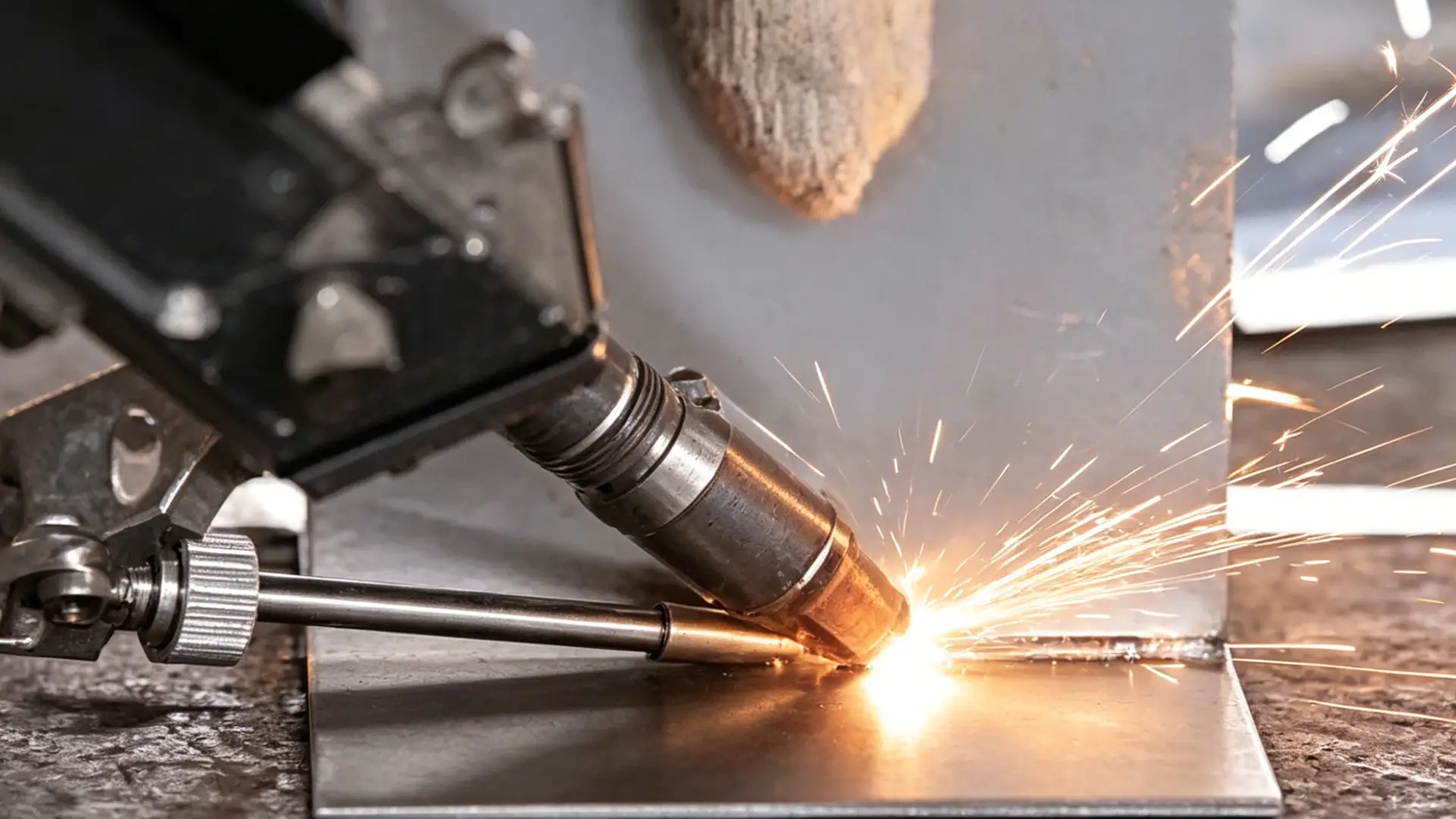
Traditional Welding doesn’t fail with a bang. It fails in silence — in the minutes lost between jobs, the callbacks that eat your afternoon, the bids you can’t win because your cost structure won’t allow it.
For Marcus, the math was painful and clear. A conventional TIG setup gave him arc-on time of just 20–30% of his paid hours. The rest vanished into grinding, repositioning, and swapping out electrodes. At 100–150 rods per shift, that adds up to 150 minutes of dead time — every single day.
That wasn’t just inefficiency. That was the ceiling on his business.
The problems stacked up fast:
Heat distortion on precision repair jobs added straightening time — 0.5–2 hours per assembly — cutting straight into his margin
Defect and rework rates on manual TIG work hit as high as 5–15% of total labor hours. Close to one in ten jobs came back
Dimensional inconsistency of ±1–3 mm on structural repairs forced extra fitting time. Some jobs ended up as expensive scrap
Quoting was guesswork — actual hours drifted from estimates by ±15–30%. So Marcus either underpriced and bled margin, or overpriced and lost the job
The deeper problem was scalability. In a manual operation, a 20–30% revenue increase demands a near-identical increase in labor. There’s no leverage. You hire another welder, buy another truck, and your overhead climbs right alongside your revenue.
That’s not a business. That’s a treadmill.
The Turning Point: Choosing a Portable Laser Welder for Mobile Work
Not every business decision feels like a turning point. Marcus didn’t walk into a welding supply shop expecting a revelation. He walked in frustrated, carrying a quote he’d lost because his setup time had eaten his margin alive.
What he walked out with was a 1500 W handheld fiber laser welding machine — and a different ceiling.
The specs that sold him weren’t glamorous. They were practical:
- Gun weight under 1.5 kg, with an 8–10 m fiber cable — enough reach to work around a full-size truck without moving the unit
- 220 V single-phase input — any standard site outlet or a mid-sized generator runs it fine
- Full unbox-to-first-weld time of 20–30 minutes in field conditions, after one run-through of the system
That last number mattered more than anything on the spec sheet. Half a day of TIG setup compressed into a lunch break.
Why “Portable” Means Something Here
The machine rolls on casters — the full system sits around 100–130 kg. It’s not a backpack. But it fits through standard doorways, loads into a van, and parks next to the job without drama. That’s what mobility means in on-site metal repair: not weightless, but frictionless.
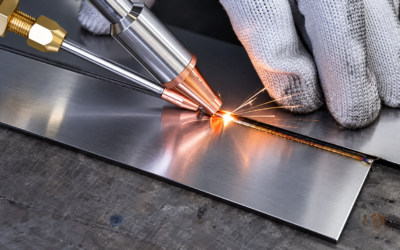
The handheld laser welding gun handles the real work. At 1500–2000 W, it single-pass welds 3–4 mm plate. Marcus’s core jobs cover stainless railings, automotive bodywork, and carbon steel brackets in the 1–6 mm range. The gun handles all of it. No process switching needed.
Two other things sealed the deal:
Minimal post-weld grinding on visible stainless seams. Jobs that used to end with 45 minutes of angle grinder work now finish clean off the gun
Material presets for stainless, aluminum, and carbon steel — Marcus didn’t need to dial in parameters from scratch at every new job site
The Right Call — And When It Isn’t
The portable laser welder isn’t a universal answer. Marcus knew that going in.
It’s a strong fit when:
– Your work centers on 1–6 mm stainless or carbon steel, with cosmetic or precision requirements
– Job sites run on single-phase power, where hauling high-amperage TIG gear creates its own headaches
– Rework and cleanup labor is bleeding your margins without you noticing
It’s the wrong tool for structural members past 10 mm. Also pass on it when job geometry forces the gun into tight corners where it can’t stay perpendicular to the joint. The wire feeder adds real bulk — that’s a genuine constraint, not a footnote.
For Marcus’s work mix, the fit was clean. The machine he chose wasn’t the cheapest or the most powerful. It was the one that matched how he worked — fast setup, clean finishes, mobile-first.
Immediate Operational Wins: Speed, Precision, and Fewer Callbacks
Marcus’s first week with the portable laser welder, he wasn’t tracking numbers. He just noticed he was finishing early.
That feeling had a number behind it. His setup-to-first-weld time dropped from several hours to under 30 minutes. Jobs that used to eat a full day were wrapping up by early afternoon. New time slots opened up — and he filled them.
Here’s what shifted at the operational level, and why the gains stacked up fast.
Speed That Shows Up in the Schedule
The handheld laser welding gun doesn’t just weld faster. It cuts out all the friction around the weld. No long preheating cycles. No electrode swaps mid-job. No repositioning the workpiece to control heat buildup.
Marcus could move through a stainless railing repair — measure, tack, run the seam, done — in one clean pass. No stop-start rhythm breaking up his day.
That time savings added up across every job. More jobs per week meant more revenue. No extra truck. No second operator.
Precision That Ends the Callback Loop
The fiber laser welding machine runs a focused beam with a tight heat-affected zone. Surrounding material stays stable. On cosmetic repairs — automotive bodywork, decorative metalwork, precision brackets — that’s a big deal. Distortion that used to need post-weld straightening? It stopped showing up.
Marcus’s callback rate dropped to near zero in the first two months.
Callbacks are the silent margin killer in mobile welding. One return visit eats the profit from two completed jobs. Cut them out and you win on quality, pricing, and capacity — all at once.
The practical result:
Stainless seams needed little post-weld grinding — jobs that used to end with 45 minutes of angle grinder work now came off the gun clean
Dimensional consistency on structural repairs tightened from ±1–3 mm variance to precision fits with no rework needed
Material presets for stainless, aluminum, and carbon steel meant Marcus arrived at each site ready to weld — not ready to calibrate
First-Time Fix Rate as a Business Metric
Marcus never used the phrase “first-time fix rate” — but that’s what he was chasing. In on-site metal repair, the industry target for solid operations sits above 80–85% first-time completion. Drop below that line and callbacks pile up fast. They drain technician capacity in a hurry.
The portable welding equipment pushed Marcus well past that benchmark. Fast setup, clean output, and tight finishes gave clients no reason to call back. So instead, they called forward — with referrals, repeat jobs, and word-of-mouth that no ad budget can buy.
That’s the compounding effect you won’t find on any spec sheet.
Service Expansion: New Revenue Streams Unlocked by Laser Welding
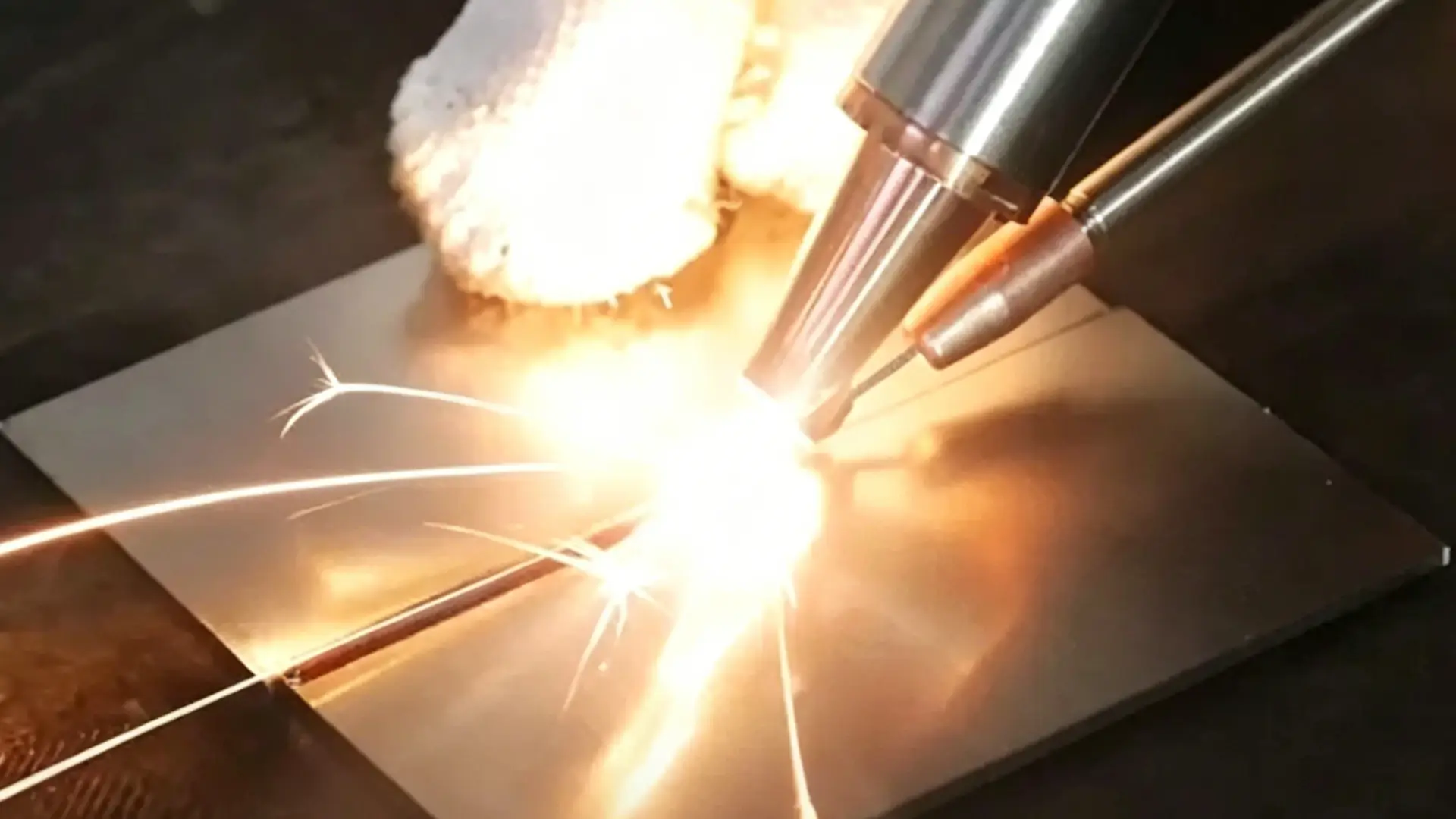
faster welds don’t just save time. They create time — and time, in a mobile welding business, turns straight into money you weren’t making before.
Marcus’s callback rate dropped. His daily job count climbed. Then something else happened: he started saying yes to work he’d turned away before. That’s where the real growth story begins. Not in efficiency gains. In brand-new revenue categories he hadn’t touched.
Here’s what opened up.
Six Revenue Streams That Didn’t Exist Before
1. Local repair and restoration — the easiest entry point
Metal furniture, gates, railings, automotive trim, decorative fixtures — this market is everywhere and underserved. A handheld laser welding gun lets Marcus weld thin stainless tubes and ornamental brass pieces that MIG or TIG would have burned through. Near-zero warpage means he can take jobs other welders refuse.
The pricing is simple: a USD 80–150 call-out fee plus USD 60–120 per hour for welding time. Laser runs 4–5× faster than TIG, so the ticket stays the same — but he finishes in half the time and moves to the next job.
2. Precision small-part work for makers and Fabricators
The maker and Robotics community needs someone who can weld a drone frame without warping it. That person used to be hard to find. Now it’s Marcus. He prices at USD 10–40 per small weld job. Repeat clients can sign up for monthly service plans too.
3. Subcontract laser work for other shops
Fabrication shops and machine shops sometimes need a Fiber laser welding machine but don’t own one. Marcus fills that gap. He acts as their on-call laser operator — charging USD 30–100 per hour on discounted B2B rates, or USD 0.50–3.00 per weld seam on volume contracts. Laser throughput runs 4–5× faster than TIG. A shift that used to produce 100 welded parts now hits 400–500.
4. Mobile industrial repair at day rates
This is where portable welding equipment earns its keep most clearly. Conveyor frames, storage racks, industrial piping — heavy gear that can’t move to a shop. Marcus charges USD 800–1,500 per day for on-site work. Emergency same-day calls carry a 50–100% premium. Clients pay it. The alternative is downtime.
5. Equipment rental during idle days
No booking? The machine still earns. A 1–1.5 kW handheld system rents for USD 250–400 per day or USD 800–1,200 per week to local welders who need occasional laser capability. At 10 rental days per month, that’s USD 3,000/month — enough to cover the equipment financing on its own.
6. Training and content as a long-term asset
Marcus knows things other welders don’t. That knowledge has real market value. Packaged courses on laser welding parameters, material-specific troubleshooting, and job-site workflow sell for solid fees on platforms like Udemy or Skillshare. A YouTube channel documenting repair jobs pulls ad revenue, sponsorships, and affiliate commissions — plus it feeds a steady flow of local service inquiries.
The Math Behind the Expansion
None of this needs a second truck or a second operator. the laser welder ROI builds up fast because the same machine, in the same hands, opens multiple billing models at once.
A shop charging USD 80–120 per labor hour can recoup a USD 15,000–20,000 equipment investment within 150–250 billable laser hours. That’s about one to three months at 15–20 laser hours per week. After that, every new service stream is pure margin growth.
Marcus’s welding business growth wasn’t one big leap. It was six smaller doors, all opened by one machine. He didn’t need to walk through all of them at once. He just needed to know they were there.
Pricing Strategy: Charging Premium for “No-Distortion, On-Site” Repairs
Clients don’t pay a premium because you charged more. They pay it because they understand what they’re no longer dealing with.
Marcus figured this out fast. He told a client — straight-faced — “I’ll repair that conveyor frame on-site, no distortion, back in service today.” The pricing conversation shifted. He wasn’t selling labor hours. He was selling the end of a problem the client already knew was costing them money.
That’s the premium pricing logic that holds. Nothing else comes close.
What “No-Distortion, On-Site” Takes Off the Table
The real case for charging more isn’t the laser. It’s the list of costs that vanish when the laser comes to the job:
No equipment transport — no crane rental, no rigging, no logistics bill
No disassembly distortion — components that come apart out of alignment don’t go back together right
No downtime spiral — the machine stays in place, the repair gets done, the shift picks back up
No rework from reassembly — fix it once, it stays fixed
Each of those line items has a real dollar value for the client. Your premium needs to sit below that value. That’s the whole pricing model.
A Tiered Structure That Captures the Right Revenue
Marcus breaks quotes into three clean tiers:
| Service Level | Rate Logic |
|---|---|
| Standard repair | Base labor rate |
| No-distortion on-site repair | Base + precision/mobilization premium |
| Emergency same-day on-site | Highest tier — 50–100% uplift, non-negotiable |
The tiers aren’t random. Each one reflects real differences — urgency, site access difficulty, and how much risk the client is carrying.
Set the Premium Before You Arrive
This is where most operators lose money. They show up, look at the job, then feel uncomfortable charging more than the number they quoted over the phone.
The fix is about process, not mindset:
- Define the repair boundary before quoting — scope creep kills premium margins faster than any discount
- Spell out what “no distortion” means in measurable terms — tolerance range, finish standard, dimensional outcome
- Get e-signature acceptance before dispatch — this one step protects the entire pricing structure
A premium is defensible only when the process behind it is tight. Vague quotes open the door to renegotiation. Precise scope documents shut it.
The Premium Fails Without the Process
Charging more without changing how the job runs isn’t a pricing strategy. It’s a fast path to a bad review.
The portable laser welder gives Marcus the technical foundation — tight heat-affected zones, clean stainless finishes, no post-weld distortion on the jobs that count. The premium holds because of what backs up that technical capability: documented quality checks before sign-off, site requirements spelled out in advance, and a workmanship warranty Marcus stands behind without hesitation.
Put those together — specialized portable welding equipment, controlled execution, defined deliverables — and a client sees a higher quote and thinks that’s worth it, not that’s steep.
Clients who push back on the premium are not the ones with critical equipment still running and a clock ticking. Those clients get the math. They’re buying risk reduction as much as a repair. Price to match that reality.
Marketing That Worked: How On-Site Laser Welds Sell Themselves
Word of mouth is powerful. Engineered word of mouth is a business model.
Marcus didn’t run ads in his first growth phase. He let the work do it. A client watched him wipe a stainless weld clean with a shop rag — no grinder, no repainting, no waiting — and pulled out their phone before he’d packed the gun away. That photo reached three other plant managers by end of day.
That’s not luck. The product was flat-out better than what people expected. They could see it. That’s what made them share it.
But instinct only goes so far. Here’s the system behind it.
Make the Numbers Impossible to Ignore
The fastest way to close a commercial kitchen or brewery client isn’t a sales pitch. It’s a side-by-side cost breakdown they can show their boss.
A railing repair that used to take 3 hours at $85/hr = $255 — plus grinding and repainting — now takes 1 hour of laser at $140/hr = $140. No repaint. Same-day return to service. The client saves 45% and gets their equipment back faster. Show that math once in a quote, and the premium stops feeling like a premium.
For industrial clients, frame it around downtime reduction. On thin-gauge and stainless work, on-site laser welding cuts repair downtime by 50–70% compared to conventional welding plus cleanup. Their operations team already knows what that number costs. You’re not selling a weld. You’re selling a shift that doesn’t stop.
Channel Tactics That Convert
Google Search — high intent, high return
Broad keywords waste budget. Specific ones close jobs. Skip bidding on “welding service.” Target terms like:
- “on-site laser weld repair”
- “mobile laser welding stainless”
- “laser weld food-grade pipe on site”
Send that traffic to a single-offer landing page — not your homepage. One CTA: “Upload photos for an instant quote.” That one change lifts conversion rates in a real, measurable way.
Google Business Profile — local visibility that compounds
Post 1–2 on-site weld photos per week. Write captions that name the service and city: “On-site laser weld repair – stainless tank – Houston.” Push for 20–50 reviews from your first clients. Ask them to mention speed and cleanliness by name. Those two words in a review do more to pre-sell the next prospect than any ad copy.
Facebook Marketplace — low cost, high specificity
List micro-offers with exact language: “Same-day on-site laser weld for cracked stainless sink — from $120.” Specific beats generic every time. Follow up with Facebook retargeting — short 10–30 second video clips of the gun running, then a rag wipe where a grinder used to be. Caption: “Fixed in 15 minutes. No grinding.”
Email — for repeat industrial accounts
Trade a one-page Rapid Repair Menu PDF for an email and phone number. Price anchor the common jobs:
- Stainless handrail crack repair: from $95
- Food-grade stainless pipe pinhole: from $150
- Thin-wall aluminum tank leak: from $180
Then send timestamped case studies: “Photo at 9:02. Job complete at 9:37. Grocery store stainless display back in service before opening.” Numbers that precise don’t feel like marketing. They feel like proof.
The Foot-in-the-Door Play
Pick 2–3 high-value niches — commercial kitchens, breweries, architectural railing contractors — where thin stainless repairs come up often and downtime is expensive. Build one hard-to-refuse entry offer per niche:
“First on-site laser weld repair for commercial kitchen hardware, up to 30 minutes torch-on time — $49. Standard rate: $140.”
That first job isn’t about margin. It’s about letting the work introduce itself. Lifetime client value in repeat-heavy segments runs 10–20× the first job. The intro pricing pays itself back fast.
After every foot-in-the-door job: text the Google review link. Ask them to mention speed, cleanliness, and no grinding. Hit 25–30 reviews within 60–90 days and local search ranking shifts in your favor — you’ll see it move.
Live Demos Close Fabricators
For contractors and fab shops, skip the brochure. Do a live weld. Run a stainless fillet in front of them, wipe it clean, and say: “That took 22 seconds of arc time. How long does your TIG setup take, including grinding?”
The answer is 2–3 minutes plus cleanup. That’s an 80% time reduction they just watched happen. No spec sheet needed.
Pricing That Holds the Premium
Set your rates to reflect the real difference in value you deliver:
| Job Type | Rate |
|---|---|
| Standard laser repair | $120–180/hr |
| Micro-repairs (stainless crack ≤30 mm) | $90–120 flat |
| Pinhole repairs | $150–200 first, $40–60 each additional |
| Monthly retainer (plants, 4 hrs/month) | $400–700/month |
The retainer model matters. It turns one-time clients into recurring revenue. The 24-hour priority response guarantee seals it — no generic welding shop can offer that without the same portable setup.
One last move that costs nothing: after every first job, do one small extra weld or polish touch-up for free. Leave a wallet card with a direct emergency number. Then ask for one peer introduction. One restaurant to another. One plant manager to the next building over.
That’s not marketing. That’s the mobile welding service version of compound interest.
Real Numbers: Business Growth Metrics After 6–12 Months
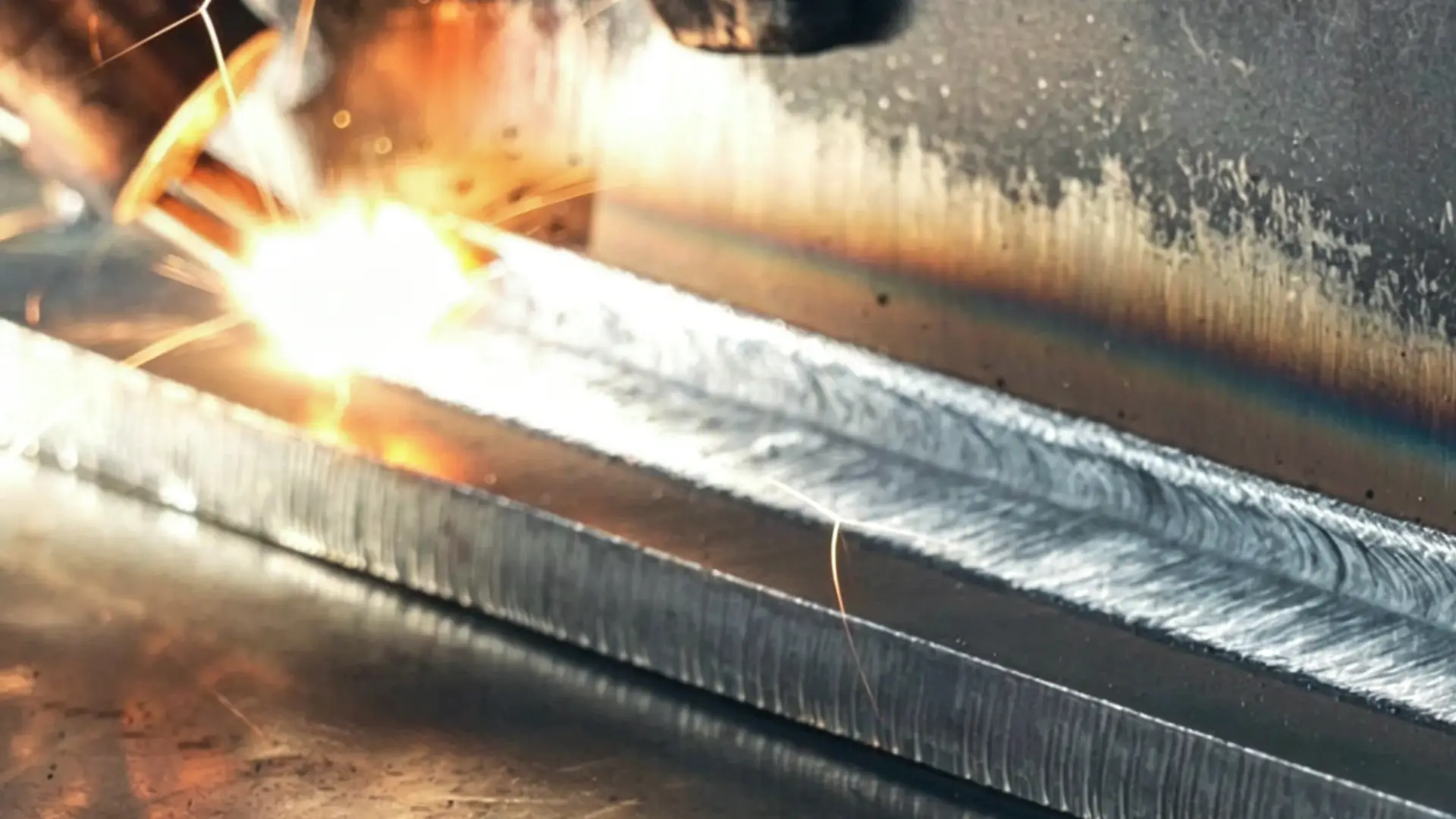
Six months in, Marcus stopped guessing and started measuring. The numbers told a story he hadn’t expected — not just faster jobs, but a completely different business.
Here’s what the data looked like.
Month 1 baseline:
– Weekly jobs completed: 8–10
– Average ticket: $180
– Callback rate: ~12%
– Monthly revenue: ~$6,500
Month 6 snapshot:
– Weekly jobs completed: 18–22
– Average ticket: $260
– Callback rate: <1%
– Monthly revenue: ~$14,000
That’s 115% revenue growth in six months. Three things drove it: more jobs per week, higher pay per job, and near-zero rework stealing billable time. All three moved at once.
By month 12, the results were undeniable. Monthly revenue crossed $22,000. Same operator. Same truck. The portable laser welder didn’t add headcount — it multiplied output per hour.
What Moved the Needle
Nobody talks about callback elimination. But it’s a silent revenue killer. At a 12% callback rate, Marcus was losing 1.2 jobs per every 10 completed — unpaid return visits burning fuel, time, and reputation. All for free.
Dropping that rate to under 1% freed up 8–10 billable hours per month. At $140/hr, that’s $1,120–$1,400 back per month. From work he was already doing — just done right the first time.
The laser welder ROI math closes fast. Count what stops bleeding, not just what starts growing.
Is a Portable Laser Welder Right for Your Repair Business?
The honest answer: it depends on your numbers, not your enthusiasm.
Before you spec out a unit, run this screen.
The Financial Reality Check
Portable handheld systems cover a wide price range in 2025:
- USD 5,000–9,000 for economy 1,000–1,500 W units
- USD 10,000–18,000 for mid-range branded systems with chiller, wire feeder, and safety package
- USD 18,000–30,000+ for high-end multi-process setups
Most small fabrication shops use this decision rule: payback ≤ 18–24 months, with laser-compatible work making up ≥ 20% of your welding hours each week.
Here’s what that looks like in practice. Book 10 laser hours per month at USD 90/hr and you’re generating USD 10,800 per year. A USD 12,000 machine pays itself back in just over a year. Drop to 5 hours at USD 70/hr and payback stretches toward 2.5 years — the outer edge of what’s reasonable.
Don’t forget operating costs. Electricity runs about USD 300–600 per year. Consumables — lenses, wire, nozzles — add another USD 200–600. Shielding gas runs 10–20 cylinders per year, costing USD 500–1,200. Also factor in insurance: Class 4 laser equipment can push your general liability premium up by hundreds to a few thousand dollars per year. Get that number before you sign anything.
The Technical Fit Screen
Your work mix tells you more than any spec sheet.
Strong fit signals:
– Thin-to-medium stainless, carbon steel, or aluminum — 0.5–6 mm is the sweet spot
– Jobs where cosmetic finish matters and grinding eats up more than 25–30% of your labor hours
– Short-run, high-mix repair work on food-grade equipment, railings, enclosures, or automotive panels
– Job sites with stable 220–240 V single-phase power, or a generator you already own
Pass for now if:
– Most of your structural work runs >8–10 mm — MIG and stick still win there
– Your shop rate sits below USD 50/hr — premium capital equipment is hard to pay back on thin margins
– Your mobile sites can’t get a stable 10–20 kVA power supply
A Three-Step Decision Process
1. Audit your last 3–6 months. What share of your hours went to thin-sheet stainless, aluminum, or cosmetic-grade repairs? Clear 30–40% and laser has real potential.
2. Model conservative utilization. In year one, plan for just 30–50% of your laser-suitable work to make the switch. Take those hours and multiply by your billable rate. Annual gross margin gets you to payback inside 24 months? The math works.
3. Price your 3-year total cost of ownership. Add up: machine + safety gear (rated eyewear, laser curtains, fume extraction) + annual maintenance + gas + insurance increase. Divide that total by your projected productive hours over three years. That’s your true cost per hour. Compare it straight to what you’re billing.
One more thing worth knowing: operators with basic welding backgrounds can hit production-ready results in 1–3 days on a handheld fiber laser. Mastering aesthetic TIG takes weeks or months. That gap changes your hiring math too.
Numbers clear all three steps? The door’s already open. You’re just deciding whether to walk through it.
Conclusion
The math isn’t complicated. A portable laser welder cuts your job time. It expands your billable service list. You can charge premium rates for results clients see on their own floor — not yours.
What this business proved over 12 months goes beyond the equipment paying for itself. The right tool changes what your business can be. Fewer callbacks. Higher ticket jobs. Customers who refer you because they’ve never seen a repair done that clean, that fast, on-site.
Running the same welding setup and wondering why growth feels stuck? You already know the answer.
The question is simple: what’s your next job worth if you show up with a Fiber laser welding machine instead?
Start there. Run your own numbers. Ready to find out which portable welding equipment fits your service model? Talk to a Maxwave specialist today — no pressure, just clarit

0 Comments