
When picking a laser welder for on-site metal repair, choosing the wrong equipment will only lead to wasted time and costs. Would you haul an 80kg bulky unit up a scaffold, or use a compact, plug-and-play device? The gap lies in what true portability can bring. Drawing on hundreds of real-world field applications, MaxWave analyzes the actual performance of leading laser welders in 2026.
The “Portable” Threshold for On-Site Repair – See the Gap at a Glance
Having wheels doesn’t make a welder portable. Real field equipment must pass four hard metrics. We’ve put our own service standards alongside industry benchmarks for a direct comparison.
| Evaluation Metric | Laser MaxWave Custom Solution | IPG LightWELD 1500 | PhotonWeld PRO MASTER-Pro | Dynalasers M70 |
|---|---|---|---|---|
| System Weight | < 50 kg (customizable) | 53 kg | ~62 kg | 46 kg |
| Torch Weight | < 1.2 kg | ~1.5 kg | >1.5 kg | 0.48 kg |
| Fiber Cable Length | 10-15 m (customizable) | 5 m (extendable to 10 m) | N/A | N/A |
| Cooling Type | Air / Water (optional) | Air-cooled | Air-cooled | Air-cooled |
| Field Adaptability Score | ★★★★★ (Flexible) | ★★★★☆ | ★★★☆☆ | ★★★★☆ |
Takeaway: Don’t get blinded by max power. On-site, the real red lines are torch weight <1.5kg, fiber length >10m, total weight <60kg. MaxWave doesn’t lock you into a fixed model. We match a solution to your scaffold height and working radius.
MaxWave Custom Solution — Pay for Fit, Not for Specs
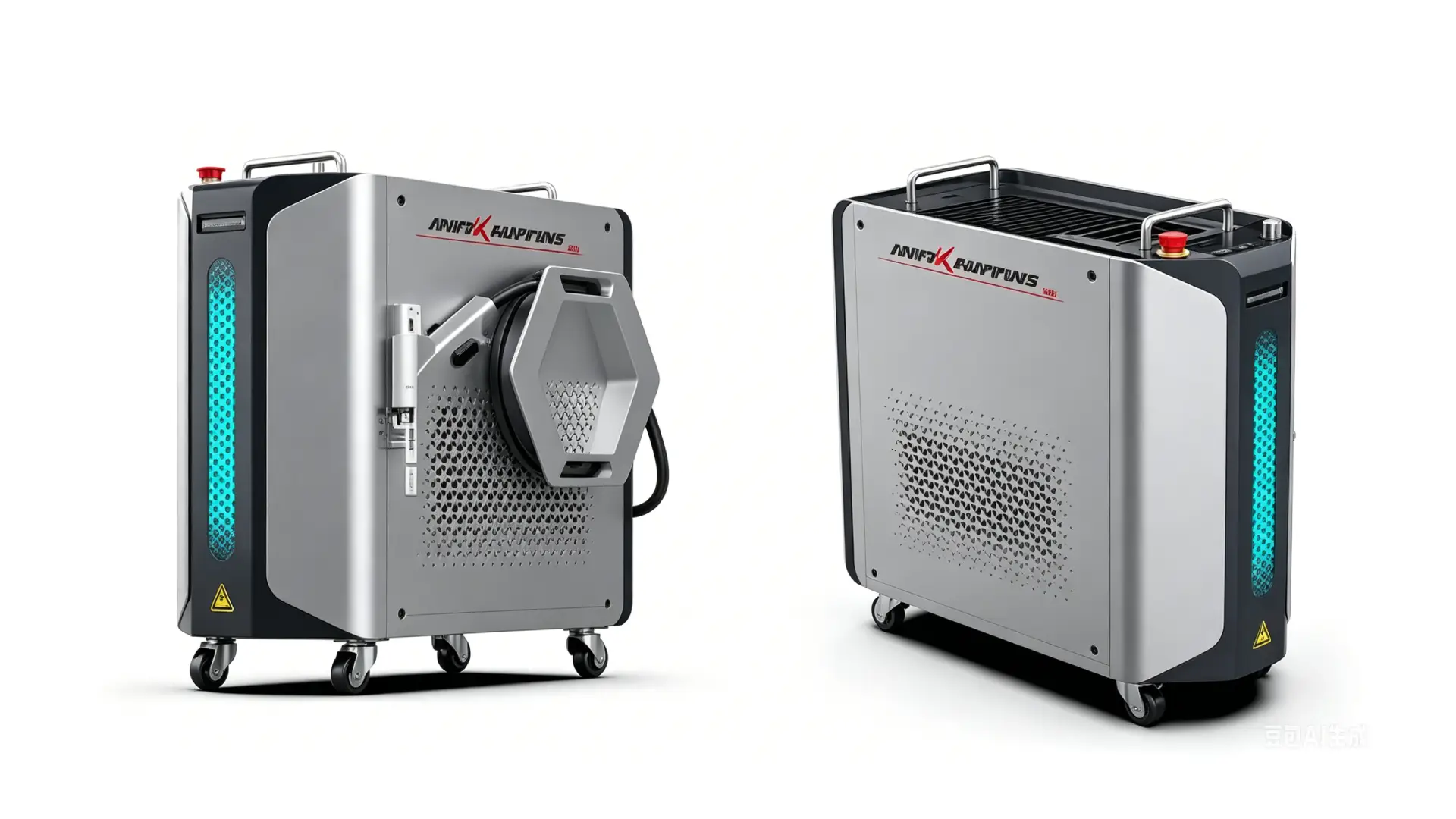
Others sell standard machines. We do matching. MaxWave doesn’t lock you into a fixed model. Instead, we build a solution based on your repair thickness, working radius, power availability, and how you move the machine. 15 years of laser industry experience, serving B2B customers globally.
Weight & Portability
Total system weight customizable to under 50kg. Lightweight options go down to 30-40kg — one-person carry. Ultra-light S-Series goes as low as 8-22kg. Translation for the field: Climbing three floors daily? We give you light. Mostly moving on a workshop floor? Heavier saves budget.
Torch Weight & Feel
Standard configuration under 1.2kg. Lightweight option goes down to 0.8kg. Four hours of continuous overhead work without arm fatigue. Translation for the field: 8 hours of overhead welding daily? Give you the lightest torch. Occasional overhead? 1.2kg is enough — put the saved budget into power.
Fiber Cable Length
Standard 10 meters. Extended configuration 15 meters. Weld up two stories on scaffolding without moving the machine. Translation for the field: 10 meters works for most sites. Repairing truck fleets or large tanks? 15 meters is a must.
Cooling & Power
Main solution: Air-cooled up to 1500W — no coolant, no frozen lines, no maintenance. Power scales from 500W to 2000W as needed: 1000W for 2-3mm sheet, 1500W for 3-4mm industrial pipe, 2000W for 4-6mm heavy equipment. Translation for the field: Sub-zero sites? Choose air-cooled. Match power to actual thickness.
Power Supply & Protection
All solutions support 220V single-phase and run on 5-15kVA inverter generators. Protection rating customizable to IP54 (dust-proof and splash-proof) for open-air, dusty sites. Translation for the field: Nothing’s worse than arriving to find no power. We check your power source first and match the solution.
Service & Spare Parts
72-hour spare parts shipping commitment — minimize downtime. We provide material-power-speed presets so your first weld on-site has a solid starting point.
Real-World Tradeoffs
We don’t chase extreme numbers. We chase the balance of light enough, capable enough, durable enough for your actual work.
Best For
✅ B2B repair teams with varied jobs and material thicknesses
✅ Rational buyers who don’t want to pay for unused features
✅ Enterprise users who need spare parts and service support
❌ Standardized procurement that just wants to “pick one model and order”
IPG LightWELD 1500 – The Benchmark for High-Power Portable Air-Cooled Welders
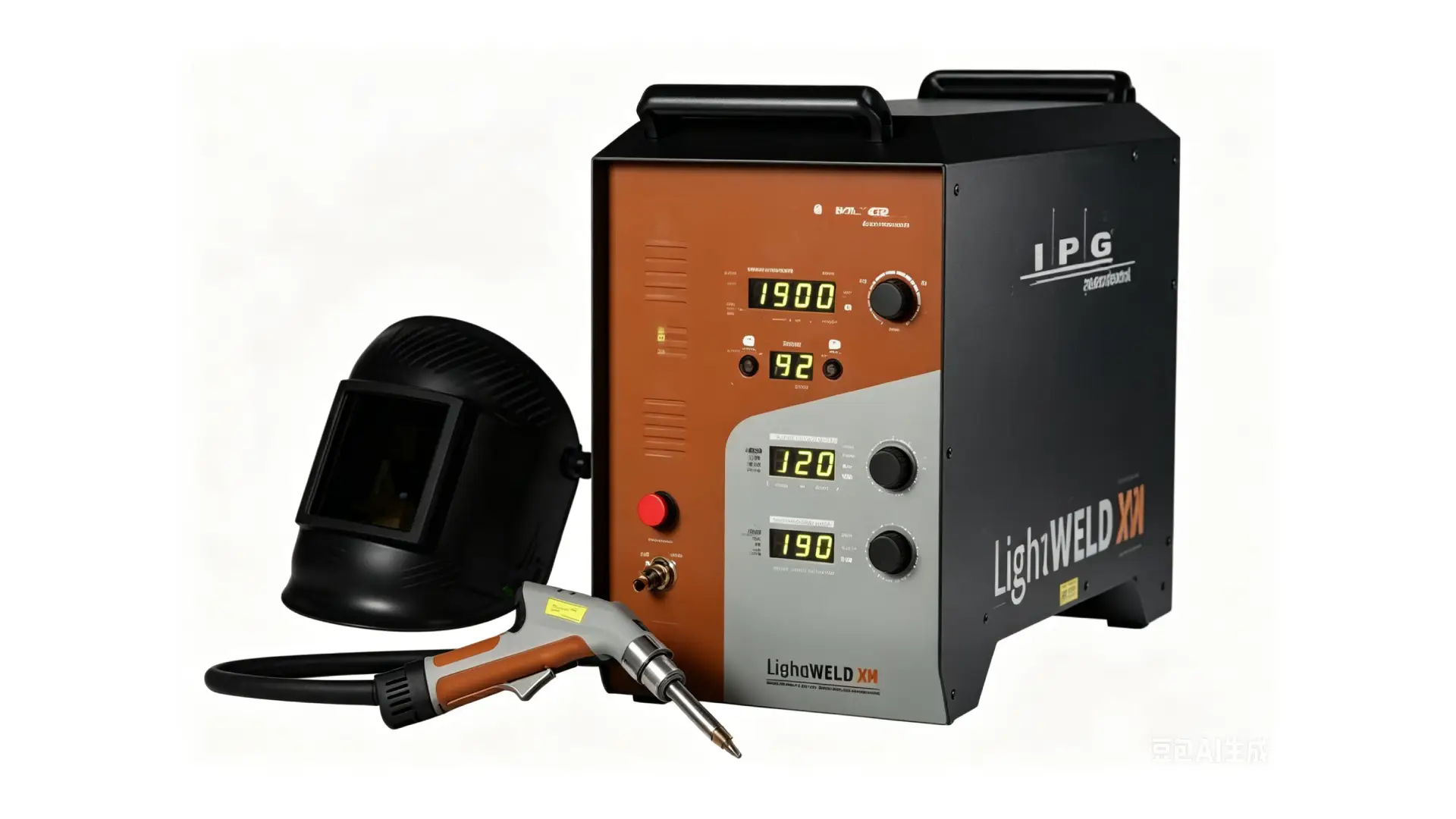
IPG is the global leader in fiber laser sources. The LightWELD 1500 is their serious entry into complete systems. Its mission is clear: pack 1500W of industrial welding power into a 53kg air-cooled chassis.
Power & Penetration
1500W continuous output, 1070nm fiber laser. Solid single-pass penetration: 4mm stainless/carbon steel, 6.35mm aluminum (3 & 5 series), 5mm nickel alloys/titanium, 2mm copper. This means the vast majority of industrial field repairs—from food plant stainless pipes to chemical plant aluminum ladders—are within reach.
Cooling & Field Adaptability
Air-cooling is the soul of this machine. Most competitors at this power level need water cooling, meaning an external chiller, extra hoses, longer setup, and the risk of frozen coolant in winter. The LightWELD 1500 cuts all that out. Roll it off the truck, plug into 220V, and weld. This is golden on sub-zero job sites.
Speed & Efficiency
IPG claims 4x faster than TIG. Real-world field math: welding a 4-inch stainless pipe. TIG takes about 15 minutes (prep, strike, fill, slow cool). The LightWELD 1500 does it in ~4 minutes with a clean bead, little to no post-weld cleanup. Do five of those a day, and you’ve saved nearly an hour.
Learning Curve
Built-in process presets for stainless, aluminum, carbon steel, galvanized. An experienced TIG welder can lay down a good bead in 30 minutes. A complete newbie is functional in under an hour. The machine doesn’t need a specialist.
Power & Generator
220V single-phase, 32A peak. Can run on a 10-12kVA inverter generator. Crucial: Must be an inverter type. Standard generators cause voltage swings that trip the laser’s power supply—the worst interruption on a repair job.
Real-World Tradeoffs
- Fiber Length: Standard 5m is awkward on-site. Weld a truck chassis? Move the machine three times. Up two stories on scaffolding? The machine stays on the ground. A 10m extension is optional.
- Price: ~$22,300 starting. Only makes sense for industrial teams doing 20+ repairs per month. Hard for an independent tech to justify.
- Weight: 53kg. Two people can manage, but one person struggles up stairs.
- Protection: No stated IP rating. Not recommended for rain or heavy dust.
Best For
✅ In-plant pipe, equipment, and structural repair
✅ High-volume industrial maintenance teams
❌ Independent techs or light-duty users
❌ Jobs requiring frequent stair carries
❌ Rainy or dusty outdoor environments
PhotonWeld PRO MASTER-Pro – The “Battle Tank” for Harsh Environments
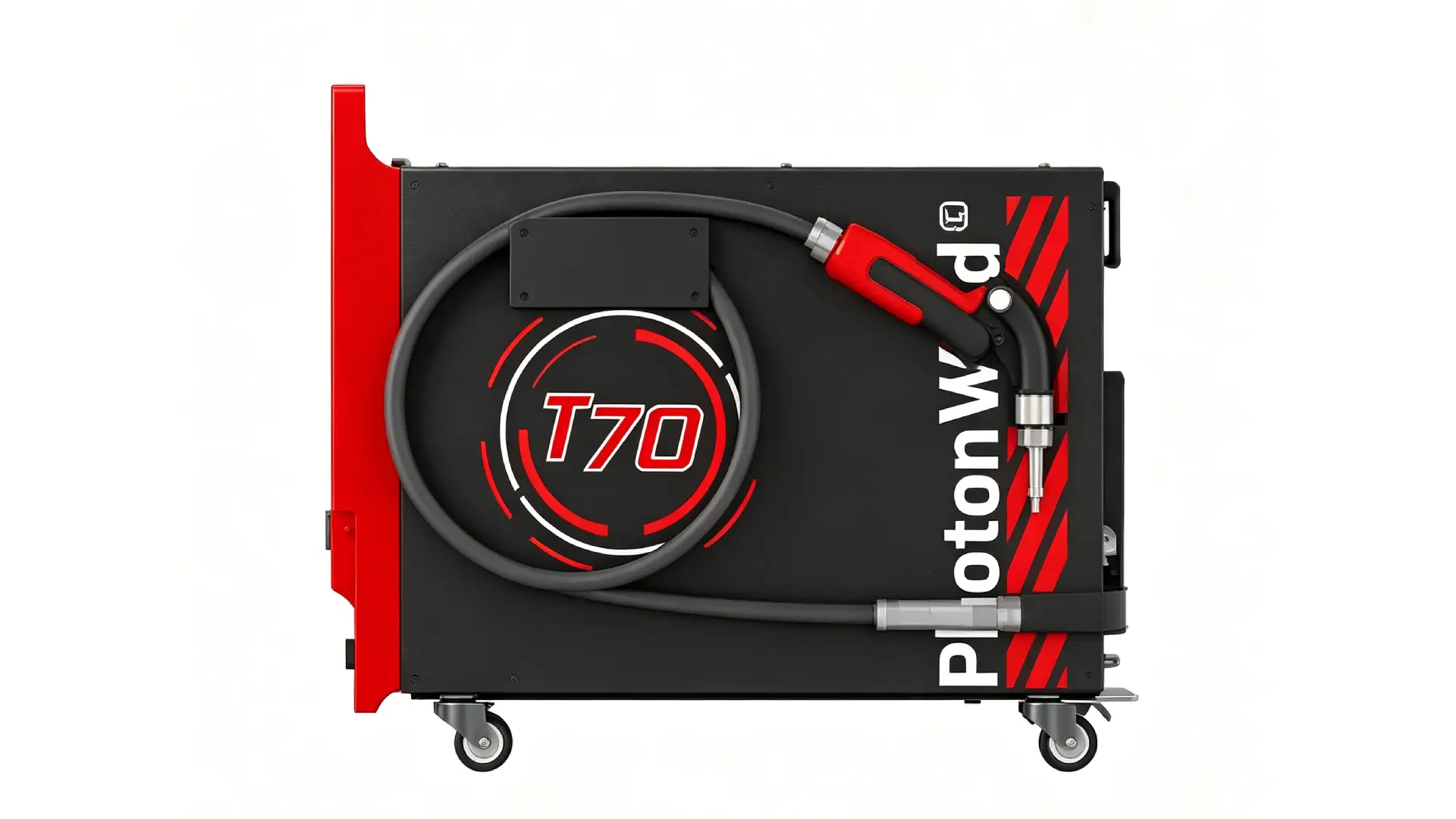
Most portable laser welders are built for clean workshops. The PhotonWeld PRO Series flips that—it’s built to survive. The MASTER-Pro is the flagship.
Power & Pulse Capability
1600W continuous, 2800W peak pulse. Pulse mode is its secret weapon: it punches through the reflectivity of copper and brass, and it precisely controls heat input on thin sheets to minimize distortion. Pure continuous-wave machines can’t do this.
Protection Rating – Core Differentiator
IP54 certified – the only high-power unit in this comparison with a stated dust/water resistance rating. IP54 means dust-protected (harmful dust cannot enter) and splash-proof (water from any direction causes no harm). Manufacturer data shows 85% fewer dust-related failures and 75% fewer moisture-induced failures compared to standard units.
Translation for the field: Quarry dust, sudden rain on an open site, muddy water from farm equipment repairs—environments that kill standard lasers—the MASTER-Pro handles them.
Durability Details
- Sealed optics: Keeps dust out of the beam path
- Reinforced connectors: Withstands constant plugging and cable drag
- Shock-resistant chassis: Survives bumpy truck rides
- Full metal housing: More impact-resistant than plastic
Energy Efficiency
22% less energy consumption than comparable units. In the field: more weld time per tank of fuel, or the ability to use a smaller generator (maybe 8kVA).
Real-World Tradeoffs
- Weight: ~62kg, the heaviest here. Two people can manage, but one person absolutely cannot. Stairs need mechanical help or three people.
- Torch Weight: Over 1.5kg. Overhead work for 30+ minutes will fatigue your arm.
- Price: Not publicly listed, but likely in IPG’s range or higher. A premium industrial tool.
- Maintenance: The sealed design makes filter changes and optic cleaning more involved.
Best For
✅ Open-pit mines, quarries, construction sites
✅ Rainy or dusty regions
✅ Sites far from a workshop
❌ Clean indoor work (overkill protection)
❌ Jobs requiring frequent one-person carries
Dynalasers M/D/S Series – Best 3-in-1 Portable Laser Welder for Mobile Repair Techs
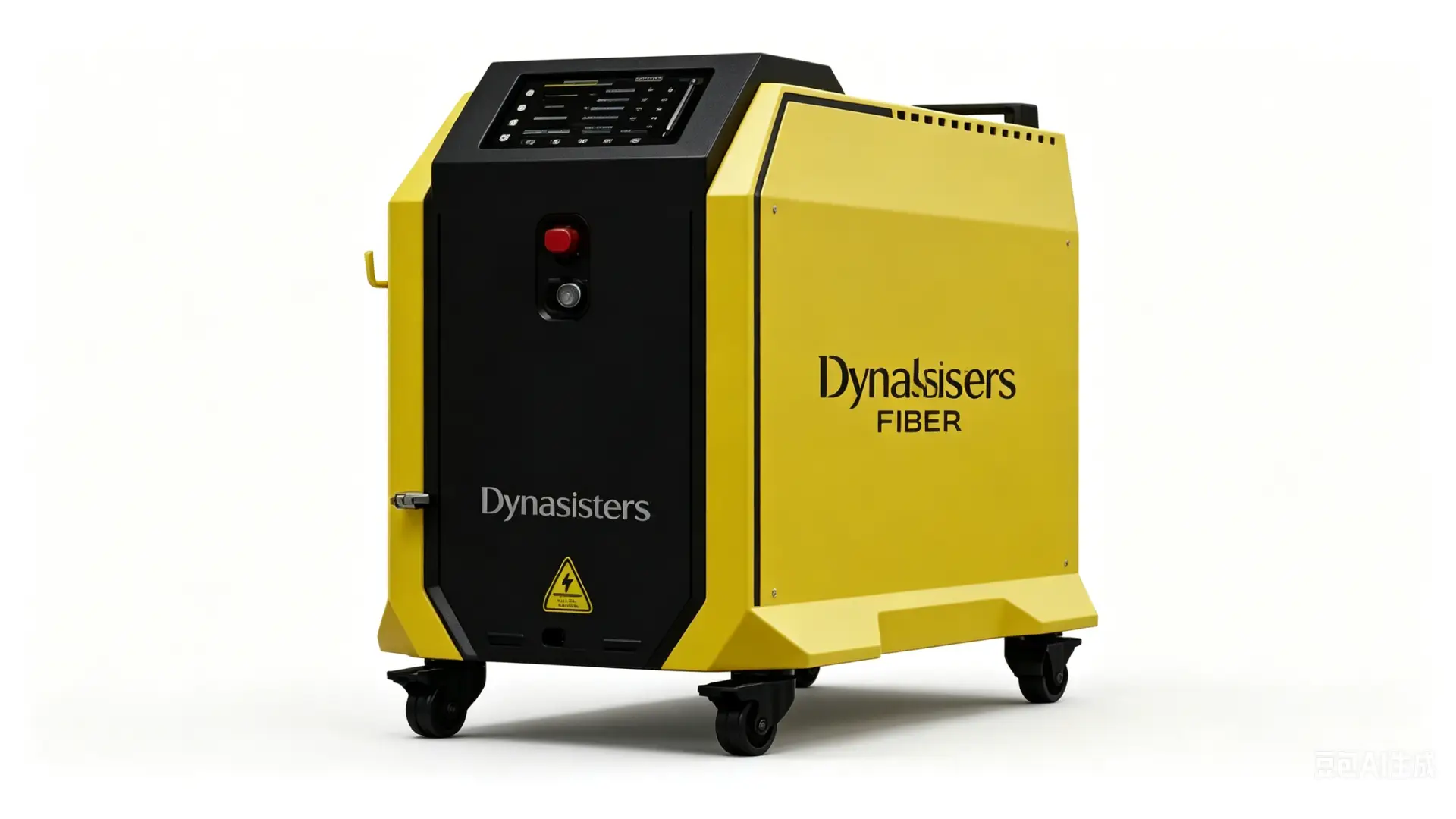
Three tools in one van slot. That’s why mobile repair technicians keep coming back to the Dynalasers M Series. Most portable laser welders do one thing well. The M Series does three—welding, cutting, and laser cleaning—in a single compact handheld system.
The Field Value of 3-in-1
A rusty bracket repair call: Traditional approach needs a cleaner (remove rust), a welder (weld), and a grinder (trim). Three machines in the van, taking up space, heavy to move. The M Series does it all: Switch to cleaning mode to strip rust, switch to weld mode to repair, switch to cut mode to trim the edge.
The real ROI logic: Not every job needs all three functions. But when 10% do, you save a round trip and half a day of loading/unloading. For a mobile tech, time is the biggest cost.
The Remarkable Torch – 0.48kg
The lightest torch in this comparison. How light? IPG’s is ~1.5kg, over three times heavier. What 0.48kg means in the field:
- Overhead welds: Arms don’t shake after three minutes
- Vertical/ceiling welds: Neck and shoulder strain plummets
- Tight spaces: Fits into engine bays, pipe chases
- All-day work: 70% less fatigue after an 8-hour shift
For someone who welds every day, this difference is transformative.
Power Options
The M Series scales. Common models:
- M30: 800W – thin sheet, precision, auto body
- M50: 1200W – covers 2-3mm stainless/carbon
- M70: 1800W – handles 3-4mm stainless, the sweet spot
- S Series: 8-22kg ultra-light, for extreme solo portability
Buy what you need. Only do auto body? 800W is fine. Mixed heavy field work? Get the 1800W.
Operating Modes
Continuous, pulse, spot, and Turbo modes. Pulse for thin or heat-sensitive metal. Spot for tacking. Turbo for extra penetration on thicker sections. All adjustable with one knob. No manual needed on-site.
Optional Wire Feeder
Field repairs sometimes need filler wire (gaps, corner joints). The M Series offers an optional Smart Drive wire feeder. Many pure laser welders lack this—without it, a large gap means no weld.
Real-World Tradeoffs
- Brand Recognition: Less than IPG outside of some markets. Spare parts and service network coverage is a potential risk.
- 3-in-1 is not free: Switching modes takes a few seconds. If you’re welding 100 identical parts a day (repetitive work), a single-function machine is faster.
- Cutting Limits: The cutting mode is for thin sheet trimming. Not a replacement for a plasma cutter on thick plate.
- Cleaning Power: Less than a dedicated industrial cleaner. Heavy rust needs more passes.
Best For
✅ Mobile repair techs (varied jobs, mixed metals)
✅ Vans/trucks with limited space
✅ Jobs that often need clean → weld → trim
✅ Solo operators who move the machine frequently
❌ Factory production line (repetitive, single-task)
❌ Professional-grade cleaning or cutting as primary work
The 500-1000W Compact Class – Value Kings for Light-Gauge Repair
Not every field repair needs a 1500W industrial beast. Auto body panels (0.6-0.9mm), HVAC ducting (1.2mm galvanized), stainless equipment covers (under 2mm)—these daily thin-gauge jobs are actually better with a 1000W class machine: lighter, more power-efficient, cheaper.
Power vs. Thickness
| Power | Suitable Thickness | Typical Job |
|---|---|---|
| 500-800W | ≤2mm | Auto body, thin stainless trim |
| 1000W | 2-3mm | Light structural, machine guards |
| 1200-1500W | 3-4mm | Mixed (exceeds compact class) |
Honest spec check: A 1000W machine welding 3mm stainless will need slower travel speed, increasing heat input and distortion risk. Max rating and stable operating zone are two different things.
Portability
Most 500-1000W Chinese-made units weigh 20-40kg total. One person carries it. Torch weight is 0.8-1.2kg. Fiber length is typically 8-10m—sufficient.
Power Advantage
220V single-phase, 15-25A draw. This means:
- Standard home outlet (in many countries)
- Can run on a 3-5kW inverter generator
- Some units support 120V (US standard) via inverter
For techs doing residential or light commercial calls, this is a decisive advantage. No need to negotiate for 380V three-phase power.
Price Reality
500-1000W handheld laser welders from Chinese manufacturers, delivered price:
- Entry level: $2,400-$3,500 (feature-complete, rough edges)
- Business grade: $3,500-$5,500 (recommended – balance of reliability and cost)
- Branded units: $7,000-$12,000 (better warranty and local support)
Compare to IPG’s 1500W at >$22,000. For an independent tech making $80k-$120k per year, the difference between a $5,000 and a $22,000 initial investment is the difference between being able to enter the market or not.
Real-World Tradeoffs
- Inconsistent QC: Wide quality variation between manufacturers at the same price point.
- Slow service response: Many overseas sellers lack local spare parts and engineers.
- Spec inflation: A “1500W” label might be 1000W in reality. Verify.
- Poor software experience: Poor translations, inaccurate presets.
Best For
✅ Independent auto body or HVAC techs
✅ Budget under $5,000
✅ Residential / light commercial calls (power-limited)
✅ Mostly thin-gauge work, occasional thicker jobs
❌ 8-hour heavy industrial applications
❌ Those who cannot tolerate a week of machine downtime
Laser vs. Traditional Welding – Real On-Site Time Comparison
Repair a 2-meter, 2mm stainless steel handrail (cosmetic-grade weld):
| Process | Total Time | Post-Weld Cleanup | Heat Distortion |
|---|---|---|---|
| Handheld Laser | 12-15 min | Almost none (no spatter, no discoloration) | Minimal |
| MIG | 33-39 min | Grind spatter, remove HAZ black residue | Significant |
| TIG | 30-37 min | Acid clean or polish to remove oxidation | Moderate |
Takeaway: Laser’s biggest win on-site isn’t “welds faster“. It’s “weld and go”. No grinding, no rework, no distortion correction. Close the ticket in half a day.
VII. On-Site Selection Checklist – 6 Factors to Avoid 90% of Mistakes
- Power vs. Thickness: 80% of field repairs are 1-4mm. 1000-1500W is the sweet spot. Don’t carry excess weight for the 1% edge case.
- Fiber Cable Length: Under 8m, you move the machine constantly. 10-15m – the machine stays put, you move.
- Torch Weight Ceiling: Continuous overhead or vertical work >30 minutes? Torch weight must be under 1.5kg. Under 1.2kg is the comfort zone.
- Cooling Reality: At ≤1500W, choose air-cooled (no maintenance, no freeze risk). Only go water-cooled at higher power, but accept the weight and antifreeze requirement.
- Power Supply Reality: Can your site generator (5-10kW inverter type) or wall outlet deliver stable 220V single-phase? 380V three-phase is rare on many sites.
- Consumables Lifeline: Carry 3-5 spare protective lenses for every multi-day field job. Ask your supplier about spare parts shipping time. Over 72 hours means a week of downtime.
Conclusion
Choosing a portable laser welder for on-site repair comes down to three things: power matches thickness, weight decides efficiency, fiber length equals freedom. Don’t pay for peak spec sheet numbers. Pay for minutes saved on the job site. IPG leads on brand and raw power. PhotonWeld dominates in harsh environments. Dynalasers offers unmatched 3-in-1 versatility. The compact class delivers value and portability.
MaxWave bridges the gap—we help you find the one machine from all these choices that actually fits your daily repair work. We put industrial-grade performance into a field-portable package, making every metal repair ticket faster, cleaner, and stronger. Act now. Put real productivity in your truck.

0 Comments