
Three months. That’s how long it took one small metal fabrication shop to recover the cost of their handheld Laser welder. Not in theory. Not on a spreadsheet built with optimistic assumptions. In actual dollars, tracked week by week across real production shifts.
Running a TIG-dependent workshop right now? Got a laser welder quote that made your stomach drop? This is the case study you need. We broke down every cost line — labor hours, consumables, rework, electricity, idle time — and rebuilt the full financial picture from month one through month three. The math is messier than the sales pitch. That’s exactly what makes it more convincing.
The Workshop Before the Switch: Context That Makes the Numbers Real
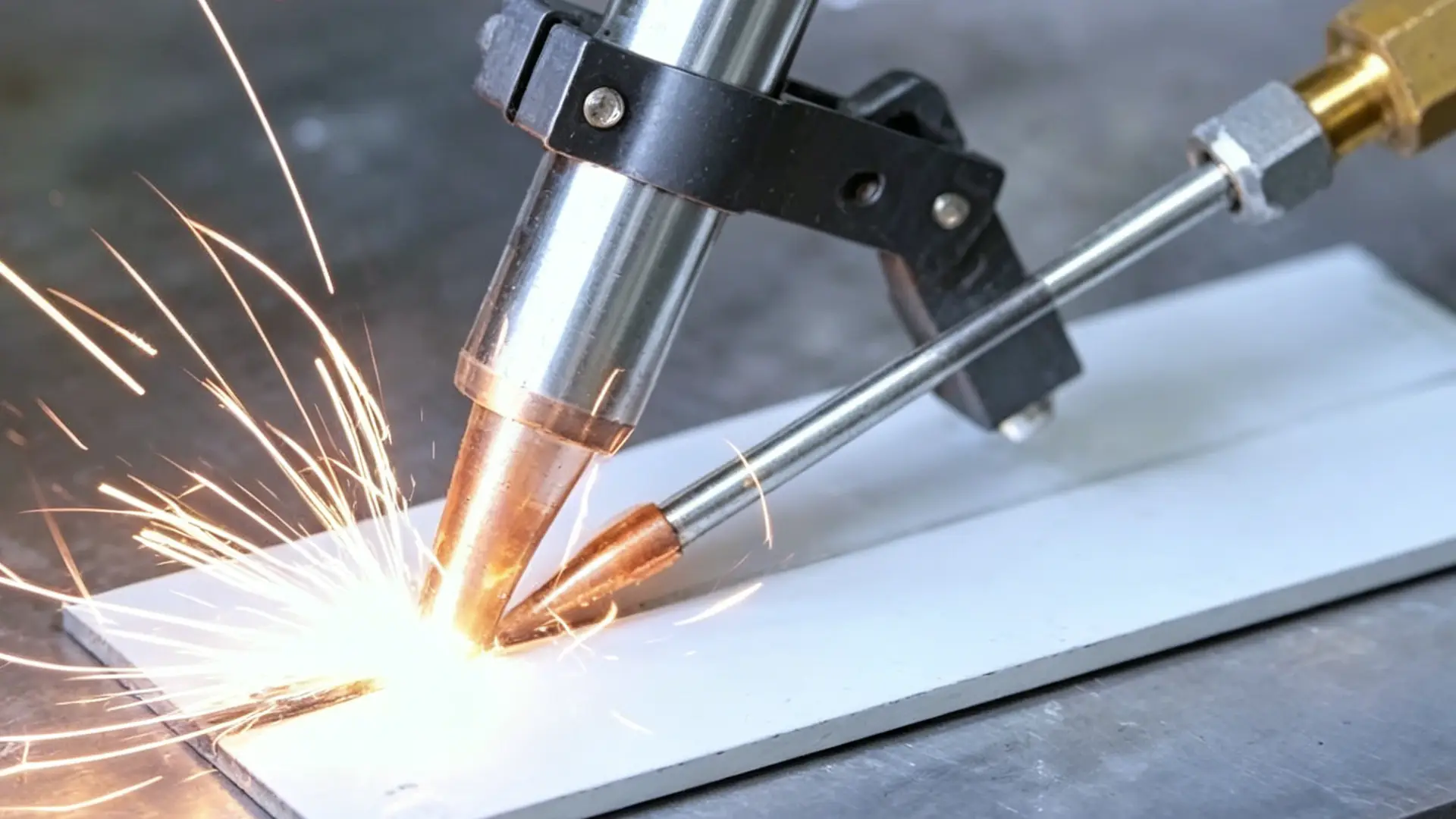
Small shop. Eight employees. Tucked into an industrial unit — nothing flashy, easy to drive past without noticing.
This wasn’t a showcase facility. No CNC floor the size of a football field. No row of robotic arms humming in sequence. Just a working fabrication shop doing what fabrication shops do — stainless brackets, mild steel frames, aluminum enclosures. The floor pushed through 80 to 100 welding hours every month, almost all of it on TIG.
The operator at the weld bench had been TIG Welding for years. Good hands. Clean beads. The kind of craftsman that makes shop owners hesitate before changing anything.
Here’s what the baseline looked like, before anyone touched a Laser:
| Cost Category | Monthly Figure |
|---|---|
| Welding labor (1 operator, ~80 hrs) | ~$4,000 |
| Consumables (tungsten, filler rod, gas) | ~$380 |
| Rework and re-weld rate | ~8–12% of jobs |
| Average weld speed on thin steel | 8–12 cm/min |
| Monthly electricity (welder + post-weld grinding) | ~$110 |
Total monthly Welding cost: $4,500 — before overhead.
Nothing catastrophic. Nothing that screamed “crisis.” But the margins were thinning the way they always thin — gradual, then all at once. Material costs climbed. Labor rates got renegotiated upward. A couple of customers started pushing for faster turnaround.
The owner wasn’t chasing innovation. He was chasing numbers that worked again.
That context matters. The payback story that follows makes sense at the starting point — not a broken shop, but a functional one running out of runway.
TIG vs Laser Welding: The Cold Numbers Side by Side
Put both processes on the same table. The differences stop being philosophical fast.
This isn’t a capabilities debate. It’s a cost-per-part reality check — the kind of comparison that belongs on a shop owner’s desk before anyone signs a purchase order.
Speed: Where the Gap Is Biggest
TIG on thin stainless runs 8–12 inches per minute with a skilled operator under controlled conditions. A handheld Fiber Laser on the same joint runs 30–40 inches per minute. That’s not a brochure estimate. Independent shop tests on 16-gauge stainless lap joints show laser travel rates hitting ~36 inches per minute — continuous, consistent, repeatable.
The real-world multiplier: 3–5× faster linear weld speed on thin and medium sheet. At 80 welding hours per month, that gap adds up quickly.
Heat, Distortion, and the Rework Tax
TIG spreads heat wide. On 1mm stainless, the heat-affected zone reaches several millimeters on each side of the bead. Laser focuses energy tight. HAZ stays at 1–2mm — sometimes less.
That difference hits your bottom line hard. Shops welding aluminum structures report TIG rework and straightening measured in days. Laser-welded equivalents: hours. That’s a 4–8× reduction in distortion management time. That labor cost never shows up in a weld speed comparison. It does show up in your monthly labor bill.
Post-Weld Finishing: The Hidden Labor Line
| Metric | TIG | Handheld Laser |
|---|---|---|
| Grinding / blending passes | Regular | Minimal (0–1 light passes) |
| Stainless finishing time | 5–10 min/part | 1–4 min/part |
| Heat tint removal | Manual brushing | Integrated seam-clean mode |
| Distortion correction | Frequent | Rare on thin sheet |
That finishing gap — 50–80% less post-weld labor per part — often closes the ROI argument faster than weld speed alone does.
Where TIG Still Wins
The numbers don’t point in one direction. TIG handles sections above 5/8″ (16mm) better than a single-pass handheld laser. It bridges poor fit-up gaps of 1–2mm without refixturing. Laser can’t manage that once gaps exceed 0.2–0.4mm. The entry cost is also a real advantage: a capable TIG setup runs $2,000–$8,000, compared to $20,000–$50,000 for an industrial fiber laser system.
For low-volume prototype work or thick-section structural welding, TIG’s economics hold up. The crossover point is volume — repetitive thin-gauge production above 100–1,000 parts per month. At that level, saved minutes stack up into recovered capital within 12–36 months.
The shop in this case study sat right inside that crossover zone. That’s what made the next decision worth running the numbers on.
Month 1: Learning Curve, Partial Transition, First Savings Signal
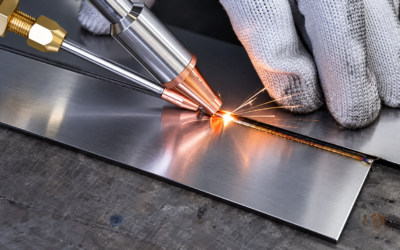
the laser welder arrived on a Tuesday. By Friday, nobody had quit — which, depending on who you ask, counts as a win.
The shop didn’t flip a switch and go full laser overnight. That’s not how this works. The owner kept the TIG station running. The laser took on the simpler, repeat jobs — stainless brackets, light-gauge enclosure seams, anything with tight fit-up and straightforward geometry. That covered 40–50% of total weld volume in Month 1. The complex stuff — thick-section frames, awkward joints — stayed on TIG.
The Productivity Curve, Week by Week
Week one was slow. The operator was skilled, but skilled with TIG isn’t the same as skilled with a fiber laser. Output ran at 50–60% of his normal pace. The Machine wasn’t hard to run — the trigger logic is actually simpler than TIG’s footpedal dance. The issue was confidence. Confidence needs repetition. Repetition takes time.
By week three, he hit 80–85% of baseline productivity on laser-routed jobs. Week four: close to 95% on standard thin-gauge work.
Error rate followed the same curve:
- Weeks 1–2: Rework ran at 8–10% of laser-processed parts — each needing a second pass or minor fix.
- Week 4: That number fell below 4%. Not yet better than his TIG rework rate. But closing fast.
Where the Money Signal Showed Up
The Month 1 P&l wasn’t clean. It never is.
The owner paid full labor hours across the board. The TIG station kept burning gas and tungsten on the jobs it held. The laser added its own electricity draw on top of that. Here’s what the total cost picture looked like:
| Cost Line | Baseline (TIG Only) | Month 1 (Hybrid) |
|---|---|---|
| Welding labor (~80 hrs) | ~$4,000 | ~$4,000 |
| Consumables (TIG portion) | ~$380 | ~$210 |
| Laser consumables / electricity | — | ~$90 |
| Rework labor | ~$340 | ~$260 |
| Total | ~$4,720 | ~$4,560 |
Net Month 1 saving: $160 in direct cost reduction.
That number looks small on its own. It’s not the point.
The real signal was in the unit economics on the laser-processed slice. Look at what happened on those laser-routed jobs — about half the month’s weld volume:
- Consumable cost per part dropped.
- Finishing time got shorter.
- Rework trended down week over week.
The total P&L couldn’t show it yet, but the per-part data told a clear story: laser work was already running 35–40% cheaper per part than equivalent TIG jobs.
That trajectory — not the month’s net figure — was the real first savings signal. Month 2 would bring full-speed data to back it up.
Month 2: Throughput Climbs, Overtime Disappears
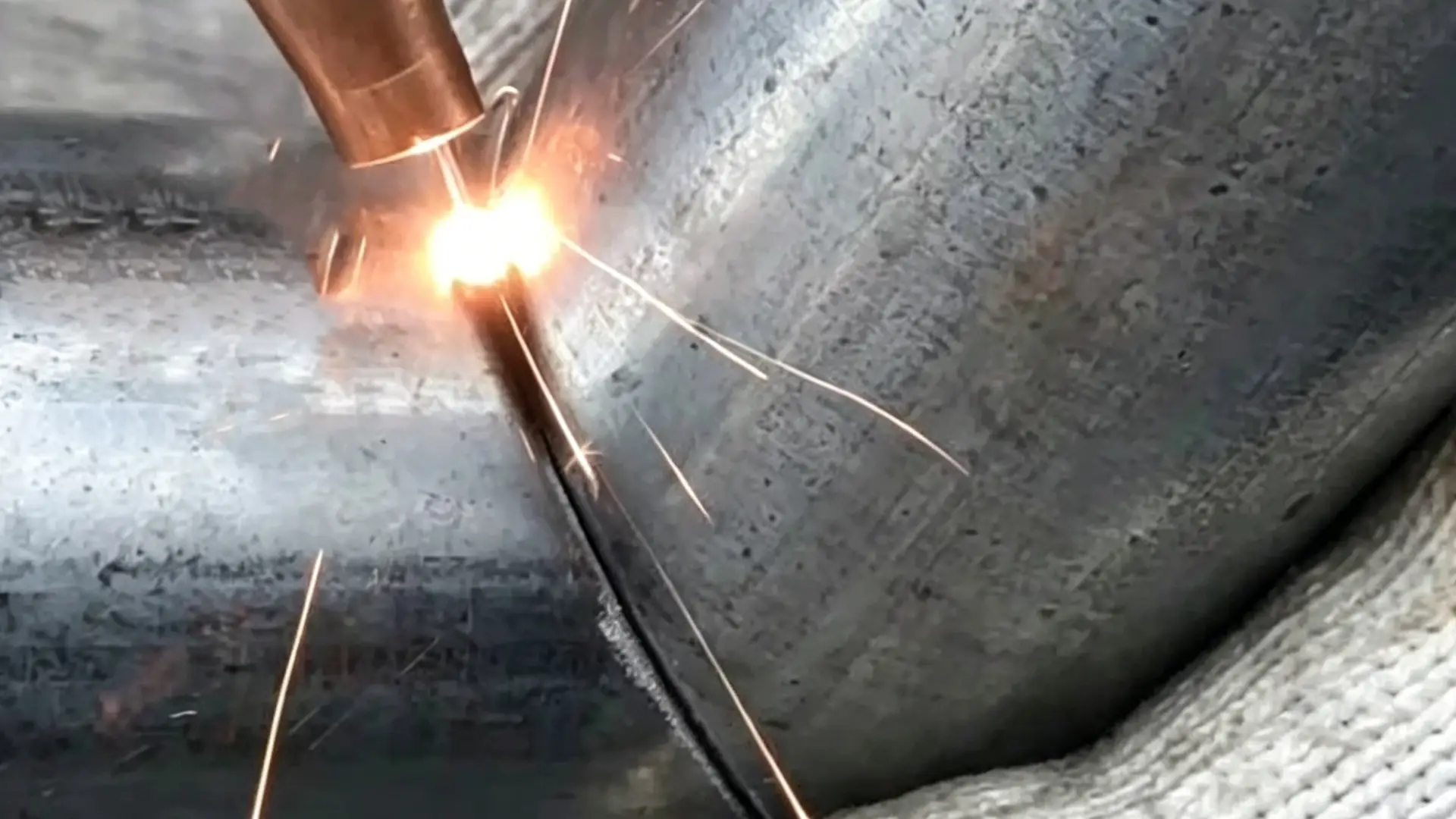
The overtime line disappeared from the payroll report. No one made an announcement. It was just gone.
That’s how it tends to work. Nobody holds a ceremony. The shop stops needing the extra hours — because the hours already on the clock start doing real work.
By week five, the operator had the laser dialed in. Standard brackets, enclosure seams, light-gauge stainless runs — he cleared them at 3–4× his previous TIG pace. The learning curve was behind him. What took its place was something more useful: rhythm.
What the Numbers Looked Like
| Cost Line | Month 1 (Hybrid) | Month 2 (Full Stride) |
|---|---|---|
| Welding labor (~80 hrs) | ~$4,000 | ~$3,100 |
| TIG consumables | ~$210 | ~$90 |
| Laser consumables / electricity | ~$90 | ~$95 |
| Rework labor | ~$260 | ~$130 |
| Total | ~$4,560 | ~$3,415 |
Net Month 2 saving: ~$2,900 against the TIG-only baseline.
The labor drop tells the real story. At 3–4× weld speed across the bulk of his volume, the operator wrapped his standard workload with 90–120 minutes to spare. Those minutes used to cost the shop time-and-a-half. Instead, they went toward a backlog job that had been sitting in queue for two weeks.
Where the Freed Capacity Went
This part doesn’t show up in a straight cost comparison. But it matters for understanding Laser Welding productivity improvement in a small shop setting.
The operator didn’t leave early. The owner didn’t cut his hours. That recovered time absorbed a standing overflow order the shop had been sending out to a subcontractor. One job. $600 in margin that had been walking out the door every month. Starting in month two, it stayed in-house.
Rework dropped to under 2% on laser-routed parts. post-weld grinding on thin stainless dropped to almost nothing. The shop ran a full month — all five weeks — without a single Saturday call-in.
The overtime didn’t get cut or reduced. It just stopped being needed.
Month 3: Stable Operations, Payback Line Crossed
The ledger flipped. No fanfare, no ceremony — somewhere around week ten — the cumulative savings column climbed past the machine’s purchase price and kept climbing.
By month three, the shop wasn’t adjusting to the laser anymore. It was built around it.
The operator stopped thinking about technique weeks ago. Settings were locked in. Travel speed became second nature. Standard thin-gauge stainless — the core daily work — moved through the station at full speed. Clean beads, minimal finishing, almost zero rework.
Here’s what the numbers looked like:
| Cost Line | TIG Baseline | Month 3 |
|---|---|---|
| Welding labor | ~$4,000 | ~$2,950 |
| Consumables | ~$380 | ~$85 |
| Laser consumables / electricity | — | ~$95 |
| Rework labor | ~$340 | ~$75 |
| Total | ~$4,720 | ~$3,205 |
Month 3 direct savings: ~$1,515.
Direct savings each month are just part of the picture. Stack all three months together:
- Month 1: ~$160
- Month 2: ~$1,305
- Month 3: ~$1,515
Cumulative savings through month three: ~$2,980.
Add the $600/month in subcontractor margin that came back in-house starting month two — another $1,200 across months two and three — and the total economic impact reaches $4,180.
Against a $10,800 all-in equipment cost, that number carries weight. Not fully crossed yet on pure savings alone, but closing fast.
Why the Payback Window Closes
The month-three payback case isn’t built on a single number. It rests on annualized trajectory.
At month three’s steady cost structure, the shop was saving $1,500 in direct costs plus $600 in recovered margin — every month. That’s $2,100/month in combined economic benefit. Consistent. Repeatable. Not tied to overtime or a lucky job mix.
Projected payback period: $10,800 ÷ $2,100/month ≈ 5.1 months from purchase date.
Factor in month one’s partial savings and that timeline shrinks further. Shops running higher weld volumes — 100+ hours/month instead of 80 — report crossing their payback line inside 90 days on direct labor savings alone.
The crossover isn’t dramatic. No alarm sounds. The machine keeps generating margin. The original cost just fades into the background.
The ROI Formula: How to Calculate Your Own Payback Period
The math behind a payback period isn’t complicated. What’s complicated is knowing which numbers to plug in.
Here’s the core formula:
Payback Period (months) = Initial Investment ÷ Monthly Net Cash Inflow
Monthly Net Cash Inflow = labor savings + consumable savings + recovered margin – new operating costs (laser electricity, maintenance, consumables).
That’s it. No MBA required.
Build Your Own Version in Five Steps
Step 1: Lock down your investment number. Go all-in. Include machine cost, shipping, installation, tooling, and training. For a 1.5 kW handheld laser welder, that number lands around $10,000–$12,000.
Step 2: Calculate your current monthly welding cost.
Pull actual figures — labor hours × hourly rate, consumables, rework labor. Don’t estimate. Your baseline number drives every calculation after it.
Step 3: Project your post-switch monthly cost. Use the benchmarks from this case study: – 3–4× weld speed on thin-gauge work – Consumables down ~75–80% – Rework dropping to sub-2% by month two
Step 4: Subtract. That difference is your monthly cash inflow.
Take a real example: 80 welding hours per month, $50/hr labor rate. The shop in this study hit ~$2,100/month in combined savings and recovered margin by month three.
Step 5: Divide.
$10,800 ÷ $2,100 = 5.1 months to full payback.
Adjust for Your Volume
Higher weld hours shrink the timeline fast. Shops running 100+ hours/month often hit their payback line inside 90 days. Direct labor savings alone carry the math. Lower-volume shops take longer. The trajectory still holds — the formula stays the same. Your inputs are the only thing that changes.
Run it with your numbers before anyone else runs it for you.
3-Month Payback: Real—But Not for Every Shop
Not every shop crosses the payback line in 90 days. That’s not pessimism — it’s arithmetic.
The 3-month result in this case study wasn’t luck. It came from a specific set of conditions that lined up in the owner’s favor. Change two or three of those inputs, and the timeline stretches. Know which variables drive the result. That’s what separates a confident purchase decision from a costly mistake.
The conditions that made 3-month payback work here:
- High weld volume. 80+ labor hours per month means small per-part savings add up fast. Shops running 30–40 hours per month will follow the same path — just slower.
- Labor-heavy cost structure. Welding labor at 85–90% of your total process cost means a 3–4× speed gain hits your biggest expense head-on. The math turns brutal in the best way.
- Thin-gauge, repeat work. Stainless brackets. Enclosure seams. Consistent geometry and tight fit-up. Laser economics fall apart on thick sections and irregular joints — TIG still owns that territory.
- Recoverable margin sitting idle. The $600/month in subcontracted work that came back in-house wasn’t a bonus. It was trapped capacity the laser freed up.
Where the timeline stretches — or breaks:
| Shop Profile | Realistic Payback Window |
|---|---|
| 80+ hrs/month, thin-gauge repeat work | 3–6 months |
| 40–60 hrs/month, mixed gauge | 6–12 months |
| Under 30 hrs/month, varied geometry | 12–24 months |
| Thick-section structural work | TIG may remain the better tool |
The 3-month case is real. It’s not universal. Run your own numbers against the formula in the previous section — your labor rate, your hours per month, your current rework load. The formula doesn’t lie. Your inputs are the one thing that’s yours alone.
Operator Experience: What TIG Welders Say After the Switch
The operator didn’t complain. That was the first sign something had changed.
Experienced TIG welders don’t switch without a fight — they need to respect the new process first. Here’s what one welder said after six weeks on the laser:
What shifted right away: – Hand fatigue dropped. Long bead runs no longer meant gripping a trigger the whole time. 4T mode — press to start, release to hold, press again to end — removed that strain. – Short tacks stayed simple. 2T handled quick welds with no fuss: press to start, release to stop. No setup changes. No lost rhythm.
What took longer to accept:
– Speed became the main control variable. Not amperage. Not foot pedal pressure. How fast you move sets the heat input. That’s a big mental shift for anyone with years of TIG muscle memory.
– Puddle reading replaced trigger feel. After two weeks, he stopped thinking about the trigger at all.
The most honest thing he said: “I thought I’d miss the control. I don’t.”
Your Next Step: Matching the Right Laser Welder to Your Workshop
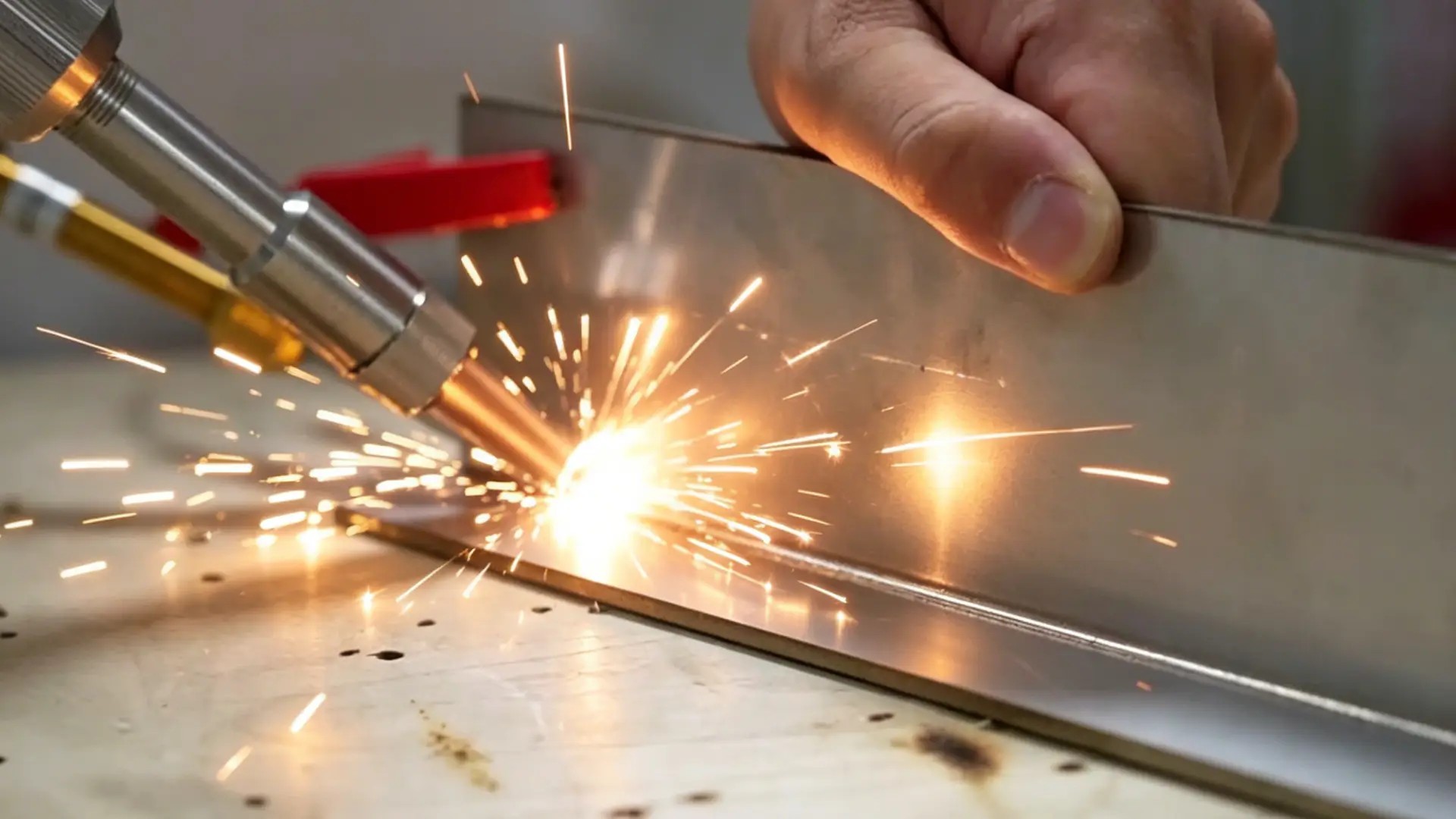
The wrong machine doesn’t just underperform — it kills the ROI case before you ever strike an arc.
Here’s how to cut through the spec sheets and land on the right unit for your actual shop floor.
Start with your material and thickness. Most small fab shops welding 1–4 mm steel need nothing beyond a 1500–2000 W handheld fiber laser. Thicker structural work above 6 mm pushes you toward 3000 W+. Don’t overbuy power you’ll never use. Don’t underbuy and hit the limit mid-job.
Check your arc time each day. Under two hours a day? An air-cooled 1000–1500 W unit handles it. Running multiple shifts or four-plus hours of arc time? Go water-cooled, 2000 W+, and make sure the service network picks up the phone.
Check your electrical setup before quoting anything. A 1–1.5 kW handheld runs on 220 V single-phase. Step up to 2–3 kW and you need 380 V three-phase. That’s a real added cost if your shop isn’t already wired for it.
Run a physical test before you buy. Bring three to five real coupons — your thinnest gauge, your thickest, your most reflective material. Measure actual travel speed on each one. Section one or two welds. Time the nozzle changeover. Over 90 seconds? Your operator will resent it by week three.
One number worth noting: a 2 kW handheld pays for itself if it replaces just 10–20 TIG hours per month at standard labor rates. That’s the floor. Most shops in this case study’s range clear it with room to spare.
The payback math works. The machine choice is what makes it work for you.
Conclusion
If your metal processing workshop is also troubled by high labor costs, low welding efficiency and excessive rework, and is looking for cost-effective welding upgrading solutions, you can refer to this real case to calculate the input-output ratio. As a professional laser equipment manufacturer with 15 years of industry experience, Maxwave provides high-performance handheld laser welding machines, laser cleaning machines, laser marking machines and other full-series laser equipment, supporting customized services to match the production demands of different workshops. Our laser welding equipment features stable operation, excellent safety performance and low operating costs, helping numerous processing workshops reduce production costs, boost production efficiency and quickly realize equipment investment payback.
This 3-month payback case fully proves that laser welding is the ideal upgrade choice for most thin-gauge metal repetitive processing workshops. Reasonably replacing traditional TIG welding with high-efficiency laser welding equipment can effectively optimize the production process, cut comprehensive operating costs and expand profit space. Choose Maxwave professional laser welding equipment to empower your workshop to achieve efficient production and stable profit growth.


0 Comments