
Laser welder purchases for most manufacturers still follow the procurement logic of traditional TIG arc welders, with buyers making purchase decisions solely through price comparison — a choice that generates substantial hidden costs down the line. Oversized power configurations result in wasted capital expenditure, whereas underpowered models force extra manual labor to offset lagging welding throughput. Many buyers overlook mandatory workshop electrical upgrades and safety accessory matching, incurring unplanned additional expenses between $500 and $2000 right after equipment delivery. What’s more, without standardized formal after-sales contracts in place, manufacturing plants suffer lengthy production halts when core hardware malfunctions, as they wait weeks or months for replacement spare parts.
Handheld fiber laser welders outperform conventional arc welding in working efficiency and consumable expenditure. To maximize equipment value, buyers must confirm seven core questions before order placement for error-free selection.
Purchasing Decision Comparison
| Decision Approach | Focus | Common Consequence | Long-Term Cost | Recommendation |
|---|---|---|---|---|
| Price only | Equipment price tag | Buy machine with insufficient or excessive power | High (rework + downtime) | ❌ Not recommended |
| Wattage only | Maximum power | Cannot weld aluminum/copper, or cooling cannot keep up | Medium-High | ❌ Not recommended |
| Brand only | Brand reputation | Pay for marketing premium | Medium | ⚠️ Acceptable |
| Comprehensive evaluation (recommended) | Material match + operating cost + after-sales support | Equipment fits your needs; cost-effective long-term | Low | ✅ Strongly recommended |
Three Mistakes Most Buyers Regret
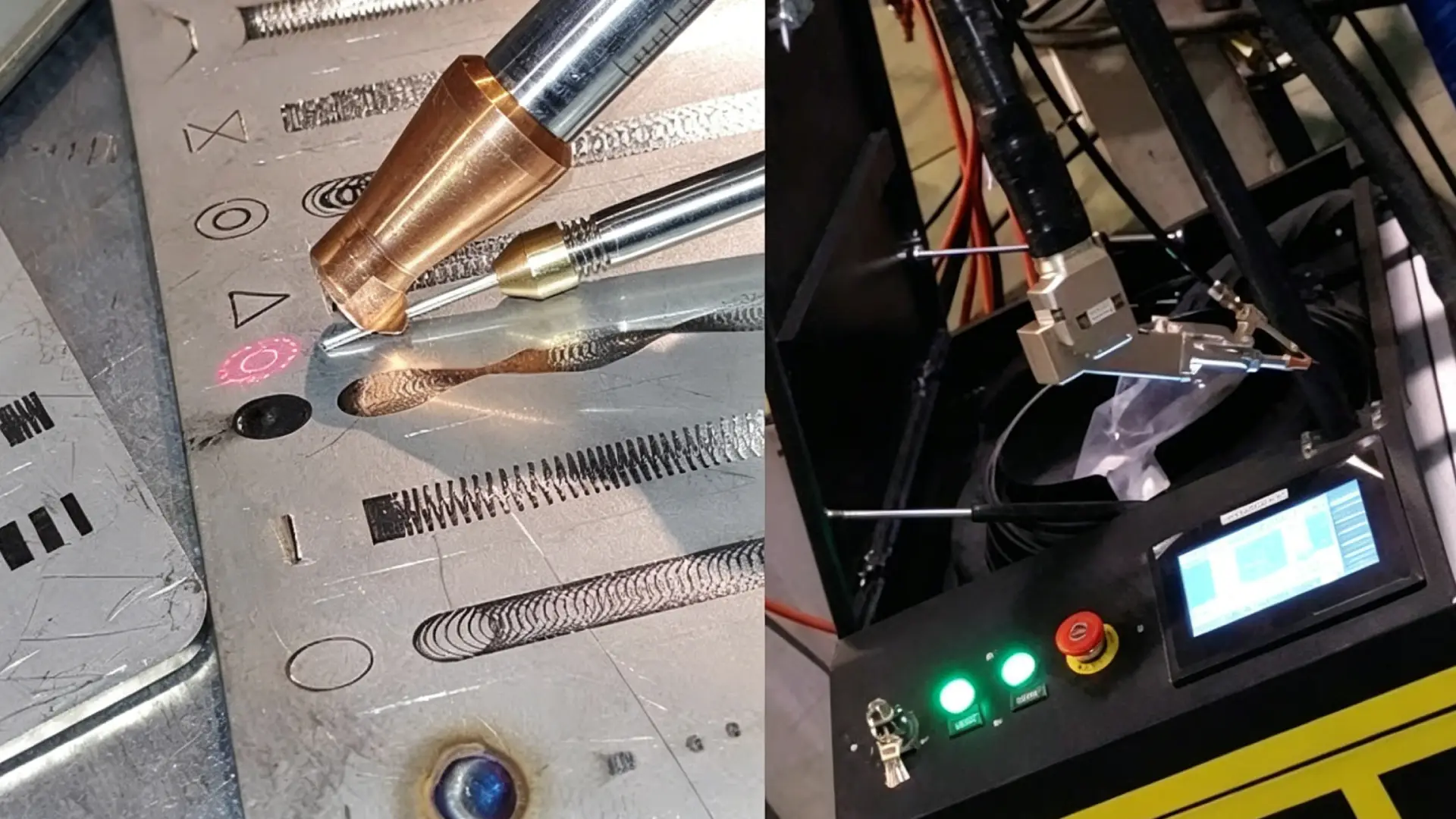
The numbers tell the story. Overshoot on wattage — say, a 3000W machine for a shop that welds 1–2mm stainless all day — and you have paid a $5,000 premium for power you will never use. Undershoot, and a 1000W unit struggling through 3mm structural steel burns two extra hours of labor per day. At $25 per hour, that is $1,500 a month walking out the door.
Then there are the day-one disasters nobody warns you about. Machines arrive at shops with mismatched power supplies. They sit idle for weeks while electricians sort out rewiring. That bill alone can hit $3,000 before a single weld is made.
Three mistakes kill most first purchases:
- Wrong power specification for actual material thickness
- No compatibility with high-reflectivity metals like aluminum or copper
- Setup costs that go overlooked — cooling systems, safety gear, electrical upgrades — adding $500–$2,000 before the machine earns a dollar
Question 1: Does This Handheld Laser Welder Work With My Materials and Thickness?
Material incompatibility kills more deals than price ever does.
The three most common power ratings are 1000W, 1500W, and 2000W. The table below gives engineering reference values — not vendor promises.
| Material | 1000W | 1500W | 2000W |
|---|---|---|---|
| Carbon Steel (Q235) | Stable penetration 1.5–2mm; double-sided up to ~3mm | 3–4mm full penetration; lap joints possible at 5–6mm | Single-side 4–5mm; double-pass up to 6–8mm |
| Stainless Steel (304/316) | Clean welds at ≤2mm | Full penetration at 3mm | Single-side 4–5mm; above 6mm needs 2000W+ or multi-pass |
| Aluminum (6061) | Practical limit 1–1.5mm; above 2mm gets unstable | 2–3mm workable; 3mm is near the ceiling | 3–4mm penetration; beyond that, step up to 3000W |
| Galvanized Steel | ≤1.5mm with pre-treatment | Up to ~2mm with groove prep and ventilation | 2–3mm achievable, but process window is narrow |
| Pure Copper | ≤0.5–0.8mm precision parts only | ~1mm with correct focal point | 1.5–2mm practical max; heavier work needs 3000W+ |
| Brass (CuZn) | ≤0.5–0.8mm small parts | Up to ~1mm; porosity control is critical | ~1.5–2mm feasible — sample testing is non-negotiable |
Joint type changes the equation: Butt joints require one power tier higher than your maximum plate thickness demands. Lap or fillet welds allow you to step down one tier for the same thickness.
Before you sign: No data sheet replaces a physical sample from your actual material. Ask for at least three sample welds per critical combination. Run your own bend tests and pull tests. A vendor who hesitates on samples — that hesitation is your answer.
Question 2: Is the Power Rating and Duty Cycle Matched to My Production Volume?
Duty cycle is simple math: run time ÷ total cycle time × 100%. A machine at 70% duty cycle runs for 70 seconds, then needs 30 seconds to cool. Your production floor runs continuous welds with no natural breaks. That 30-second cooling window becomes a bottleneck.
If your operators weld for 30+ uninterrupted minutes per session, you need a machine rated at 100% duty cycle under continuous (S1) conditions.
| Power Tier | Best-Fit Production Scenario |
|---|---|
| 1000W | Thin sheet, short welds, low-frequency intermittent production |
| 1500W | Mixed thin-to-medium plate, moderate batch sizes, medium seam lengths |
| 2000W | Medium-to-thick plate, higher throughput, demanding seam geometry |
| 3000W | Heavy plate, high-volume continuous runs, maximum thermal stability required |
Question 3: How Safe and Stable Is It in My Actual Shop Environment?
Dust kills electronics. Heat kills them faster.
Most metal shops run ambient dust levels between 1–10 mg/m³. Foundries and grinding stations can hit 50 mg/m³ or higher. For most electronic components, every 10°C rise in operating temperature doubles the failure rate.
Ask your vendor directly:
- What is the control cabinet’s IP rating? IP54 or higher is the baseline for dusty environments.
- What is the rated continuous operating temperature?
- What are the rated daily operating hours?
- What is the wear-parts replacement schedule listed in operating hours — not calendar time?
Safety systems to verify: Laser classification (most industrial handheld fiber laser welders are Class 4), interlock response time (milliseconds to 1 second for complete shutdown), E-stop performance, and PPE requirements (for 1064nm fiber lasers, OD6+ rated lenses conforming to EN 207).
Question 4: How Fast Can My Operators Learn to Use It?
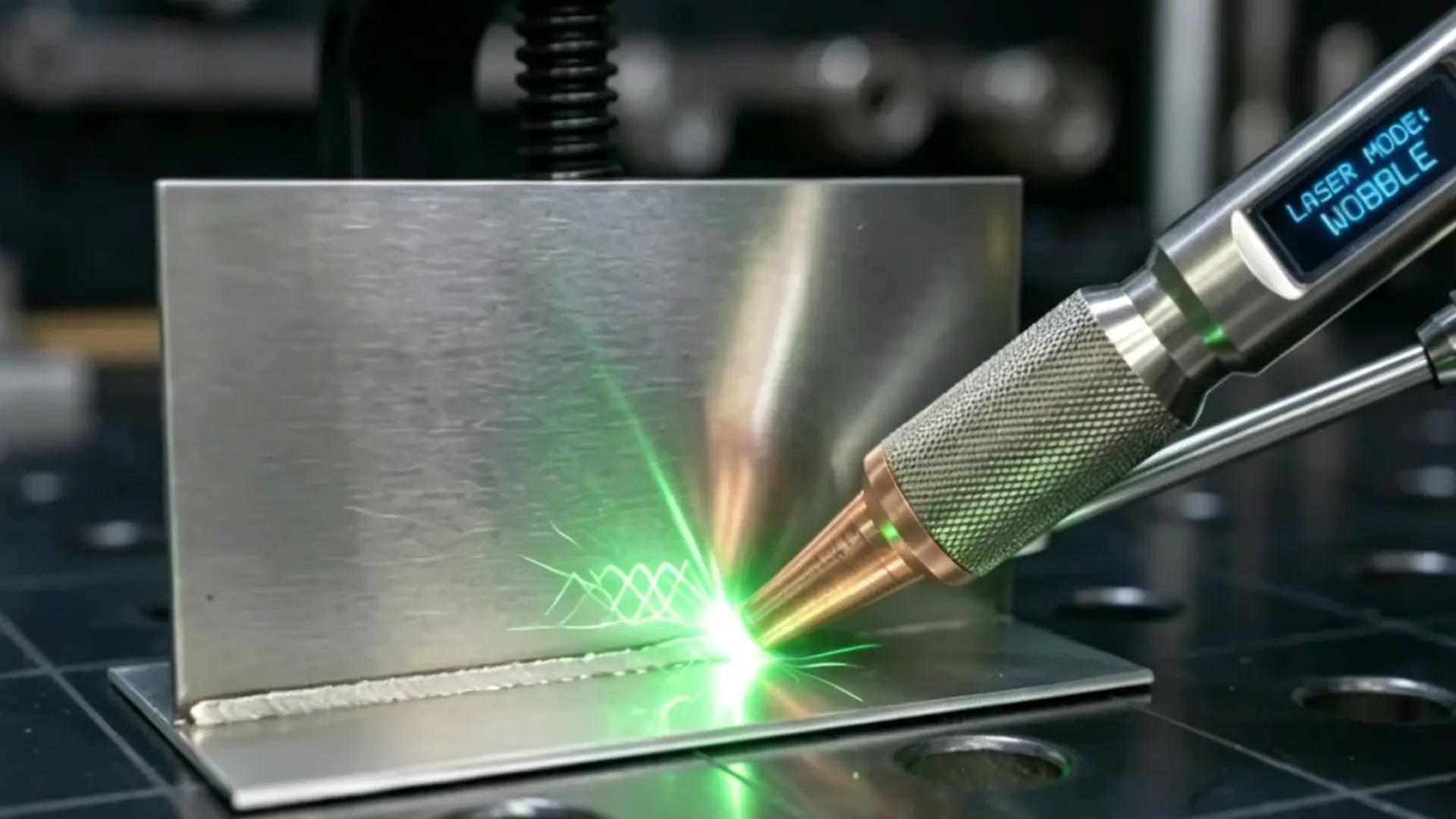
With a preset process library: 1–2 days
Select material on the touchscreen. The system suggests shielding gas, filler wire, and program number. The operator adjusts one variable — power — to match plate thickness. Scrap rates during the learning curve drop from 10–20% down to under 5%.
Without a process library: 5–10 working days minimum
Operators must set power, scan width, wire feed speed, and gas flow — for every material and thickness combination. Three materials, four thickness ranges each, three hours of test-weld checks per combination — that is 36 hours of sample runs before parameters are set. Add posture correction and defect recognition practice, and you are looking at 40–60 hours of training.
Gun weight changes everything: A 1.0–1.2kg torch allows 30–45 minutes of productive practice. Above 1.5kg, session length falls to 15–25 minutes, and days needed to reach stable quality stretch by 20–40%.
Question 5: What Are the Real Total Operating Costs Beyond the Sticker Price?
A 1.5–2kW handheld fiber laser welder pulls from three separate cost streams per hour:
Shielding gas: 15–25 L/min. At 20 L/min, that is 1.2 m³ per hour. Industrial argon in bulk contracts runs $0.6–1.2/m³. Gas cost: $0.7–1.4 per operating hour.
Electricity: A 1.5–2kW laser system draws closer to 6–8kW at the wall once you factor in the chiller and auxiliary systems. At 50% effective duty cycle, you are averaging around 4kW continuous draw. At $0.10–0.15/kWh, that is $0.40–0.60 per hour.
Consumables:
| Consumable | Unit Cost | Service Life | Cost Per Hour |
|---|---|---|---|
| Copper nozzle | $5–15 | 30–80 hours | ~$0.20/h |
| Protective cover lens | $10–30 | 20–40 hours | ~$0.50/h |
| Wire contact tip (if filler) | $3–8 | 8–20 hours | ~$0.50/h |
| Misc. (gel, wipes, tools) | — | — | $0.10–0.30/h |
No filler wire? Total consumables run $0.80–1.00/hour. With filler wire, that climbs to $1.30–1.70/hour.
Total: Without filler wire: $1.90–3.70/hour. With filler wire: $3.30–5.90/hour.
Question 6: What Does After-Sales Support and Warranty Cover?
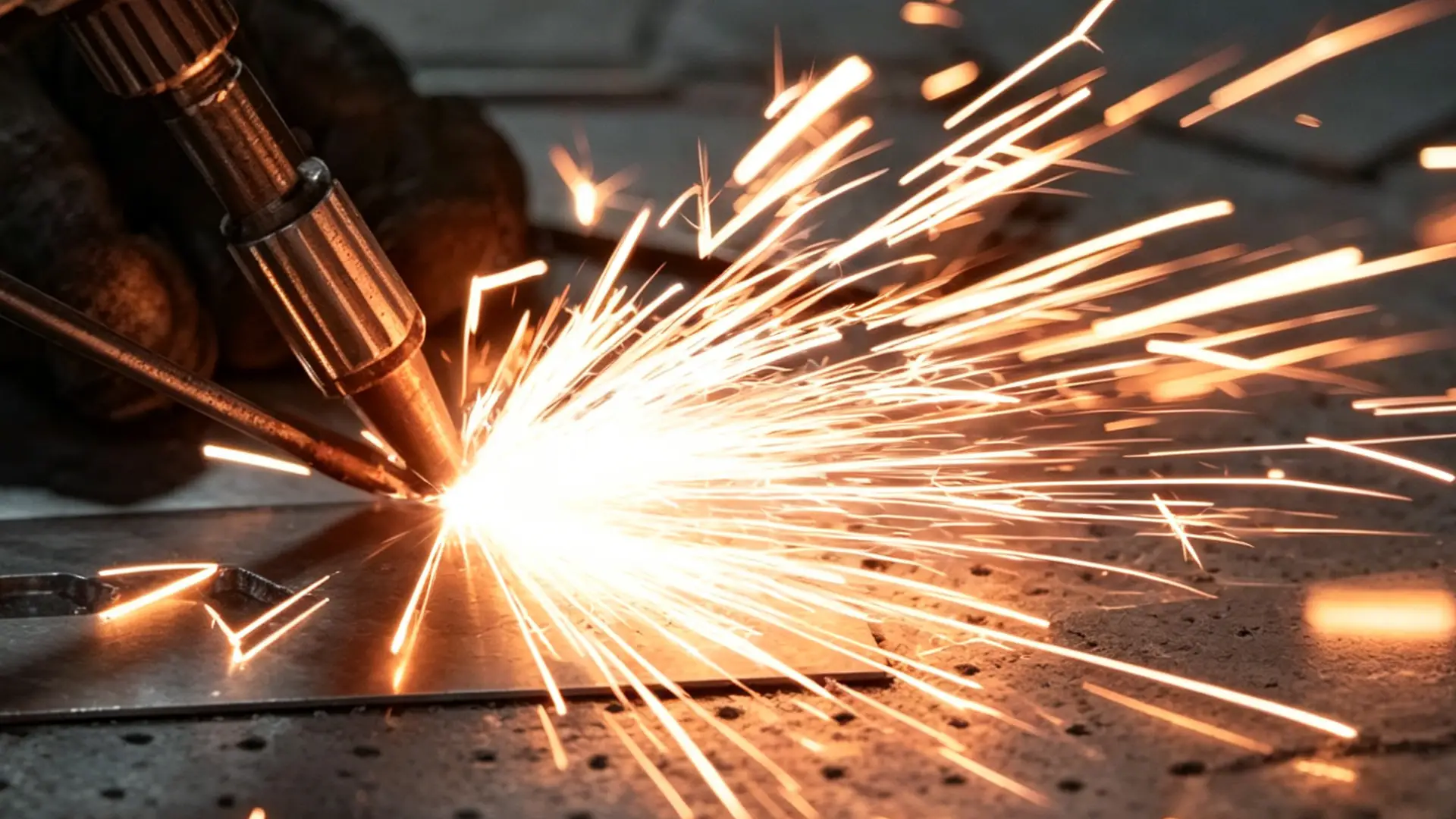
Warranty terms by component:
| Component | Industry Benchmark |
|---|---|
| Fiber laser source | 24 months or 10,000–20,000 operating hours — whichever comes first |
| Chiller unit | 12 months; compressor sometimes extended to 18–24 months |
| Welding head / optics module | 12 months — protective lenses and nozzles excluded as consumables |
| Gun body and electrical module | 12 months; cables and connectors covered outside normal wear only |
After-sales response time: Industry benchmark for critical stoppage is 2–4 hours within business hours. Remote diagnosis and parts identification target 1–2 business days. Parts delivery: local warehouse stock: 1–3 days; international air freight: 7–14 days (including customs clearance). On-site repair: 1–2 days.
Best-case net downtime: 3–5 days back in production. No local inventory, overseas shipment: 7–14 days minimum.
Question 7: Will This Machine Still Fit My Business in 3 Years?
Four factors determine the answer:
Expansion interfaces: You want at least 4–8 digital inputs/outputs, plus a fieldbus like Modbus-TCP or EtherNet/IP.
Automation upgrade path: Does the laser source use a standard QBH connector? If yes, that same laser source can move into a robot cell or gantry system later.
Software scalability: The control system should store 100+ named weld recipes, have at least three user permission levels, and support log export via USB or Ethernet.
Total 3-year cost: A machine priced 10% higher can still be the cheaper option — if it cuts out a future laser source purchase.
Conclusion
You came here with a purchasing decision to make. Now you have the framework to make it well.
Some laser welders transform a shop. Others collect dust. The difference is not luck — it is the questions you asked before signing the purchase order. Materials compatibility, real duty cycle performance, total operating costs, and long-term scalability — these are not bonus considerations. They are the whole game.
A handheld laser welder is not a commodity buy. It is a production infrastructure decision. Good suppliers will welcome every hard question you throw at them. They already have the answers ready.
Take these seven questions to every supplier conversation. A supplier who hesitates, deflects, or pushes you toward a quote before understanding your application — that hesitation is your answer.
The right machine is out there. The right questions are what lead you to it.

0 Comments