
You already know handheld laser welders aren’t cheap. But here’s what most buyers miss — two machines with near-identical specs can differ by $8,000 in price. And that “affordable” $3,500 unit? It can end up costing you double once you count consumables, power draw, and support that never picks up.
For small shops making a real purchasing decision, the sticker price is beside the point. The full cost picture is what matters — wattage tiers, hidden fees, how Laser compares to your TIG setup, and whether the ROI math works for a shop your size. That’s what this breakdown covers.
Handheld Laser Welder Price at a Glance: What Small Shops Pay in 2026
The market will quote you anywhere from $1,800 to $50,000 for the same category of tool. That spread isn’t noise — it’s the whole story.
Here’s what small shops are paying in 2025, with the marketing noise cut out:
| Wattage | Typical Street Price (USD) | Best Fit for Small Shops |
|---|---|---|
| 1000W | $2,000 – $3,000 | Thin sheet ≤2mm, light stainless/carbon steel |
| 1500W | $2,300 – $5,500 | The small-shop sweet spot — structural parts, railings, shelving |
| 2000W | $3,500 – $6,000 | Steel up to 6mm, equipment repair, general fabrication |
| 3000W | $5,000 – $8,000 (direct) / $8,000–$15,000+ (branded) | Thick plate, chassis work, 3-in-1 production support |
For most small fab shops and job shops, $4,000–$6,000 gets you a solid setup. You’re looking at a 1500W–2000W unit with a trusted fiber source — Raycus or JPT. It comes with water cooling and a 3-in-1 head. Bought direct from a Chinese manufacturer, that’s your price range.
That same setup through a US or EU reseller runs $8,000–$12,000. You get local service and installation included.
The price gap isn’t about quality. It comes down to the sales channel, certification, and support structure. Each of those factors carries real weight, depending on how your shop runs.
1000W vs 1500W vs 2000W vs 3000W Price Breakdown
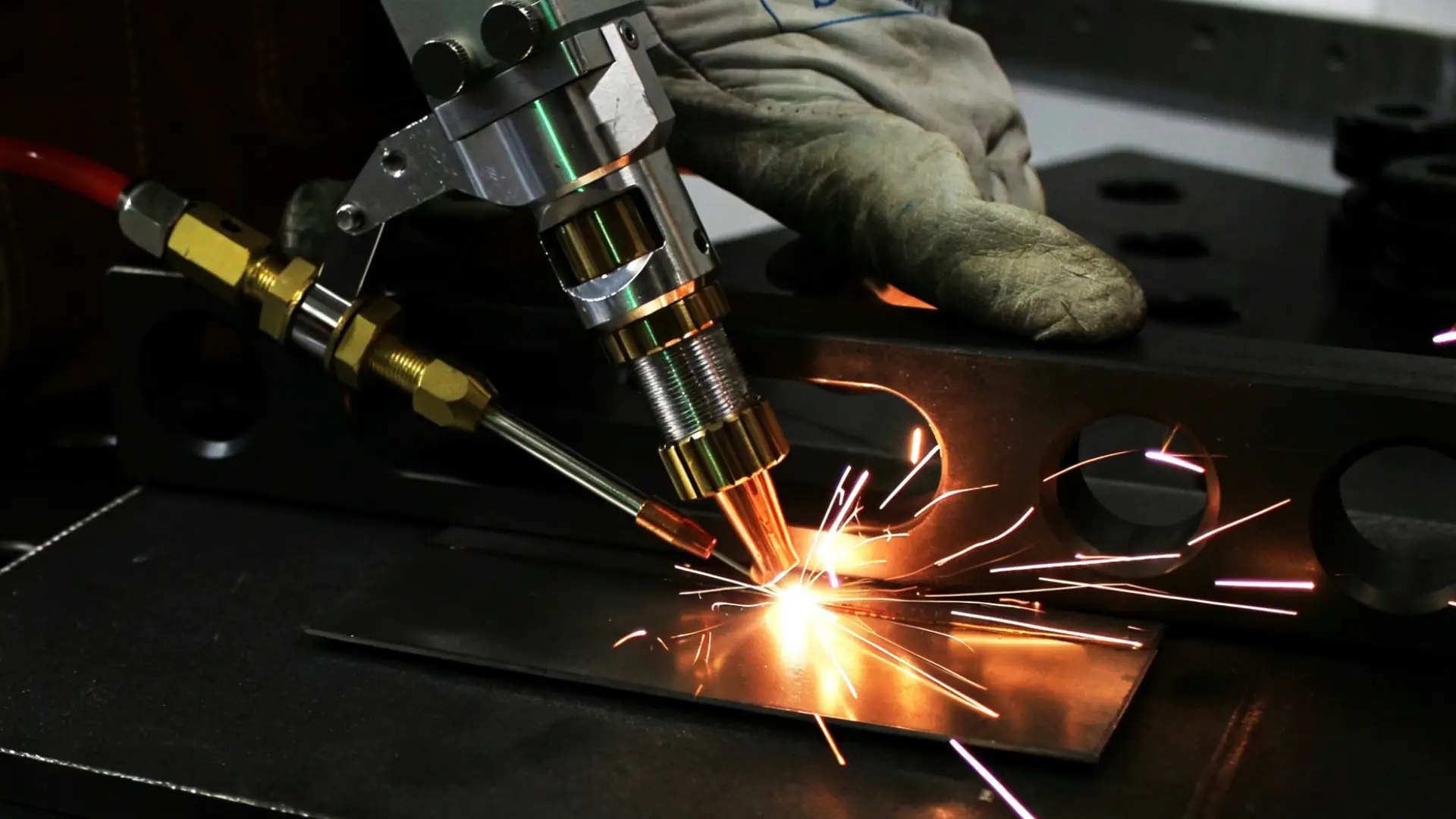
Wattage is the single biggest factor in price — and most buyers don’t realize how fast that cost climbs.
Here’s the real market picture for Handheld Fiber Laser welders in 2025, broken down by power tier. Two price bands matter for each: what you pay buying direct from a Chinese manufacturer, and what you pay through a supported Western brand.
| Wattage | Direct Import Price | Branded / Supported Price | Max Weldable Thickness (single pass) |
|---|---|---|---|
| 1000W | $2,000 – $5,500 | $6,000 – $18,000 | ~3mm stainless / 2.5mm carbon steel |
| 1500W | $3,000 – $6,000 | $10,000 – $22,000 | ~5mm stainless / 6mm with joint prep |
| 2000W | $5,000 – $10,000 | $18,000 – $30,000 | ~8mm stainless / 10mm multi-pass |
| 3000W | $8,000 – $12,000 | $22,000 – $39,000+ | ~10mm stainless / sustained high-duty cycle |
What Each Wattage Jump Costs You
The step from 1000W to 1500W adds $5,000–$7,000 at comparable build quality. That price difference isn’t arbitrary. You get 30–60% faster travel speed on the same material thickness. Plus, you can push through 5mm plate in a single pass instead of two.
The jump from 1500W to 2000W costs another $7,000–$10,000. In return, you get 20–40% faster welds on 3–4mm sheet. You also run fewer multi-pass operations and can handle structural steel up to 8mm.
The 2000W to 3000W step depends heavily on context. For a standalone handheld unit, the price gap within the same product series sits at $4,000–$8,000. But 3000W machines are more and more often bundled into robotic or cobot cells. Those systems start at $70,000 and go past $150,000. Make sure you know which product you’re quoting before comparing numbers.
The Per-Watt Cost Curve — And Where It Peaks
Per-watt pricing on supported handheld systems shows a clear pattern:
- 1000W: $6–$18 per watt
- 1500W: $7–$15 per watt
- 2000W: $9–$15 per watt
- 3000W: $7–$13 per watt (volume orders)
Cost-per-watt peaks at 1500W–2000W, then levels off at 3000W for volume buyers. That peak isn’t random. It marks the point where cooling requirements, safety systems, and duty-cycle engineering all land in the same Machine at once. Each of those factors adds cost — and at 1500W–2000W, they all hit together.
Water Cooling Adds Real Money at Every Tier
Cooling method isn’t just a spec checkbox. It moves the price — sometimes by a lot.
At 1000W, water cooling adds $800–$1,500 over air-cooled units at the same power. Most budget imports in the $2,000–$3,500 range use air cooling to stay at that price point. Water-cooled versions cluster around $3,500–$5,000.
At 1500W and above, water cooling isn’t optional — the heat load demands it. Some suppliers do offer both options at 1500W. The water-cooled version runs 5–10% higher, which works out to around $1,000–$2,000 more.
At 2000W and 3000W, the question shifts. It’s not air vs. water anymore — it’s what grade of water cooling you need. Stepping up from a small integrated chiller to a high-capacity industrial chiller adds $1,500–$3,000 within the same wattage class.
The Wattage Decision Is a Thickness Decision
Buy for the material you’re Welding now — not the material you might weld someday.
- 1000W fits light enclosures, thin brackets, and sheet metal under 3mm. Energy cost runs around $1.50–$3.00/hour, or $3,000–$6,000/year at 2,000 hours of use.
- 1500W is the small-shop workhorse. It covers most structural fab work — railings, frames, equipment panels — without the price jump of 2000W.
- 2000W earns its cost for shops that hit 5mm+ plate on a regular basis or run repair work on thicker equipment.
- 3000W is a production-line tool. Not running two or three shifts? The math rarely supports the spend.
Higher wattage does cost more per hour to run. But the cost per meter of weld drops, because you move faster and make fewer passes. That’s the part most buyers miss — and it changes the whole cost calculation.
The Real Total Cost: Hidden Expenses Most Buyers Overlook
The sticker price is a lie of omission. Not a deliberate one — but a lie nonetheless.
A $5,000 laser welder that costs you $9,000 in its first year isn’t a $5,000 machine. It never was. Shops that figure this out after the purchase are the ones posting frustrated rants on forums at midnight.
Here are four cost categories most buyers never price out until it’s too late.
Consumables: The Slow Bleed
Small unit prices hide enormous annual totals. Most buyers see “$30 per lens” and move on. They never multiply it by 24.
| Consumable | Typical Unit Cost | Annual Cost (Small Shop) |
|---|---|---|
| Protective lenses | $20–$80/each | $300–$800/year |
| Ceramic chambers | $30–$150/each | $150–$500/year |
| Nozzles | $2–$15/each | $300–$1,200/year |
| Filler wire | $2–$6/kg | $500–$1,500/year |
Add it up. A typical single-machine small shop lands between $1,250–$4,000/year in consumables alone. Buyers who focus only on unit pricing tend to underestimate their true consumable cost by 50–200%. That gap adds up fast.
Electricity: Where Laser Wins
A 2000W laser welder running 8 hours a day costs about $584/year in electricity at $0.10/kWh. A comparable 300A TIG setup — drawing 6–8kW — runs $1,752–$2,336/year.
That’s a gap of $1,200–$1,750 per year. Stretch that over a five-year machine life and you’re saving $6,000–$8,000 in electricity costs alone. Most buyers comparing purchase prices never factor this in — and that’s a costly oversight.
Service Contracts: Don’t Overpay for Coverage You Don’t Need
Vendors quote maintenance contracts on laser systems at $5,000–$20,000/year. That range is wide enough to mean almost anything. Small shops running under 1,000 hours per year rarely need the high end. For light-use machines, repair and inspection costs tend to stay under $3,000/year with no contract at all.
Push back hard on full-coverage contracts. Here’s how:
- Push for a 1-year trial — no auto-renewal into a 3–5 year lock-in
- Split the line items — fixed annual fee covers remote support and one site inspection; parts get billed as used
- Remove exclusivity clauses — you want the right to use third-party repair, no exceptions
- Demand downtime penalties — get 24-hour response promises written into the contract with real consequences
The Real Number
Put it all together for a clear first-year picture:
- Consumables: $1,250–$4,000
- Electricity: $584
- Service/maintenance: $1,500–$5,000 (without a full contract)
- Total operating cost, Year 1: $3,300–$9,600
That number belongs right next to your machine quote — not buried somewhere in year two.
Entry-Level vs Mid-Range vs Professional Grade: Which Tier Fits a Small Shop Budget?
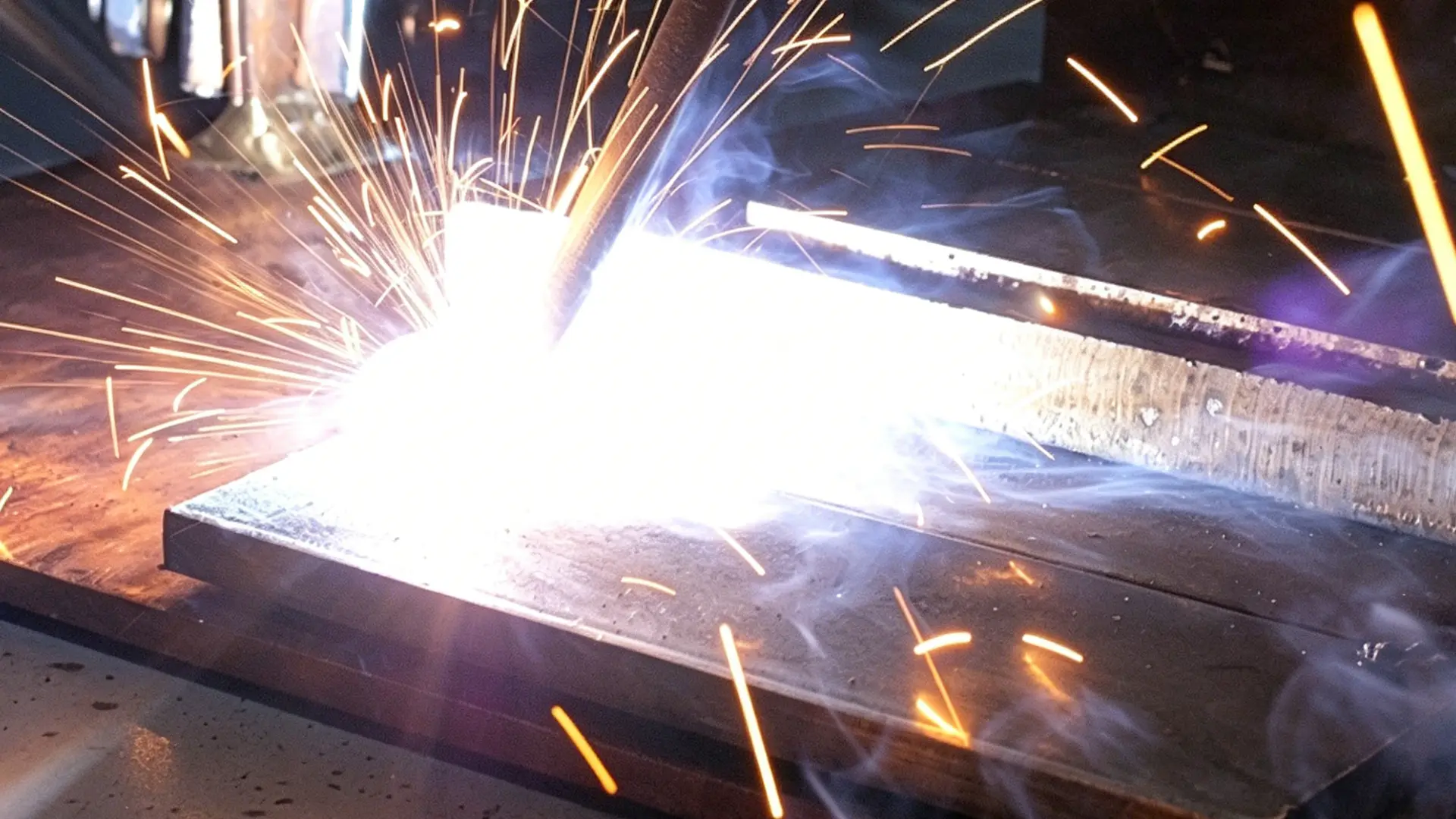
Three tiers. One right answer for your shop — and two ways to waste money.
The mistake most buyers make isn’t choosing the wrong price point. It’s treating all three tiers as the same thing with different price tags. They’re not. Each tier is built around a different set of engineering trade-offs. Those trade-offs either match your workload or they don’t.
Here’s how the tiers break down:
| Tier | Price Range | Power | Best Fit |
|---|---|---|---|
| Entry-Level | $1,800–$4,500 | 500–1000W | Thin sheet, light repair, low volume |
| Mid-Range | $4,500–$10,000 | 1500–2000W | Structural fab, stainless kitchens, auto body |
| Professional | $10,000–$25,000+ | 2000–3000W | High-duty production, jewelry, precision work |
Entry-Level ($1,800–$4,500): Know What You’re Buying
A $2,000 machine isn’t a bad machine. It’s a specific machine.
Entry-level units run 500–1000W. You get a basic integrated water tank, a fixed or simple oscillating beam head, and spot diameters around 0.8–1.5mm. On clean stainless under 3mm, they do the job. Go thicker, and optical stability gets inconsistent. That shows up directly in your welds.
The real limitation isn’t peak power — it’s sustained performance. Most entry units need to throttle back or stop after 5–10 minutes of continuous welding. Occasional light repairs? That’s fine. Four hours of back-to-back stainless fab? That cooling ceiling turns into a production problem every single day.
Consumables are the upside. Protective lenses run $2–$5 each on these machines. Parts are cheap and easy to get fast.
Mid-Range ($4,500–$10,000): Where Most Small Shops Should Land
This tier fits a working shop budget — and handles real working-shop volume.
A 1500W mid-range unit with an industrial chiller runs stable for 1–3 hours straight without heat throttling. Beam oscillation is programmable — 10–300Hz range, 0–5mm amplitude. That matters for bridging fitup gaps on structural parts. Entry-level fixed heads can’t do that at all.
Auto body shops get solid coverage from a 1500W machine. It handles everything from 0.8mm door skins up to 12–15mm stainless structural reinforcements. Stainless kitchen Fabricators running 5+ jobs a day need at least this tier. Continuous weld runs on 1–2 meter countertop seams aren’t optional at that volume — they’re the whole job.
Speed is the other factor. Laser travel is faster than MIG or TIG on the same material. Plus, the smaller heat-affected zone cuts down on grinding and finishing time after the weld. That’s where mid-range machines pay for themselves — not in the weld itself, but in the time saved around it.
Professional Grade ($10,000–$25,000+): Production Tools, Not Shop Upgrades
At this tier, the machine isn’t a tool anymore — it’s infrastructure.
Professional-grade units run 2000–3000W. They come with redundant cooling circuits built for full 8-hour shifts. Power variance holds tight at ±1–2%. Jewelry machines in this class hit peak outputs of 12kW for deep-pulse work. Single-pulse energy can exceed 180J on high-end models like the Orotig Revo X².
For most small fab shops, this tier doesn’t make financial sense. You’d need two or more shifts, or highly specialized precision work, to justify it. The exception is dedicated jewelry studios doing heavy batch repair volume. The microscope optics, 50μm spot focus, and micro-positioning tables can justify the $17,000–$22,000 price point at that scale.
Short of sustained high-volume output, you’re paying for engineering headroom you’ll never touch.
Handheld Laser Welder vs TIG Welder: True Cost Comparison for Small Shops
The TIG welder sitting in your shop right now cost you around $1,500. The handheld laser welder you’re pricing out costs $8,000. That $6,500 gap is real — but it’s the wrong number to focus on.
Here’s the comparison that matters.
Purchase Price: The Gap Is Smaller Than You Think
A solid mid-range TIG setup runs $2,000–$3,000. A comparable entry-to-mid Handheld laser welder lands at $4,000–$10,000 for small shops buying direct. The capital difference sits at $6,000–$12,000 depending on configuration.
That gap closes faster than most buyers expect.
Speed Is Where the Math Breaks Open
TIG moves at 10–20 cm/min on typical structural work. Handheld laser runs 200–300 cm/min on the same material. That’s not a rounding error. On a good day, laser is 10–15x faster. On real shop work — with setup and positioning included — you’re still looking at 4–5x faster.
One laser operator can match the output of four TIG welders. Say you’re running two TIG operators to hit your weekly output. One laser operator covers that same load. Your second person moves to other work.
The labor math on that scenario:
- Save 0.5 FTE of TIG labor at $25/hour
- Annual savings: $26,000/year
- Payback on a $6,000–$12,000 capital gap: under 6 months
Industrial benchmarks place typical payback at 2–3 years under conservative load assumptions. For a shop running steady volume, the real number sits closer to the aggressive end.
Training Cost: Hours vs. Months
This cost almost never shows up in comparisons. It should.
Getting a new hire to weld client parts on TIG with reliable quality takes 40–200 hours of practice. Aluminum and thin stainless push toward the longer end. Laser Welding gets a new operator to “good enough to bill” in 4–8 hours.
Put that in dollar terms at $20/hour with 50% productivity during training:
| Method | Training Hours | Training Cost |
|---|---|---|
| TIG | ~80 hours | ~$1,600 |
| Laser | ~8 hours | ~$160 |
Each time you bring on a new employee or part-timer, laser welding saves you $1,400 in ramp-up cost. Small shops with turnover feel that difference right away.
Post-Weld Labor: The Hidden TIG Tax
TIG welds need cleanup. Not always a lot — but there’s always some. Grinding, polishing, finishing exposed seams. On a stainless door frame with four visible corner welds, that’s 15–20 minutes per piece in post-weld labor.
laser welds come off the machine clean. The heat-affected zone shrinks to ≤0.5mm. Distortion drops to one-eighth of what TIG produces on the same material. Most laser welds on visible surfaces go straight to the customer — no grinding, no polishing pass.
At $25/hour labor and 10 pieces per day, that 18-minute TIG finishing difference adds up to $75/day — or $18,000/year. That number alone covers the full equipment cost gap.
The Honest Summary
TIG welders cost less to buy. That’s the one category where TIG wins outright. Laser welding costs more upfront. It pays back through labor speed, faster training, and less post-weld finishing time. For a small shop running steady volume on stainless or carbon steel, the economics shift clearly within the first year.
The question isn’t whether laser welding costs more. The real question is whether your shop runs enough volume for the savings to show up on your bottom line before year two. Weld more than 20 hours a week? The answer is yes.
ROI Calculator: How Long Before a Small Shop Breaks Even on a Laser Welder?
Run the numbers. That’s the one way to settle this.
Not gut feeling. Not what the sales rep said. Real arithmetic — your labor rate, your part count per day, your current TIG setup — fed into a model that shows how many months before the machine pays for itself.
Here’s that model.
The Baseline Assumptions
- Equipment cost: $5,000 (entry-level or direct-import unit)
- Labor rate: $40/hour
- TIG workflow per part: 10 min welding + 15 min grinding = 25 min total
- Laser workflow per part: ~5 min, near-zero post-weld cleanup
- Time saved per part: 20 minutes — every part, every day
A 1500W system costs about $1,050/year in electricity at $0.15/kWh over 4 hours/day. That’s a real number, but it’s small compared to what you save on labor.
Breakeven by Daily Output
| Daily Part Count | Annual Savings | Operating Cost | Net Annual Gain | Payback Period |
|---|---|---|---|---|
| 10 parts/day | $33,400 | ~$1,000 | $32,400 | ~1.8 months |
| 5 parts/day | $16,700 | ~$1,000 | $15,700 | ~3.8 months |
| 2 parts/day | $6,680 | ~$1,000 | $5,680 | ~10.6 months |
Even at the lowest use — two parts a day, the machine barely working — you break even in under a year.
Breakeven by Daily Machine Hours
Think in hours instead of parts. The picture gets clearer. Laser welding runs at 3× TIG speed. So each hour on the laser cuts out two hours of TIG labor. At $40/hour, that’s $80 saved per laser hour.
| Daily Usage | Monthly Savings | $5K Machine Payback | $15K Machine Payback |
|---|---|---|---|
| 2 hrs/day | ~$3,520 | 1.4 months | 4.3 months |
| 4 hrs/day | ~$7,040 | 0.7 months | 2.1 months |
| 8 hrs/day | ~$14,080 | < 1 month | 1.4 months |
Shops running 20+ hours per week break even in under 4 months on most mid-range machines. That matches what the industry data shows across the board.
The Numbers Most Shops Forget to Count
Labor savings are the big headline. But three other gains sit right underneath — and most shops miss them:
Precision work premiums. Laser’s tight heat-affected zone lets you take on thin-wall and high-finish jobs. Those aren’t jobs you can bid on with TIG. Those parts price 10–30% higher. Add 50 precision parts per month at a $15 markup and that’s $750/month in extra revenue — work you couldn’t touch before.
Scrap reduction. TIG distortion and defects add up fast. Say you reject 20 parts per month at $100 fully-loaded cost per piece. That’s $24,000/year in losses. Switch to laser’s stable, low-heat output and cut that down to 5 rejected parts per month. You get $18,000/year back. Put that straight into your ROI model.
Capacity released. Move 5 parts from 25-minute TIG cycles to 5-minute laser cycles. You free up 100 minutes right there. For a shop doing 10 parts a day, that adds up to 400+ hours per year handed back to you. Fill a third of that with new billable work at $30/hour net margin. That’s $4,000+ in added annual profit.
Stack labor savings, scrap reduction, and freed capacity together. The machine doesn’t just break even — it changes what your shop is able to earn.
What Drives Handheld Laser Welder Pricing? 6 Key Factors Explained
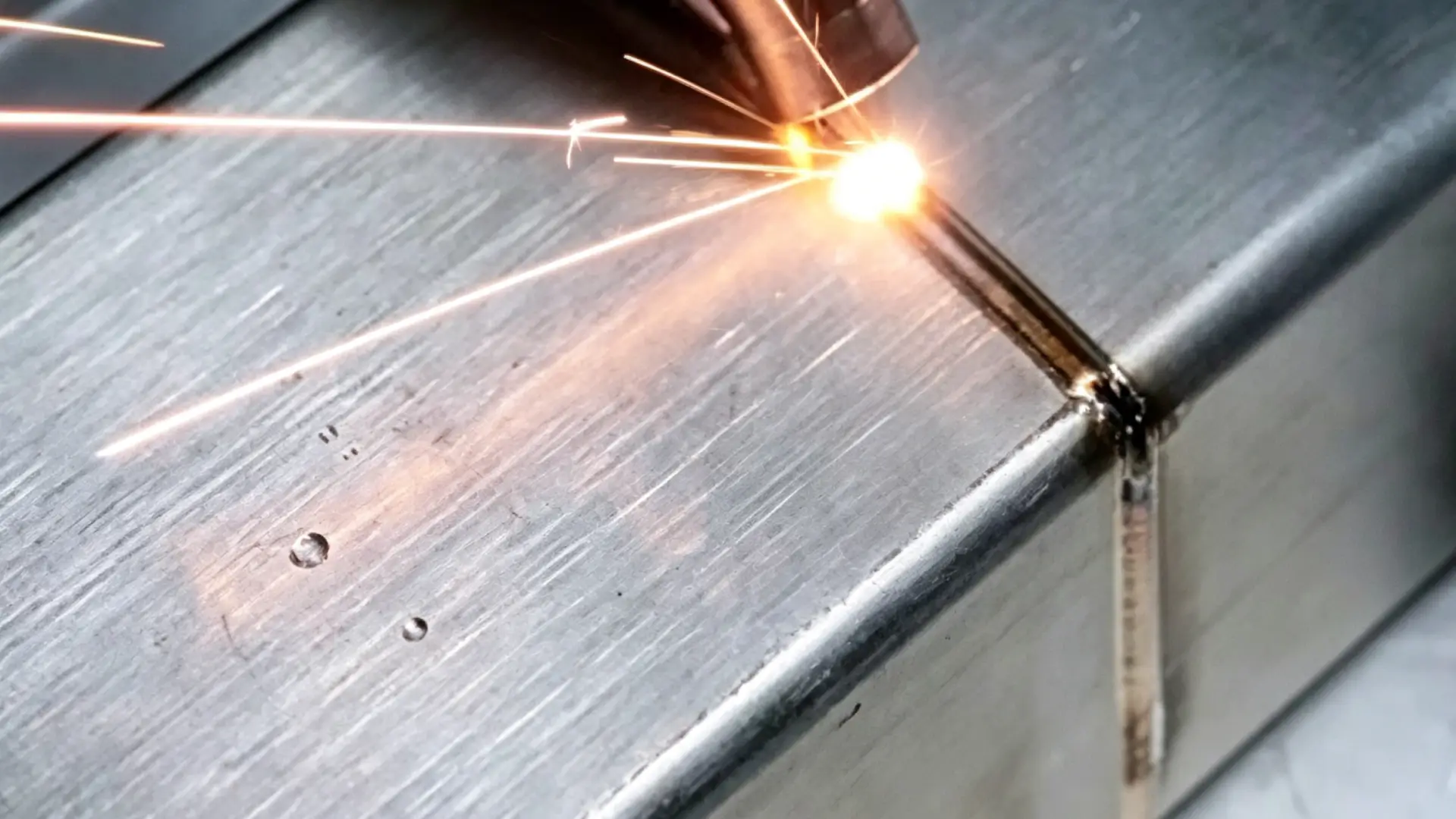
Six variables set the price on a handheld laser welder. Know them, and a $12,000 quote starts to make sense. Miss them, and you’ll overpay by thousands — or buy a machine that slowly breaks down your shop six months in.
1. Laser Power Output
Wattage drives 45–55% of the total machine cost. The fiber source alone — the part that generates the beam — accounts for 40–55% of the bill of materials on a typical Chinese-built unit. Every 500W step up in the 1–3kW range adds 10–20% to the final price. Factor that in before you start comparing quotes.
2. Fiber Source Brand
Not all fiber sources are equal. The price gap is real and specific. A machine built around an IPG laser source runs $1,000–$3,000 more than an identical-spec unit using a domestic Raycus or Max source. That extra cost gets you a lower M² beam quality figure, tighter spot control, and better stability on high-reflectivity materials like aluminum and mirror-finish stainless. For precision work, that matters. For basic fab, it may not justify the cost.
3. Cooling System
Water cooling is not optional above 1500W. The heat load demands it. A standalone industrial chiller runs $800–$1,500 on the open market. That’s 10–20% of a typical machine’s sale price. Some suppliers pair a high-power fiber source with an undersized chiller to cut costs. The result: thermal protection alarms, broken duty cycles, and a machine that hits its wattage spec on paper but can’t hold that output through a real workday.
4. Weld Head Configuration
A standard oscillating weld head costs $400–$800. A 3-in-1 head — welding, cleaning, and basic cutting in one unit — runs $800–$1,500. On a complete machine, that upgrade should add $500–$1,000 to the asking price.
Watch out for this trap: a vendor quotes $1,500–$2,000 more for the 3-in-1 head, but drops the fiber source or chiller spec to cover the difference. The headline feature improves. The core machine gets worse. That’s the classic “feature inflation” move.
5. Certifications and Sales Channel
CE certification on a laser product is not just paperwork. It requires third-party lab testing and a fully documented safety circuit design. That process costs manufacturers $5,000–$20,000 per model. They recover it through a 5–10% price premium on certified units.
For small shops importing into the EU or selling finished work in regulated markets, that certification removes real legal and customs risk. It’s not a prestige mark. It’s a documented cost with a clear return.
Local warehousing adds another $300–$800 per unit. That covers pre-paid duties, storage, and the logistics setup that gets you a machine in 3–7 days instead of 30–45. English-language technical support carries an embedded $200–$500 premium. That reflects time-zone coverage and the staff cost of keeping it running.
6. Warranty Depth
A standard 1-year warranty is the floor, not a selling point. Extending to 2 years on the full machine adds 5–8% to the purchase price — sometimes listed as a line item, sometimes folded into a brand’s base price. Either way, it’s a real cost.
On a 2kW fiber source with a replacement cost of $1,500–$2,500, a manufacturer covering year two takes on genuine financial risk. For a small shop with no in-house repair capability, that coverage has real dollar value. Price it out as a separate line. Don’t ignore it.
Put these six factors side by side on every quote you review. Machines that look expensive often earn that price. The cheap ones usually hide the cost somewhere — in the chiller, the fiber source, or warranty fine print you won’t read until month eight.
How to Buy a Handheld Laser Welder for Your Small Shop
Five rules. That’s all that separates a smart purchase from an expensive regret.
Rule 1: Buy for the Thickness You Weld — Not Your Worst-Case Job
List your top three materials and the plate thickness that covers 80–90% of your real work. Then buy the minimum wattage that handles that range in a single pass.
- ≤3mm stainless or mild steel? 1500W is your ceiling. Stop there.
- 3–5mm carbon steel on most jobs? Step to 2000W.
- Aluminum at 2–3mm? You need at least 2000W — aluminum’s high reflectivity eats power.
Jumping to 3000W when your shop never sees 6mm plate adds 20–40% to your machine cost. You get zero return on that extra spend.
Rule 2: Verify Duty Cycle and Electrical Requirements Before You Order
A machine rated at 2000W means nothing if it throttles back after eight minutes. Industrial-grade fiber sources hold >90% duty cycle at rated power. Budget units often drop to 40–60%. Intermittent spot repairs? That gap won’t hurt you. Running continuous seams all afternoon? It will shut down your day.
Also check your electrical panel before you buy. Many 1500–2000W units need 220V, single-phase, 20–30A. A 3000W unit often demands 3-phase, 380–480V. Rewiring a shop panel runs $500–$2,000. That’s real money buried in a spec sheet most buyers never read.
Rule 3: Inspect Before You Sign Off at Delivery
The machine arrives. Run this checklist before you accept it:
- Check the fiber source nameplate — brand, model, serial number. Match it against your purchase contract.
- Pull the emission hours from the HMI service screen. A new machine should show under five hours — under one is better.
- Fire a test weld on scrap. A 1500W unit should penetrate 2mm steel clean at 0.5–1 m/min. A 2000W unit should handle 3–4mm carbon steel in a single pass. No penetration? The source is derated or worse.
- Run the chiller for 15 minutes at high power. Water temperature should hold within ±2°C. Swings beyond that signal undersized cooling. You’ll get shortened optics life and mid-job alarms.
Rule 4: Used Machines — Know What You’re Buying
A used handheld laser welder at 50% of new can be a smart move. Or it can be a machine someone ran hard and sold before the repair bills arrived.
The number that matters most isn’t calendar age — it’s emission hours. Fiber sources carry rated lifetimes of 80,000–100,000 hours. A five-year-old machine with under 1,000 hours is a completely different product from a two-year-old unit with 12,000 hours on it. Low hours beat a recent manufacture date. Every time.
A used unit priced above 80% of new? Demand a full power test and a written 30–90 day warranty. No test, no warranty — walk away.
Rule 5: Match the Monthly Payment to What the Machine Earns
A $10,000 machine financed over 48–60 months at 8–18% APR runs $220–$350/month. That’s manageable — as long as the machine earns it.
Quick test: estimate labor savings at your shop rate. Laser welding saves 0.5 hours per job across 40 jobs a month at $60/hour. That’s $1,200/month back in your pocket. A $300 payment fits inside that with room to spare. A $700 payment doesn’t.
Keep equipment payments at 10–15% of monthly gross welding profit. Go past that and you’re financing capacity you haven’t booked yet. That’s how overpaying happens — one month at a time, so slow you barely notice it.
FAQ: Handheld Laser Welder Cost Questions Small Shop Owners Ask Most
These questions come up every week. Here are straight answers.
Is a handheld laser welder worth it for a small shop?
Bill 10–20 welding hours a week at $75–$120/hr? Yes. A supported 1500W system pays back in 6–18 months through labor savings alone.
Can I get one under $5,000?
Yes — 1500W Chinese units run $2,000–$5,500 FOB. Expect minimal support and basic safety. Shops running full daily production tend to budget $8,000–$22,000 for something dependable.
What does it cost per hour to run?
Electricity, gas, and wear parts combined come to $2–$6/hour. That’s less than TIG once you’re dialed in.
What hidden costs should I budget for?
Add these to your estimate:
– $300–$1,500 for shipping
– $300–$1,500 for electrical work
– Up to $2,000 for training and safety gear
Does a cobot cell ever make more sense?
Running repeatable parts 20–40 hours a week? A cobot cell starts to make sense at that volume. Below that threshold, a $8,000–$30,000 handheld gives you better flexibility at a fraction of the risk.
Conclusion
The price of a handheld laser welder is never just the number on the tag. It’s the power you chose, the consumables you ignored, the electricity you burned, and the after-sales support that either showed up or didn’t.
For most small shops, this machine isn’t an expense; it’s a profit engine. Once you cross 20 welding hours per week, you erase the cost in 8–18 months. Every bead after that is pure margin your TIG setup could never deliver.
Ready for a transparent 2026 quote that actually fits your shop’s numbers?

0 Comments