
Gold jewelry repair workshops commonly struggle with broken chains, fractured setting prongs, cracked ring shanks and frequent rework on K-gold pieces. Featuring minimal heat input and seamless welding results, the gold jewelry laser welder has become essential equipment for global jewelry studios repairing 14K/18K/22K gold items. It drastically cuts turnaround time for repair orders and boosts finished product yield while eliminating recurring drawbacks of traditional torch welding such as burnt gemstones, gold oxidation discoloration and insufficient weld joint strength.
Practical data from worldwide jewelry repair operators proves that a calibrated jewelry spot laser welder slashes single-piece repair time by half and improves tensile strength of welds by 70%~80%, helping repair shops raise service pricing and secure high-end custom restoration jobs.
Best Laser Welder for Gold Jewelry: Brand Comparison
| Brand / Model | Laser Type | Power / Min. Spot Size | Pulse Energy | Best For | Price Range | Verdict |
|---|---|---|---|---|---|---|
| MAXWAVE QW Series (Recommended) | Nd:YAG / QCW Fiber | 60W / 150W / 200W Min. Spot: 0.01mm | 0.5–100J (Stable <1J control) | Fine chains, prong re-tipping, 18K/22K shank rebuilds, stone-safe welding | From $3,100 | ✅ BEST VALUE. Industry-leading 0.01mm spot, HD microscope + CCD, zero-maintenance fiber options. The ultimate pro choice. |
| Sunstone Orion mPulse | Capacitor Discharge Nd:YAG | ~60–80W equiv. Spot ≈0.5mm | 1–30J | Permanent jewelry, jump rings, light-duty repairs | ~$1,999 | ⚠️ Entry-level only. Not suitable for structural shank repairs or heavy gold. |
| WTTTOOLS 150W | Lamp-pumped Nd:YAG | 150W Spot 0.2–2.0mm | 0.5–40J | General repair shops mixing chains, rings, and custom work | ~$5,099 | ⚠️ Requires regular flashlamp replacements (consumable cost). Less precise than MAXWAVE. |
| WTTTOOLS 1200W | CW Fiber | 1200W Adjustable Spot | CW/Pulse Modes | ≥3mm thick gold bangles/cuffs, not micro-work | ~$5,000–$6,000 | ⚠️ Overpowered for jewelry. Risks burning through fine chains. Requires 30A circuit + water chiller. |
| ACCTEK 4-in-1 (Weld/Cut/Clean) | CW Fiber 3000W | Spot 0.1–2.0mm | Structural Welding | Industrial metalworking + occasional jewelry fixes | ~$2,900 | ❌ Lacks jewelry-grade micro-pulse control. Not recommended for precision gold repair. |
What Makes a Laser Welder “Best” for Gold Jewelry Repair
Gold creates a thermal runaway problem. Its conductivity runs around 315–320 W/m·K. That pulls heat away from your Weld point fast. An underpowered Machine doesn’t just struggle — it fails outright.
“Best” is specific. The right machine handles your real gold work: 14K chain links, 18K prong re-tipping near diamonds, heavy 22K shank rebuilds. Each task needs different parameters. A machine that can’t shift between them isn’t best — it covers one job and stops there.
Here’s what separates a great gold repair Laser from a mediocre one:
- Pulse energy range: You need 0.5–8 J for fine chain and prong work, 8–25 J for structural shank repairs. Look for at least 30–40 J maximum, with stable delivery below 1 J for filigree.
- Spot size adjustability: 0.2–2.0 mm range is non-negotiable. Tight 0.2–0.3 mm spots protect stones during prong work. Wider 0.8–1.5 mm spots fill pits and rebuild edges without wasted energy.
- Peak power: Aim for ≥5 kW. Gold’s high conductivity moves heat out fast. Low peak power means fusion never happens — this is a bigger problem on heavier 18K/22K pieces.
- Argon shielding integration: Built-in gas ports with 2–8 L/min flow control are required on gold. They block oxidation, blackening, and color shift on yellow and white gold alloys.
- Microscope quality: 10x–20x zoom, integrated crosshair, adjustable LED lighting. Without it, you’re guessing where your 0.2 mm spot lands — and that guess costs you repairs.
The best machines also factor in your long-term business cost, not just the upfront price. Lamp-pumped Nd:YAG units cost less to buy, but they burn through flashlamps fast. Each lamp runs hundreds of dollars, and a busy shop goes through several per year. Fiber or diode-pumped systems run 50,000–100,000+ hours without that overhead. For volume gold repair, fiber wins the math.
One more point worth knowing: shops running well-spec’d laser welders report repair time reductions up to 50% and welds 70–80% stronger than traditional methods. That’s not a sales claim. Correct pulse energy, the right spot size, and solid argon shielding deliver those results on gold — the numbers back it up.
MaxWave QW Series — Best Precision Laser Welder for Fine Gold Jewelry Repair
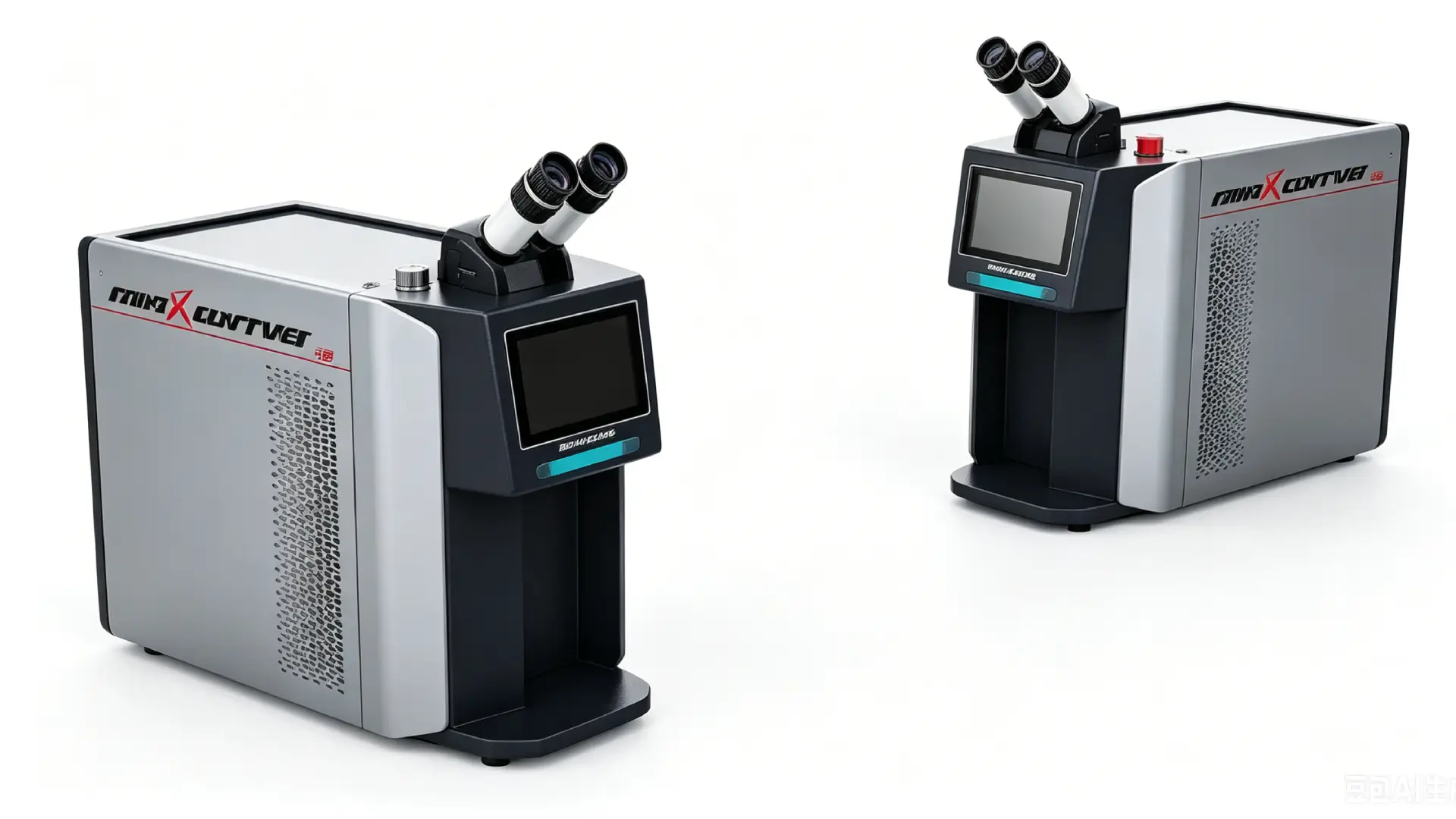
The Maxwave QW Series earns its reputation the straightforward way: better specs, lower price, and a minimum beam diameter that most competitors can’t touch.
At 0.01 mm minimum beam diameter, the QW Series focuses tighter than any other benchtop jewelry laser in its class. Competing units from WTTTOOLS quote 0.2 mm at best — and cost $5,099–$6,399. The Maxwave QW starts at $3,100. It comes in 60W, 150W, and 200W configurations. You get finer focus at 20–40% less cost.
That gap matters on real gold work.
What the Numbers Mean on Your Bench
The QW 150W and 200W units run a 90% duty cycle. They handle material up to 2 mm thick and pulse between 0.1–15 ms at frequencies up to 30 Hz. Fine gold jewelry — chains, prongs, bezels, filigree — cross-sections top out around 1.5 mm. The QW’s range covers every high-value repair you’ll see in the shop.
Task-specific starting points:
- Thin gold chain (0.3–0.6 mm links): 0.5–2 ms pulse, 1–5 Hz, 0.2–0.4 mm spot
- Prong re-tipping (0.8–1.2 mm prongs): 1–5 ms pulse, 1–10 Hz, 0.3–0.6 mm spot
- Bezel crack and filigree repair: 0.5–3 ms pulse, 1–5 Hz, 0.1–0.3 mm spot
The built-in HD 4K 8MP camera handles positioning. New to Laser Welding and coming off a torch? The optical assist cuts your learning curve fast. You see the exact landing point of a sub-millimeter spot before you fire — no guesswork.
The QW 60W covers light repair and custom design work. Step up to the 150W or 200W for continuous shop volume and heavier shanks. Either way, argon shielding keeps yellow gold color clean at the weld — no blackening, no color shift near stones.
For precision fine gold repair at this price point, nothing on the market in 2025 comes close.
Sunstone Orion mPulse — Best Overall for Professional Jewelry Repair Shops
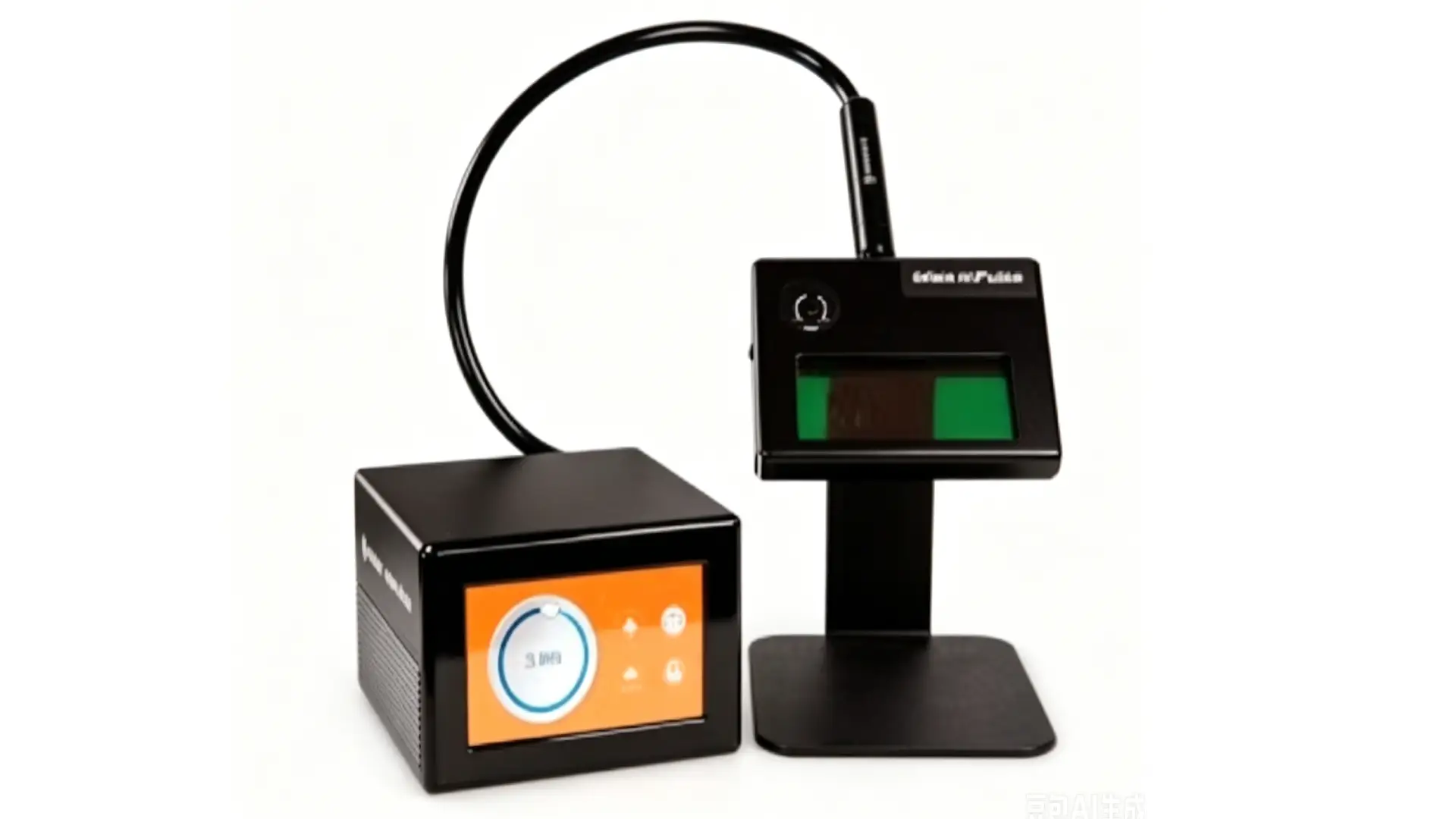
The Orion mPulse has become the default welder in professional permanent jewelry studios across North America. No big marketing push behind it. Just word of mouth from jewelers who stopped blowing out fine chain links.
At $1,999, it lands at about 40% of what the Orion 200i2 costs. Your daily work is jump rings, fine 14K chains, prong tips, and small gold findings? That price difference is hard to ignore.
Precision That Protects Your Material
The mPulse runs Tru-Fire pulse technology — Sunstone’s capacitive discharge system. It charges to an exact joule value before every shot. You get consistent energy pulse-to-pulse across hundreds of welds per day. Arc stability stays solid with no drift.
Here’s how the settings break down by task:
- Fine 14K chain (0.3–0.5 mm wire): Start at 3 J
- Jump rings and small bezels: Work between 3–7 J
The arc footprint stays under 1 mm in diameter. That keeps heat away from nearby stones and protects your materials.
Clean welds also mean less finishing work. Most mPulse users skip the solder step — a fiberglass brush polish gets the job done. That drops repair cycle time from 20+ minutes down to just a few.
Who It’s Built For
The mPulse earns its “best overall” label for a specific type of workload: fine chain, light prong work, Permanent jewelry, and small gold findings. That covers the core revenue stream for most repair shops.
Tackling heavy 14–18K shanks or multi-pass structural build-ups on a regular basis? Step up to the Orion 150s ($4,900). But those jobs make up less than 20% of your bench work? The mPulse covers everything else. It holds a 5.0/5.0 rating from 18+ verified buyers, and Sunstone backs it with training support and solid parts availability.
WTTTOOLS 150W Laser Welder — Best Mid-Range Option for Mixed Repair & Custom Work
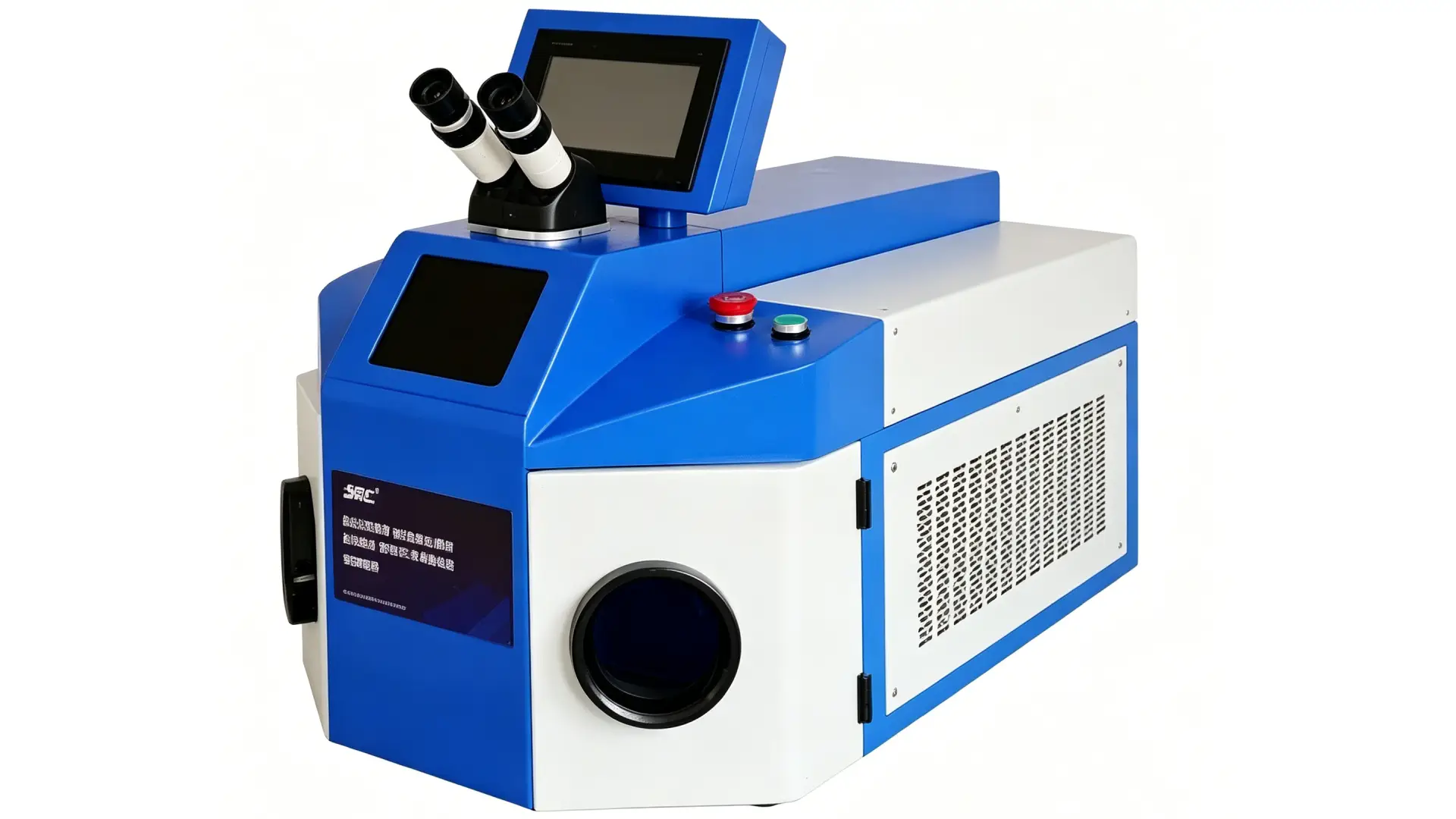
At $5,699, this machine lands in a sweet spot. It sits above the generic 80W units that struggle with 24K gold. It’s also well below the $15,000+ European branded systems that most independent shops can’t justify.
That’s the WTTTOOLS 150W’s entire argument, and it’s a solid one.
What the Specs Mean for Gold Work
This is a 1064 nm Nd:YAG pulse Laser welding machine with up to 150W output. Pulse width adjusts between 0.1–15 ms at frequencies up to 50 Hz. That’s 50 shots per second — useful for stacking passes on a worn shank. Weld depth ranges from 0.1 mm to 2.5 mm, covering the full spread of gold repair tasks you’ll run day to day:
- Fine chain links (0.3–0.6 mm wire): tight spot, micro pulse, minimal heat spread
- Prong re-tipping on 14K/18K: enough precision to work near heat-sensitive stones
- Ring shank rebuilds up to 2.5 mm: longer pulse widths (10–15 ms) handle the depth
Heavier sections — solid 4–5 mm signet rings, dense cast bracelets — need multi-pass overlapping welds. Single-shot penetration tops out around 2.5 mm. That’s not a flaw. It’s just physics at 150W.
Where It Fits (and Where It Doesn’t)
Best fit: Mixed-workload shops handling chains, sizing jobs, and prong work alongside occasional custom fabrication. The 150W output gives you real headroom over 100W units on reflective 24K gold and thicker platinum sections.
Not the right call for: High-volume production shops that weld sections above 3 mm on a regular basis. A 200–300W system deposits faster and fuses deeper. The WTTTOOLS will fall behind on throughput in that environment.
The Consumable Reality
This is a lamp-pumped Nd:YAG jewelry spot welder — flashlamps are your main ongoing cost. Typical lamp life runs 1–3 million shots. Replacement costs land around $100–$300 per lamp. Keep 1–2 spares on hand to avoid downtime.
Warranty service is remote — video support and parts mail-out, not on-site visits. Factor that in before you buy. Your tolerance for downtime matters here.
WTTTOOLS 1200W — Best High-Power Laser Welder for Heavy Gold Components
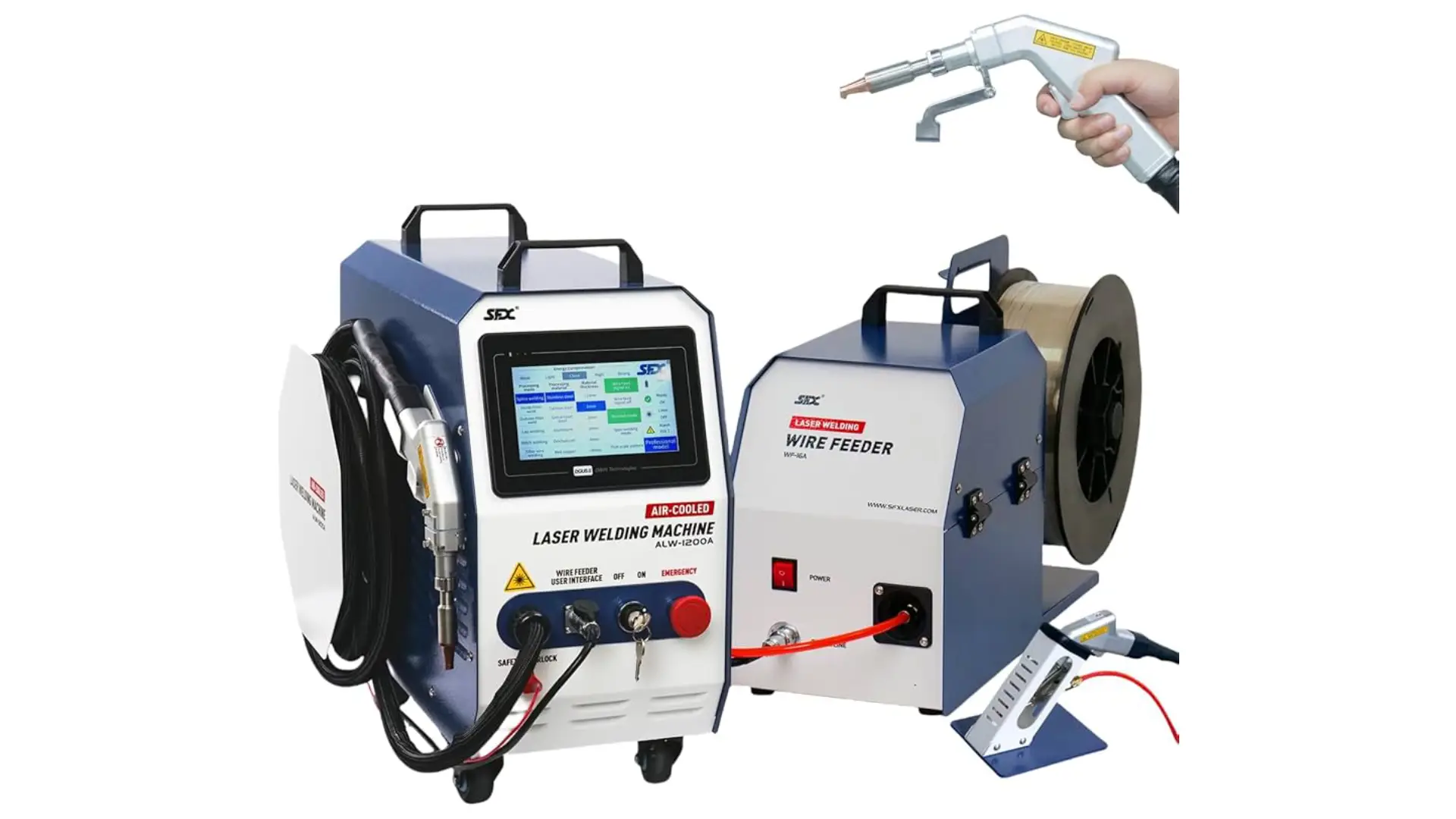
Most jewelry lasers stop at 200W. The WTTTOOLS 1200W doesn’t live in that world.
This is a 1200W continuous Fiber Laser built for one specific problem: thick gold. Solid cast bangles. Heavy custom cuffs. Multi-component gold fixtures with wall sections hitting 3–5 mm. The 150W units on your bench weren’t designed for that work. This one was.
Where 1200W Makes Sense — and Where It Doesn’t
The machine handles metal from 0.2–5.0 mm in Welding mode. That range is the whole point.
- ≥3 mm gold cross-sections: Full-penetration joining in a single pass, at speeds up to 8× faster than TIG
- Heavy bangles, clasps, industrial gold parts: High linear energy input where pulsed jewelry lasers fall short — they can’t match that output
- <0.5 mm gold (chains, prong tips): Skip this machine here — burn-through risk is real and fast
It also runs three modes: welding, cutting, and cleaning. A shop that fabricates steel fixtures alongside gold repairs gets a true multi-tool. No more single-purpose bench anchor taking up space.
Infrastructure Requirements You Can’t Skip
This machine pulls 5 kW at full load on 220–240V AC. You’ll need a dedicated 30A branch circuit — keep it off your polishing motor or compressor. It also needs a closed-loop water chiller with at least 10L coolant capacity.
At around $5,000–$6,000, the ROI math makes the most sense for shops doing high-volume work on both heavy gold fabrication and standard repairs. For a bench focused on micro-repairs only, a 150W jewelry laser is still the sharper, more practical tool.
ACCTEK 4-in-1 Laser Machine — Best Budget Entry Point for Small Jewelry Repair Shops
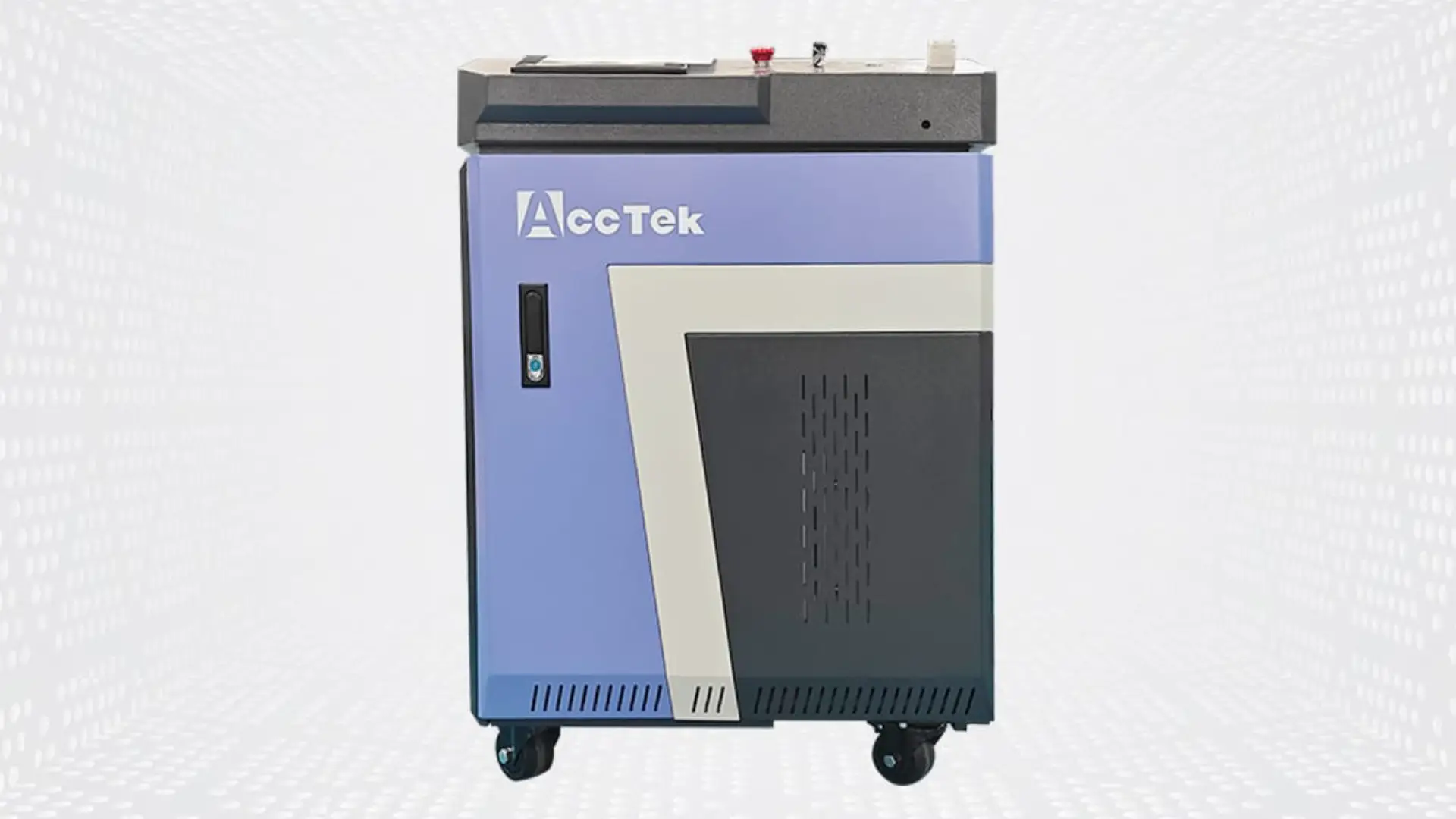
The name says “4-in-1.” That’s worth unpacking before you get excited.
This machine handles welding, cutting, and cleaning — all on a single 3000W fiber platform. Demos show it cutting 1 mm Stainless steel and welding through 8 mm structural sections. That’s solid performance — for a metal fabrication shop.
For fine gold jewelry repair, the fit gets messy.
The beam diameter range is 0.1–2.0 mm. At 2 mm, you’re hitting a broad spot against prong tips and chain links that are smaller than that. Even at 0.1 mm, you still need precise fixturing and strong operator skill to keep heat from spreading on thin gold. The demos focus on carbon steel, aluminum, and brass — not 14K prongs or hollow chain links.
The honest bottom line:
Your shop does occasional steel fabrication, oxide cleaning, and mixed-metal work — plus some light jewelry repairs? The ACCTEK’s multi-process setup makes sense. But gold chains and prong re-tipping are your core revenue? A dedicated jewelry laser — one with clear pulse control and sub-0.3 mm spot specs — will do the job better where it counts.
Before you order, confirm three things:
- Actual beam diameter at working distance — not just the stated range
- Gold-specific demo footage on 14K/18K parts
- Pulse control detail that fits jewelry-grade work, not just structural welding
Nd:YAG vs. Fiber Laser Welder for Gold Jewelry Repair — Which Technology Wins
Two technologies. Same wavelength. Very different behavior on gold.
The difference matters in practice. It decides which machine earns a spot on your bench.
Why Nd:YAG Dominated for Two Decades
Flashlamp Nd:YAG welders ruled jewelry repair for a reason rooted in physics, not marketing.
Gold is highly reflective. Polished 18K yellow gold bounces back 80–95% of incident laser energy at 1064 nm before any melting starts. The first fraction of a millisecond is everything. A flashlamp Nd:YAG fires a massive single pulse — 20–200 J, delivered in 0.5–20 ms — with peak powers hitting 5–10+ kW at a 0.2–0.6 mm spot. That burst of intensity breaks through gold’s reflectivity threshold fast. The surface melts. Then the molten pool absorbs the rest of the pulse. The heat-affected zone stays tight — 0.2–0.5 mm — and the diamonds next door stay cold.
Early fiber lasers couldn’t do that. They were built for cutting and marking: high frequency, low energy per shot. Delivering 1–10 mJ per pulse at tens of kHz works well for engraving stainless steel. On a 0.4 mm 18K chain link, energy builds up slowly, the HAZ grows, and control becomes unpredictable.
So Nd:YAG became the default. Jewelers learned to tune three numbers — joules, milliseconds, spot size — and the results were precise and repeatable.
Where Fiber Has Caught Up
Modern pulsed fiber welders have closed the gap — but only with hardware built for jewelry work.
The key shift is macro-pulsed fiber modes that mimic Nd:YAG behavior. These units skip continuous or kHz-frequency output. Instead, they fire 1–5 ms pulses at 2–10 J, at repetition rates of 5–20 Hz. Same energy range. Similar spot sizes. Weld Quality on gold matches Nd:YAG output when you dial in the right parameters.
Fiber also brings two real advantages Nd:YAG can’t match:
- Wall-plug efficiency: fiber runs at 20–30% electrical efficiency vs. Nd:YAG’s 3–4%. Less heat in your workspace, lower running costs.
- Maintenance: flashlamps last 500–3,000 hours and cost $100–$300 per replacement. Fiber diodes run 50,000–100,000+ hours. For a busy repair shop, that cost difference adds up fast.
The Honest Trade-Off
Nd:YAG still leads on ultra-delicate work — thin filigree, fine chains under 0.4 mm. Single-shot, high-peak-power fusion gives jewelers tight, shot-by-shot control. The slower repetition rate (1–5 Hz at the foot pedal) creates a natural rhythm too. Experienced jewelers often prefer it for stacking precise, incremental welds.
Fiber wins on throughput, efficiency, and long-term cost. Still, fiber laser welder gold performance depends on one thing: does the unit support true macro-pulsed modes with enough per-pulse energy? A fiber unit built for cutting with a welding mode added on is not the same as a purpose-built jewelry laser spot welder with Nd:YAG-style pulse control. That distinction matters more than the brand name on the housing.
The practical verdict: For most professional repair shops in 2025, a well-specced pulsed fiber system or a modern Nd:YAG pulse laser welding machine with solid microscope integration and argon shielding will both handle gold repair. Your choice comes down to three things: workload volume, tolerance for consumable costs, and whether the unit you’re evaluating delivers controllable pulse energy below 1 J for fine work — no matter which technology sits inside.
Laser Welder Power Settings for Gold Jewelry Repair — Practical Parameter Guide
Wrong settings don’t just produce bad welds. They destroy material — and sometimes the job that comes after it.
Gold punishes guesswork. Too much energy on a hollow chain link and you’re looking at a crater. Too little on a 10K band seam and the weld flakes off under the first stress test. These numbers come from real bench work, not theory. Use them as starting points. Then adjust ±20–30% for your specific machine and geometry.
Starting Parameters by Karat and Task
| Task | 14K Gold | 18K Gold | 10K Gold |
|---|---|---|---|
| Chain / jump ring | 5–7 J · 0.8–1.2 ms · 0.2–0.3 mm spot | 4–6 J · 0.6–1.0 ms · 0.2–0.3 mm spot | 6–8 J · 0.8–1.2 ms · 0.2–0.3 mm spot |
| Prong re-tipping | 7–9 J · 1.0–1.5 ms · 0.3–0.4 mm spot | 6–8 J · 0.8–1.2 ms · 0.3–0.4 mm spot | 8–10 J · 1.0–1.5 ms · 0.3–0.4 mm spot |
| Band seam / resize | 9–11 J · 1.4–1.8 ms · 0.4–0.5 mm spot | 8–10 J · 1.3–1.8 ms · 0.4–0.6 mm spot | 10–12 J · 1.5–2.0 ms · 0.4–0.5 mm spot |
22K–24K: Higher reflectivity needs a sharper initial spike. Use shorter pulses (0.6–1.0 ms) to stop slumping. Build up in passes instead of pushing all energy into one shot.
White gold (nickel-based): Keep pulses at ≤1.5 ms unless you run argon with pulse ramp-down shaping. Longer pulses with no gas coverage cause pitting fast.
Spot Size by Repair Type
- Chain links (0.2–0.5 mm wire): 0.1–0.25 mm spot. Small spot, lower joules, higher energy density — keeps heat off adjacent links.
- Prong re-tipping: Start at 0.2–0.25 mm to fuse the base. Open to 0.3–0.4 mm for build-up passes.
- Bezel repair: 0.3–0.4 mm for joining, 0.5–0.6 mm for gap filling.
- Heavy shank build-up: 0.4–0.8 mm. A larger spot cuts intensity. You can run longer pulses for smooth planishing without punching through.
Argon Shielding: Non-Negotiable on White Gold
Flow rate: 5–10 l/min, laminar, into the working chamber. Start gas flow a few seconds before welding. Keep it running a few seconds after.
Argon makes the biggest single difference on nickel white gold. You get cleaner beads, less pitting, and noticeably brighter welds. Nitrogen works as a backup on non-critical yellow gold joints. Use argon any time the weld surface will be seen.
The Two Errors That Kill Gold Repairs
Too much power: Deep craters, blow-through on thin shanks, cracking in white gold. Drop joules, shorten pulse time, or open the spot size a little. Build with multiple low-power passes.
Too little power: The bead sits proud and flakes. Chain links break right at the weld. Got a reflective surface? Mark it with a red Sharpie first. It raises absorption and lets you fuse at lower overall energy — with a cleaner result.
Laser Welding vs. Traditional Soldering for Gold Jewelry Repair
The torch isn’t dead. But its job description has gotten narrower.
For stone-set gold repairs — prongs sitting millimeters from diamonds, emeralds, or opals — laser welding isn’t just better. It’s the one method that lets you complete the repair without risking the stone. Laser’s heat-affected zone stays within 0.2–1.0 mm. A torch spreads heat across 10 mm or more. That gap tells the whole story.
Use laser welding for: – Stones that can’t come out without damage (opals, emeralds, pavé-set diamonds) – Repair zones within 1–2 mm of any heat-sensitive element – Joints that need maximum strength — laser welds are 260× stronger than soldered joints – Pieces where a visible solder line would lower the value
Stick with torch soldering for: – Stone-free pieces – Seams running longer than 10–15 mm with no delicate parts nearby – Budget jobs on plain 10K–14K bands where standard solder is already on hand
The ROI math makes this decision clear. Shops charge a 20–50% premium for laser repairs that skip stone removal. That’s $45–$60 vs. $30–$40 for a standard prong re-tip. At eight laser jobs per week, you recoup a $20,000 machine in under two years. The torch stays in rotation. It just stops being the go-to tool for every job.
How to Choose the Right Laser Welder for Your Gold Jewelry Repair Business
Five factors separate a smart purchase from an expensive regret.
Match Wattage to Your Volume
Repair count drives your power requirement more than anything else. Under 15 jobs per day? A 60–80W unit handles it fine. Running 20–40 gold repairs — heavy shanks, thick findings, multi-row pavé — step up to 120–200W. An underpowered bench slows you down. Worse, it degrades weld quality on gold’s most demanding sections.
Budget Tier Reality Check
- $2,900–$4,500: Entry-level. Good for ring sizing and thin chain repair. Comes with a 1–2 year warranty and a basic microscope.
- $4,500–$8,000: The professional sweet spot. You get 120–150W output, programmable presets, closed-loop cooling, and 2–3 year coverage.
- $8,000+: Industrial throughput. Built for continuous operation and multi-store or factory workflows.
Microscope Matters More Than Most Buyers Realize
Binocular scopes outperform CCD monitors for fine gold work. Depth perception on a 0.3mm prong tip is non-negotiable — a flat monitor just can’t replicate that. Target at least 20× magnification. Go for 30× on polished 18K surfaces where invisible welds are the standard.
Vendor Support Is Part of the Machine’s Value
Before signing anything, run through this checklist:
- Service response time — 24–72 hours is the acceptable range. Longer than that, and a broken bench kills your revenue.
- Flash lamp availability — Confirm they’re in stock and check the replacement cost. Expect $150–$400 per lamp.
- Gold-specific parameters — Ask if they provide starter recipes for 14K, 18K, and 22K work. This saves hours of trial-and-error setup time.
A vendor who ships test repairs using your own broken chains before purchase? Put them at the top of your list. That’s a sign they stand behind the machine.
Frequently Asked Questions About Laser Welders for Gold Jewelry Repair
These questions show up on forum threads, vendor calls, and shop floors everywhere — any place someone is taking a hard look at a laser welder for gold work.
Can you laser weld gold without filler wire?
Yes — but only for tight joints under 0.02–0.05 mm gap. 18K yellow gold is the easiest metal to weld without filler. White gold and rose gold are a different case. Zinc vaporization causes pitting on white gold. Copper content creates undercut on rose gold. Both metals need filler wire. If you’re unsure, feed 0.25–0.35 mm matching wire and skip the guesswork.
How many watts do I need?
- 60–100W: fine chain, micro-prongs, work near stones
- 100–150W: ring sizing, gallery repair, moderate prong rebuilding
- 150–200W: heavy shanks, large bezels, thick cast sections
More watts doesn’t mean better welds. Pulse energy, duration, and spot size are what drive weld quality. Most shops cover all gold repair work at 80–100W without issue.
Will laser welding damage my customer’s diamonds?
Diamonds handle welding within 0.5–1 mm as long as the beam stays on metal. Opals, emeralds, pearls, and treated stones are far more sensitive. Keep the beam away, use heat sinks, or take the stones out before you start.
What does a professional jewelry laser welder cost?
- Entry-level: $7,000–$15,000
- Mid-range (most shops): $15,000–$30,000
- High-end production: $30,000–$60,000+
Don’t forget the ongoing costs. Flashlamp replacements and argon supply both add up fast on a busy bench. Build those into your budget from day one.
Conclusion
MAXWAVE designs jewelry laser welding machines for precision, speed, and durability. We manufacture in-house, test every machine under real welding conditions, and provide direct technical support worldwide. Whether you run a boutique jewelry studio or a high-volume repair shop, MAXWAVE delivers the right laser welder for gold jewelry repair — backed by performance data, not marketing claims.
If you want faster turnaround, invisible repairs, and the confidence to take on challenging gold work, contact MAXWAVE today for a personalized specification review and application test. Let us prove why more jewelers are switching to MAXWAVE for their gold repair laser welders.

0 Comments